Why Does Your Car’s Engine Misfire At Idle? Let’s Find Out
Many car owners have experienced that frustrating moment when their engine starts misfiring at idle. You’re not alone—this is a common issue that can leave you feeling stuck and unsure of what’s wrong. Understanding the root causes can help you troubleshoot and get back to smooth driving.
If your car’s engine misfires at idle, it’s often due to issues with the fuel delivery or ignition system, like clogged injectors, faulty spark plugs, or incorrect ignition timing.
Failing sensors and low-quality fuel can also cause rough idling. These problems disrupt proper combustion, leading to vibrations, noises, or uneven RPMs.
To understand specific causes and solutions, keep exploring—identifying the root issue can help restore smooth engine performance.
Key Takeaways
- Fuel delivery issues like clogged injectors or low fuel pressure can cause inconsistent combustion at idle. When the fuel isn’t flowing properly, the engine struggles to run smoothly.
- Faulty or worn spark plugs and improper ignition timing lead to misfires during idle. If the spark isn’t firing at the right time, it can cause rough running.
- Engine temperature fluctuations and imbalance among cylinders affect smooth idle operation. When some cylinders aren’t working correctly, it can cause the engine to stumble.
- Dirty air filters or malfunctioning sensors disrupt the optimal air-fuel mixture, causing misfires. A clogged filter or faulty sensor throws off the balance needed for a steady idle.
- Ignition coil problems or sensor failures can trigger misfires and rough idling. When these parts fail, the spark and fuel management become inconsistent.
What Causes Engine Misfires at Idle?
Engine misfires at idle often happen because of issues with the fuel delivery or ignition systems. Poor fuel quality can cause inconsistent combustion, leading to rough idling. Regular injector cleaning helps ensure fuel sprays evenly, preventing misfires caused by clogged injectors.
Engine temperature also plays a role; if it’s too cold or too hot, it can disrupt proper combustion. Compression testing helps identify if internal engine components like valves or pistons are causing uneven cylinder performance. Faulty ignition coils can weaken spark delivery, making it harder for fuel to ignite properly.
Maintaining proper cylinder balance is essential for smooth running, and misfires often happen when one cylinder isn’t firing correctly. Fuel mapping and throttle response adjustments can optimize the fuel-air mixture and engine responsiveness, reducing idle misfires.
Signs Your Car Is Misfiring When Idling
When your car starts to misfire at idle, there are some clear signs that something’s not quite right under the hood. You might notice your engine behaving oddly, which can make your ride feel less smooth.
Common signs include a rough or uneven idle, where the engine hesitates or vibrates more than usual. You could also see a drop in engine RPM or fluctuations that make the engine feel unstable.
A rough, uneven idle with hesitations or vibrations signals potential misfire issues under the hood.
The check engine light might come on, signaling that there’s a problem. Sometimes, you’ll hear knocking or sputtering noises during idle, which are signs of misfiring issues.
These symptoms directly affect how your car idles, making it less responsive and more likely to stall. Catching these signs early can help you identify problems before they get worse, saving you time and money on repairs.
How Do Spark Plugs and Ignition Timing Affect Idle?
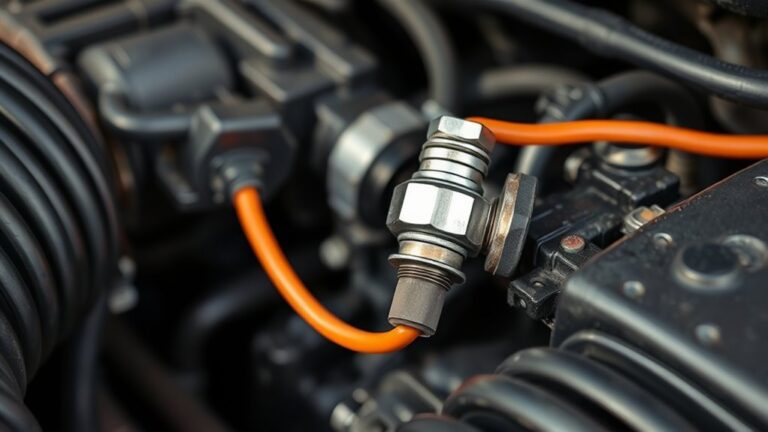
Ever wondered how spark plugs and ignition timing influence your car’s idle performance? Your spark plugs are key for igniting the fuel-air mixture in your engine.
Different spark plug types, like copper, platinum, or iridium, have varying durability and performance. This affects how smoothly your engine runs at idle.
Worn or improperly gapped spark plugs can cause misfires, rough idling, or hesitation. Ignition timing, controlled by the ignition coil and the engine’s computer, decides when the spark ignites the mixture.
If the timing is off—either too advanced or too retarded—you’ll notice roughness or stalling at idle. Properly timed ignition ensures consistent combustion, leading to a steadier idle.
Using the right spark plug type and keeping the ignition coil in good shape helps maintain peak ignition timing. When these components work together correctly, your engine idles smoothly.
This prevents misfires and boosts overall performance.
Common Fuel System Issues That Cause Idle Misfires
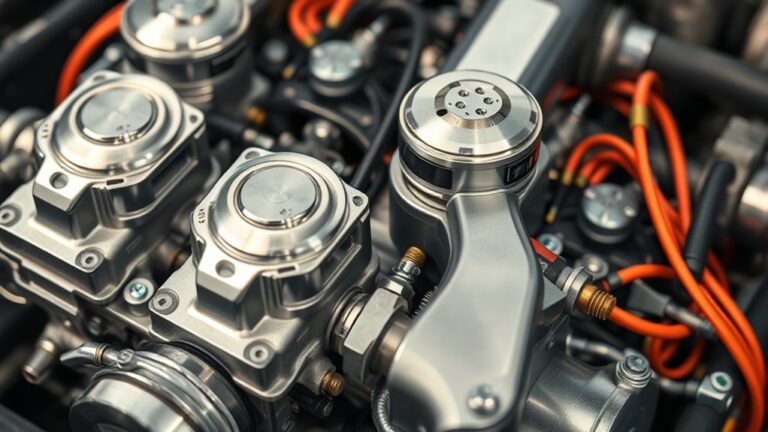
Have you noticed your car misfiring or running rough at idle? If so, the fuel system might be the problem. Common issues include fuel injector clogs, which block proper fuel delivery and cause uneven combustion.
Low fuel pressure from a failing fuel pump or a clogged fuel filter can also disrupt the air-fuel mixture, leading to idle misfires. These problems can make your engine run rough or inconsistent.
Here are some typical fuel system issues that cause idle problems:
- Fuel injector clogs: Dirt or debris block the injectors, reducing fuel flow.
- Inconsistent fuel pressure: A weak fuel pump or clogged filter hampers steady fuel supply.
- Dirty fuel filters: Restrict fuel flow to the injectors, causing misfires.
- Faulty fuel pressure regulator: Fails to maintain proper fuel pressure, impacting engine performance.
Fixing these issues can help your engine idle smoothly again and improve overall performance.
How Faulty Sensors Can Lead to Idle Engine Problems
Faulty sensors can trick your engine’s control systems, leading to idle issues even if the mechanical parts are fine.
When sensors like the oxygen sensor, throttle position sensor, or mass airflow sensor malfunction, they send incorrect data to your engine control unit (ECU). This messes up sensor calibration, which is key for good engine performance.
Because of this, your engine might idle roughly, stall, or run unevenly. Fixing these sensors helps restore proper data flow, keeping your engine steady at idle and running smoothly overall.
| Sensor Type | Common Issue | Effect on Idle |
|---|---|---|
| Oxygen Sensor | Faulty readings | Poor fuel mixture, rough idle |
| Throttle Sensor | Calibration errors | Inconsistent engine speed |
| MAF Sensor | Dirt or failure | Erratic idle behavior |
Vacuum Leaks and Air Intake Problems That Cause Misfires
Vacuum leaks and air intake problems can really mess with your engine, especially when you’re idling. You might notice it running rough or feeling like it’s misfiring, which can be pretty frustrating. Sometimes, you’ll hear a hissing sound or see that pesky check engine light come on, and that’s usually a sign something’s not right.
Most of the time, these issues are caused by things like cracked hoses or a dirty air filter. Fixing or replacing these parts can do wonders for restoring proper airflow. Once you get those sorted out, your engine should run smoother and perform better again.
Detecting Vacuum Leak Signs
Ever wonder why your engine sputters or stalls at idle? Detecting vacuum leak signs is essential. Using a vacuum gauge can help you pinpoint leak issues quickly.
When there’s a vacuum leak, you might notice an irregular idle speed or rough running. Common signs include fluctuating RPMs, hissing sounds, or a haphazard engine note.
To confirm a leak, connect a vacuum gauge to your intake manifold. An abnormally high or low reading indicates a leak. You can also do a simple visual check for cracked hoses or loose clamps.
Sometimes, spraying carb cleaner around potential leak points causes the engine RPM to change, revealing the leak. Staying vigilant with leak detection helps prevent misfires and keeps your engine running smoothly at idle.
Common Air Intake Issues
Air intake issues are a common cause of engine misfires at idle, disrupting the smooth flow of air needed for proper combustion. A clogged or dirty air filter restricts airflow, making the engine struggle to get enough air and causing misfires.
Likewise, leaks in the intake manifold can introduce unmetered air into the system, upsetting the air-fuel mixture. Cracks, loose connections, or worn gaskets in the intake manifold are typical culprits.
These problems cause the engine’s sensors to receive inaccurate readings, which can lead to misfires and rough idling. Regularly inspecting and replacing the air filter and checking the intake manifold for leaks can help prevent these issues and keep your engine running smoothly.
Effects on Engine Performance
When vacuum leaks or air intake problems happen, they can really mess with your engine’s performance by throwing off the balance needed for efficient combustion. This imbalance can make your car feel sluggish, with reduced engine power and rough idling.
You might also notice that your fuel consumption has gone up and there’s hesitation when you accelerate. These issues can cause misfires at idle, which affects how smoothly your car runs overall.
This kind of performance drop can also lead to higher emissions because of incomplete combustion. Over time, it can cause extra wear on engine parts, potentially leading to bigger problems.
Fixing these issues quickly helps bring your engine back to peak performance and stops further damage from happening.
Troubleshooting Tips for Diagnosing Idle Misfires
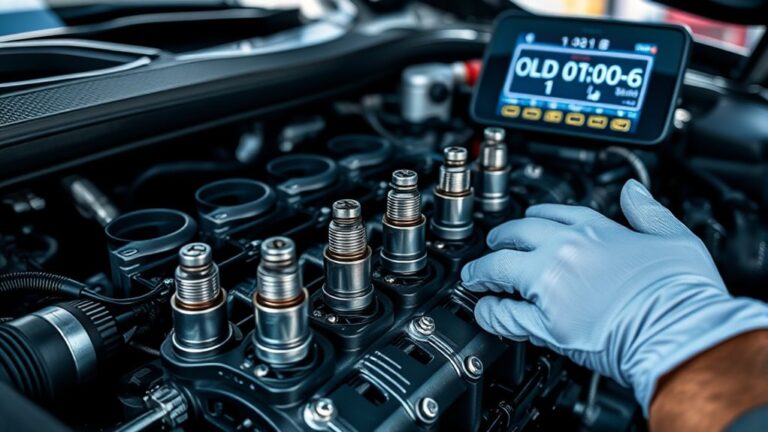
How can you effectively diagnose an idle misfire? Start by observing engine vibrations and listening for irregular sounds. Using diagnostic tools like an OBD-II scanner helps identify trouble codes related to misfires.
Next, check for consistent engine vibrations; irregular ones often point to ignition or fuel system issues. To illustrate, imagine this table:
| Symptom | Possible Cause |
|---|---|
| Rough engine vibrations | Ignition coil or spark plug issues |
| Unusual engine sounds | Vacuum leak or clogged fuel injectors |
| Poor acceleration | Fuel delivery or sensor malfunction |
Using these clues, you can narrow down potential causes. Pay close attention to engine vibrations; strong, uneven vibrations suggest specific problems. Diagnostic tools like scan tools are invaluable for reading error codes and guiding your troubleshooting.
Focus on these signs, and you’ll be better equipped to pinpoint the root of your idle misfire efficiently.
Simple Fixes You Can Try for Idle Misfires
If you’ve identified potential causes for your engine’s rough idle, trying some simple fixes can often solve the problem without needing a mechanic. Start by tuning the idle: turn the idle screw to make sure the engine runs smoothly at low speeds.
Next, think about using fuel additives made to clean fuel injectors and prevent buildup that causes misfires. These can boost combustion efficiency and help restore a smooth idle.
Also, check your spark plugs—they should be clean and properly gapped. Replacing worn spark plugs can make a big difference in how your engine runs.
Finally, look at your air filter. If it’s clogged, it can restrict airflow and cause rough idling. Replacing or cleaning it helps keep the air coming in properly.
These simple steps can often fix idle misfires, saving you time and money before more complex repairs are needed.
When to See a Mechanic for Engine Misfire Problems
Noticing persistent engine misfires despite trying simple fixes is a sign you should see a mechanic. If your misfire continues or gets worse, don’t wait too long to get professional help. A skilled mechanic has the diagnostic tools to find the problem quickly, saving you time and money.
You should see a mechanic if:
| Symptom | Action Needed |
|---|---|
| Misfire persists after basic fixes | Schedule a mechanic consultation promptly |
| Check engine light on | Diagnostic tools will pinpoint underlying issues |
| Engine runs rough at idle | Get a professional inspection for proper repair |
If your engine misfires at idle and simple adjustments don’t fix it, trust a mechanic to identify the root cause using advanced diagnostic tools. Addressing the problem early can prevent further damage and costly repairs later. Don’t delay—getting professional help is key to restoring smooth engine performance.
Preventive Tips to Avoid Future Idle Misfires
To avoid those annoying idle misfires in the future, it’s a good idea to stay on top of regular engine maintenance and keep everything clean. Using quality fuel is also key—it helps ensure proper combustion and prevents buildup that can lead to misfires.
And don’t forget to keep an eye on your engine sensors. If any of them start acting up or malfunctioning, replacing them sooner rather than later can make a big difference in keeping your engine running smoothly.
Regular Engine Maintenance
Regular engine maintenance is essential for preventing idle misfires and keeping your vehicle running smoothly. Staying on top of routine tasks can catch issues early and ensure your engine fires properly.
Make sure you regularly perform oil changes to keep the engine lubricated and efficient. Replacing filters like the air and fuel filters helps prevent dirt and debris from affecting performance.
Also, check and replace spark plugs and ignition coils when needed to maintain proper combustion. Regular inspections help identify potential problems before they cause misfires.
Keeping up with these maintenance tasks not only improves idle stability but also extends your vehicle’s lifespan. Neglecting basic maintenance can lead to costly repairs, so stay proactive and keep your engine in top shape.
Use Quality Fuel
Using high-quality fuel is a simple yet effective way to prevent your engine from misfiring at idle. Choosing fuel with the right quality helps your engine run smoothly and efficiently.
Pay attention to the octane rating, which shows how resistant the fuel is to knocking. If your vehicle’s manufacturer recommends a higher octane, using lower-quality fuel can cause knocking and misfires, especially when idling.
Using fuel with the correct octane improves combustion, reduces engine stress, and lowers the chance of misfiring. Always pick reputable fuel brands and avoid cheap options that might contain contaminants or inconsistent octane levels.
Good fuel quality helps keep your engine performing well, lasts longer, and runs smoothly both when idling and while driving.
Monitor Engine Sensors
Keeping a close eye on your engine sensors is essential because these components constantly monitor important engine parameters and provide real-time data to your vehicle’s computer. Proper engine monitoring guarantees your engine runs smoothly and can help prevent idle misfires.
Regularly check sensor calibration to maintain accuracy, especially for critical sensors like the oxygen sensor and throttle position sensor. Faulty or miscalibrated sensors can send incorrect data, leading to misfires and rough idling.
To stay ahead, consider these preventive steps: perform routine sensor inspections during maintenance, use diagnostic tools to verify sensor calibration, replace faulty sensors promptly, and keep sensors clean for peak performance.
Frequently Asked Questions
Can Engine Misfires at Idle Cause Long-Term Engine Damage?
Yes, engine misfires at idle can cause long-term damage if you ignore them. When your engine isn’t firing properly, it puts extra stress on parts like the ignition system and spark plugs, which can lead to faster wear.
Over time, frequent misfires can harm the catalytic converter and other engine components. This not only reduces your engine’s efficiency but can also lead to costly repairs down the line.
The good news is that fixing misfires early on can keep your engine running smoothly and prevent serious damage later. So, it’s a smart move to get it checked out as soon as you notice any issues.
How Does Engine Age Influence Idle Misfire Issues?
As your engine gets older, its wear and tear can make idle misfires more common and worse.
Parts like spark plugs and valves start to lose their ability to perform smoothly, which can cause problems.
Poor fuel quality can make things even trickier.
All these issues together create a perfect storm, knocking your engine off balance when idling and risking long-term damage.
Regular maintenance and using good quality fuel are your best bets to keep these aging problems in check.
Are Aftermarket Parts More Prone to Causing Idle Misfires?
Aftermarket parts, especially lower-quality ones, can increase the risk of idle misfires. Poor-quality aftermarket ignition system components may not perform reliably, causing inconsistent sparks and engine misfires.
Always choose aftermarket parts with good quality ratings to guarantee compatibility and durability. Investing in reputable brands helps prevent issues, as inferior parts often lack the precision needed for smooth engine operation during idle.
Can Driving Habits Impact the Likelihood of Idle Misfires?
Yes, your driving habits can impact idle misfires. If you often drive short distances or skip regular maintenance, fuel quality can drop and parts like spark plugs or sensors may wear out faster.
Keeping up with good maintenance helps ensure your engine runs smoothly and reduces misfires. Avoid sudden acceleration and give your car time to warm up, which helps proper fuel combustion and cuts down on idle misfires.
What Role Does Engine Coolant Temperature Play in Idle Misfires?
Coolant temperature plays a vital role in idle misfires. When your coolant sensor detects temperature fluctuations, it sends incorrect signals, causing your engine’s computer to mismanage fuel delivery and timing.
This miscommunication leads to inconsistent engine idle, especially at low speeds. If your engine’s coolant isn’t maintaining a steady temperature, it can trigger misfires.
That makes your engine stumble and shake, especially when idling.
Conclusion
Don’t ignore those rough idles—they could signal bigger issues. Sometimes, fixing the problem is simple enough to do yourself, but if it keeps happening, see a mechanic.
Addressing misfires early can save you money and prevent engine damage down the line. Regular maintenance is key to keeping your engine running smoothly.
Remember, a well-maintained engine means a smoother, more reliable ride. If your car’s engine misfires at idle, tackling the issue now is the best way to stay ahead.