Unbeatable All Terrain Tires for Your Jeep Wrangler
Are you tired of struggling to find the perfect all-terrain tires for your Jeep Wrangler? Many Jeep owners face the challenge of balancing off-road performance with everyday driving comfort. You’re not alone in wanting tires that can handle tough terrains while still offering reliability and traction.
To find unbeatable all-terrain tires for your Jeep Wrangler, choose options that boost off-road performance with aggressive tread patterns, reinforced sidewalls, and durable rubber compounds. Brands like BF Goodrich, Goodyear, and Falken are well-known for reliability and traction.
Consider your typical terrains and select the right size for better control, clearance, and efficiency.
Proper maintenance and installation are key to maxing out your tires’ potential.
Keep going to uncover more tips for choosing and caring for your tires.
Key Takeaways
- Choose tires with aggressive tread patterns and reinforced sidewalls for better off-road traction and durability.
- Match tire size and load capacity to your Jeep Wrangler’s specs to ensure safety and good performance.
- Consider reputable brands like BF Goodrich, Goodyear, or Falken for reliable, long-lasting all-terrain tires.
- Regularly check, rotate, and maintain tire pressure to get the most out of their lifespan and off-road abilities.
- Pick tires suited to your typical terrains—mud, sand, rocky, or gravel—for unbeatable all-terrain performance.
How All-Terrain Tires Boost Your Jeep Wrangler’s Off-Road Performance
All-terrain tires greatly improve your Jeep Wrangler’s off-road capabilities by providing better traction on different surfaces. To get the most out of them, pay attention to tire pressure; lowering it slightly increases the contact patch, which boosts grip on uneven terrain.
Different terrain types like mud, sand, gravel, or rocky paths need specific tire pressures for the best traction and durability. Adjusting your pressure accordingly helps you navigate these surfaces more confidently and reduces the chance of getting stuck or damaging your tires.
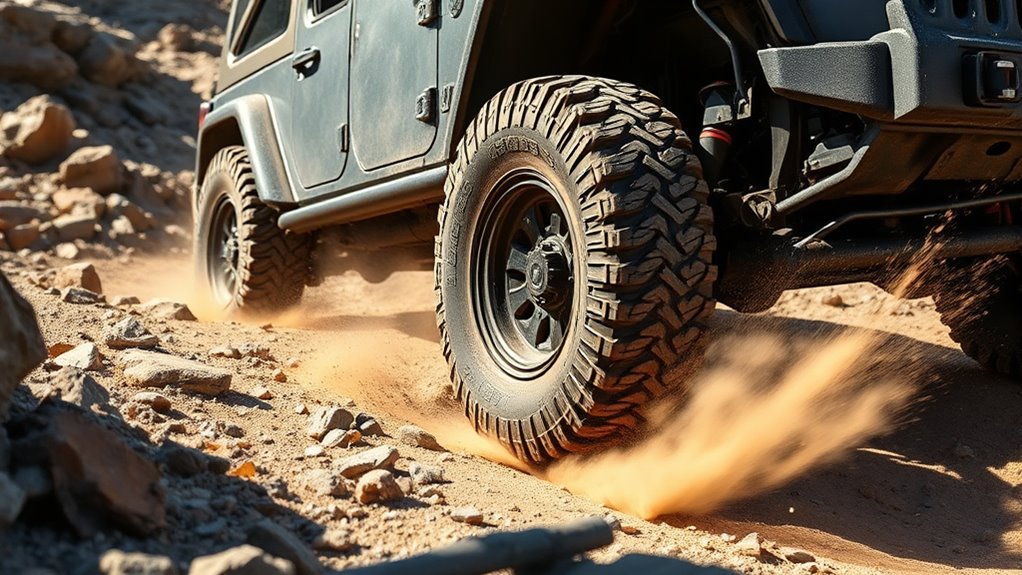
All-terrain tires feature deeper treads and more aggressive patterns that grip a variety of terrain types, offering better stability and control. This adaptability lets you switch from pavement to rough trails without sacrificing performance.
Essential Features of All-Terrain Tires for Jeep Wranglers
To ensure your Jeep Wrangler can handle off-road adventures, it’s important to know what features to look for in all-terrain tires. Key aspects include advanced tire technology that boosts durability and traction.
Tread innovations are crucial, offering aggressive patterns for better grip and mud clearance while still providing a smooth ride on the highway. Look for tires with reinforced sidewalls to prevent punctures and cuts, especially on rough terrains.
The rubber compounds should strike a balance between flexibility and toughness, helping your tires last longer and perform well in different conditions. Also, check the load capacity and speed ratings to make sure they match your off-road needs.
Here’s a quick overview:
| Feature | Benefit | Example |
|---|---|---|
| Tire Technology | Improves durability and traction | Reinforced sidewalls |
| Tread Innovations | Boosts grip and mud clearance | Aggressive tread patterns |
| Rubber Composition | Balances flexibility and toughness | Long-lasting compounds |
| Sidewall Strength | Resists punctures and cuts | Reinforced construction |
| Load/Speed Ratings | Matches vehicle demands for safe off-road driving | High load, moderate speed |
These features help your tires excel on any terrain you encounter.
Best All-Terrain Tire Brands for Your Jeep
Choosing the right tire brand can really impact your Jeep Wrangler’s performance and lifespan. Reputable brands like BF Goodrich, Goodyear, and Falken are known for their reliable all-terrain tires that offer durability and solid traction.
These brands often come with extensive tire warranties, giving you peace of mind against defects and early wear. Some all-terrain tire myths suggest all tires are the same, but the truth is quality varies a lot—so investing in trusted brands pays off in the long run.
They focus on research and innovation, making sure their tires perform well both off-road and on highways. Plus, their warranty options often cover repairs or replacements, saving you money and hassle.
Choosing a trusted brand not only helps dispel common all-terrain tire myths but also ensures a safer, more reliable ride for your Jeep Wrangler, whether you’re tackling tough trails or cruising city streets.
Choosing the Right Tread Pattern for Your Off-Road Adventures
Selecting the right tread pattern is essential when gearing up for off-road adventures, as it directly affects your Jeep Wrangler’s traction, stability, and ability to tackle diverse terrains. Understanding different tread types helps you choose the best for your needs.
For example, mud-terrain tires have large, aggressive lugs that excel in loose, muddy conditions, giving you maximum grip. All-terrain tires offer a balance of on- and off-road performance with a more moderate tread pattern, making them great for mixed terrains like gravel, dirt, and pavement.
Think about the terrain you’ll encounter most. Rocky trails need tires with sturdy sidewalls and deeper, aggressive tread blocks. Sandy terrain benefits from tires with wide voids for better flotation. Choosing the right tread type for your usual conditions ensures top performance and safety.
Matching your tire’s tread pattern to your typical off-road adventures helps you conquer challenging terrains confidently. It also makes sure you get the most out of every trip.
Picking the Correct Tire Size for Your Jeep Wrangler
Picking the right tire size for your Jeep Wrangler really comes down to knowing what your factory tires are and how they impact your ride. It’s not just about looks; the size you choose can affect your performance, handling, and comfort on the road. So, it’s worth taking a little time to understand what works best for your driving style and needs.
You also want to think about off-road adventures. Factors like ground clearance and tire durability are super important if you love hitting rough trails. Picking the right size can make a big difference in how your Jeep performs off-road, giving you better traction and protection. When you get it right, you’ll enjoy a smooth, confident ride both on and off the trail.
Factory Tire Dimensions
Your Jeep Wrangler’s factory tire dimensions are key to getting the best performance and safety. These specs make sure your vehicle runs smoothly and that your tires stay properly inflated.
When choosing new tires, remember these important points:
- Check your current tire size, usually found on the sidewall.
- Match your factory tire dimensions to keep handling, fuel efficiency, and clearance just right.
- Keep in mind that bigger tires might need some adjustments to tire pressure for optimal performance.
- Always follow the manufacturer’s recommended tire pressure to avoid uneven wear or safety concerns.
Sticking to the factory specs helps prevent fitment, performance, and safety issues. It keeps your Jeep reliable and ready for whatever adventure comes next.
Off-Road Compatibility Factors
In off-road adventures, the right tire size can really boost your Jeep Wrangler’s performance and capability. Picking the proper size impacts traction and how well you can handle different terrains, giving you confidence on the trail.
Larger tires increase ground clearance and grip, but they might slow you down a bit and use more fuel. Smaller tires give you better control on rocky paths but may not grip as well on tricky surfaces. Think about where you usually drive and your style.
Use this table to help decide which size is best for you:
| Tire Size | Traction Analysis | Terrain Adaptability |
|---|---|---|
| 33 inches | Excellent on mud and sand | Good for rocky terrains |
| 35 inches | Superior on loose surfaces | Best for deep snow |
| 32 inches | Reliable in most conditions | Versatile for all terrains |
| 37 inches | Max traction on soft ground | Best for extreme off-road |
Choose wisely to get the most out of your Wrangler off-road.
Best Value vs. Premium All-Terrain Tires
When you’re trying to decide between value and premium all-terrain tires, it really comes down to balancing what you pay now versus what you get in the long run. Cheaper tires can definitely save you some cash upfront, but they might not last as long or handle tough conditions as well.
On the other hand, premium tires usually come with better performance and durability, so they tend to last longer and perform better in different terrains. The catch is, they do cost a bit more. So, it’s all about figuring out what’s more important for your driving needs and budget.
Cost Efficiency Comparison
Choosing the right all-terrain tires often comes down to balancing cost and performance. When comparing best value versus premium options, your budget considerations and tire lifespan are key.
Premium tires usually cost more upfront but last longer and perform better in tough conditions. Best value tires offer a more affordable option with decent durability, making them ideal if you’re on a budget.
Consider these points:
- Premium tires tend to have a longer tire lifespan, reducing how often you need replacements.
- Best value tires provide a good balance between cost and durability.
- Your budget influences whether you prioritize initial savings or long-term investment.
- Higher upfront costs often mean better performance and longevity over time.
Your choice depends on how much you’re willing to invest for lasting performance.
Performance and Durability
Balancing performance and durability is key when choosing all-terrain tires for your Jeep Wrangler, especially if you’re torn between the best value options and premium models. Tire technology really matters here, with premium tires often having advanced rubber compounds and innovative tread designs that boost grip and last longer.
Rugged construction helps your tires handle tough terrains, resisting cuts and punctures while staying consistent in performance. While premium tires usually offer better durability and traction, best value options still give reliable performance for everyday off-roading.
Your choice really depends on your driving needs. Understanding how tire technology and rugged build quality influence performance can help you make an informed decision that balances cost with long-term durability.
Maintaining Your All-Terrain Tires for Longer Life
Regularly inspecting your all-terrain tires helps catch issues early and extends their lifespan. Start by doing a thorough tread check to spot uneven wear, cuts, or debris stuck in the tread.
Proper tire rotation is also key; aim to rotate your tires every 5,000 to 8,000 miles. This helps promote even wear and prolongs tire life.
Here are some simple tips to keep your tires in top shape:
- Check your tire pressure monthly and before long trips.
- Look for uneven tread wear during inspections.
- Keep your wheels aligned properly to avoid uneven tire wear.
- Clean your tires regularly to remove dirt and debris.
Following these steps keeps your tires balanced and durable, saving you money in the long run. Remember, proactive maintenance not only extends your tires’ life but also boosts your Jeep’s safety and performance both on and off-road.
Keep a close eye on your tires, and they’ll give you reliable service mile after mile.
Common Off-Road Challenges and How Tires Help
Off-road driving can be pretty challenging with all the loose surfaces, sharp objects that can puncture your tires, and tricky conditions like mud and snow. That’s where your tires really come into play—they help you stay on track by giving you the traction you need and resisting those pesky punctures.
Knowing how your tires perform in these tough conditions is super helpful. It can guide you in picking the right set of tires for your adventures, so you’re always ready to tackle whatever terrain comes your way.
Traction on Loose Surfaces
When driving over loose surfaces like sand, gravel, or mud, maintaining traction can be a big challenge off-road. Your tires are key to overcoming this, so here are some tips to help.
Start by adjusting your tire pressure to increase the surface contact on loose gravel and sandy dunes. This gives you better grip where it counts.
Choose tires with deep, aggressive tread patterns, especially for rocky trails and wet conditions. They’ll help you stay steady on tricky surfaces.
If you’re tackling icy or snowy patches, go for tires that bite into the snow and ice. That extra grip can make a huge difference.
When climbing steep inclines, make sure your tires are properly inflated. This improves grip and makes handling much easier.
Puncture Resistance Levels
Driving over rough terrain can expose your tires to sharp rocks, thorny bushes, and other hazards that increase the risk of punctures. To fight this, look for tires with advanced puncture proof technology and improved tire sidewall durability.
These features help prevent flats by reinforcing vulnerable areas and resisting debris. Some tires include reinforced sidewalls and thick rubber compounds, creating a strong barrier against punctures.
| Puncture Resistance Features | Benefits |
|---|---|
| Puncture proof technology | Prevents flats from sharp objects |
| Reinforced sidewalls | Adds durability and protection |
| Thick rubber compounds | Absorbs impacts and resists piercing |
Choosing tires with high puncture resistance means you’re ready for any off-road challenge.
Handling Mud and Snow
Handling mud and snow can be pretty tricky, but having the right tires makes all the difference. To handle these conditions well, focus on traction techniques and being winter-ready. All-terrain tires with deep, aggressive treads help grip better by channeling mud and snow away from the tire surface.
Here are four key tips:
- Pick tires with wide, spaced-out lugs for easier mud shedding.
- Choose rubber compounds made for cold temperatures to boost winter performance.
- Go for tires with siping—small cuts that improve grip on icy surfaces.
- Keep your tire pressure just right to maximize contact and traction.
When and Why to Upgrade Your Jeep’s Tires
Upgrading your Jeep’s tires is essential when they no longer provide enough grip, support, or durability for your adventures. Over time, tires wear out, especially if you often drive in different conditions.
If your tires are cracking, unevenly worn, or have less traction, it’s time to get new ones. Think about your off-road goals and whether your current tires handle different terrains like rocks, mud, sand, or snow.
Upgrading your tires can significantly improve handling and safety, especially in tough conditions. Switching to all-terrain or winter tires can keep your Jeep performing at its best all year round.
When your current tires no longer support your adventures, upgrading is the way to go. It boosts safety and makes your driving more enjoyable. Staying ahead of wear and adapting to changing conditions keeps your Jeep ready for any terrain ahead.
Installing and Balancing Your All-Terrain Tires for Peak Performance
Proper installation and balancing of your all-terrain tires are crucial to ensure they perform their best and last longer. When you’re installing new tires, make sure they’re mounted correctly and securely on your Jeep Wrangler’s wheels.
Ensure proper installation and balancing for optimal performance and longevity of your Jeep Wrangler’s all-terrain tires.
Balancing is just as important—it helps smooth out vibrations and prevents uneven tire wear. Here’s how to do it right:
First, remove the old tires and inspect the rims for any damage before mounting the new ones.
Next, carefully mount the new all-terrain tires, making sure they’re seated evenly.
Use a balancing machine to check for weight imbalances and add weights as needed.
Finally, reinstall the wheels onto your vehicle and tighten the lug nuts to the manufacturer’s specifications.
Frequently Asked Questions
How Do All-Terrain Tires Affect Fuel Efficiency on a Jeep Wrangler?
All-terrain tires can slightly decrease your Jeep Wrangler’s fuel efficiency because of their rugged tread patterns. These aggressive designs improve off-road traction but need more energy to turn, which uses more fuel.
However, choosing tires with optimized tread patterns and low rolling resistance can help you balance off-road capability with better fuel economy. Keep in mind, the trade-off is often worth it for the improved performance and durability.
Are All-Terrain Tires Suitable for Highway Driving or Only Off-Road?
You’ll find all-terrain tires versatile enough for both highway driving and off-road adventures. Studies show they offer about 10-15% more traction off-road while still performing well on highways.
They’re designed with rugged treads for off-road capability but are smooth enough to provide comfort on the highway. So, if you want reliable performance on both surfaces, all-terrain tires are a smart choice for your Jeep Wrangler.
What Is the Typical Lifespan of All-Terrain Tires on a Jeep Wrangler?
You can expect all-terrain tires on your Jeep Wrangler to last around 40,000 to 60,000 miles, depending on tread wear and terrain.
If you mainly drive on highways, they tend to last longer because the terrain isn’t as tough on the tires. Off-road adventures can wear them out faster, which cuts down on their lifespan.
Regular maintenance, proper inflation, and rotating your tires can help extend their life. This way, you get the most out of your tires and your investment.
Can All-Terrain Tires Be Used With a Lift Kit or Modifications?
Yes, all-terrain tires can be used with a lift kit or modifications. Just make sure to verify lift kit compatibility and consider tire size to avoid rubbing or clearance issues.
Upgrading your Jeep Wrangler with a lift kit makes it easier to fit larger tires, which can boost your off-road performance. But always check the manufacturer’s recommendations first.
It’s also a good idea to consult a professional to choose the right tire size and suspension setup for your specific modifications. This way, you get the best results without any surprises.
How Do I Select Tires for Different Seasonal Driving Conditions?
Choosing tires for seasonal driving is like dressing for the weather. Your tire tread needs to match the conditions.
For winter, go with tires that have deeper, more aggressive treads. This helps you get better grip on snow and ice.
In summer, pick tires with a smoother tread pattern. They’re designed for peak performance in warm, dry conditions.
Always think about seasonal performance. Make sure your tires keep you safe and reliable no matter what the weather throws at you.
Conclusion
With the perfect set of all-terrain tires, your Jeep Wrangler becomes an unstoppable beast, ready to conquer any terrain with confidence and style. These tires don’t just elevate your off-road adventures—they transform your entire driving experience into something legendary.
Investing in quality all-terrain tires makes all the difference. Maintain them well, and your Jeep will turn every trail into a victory lap. With the right tires, you’re not just driving—you’re reigning supreme on every adventure.
Get ready to dominate the wild like never before. Because with unbeatable all-terrain tires, your Jeep Wrangler is built to conquer any challenge that comes its way.