Grinding Noise When Driving: 5 Causes and Solutions
Dealing with a grinding noise when driving can be really frustrating and even scary. You’re not alone—many drivers struggle with this issue at some point.
Luckily, understanding what might be causing the noise can help you get back on the road safely and quickly.
If you’re hearing a grinding noise while driving, it could be caused by worn brake pads, damaged rotors, faulty wheel bearings, transmission issues, or worn suspension components.
You can diagnose these by listening carefully when braking, turning, or accelerating, and visually inspecting brake parts and wheel bearings.
Addressing minor problems early can prevent costly repairs later. Keep exploring for more details to help you identify and fix the issue quickly and safely.
Key Takeaways
- Worn brake pads or damaged rotors can cause grinding sounds when braking or turning. It’s a common issue that needs quick attention.
- Failing wheel bearings produce grinding noises, especially during turns or when driving straight. If you hear this, get it checked out soon.
- Transmission issues may create grinding noises without braking, which often points to internal component problems that need fixing.
- Worn CV joints or suspension parts can generate grinding sounds during acceleration or steering. Regular inspections help catch these early.
- Regular inspections and maintenance of brakes, tires, and suspension help prevent grinding noises before they become serious.
Why Is My Car Making That Grinding Noise?
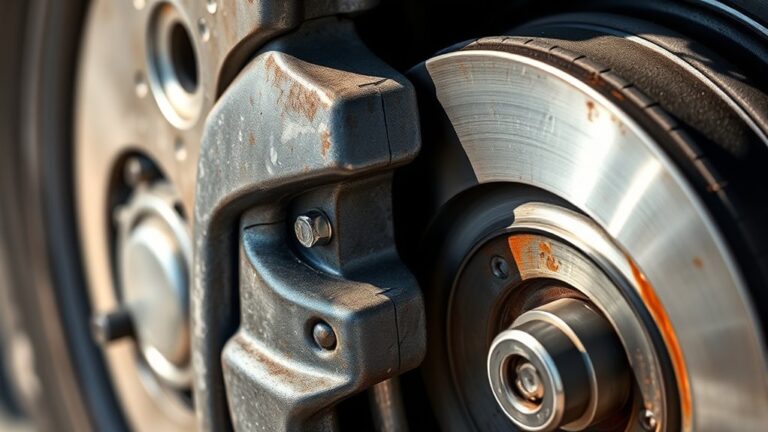
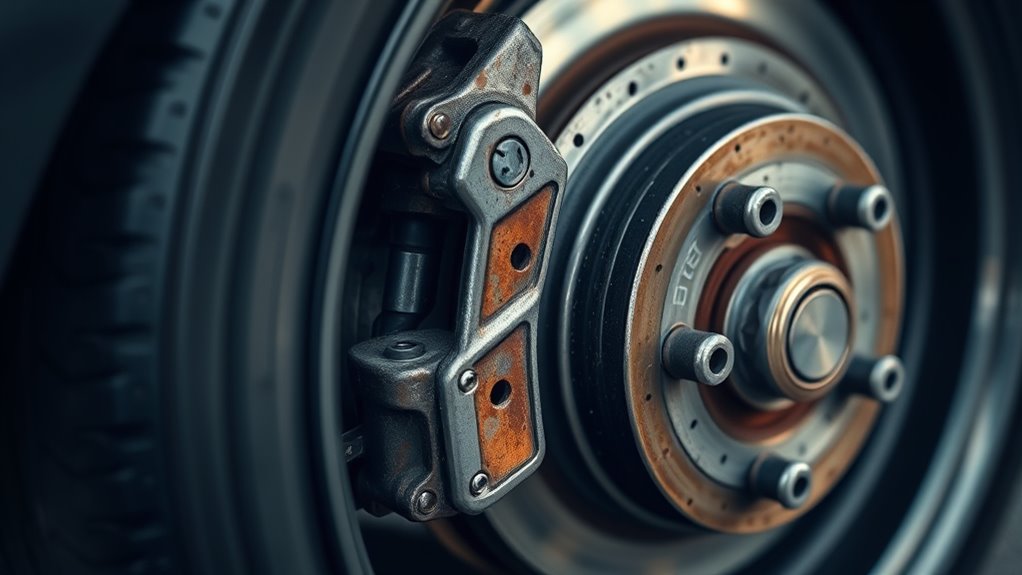
Have you ever wondered why your car suddenly starts making a grinding noise while driving? Often, this sound points to brake issues, especially if it happens when you brake or turn. Worn brake pads or damaged rotors can cause metal-on-metal contact, producing that grinding noise.
Grinding noises while driving often indicate brake problems or worn components needing immediate attention.
Another common cause is failing wheel bearings, which can make a grinding or rumbling sound as they wear out. If your car makes the noise while in motion without braking, transmission problems might be to blame, especially if components inside are worn or damaged.
Worn components in various systems like suspension parts or CV joints can also create grinding sounds. Ignoring these signs can lead to further damage or unsafe driving conditions.
If you’re hearing a persistent grinding noise, it’s important to have a mechanic inspect your vehicle promptly. They can identify and fix the root cause before things get worse.
How Can I Diagnose the Source of the Grinding Sound?
Determining the exact source of a grinding sound while driving can seem challenging, but with a systematic approach, it becomes manageable. Start by paying attention to when the noise occurs—during braking, turning, or driving straight. Conduct a visual brake inspection for worn pads or damaged rotors, as these often cause grinding. Listen carefully; if the noise gets louder when turning, it could indicate failing wheel bearings.
Use the following table to guide your diagnosis:
| Symptom | Possible Cause | Action |
|---|---|---|
| Noise during braking | Worn brake pads or rotors | Inspect the brake system and replace parts if needed |
| Noise when turning | Bad wheel bearings | Have the wheel bearings checked or replaced |
| Constant grinding while driving | Suspension or alignment issues | Get a professional inspection |
DIY Repairs for Common Grinding Noises
Fixing common grinding noises yourself can save you time and money, but it’s important to approach repairs with care. If you hear grinding when braking, check your brake pads for wear. Worn pads often cause metal-on-metal contact, which makes noise. Replacing brake pads is straightforward if you have basic tools and follow safety precautions.
For grinding sounds while driving, the problem might be with wheel bearings. If you suspect this, lift the wheel, remove the hub, and inspect the bearing for damage or looseness. Replacing wheel bearings can be tricky but manageable if you have the right tools.
Suspension parts like bushings or struts can also cause grinding if they’re worn or broken. Inspect these parts for damage and consider replacing them if needed. Drivetrain issues, such as loose or damaged CV joints, can create grinding sounds. Carefully examine these parts and replace them if necessary, but if you’re unsure, it’s best to consult a mechanic.
When Should I Call a Mechanic for Grinding Issues?
Knowing when to call a mechanic can save you from costly repairs and keep you safe. If you hear persistent grinding noises while driving, especially when braking or shifting gears, it’s time to get professional help. Worn brake parts, like brake pads, can cause grinding that gets worse over time.
Unusual sounds during transmission shifts could also point to transmission problems that need an expert’s diagnosis. Don’t ignore these signs, as they can lead to more serious damage if left unchecked.
Use this table to help decide if you need a mechanic:
| Symptom | When to Call a Mechanic |
|---|---|
| Grinding during braking | If brake wear causes the noise, replace brake pads. If the noise continues, see a mechanic. |
| Grinding when shifting gears | Suspect transmission issues; get a professional assessment. |
| Unusual noises with no clear reason | When unsure or if the noise gets worse, avoid driving until checked. |
Ignoring these signs can lead to bigger problems. When in doubt, it’s best to consult a mechanic right away.
Tips to Prevent Grinding Noises With Regular Maintenance
Regular maintenance is key to preventing grinding noises while driving, as it helps keep your vehicle’s parts in top shape. Start with routine brake checks—look at brake pads, rotors, and fluid levels regularly.
Worn brake pads can cause metal-on-metal contact, which leads to grinding sounds. Replace them before they get too thin to avoid this issue. Also, check your tires to make sure they’re properly inflated, aligned, and have enough tread.
Uneven or worn tires can affect how your vehicle brakes and may cause noises. Keep your suspension and steering parts in good condition too, since problems here can also produce grinding sounds.
Don’t ignore warning signs. Fixing small issues early can save you money and prevent unsafe driving conditions. Regular inspections are your best defense against grinding noises, helping your car run smoothly and quietly.
Frequently Asked Questions
Can Worn Brake Pads Cause Grinding Noises While Driving?
Yes, worn brake pads can cause grinding noises while you’re driving. When the brake pad wear gets really bad, the metal backing plate might touch the rotor, making a harsh grinding sound.
These noises are a sign that your brake pads need to be replaced to avoid more damage. Ignoring these sounds can lead to costly repairs, so it’s important to get your brakes checked and serviced as soon as you notice the grinding.
Is a Grinding Noise Indicative of Transmission Problems?
A grinding noise can be a sign of transmission problems, especially if it keeps happening or happens when you’re shifting gears. It’s a good idea to check your transmission maintenance because grinding often points to issues like low fluid levels or worn clutch parts.
If you hear this noise, don’t just ignore it. Fixing transmission problems early can save you from costly repairs and help your vehicle run smoothly. Regular maintenance can also help prevent grinding noises from showing up in the first place.
How Long Can I Drive With a Persistent Grinding Sound?
Ignoring a persistent grinding sound is like inviting disaster; it’s a warning sign you shouldn’t dismiss. You shouldn’t drive long with this issue, as it can speed up engine wear and cause bearing failure.
Every mile you add risk to your vehicle’s health, potentially leading to costly repairs. It’s best to get your car inspected quickly so a mechanic can find the root cause and prevent further damage.
Are Certain Road Conditions More Likely to Cause Grinding Noises?
Yes, certain road conditions like pothole impact, gravel roads, wet conditions, and uneven surfaces are more likely to cause grinding noises. Potholes and rough terrain can jolt your vehicle, leading to worn-out brake or suspension components.
Wet conditions can cause rust or reduced traction, which can increase noise. When driving over uneven surfaces or gravel, debris can get caught or damage parts, resulting in grinding sounds.
Stay cautious on these challenging roads to avoid further issues. Being mindful of these conditions can help prevent damage and keep your vehicle running smoothly.
Can Aftermarket Parts Lead to Grinding Issues?
Yes, aftermarket parts can cause grinding issues if they’re low quality or installed improperly. Poor-quality parts might not fit right, which can lead to installation problems that cause noise when driving.
To avoid this, pick aftermarket parts that are good quality and ensure they’re installed correctly. When troubleshooting a noise, think about whether aftermarket parts are involved, as they can sometimes be the cause of grinding sounds.
Conclusion
Think of your car like a heartbeat—when it starts making strange noises, it’s a sign something’s off. I once ignored a grinding sound and found my brake pads were nearly worn out, risking a costly fix.
Regular maintenance keeps your vehicle running smoothly, just like a doctor’s check-up keeps you healthy. Don’t wait for a breakdown. Listen to your car’s signals and address grinding noises early.
This way, you can keep your drive safe and quiet, avoiding bigger issues down the road. Remember, catching issues early with grinding noises can save you money and hassle in the long run.