How to Carry a Car Seat Safely and Without Strain
Carrying a car seat safely can be a real challenge, especially when you’re juggling busy schedules or handling a heavy, awkward load. Many parents and caregivers struggle with finding the right way to lift without hurting their back or feeling strained.
You’re not alone—finding a comfortable, safe method is essential for both your well-being and your child’s safety.
To carry a car seat safely and without strain, use proper lifting techniques by bending at your knees, keeping the seat close to your body, and maintaining good posture.
Opt for ergonomic handles or assistive devices if needed, and avoid twisting your torso. Always support the seat evenly and ask for help when it’s heavy or awkward.
Want a detailed guide on protecting yourself and your child? Keep exploring for helpful tips.
Key Takeaways
- Use proper lifting techniques: bend at the knees, keep your back straight, and hold the seat close to your body.
- Choose a carrying method that suits the car seat’s weight and handle design for comfort and control.
- Keep good posture and avoid twisting your torso when lifting or carrying the seat.
- Use assistive devices like padded handles, lifting straps, or carts to make it easier and reduce strain.
- Ask for help when lifting heavy or awkward car seats so you stay safe and avoid injury.
Why Properly Lifting a Car Seat Matters for Your Safety
Lifting a car seat improperly can cause serious injuries for you and your child. Poor techniques can strain your back, shoulders, and muscles, increasing the chance of getting hurt.
When you don’t lift correctly, you might drop the seat or damage the harness or frame. This can make the car seat less safe during travel.
Using the right lifting methods means keeping your back straight, bending your knees, and holding the seat close to your body. This helps reduce strain and keeps control of the seat.
Keep your back straight, bend your knees, and hold the seat close to stay safe and control during lifts.
Remember, a heavy or awkwardly balanced car seat needs careful handling. Failing to lift properly can lead to discomfort or injury that might sideline you or leave your child unprotected.
By practicing safe lifting habits, you protect your health and ensure your child’s safety. It also keeps the car seat secure and effective.
Proper lifting is a key part of overall car seat safety.
How to Choose the Best Carrying Technique for Your Car Seat
How do you determine the best way to carry your car seat? First, think about your car seat style, since different designs might need different handling.
If your seat has ergonomic handles, use those for a better grip and less strain. Second, look at how the weight is distributed—some seats are heavier on one side, so adjust your grip accordingly.
Next, consider your own strength and comfort. Pick a technique that helps you avoid straining your back and shoulders. For lightweight, compact models, gripping the ergonomic handle with both hands gives you stability.
For larger or heavier seats, support the base or use a two-hand carry to balance the weight. Always keep your back straight and avoid twisting while lifting.
Matching your technique to the car seat style and using ergonomic handles can make carrying safer and easier. Remember, choosing the right method helps protect both you and your passenger.
Step-by-Step: Safely Lifting and Supporting a Car Seat
When you’re lifting and supporting a car seat, it’s really important to use the right techniques to keep your back safe. Think about your body position—try to stay aligned and avoid twisting or bending awkwardly.
Using supportive gear like a harness or lifting straps can make the whole process a lot easier and help prevent injuries. Remember, always bend at your knees and use your leg muscles to lift, not your back. That way, you’re supporting the seat safely and protecting yourself at the same time.
Proper Lifting Technique
Grasp the car seat firmly with both hands, making sure you have a secure hold before lifting. This is key for safety and helps prevent strain. To do it right:
- Keep your back straight and bend at your hips and knees, not your waist.
- Engage your core muscles to support your spine during the lift.
- Lift with your legs, not your back, keeping the seat close for better control.
Using these ergonomic tips, you lower your risk of injury and make lifting easier. Always lift smoothly and avoid twisting your torso while carrying the seat. Remember, taking a careful approach keeps both you and the child safe, especially with heavier or awkward seats.
Use of Supportive Equipment
Using supportive equipment can really make lifting and supporting a car seat safer and easier. Supportive harnesses give extra stability, helping you hold the seat securely and reducing strain on your arms and back.
Ergonomic carriers are designed to spread out the weight evenly, making it simpler to carry heavy or awkwardly shaped seats. These tools help prevent injuries and fatigue, especially when you need to move the seat often.
Always pick equipment that fits well and is rated for your car seat’s weight. Using the right gear not only protects your body but also keeps the seat stable during transport, giving you peace of mind and making the process safer and more manageable.
Maintaining Body Alignment
Maintaining proper body alignment is key to lifting and supporting a car seat safely. Good body mechanics and ergonomic tips help prevent strain and injury.
To do this effectively, keep your back straight and engage your core muscles before lifting. Bend at your hips and knees, not your waist, to maintain a neutral spine.
Hold the car seat close to your body, distributing the weight evenly. This reduces strain on your arms and back and makes lifting safer.
Assistive Devices to Make Car Seat Carrying Easier
Car seat carriers and handles are popular assistive devices that can make transporting a car seat much easier.
Ergonomic carriers are designed to reduce strain by offering better grip and support, so lifting and carrying feels less tiring. They often have padded handles and adjustable straps to fit your height and comfort.
Car seat carts are another great option, especially if you need to cover longer distances or make frequent trips. Instead of carrying the seat, you can roll it, which minimizes effort and lowers the risk of injury.
Both ergonomic carriers and carts help you stay in control and keep the seat stable while on the move. Investing in these devices ensures you can transport your car seat safely, comfortably, and with less strain on your body.
Tips for Maintaining Good Posture While Moving a Car Seat
To prevent strain and injury while moving a car seat, it’s important to pay attention to your posture. Proper posture helps reduce muscle fatigue and lowers injury risk. Start by doing simple posture exercises to keep your muscles active and aligned.
Maintaining proper posture reduces fatigue and injury risk when moving a car seat.
Next, use ergonomic strategies like keeping the car seat close to your body to avoid reaching. Keep a slight bend in your knees and your back straight, avoiding slouching.
Finally, stay aware of your overall positioning. Distribute the weight evenly between both hands and avoid twisting your torso. Regularly adjust your grip and stance to stay comfortable.
Practicing these tips will help you maintain good posture, prevent strain, and make the task easier. Remember, being mindful of your body’s alignment and using ergonomic strategies ensures you carry a car seat safely and efficiently.
How to Secure Your Car Seat During Transport to Prevent Accidents
To keep your child safe during transport, it’s really important to use the seat belt correctly and make sure the car seat is secured tightly. It might seem simple, but proper installation makes a big difference in keeping your little one safe.
Take the time to double-check that the seat won’t move or tip over — this is key to preventing accidents. When you focus on these details, you’ll feel more confident that your child is protected every time you hit the road.
Proper Seat Belt Usage
Making sure your car seat is properly secured with the seat belt is crucial for your child’s safety during every trip. To do this, follow these simple steps:
First, read the installation guidelines carefully so you understand the correct placement and tension. This helps ensure everything is set up safely.
Next, place the seat belt through the designated path on your car seat, making sure it lies flat without twists. This prevents any issues with the belt’s effectiveness.
Finally, lock the seat belt securely, applying firm pressure to eliminate slack and prevent movement. This keeps the seat firmly in place for a safe ride.
Secure Installation Techniques
Securing your car seat properly during transport is key to preventing accidents and keeping your child safe. Always follow the manufacturer’s instructions carefully when installing it.
Use the LATCH system or seat belt to secure the seat tightly, and check for minimal movement. Avoid common mistakes like loosening straps or not reclined correctly, which can compromise safety.
Test the seat’s stability by giving it a firm shake; it shouldn’t move more than an inch side to side or front to back. Double-check that all anchors and straps are tight and properly positioned.
Proper installation reduces the risk of the seat shifting during a crash or sudden stop, helping ensure your child’s safety throughout the ride.
When to Ask for Help With Heavy or Bulky Car Seats
Handling heavy or bulky car seats can be tricky, especially if you’re alone or if the seat is really large. Knowing when to ask for help keeps you safe and helps avoid strain.
If the car seat feels too heavy or awkward to lift comfortably, it’s a sign to get some assistance. Trying to do it alone could risk injury.
If you’re unsure about how to handle the seat securely or worry about damaging it, don’s hesitate to ask for help. Proper installation is key to safety.
Feeling tired or strained while lifting? That’s a clear signal it’s time to seek help. Pushing through can lead to accidents or discomfort.
In these situations, asking friends, family, or store staff for help is the safest move. They can make the task easier and safer for you.
Best Practices for Carrying a Car Seat in Different Vehicles
When you’re carrying a car seat into different vehicles, it’s important to think about the size and shape of each one. Every car is a little different, so your approach should change accordingly. Using proper lifting techniques not only helps prevent injuries but also makes the whole process a lot easier.
Let’s take a look at how you can adapt your method depending on the vehicle you’re working with. Whether you’re loading the seat into a compact car or a larger SUV, a little planning can make a big difference in keeping you and your little one safe and sound.
Adjusting for Vehicle Type
Different vehicle types require different methods for carrying and installing a car seat safely. Knowing your vehicle compatibility helps you pick the right car seat and adjust your approach.
To ensure a secure fit, follow these steps:
- Check your vehicle’s owner manual for instructions on car seat compatibility and installation options.
- Choose a car seat suited for your vehicle’s size and seat belt setup, like rear-facing, convertible, or booster seats.
- Adjust the seat position and harness tightness to fit your vehicle’s interior and your child’s size, making sure it’s snug and safe.
Tailoring your approach based on your vehicle type helps protect your child and makes carrying the car seat easier and safer.
Using Proper Lifting Techniques
Carrying a car seat safely starts with using proper lifting techniques to prevent injury and keep the seat secure. Focus on lifting ergonomics by keeping your back straight and bending at your hips and knees, not your waist. This helps reduce strain and manage the seat’s weight better.
Before lifting, test the seat’s weight and plan your route to avoid obstacles. Hold the seat close to your body to stay balanced and in control. When placing the seat in different vehicles, adjust your grip as needed, whether carrying it horizontally or vertically.
Using correct lifting techniques minimizes strain on your muscles and joints, ensuring safe handling and lowering injury risk. Proper ergonomics is key to carrying a car seat safely in any vehicle.
Common Mistakes to Avoid When Lifting a Car Seat
Lifting a car seat improperly can cause injuries or damage, so it’s important to avoid common mistakes. One mistake is not using proper lifting techniques, which can strain your back. Another is not paying attention to weight distribution, making the lift unbalanced and harder to control. Lastly, trying to lift a heavy seat alone or without good posture increases the risk of injury.
Avoid injury by using proper lifting techniques, balancing weight, and asking for help when needed.
To avoid these issues, remember a few key points:
- Use correct lifting techniques—bend your knees, keep your back straight, and lift with your legs.
- Balance the weight by grasping the seat evenly to ensure proper weight distribution.
- Ask for help if the seat feels too heavy or awkward to lift on your own. This helps prevent strain and accidents.
Transferring Your Car Seat Safely From Car to Home or Vehicle
Transferring your car seat from the vehicle to your home or another car needs careful attention to safety. Always check that all harnesses and straps are secure before lifting.
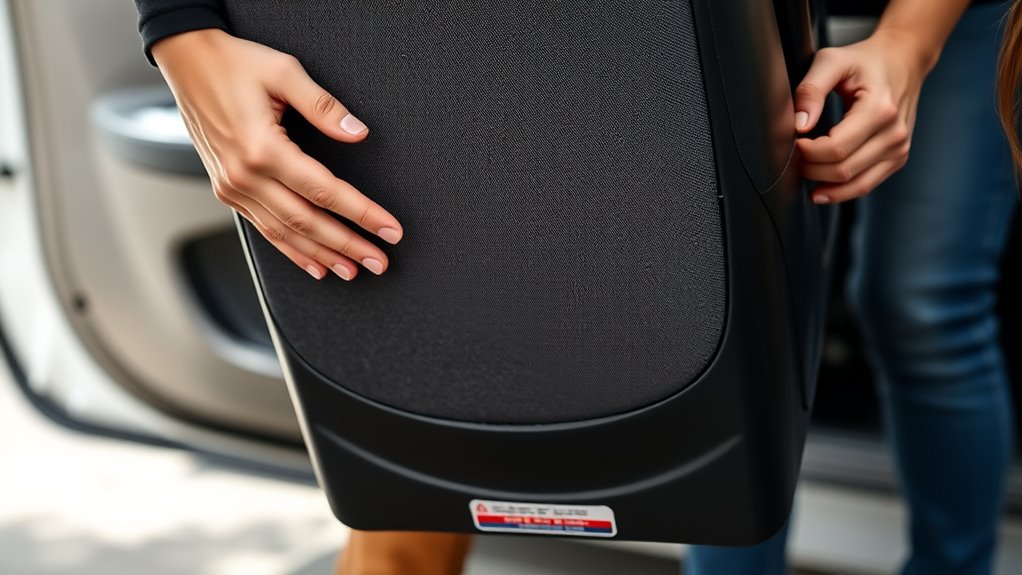
Use proper lifting techniques to avoid strain. Bend at your hips and knees, not your waist, and keep the seat close to your body. When moving the seat, hold it firmly with both hands on sturdy handles or edges.
If the seat is heavy or awkward, don’t hesitate to ask for help to prevent injury. Make sure the path is clear to avoid tripping hazards, and lift smoothly without twisting your torso.
A well-balanced, controlled lift reduces the risk of strain or damaging the seat. Always handle the car seat carefully, keeping it in an upright position to prevent damage.
Using proper technique makes transferring safer and easier, protecting your back and the integrity of the car seat.
Frequently Asked Questions
Can I Carry a Car Seat With One Hand Safely?
Yes, you can carry a car seat with one hand safely if you use proper carrying techniques and follow safety tips.
Keep the seat close to your body, gripping the handle firmly, and make sure your posture stays straight to avoid strain.
Use your core muscles to support the weight, and avoid twisting your back.
Always check the seat’s weight and balance before lifting to prevent accidents or injury.
What Are Signs of Strain or Injury While Lifting a Car Seat?
Signs of strain or injury while lifting a car seat include sharp pain, persistent soreness, or numbness in your back, shoulders, or arms. You might also feel tingling or weakness.
To prevent injury, use proper lifting techniques like bending your knees and keeping the seat close to your body.
Listen to your body, and if you experience discomfort, stop immediately to avoid strain. Injury prevention depends on safe lifting practices.
How Often Should I Rest When Carrying Heavy Car Seats?
You should rest after every few minutes of proper lifting and safe positioning, especially when carrying heavy car seats. Taking short breaks helps prevent fatigue, reduces strain, and lowers the chance of injury.
Listen to your body. If you start feeling tired or strained, take a pause and stretch a bit. Regular rests help you stay strong and in control, making lifting safer and easier.
This way, you can carry car seats comfortably without risking injury.
Are There Specific Weight Limits for Safe Car Seat Lifting?
Yes, there are specific weight recommendations for lifting car seats safely. Always check the manufacturer’s guidelines to make sure you’re within the recommended weight limits.
Use proper lifting techniques, like bending your knees and keeping your back straight, to avoid strain. If the car seat feels too heavy or awkward, ask for help or use a cart.
Staying within weight limits and using correct techniques helps prevent injury and makes lifting safer.
How Do I Prevent Back Pain After Carrying a Car Seat?
To prevent back pain after carrying a car seat, focus on ergonomic techniques and proper lifting posture. Keep your back straight, bend at your hips and knees, and hold the seat close to your body.
Use your legs to lift, not your back, and avoid twisting while carrying. Take breaks if needed, and be aware of your limits to protect your back from strain.
Conclusion
Handling a car seat with care guarantees both your safety and your little one’s comfort. Using the right techniques and tools can make the process much easier and less stressful.
Don’t hesitate to ask for help if things feel heavy or awkward. It’s perfectly okay to get a little assistance.
With patience and proper technique, you’ll keep the journey safe and worry-free. Remember, a gentle touch is key when carrying a car seat safely.