Uncover the Best Tires for Ford Edge Today
Finding the perfect tires for your Ford Edge can feel overwhelming. You’re not alone—many drivers struggle to choose the right set that balances safety, performance, and budget. With so many options out there, making the right call can seem daunting.
To find the best tires for your Ford Edge, focus on reputable brands like Michelin, Bridgestone, and Goodyear, choosing the right type for your driving needs—whether all-season, summer, or winter tires.
Pay attention to tread patterns for safety and performance, and always select the correct size and ratings as per your vehicle’s specifications.
Budget options offer basic features, but premium tires provide better durability.
Keep exploring to uncover detailed tips for making the perfect choice.
Key Takeaways
- Choose trusted brands like Michelin, Bridgestone, Continental, or Goodyear for reliability and safety.
- Pick tire types that match your climate, such as all-season, summer, or winter tires.
- Make sure the tire size fits your vehicle’s specifications for the best performance.
- Replace tires if the tread is below 2/32 inch or if you notice visible damage.
- Regularly check and maintain tire pressure, rotate your tires, and look for uneven wear to keep them in good shape and safe.
Introduction: How to Find the Perfect Tires for Your Ford Edge
Are you wondering how to choose the best tires for your Ford Edge? Start by exploring reputable tire brands known for quality and durability. Brands like Michelin, Bridgestone, and Continental offer options that suit different driving needs.
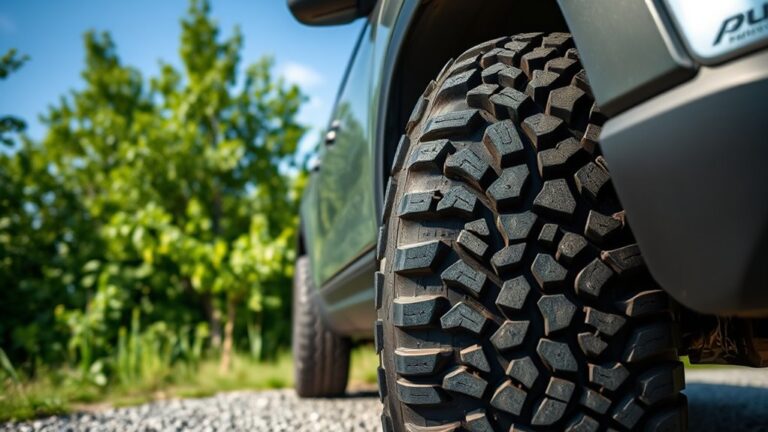
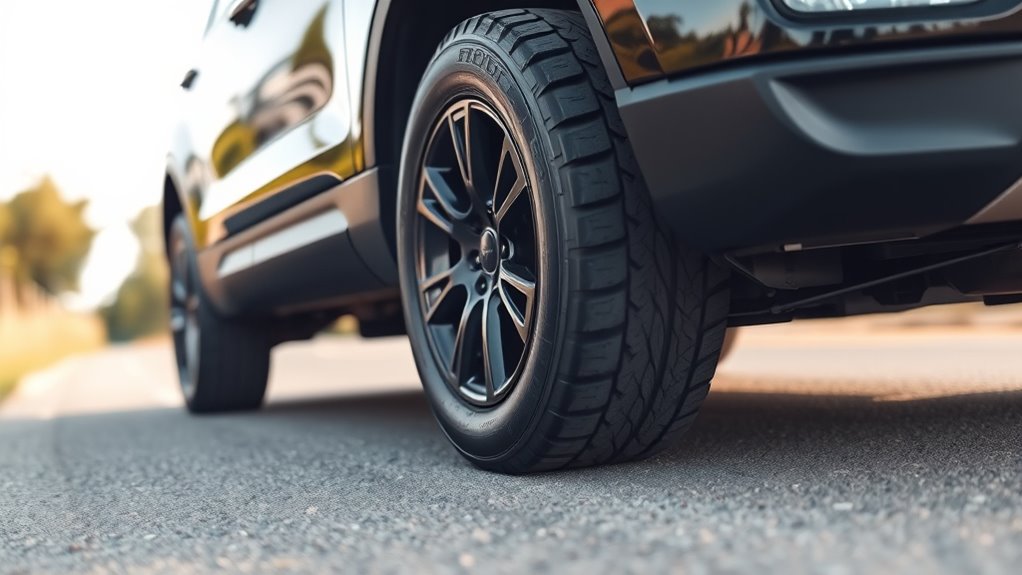
Next, consider the tread design, which plays a crucial role in grip, handling, and safety. Tires with symmetric tread patterns are quiet and efficient, while asymmetric designs improve cornering and wet traction.
Think about your typical driving conditions. Do you mostly drive on highways or city streets? If so, look for tires with a tread pattern optimized for comfort and fuel efficiency.
Also, check the tire sidewalls for specifications and ratings. Choosing the right combination of tire brands and tread design ensures your Ford Edge performs smoothly, safely, and efficiently.
Understanding Tire Types: All-Season, Summer, and Winter
Understanding the different tire types is key to picking the right set for your Ford Edge. All-season tires are pretty versatile—they’re designed to handle a variety of weather conditions, so you can rely on them year-round without much hassle. If you mostly drive in warm weather, summer tires are your best bet—they’re built to give you excellent grip and handling when it’s hot outside. On the flip side, winter tires are specially made to perform in cold, snowy, and icy conditions, giving you better traction and safety when the temperature drops.
Getting to know these features and benefits can really help you make the most of your vehicle’s performance throughout the year. Whether you’re cruising through summer or navigating winter storms, choosing the right tires makes all the difference in how your Ford Edge handles the road.
All-Season Tire Features
All-season tires strike a balance between summer and winter tires, making them a versatile choice for drivers who face varied weather conditions throughout the year. Their tire tread is designed for ideal traction performance across different surfaces, ensuring reliable grip regardless of rain or mild snow.
They also feature noise reduction technology, providing a quieter, more comfortable ride. Furthermore, all-season tires improve fuel efficiency by reducing rolling resistance, helping you save on fuel costs.
They offer weather adaptability, performing well in both warm and cool temperatures. Their wear resistance extends tire life, while handling stability remains consistent in diverse driving conditions.
Summer Tire Benefits
Summer tires are designed to deliver top performance in warm and dry conditions. They’re a great choice if you mainly drive during the warmer months.
They improve your tire’s grip on the road, which boosts handling and safety on both dry and wet surfaces. Their tread is optimized for better water dispersion, helping with wet traction and reducing hydroplaning risk.
Summer tires also resist heat well, so they can keep performing without overheating during long drives. Plus, they tend to be quieter, making for a more comfortable ride.
You’ll notice better fuel efficiency too, thanks to lower rolling resistance. Overall, summer tires offer a safer, more comfortable driving experience in warm weather, perfect for drivers who want peak performance when the conditions are right.
Winter Tire Performance
Winter tires are specially designed to perform in cold, snowy, and icy conditions, giving you better traction and control when the weather gets tough. Their unique rubber compounds stay flexible in low temperatures, improving grip and helping you stay safe on slippery roads.
With superior snow handling, these tires make it easier to navigate through deep snow and icy patches confidently. You’ll experience fewer slips, better grip, and more stability, even in the harshest winter conditions.
Don’t compromise your safety—pick winter tires to conquer winter’s challenges. Feel confident every time you hit the road, no matter how bad the weather gets.
Enjoy peace of mind with improved snow handling and tire traction. Keep your Ford Edge steady and secure through icy, snowy terrains.
Drive with confidence, knowing you’re prepared for winter’s toughest days.
Choosing the Right Tire Size and Specifications
Choosing the right tire size and specifications is essential to guarantee your Ford Edge performs safely and efficiently. You need to evaluate tire compatibility factors, such as matching the manufacturer’s recommended size and load capacity to secure proper handling and safety.
Incorrect tire sizes can affect your vehicle’s speedometer accuracy, fuel efficiency, and overall performance. Seasonal driving conditions also influence your choice; for example, larger tires with deeper treads are better for winter, while summer tires prioritize grip and responsiveness.
Always verify your owner’s manual or the tire placard inside your vehicle for the correct size and specifications. Picking tires with the right dimensions and features secures ideal contact with the road, improves safety, and boosts driving comfort.
What Do Tire Ratings and Labels Mean?
Understanding tire ratings and labels helps you make informed decisions when selecting replacements for your Ford Edge. These ratings, like tire durability and tread wear indicators, show you how long your tires are likely to last and how they perform in different conditions.
Tire durability ratings give you an idea of the lifespan of your tires, so you can pick ones that will keep you safe and confident on the road. Tread wear indicators are small bars within the tread grooves that show when your tires are nearing the end of their life, prompting you to replace them.
Recognizing these labels means you’re less likely to be caught off guard by sudden wear or poor performance. Feel confident knowing your tires are rated for safety and longevity.
This can help you avoid unexpected blowouts or skidding, especially in bad weather. Choosing durable tires with high ratings can also save you money in the long run.
Drive with peace of mind, knowing your tires are optimized for your Ford Edge.
Key Factors to Consider When Picking Ford Edge Tires
When selecting tires for your Ford Edge, several key factors can influence your choice and guarantee peak performance. First, consider the tire warranty, as it reflects the manufacturer’s confidence and can save you money over time. A longer warranty often indicates higher quality and durability.
Tread wear is another critical factor. Tires with better tread wear ratings last longer and provide consistent traction, especially in diverse weather conditions. You should also evaluate your driving habits and typical road conditions, whether you need all-season tires or specialized options like summer or winter tires.
Pay attention to tire size and specifications recommended by Ford to guarantee proper fit and handling. Moreover, consider the tire’s traction and speed ratings to match your driving style. Balancing these factors helps you select tires that offer ideal safety, longevity, and performance for your Ford Edge.
Best Tire Brands for Your Ford Edge SUV
Your Ford Edge SUV performs best when equipped with tires from reputable brands known for quality and reliability. Choosing trusted brands guarantees you get durable tires that can handle all your adventures.
Leading names like Michelin, Bridgestone, Continental, and Goodyear stand out for their commitment to safety and performance. These brands often offer excellent tire warranty options, giving you peace of mind on the road.
Leading brands like Michelin, Bridgestone, Continental, and Goodyear prioritize safety, performance, and reliable warranty coverage for peace of mind.
When selecting tires, also consider installation tips like proper balancing and alignment to maximize lifespan and safety. Investing in the right brand means fewer worries about blowouts or uneven wear.
Plus, reputable brands tend to provide better customer support and warranty coverage, so you’re protected long-term. Remember, your choice impacts safety, comfort, and cost savings, making it worth choosing wisely.
Look for brands that match your driving needs and offer solid warranty options to get the most out of your Ford Edge.
Top Tire Tread Patterns for Safety and Performance
There are several tire tread patterns that excel in balancing safety and performance, each designed to maximize traction, handling, and durability in different driving conditions. The most common types include symmetric, asymmetric, and directional patterns.
Symmetric treads provide even tread wear and a smooth ride, making them reliable for everyday driving. Asymmetric treads combine different patterns on the inside and outside, offering better cornering grip and wet traction.
Directional treads feature V-shaped patterns that excel in channeling water away and reducing the risk of hydroplaning. When choosing a tread pattern, think about how it affects tread wear—the rate at which your tires degrade.
Proper tread design not only boosts safety but also extends your tire’s lifespan by promoting even wear. Picking the right tire tread pattern depends on your driving style and typical conditions, helping your Ford Edge stay safe and perform at its best.
How Much Do New Tires for Your Ford Edge Cost? Budget vs. Premium Options
Looking for new tires for your Ford Edge? If you’re on a budget, you can find some basic tires starting around $80 to $150 each. These will get you from point A to point B without breaking the bank, but they might not offer the same level of performance or longevity as pricier options.
On the other hand, premium tires can cost anywhere from $200 to $400 or more per tire. The higher price often comes from better materials, advanced features, and well-known brands, giving you improved handling, durability, and safety. Knowing the difference in costs can help you decide what’s best for your driving needs and budget.
Budget Tire Price Range
New tires for a Ford Edge typically fall within a price range that varies considerably depending on quality and brand. If you’re looking for budget tire options, you’ll find affordable choices that still deliver solid value tire performance.
These tires usually cost between $80 and $150 per tire, making them accessible without sacrificing basic safety or durability. While they might lack some premium features, many budget tires offer reliable traction and decent wear life.
Choosing budget options can give you peace of mind knowing you’re saving money while still maintaining your vehicle’s performance.
- Feel the thrill of saving without compromising safety
- Enjoy dependable traction on every drive
- Achieve peace of mind with durable, budget-friendly choices
- Maximize your vehicle’s potential without overspending
Premium Tire Cost Factors
Premium tires for your Ford Edge typically cost between $150 and $300 per tire, reflecting their higher quality, advanced features, and brand reputation. The cost is influenced by factors like tire durability and tread life, which tend to be better in premium options.
These tires often feature advanced rubber compounds and construction techniques that improve longevity, meaning you get more miles out of each tire. Plus, premium tires usually resist wear and tear better, keeping performance consistent over time.
While the initial cost is higher, their extended tread life and durability can save you money in the long run by reducing how often you need replacements. Ultimately, paying more upfront can give you a safer, more reliable driving experience, especially if you value longevity and steady performance.
When to Replace Your Ford Edge Tires and Why It Matters
Knowing when to replace your Ford Edge tires is key to keeping your drive safe and smooth. Tires naturally wear out over time, and ignoring signs of wear can be risky.
You should consider replacing your tires if you notice the tread depth is below 2/32 inch, which reduces your grip on the road. Also, look out for cracks, bulges, or cuts on the sidewalls—they’re warning signs.
Replace tires if tread is below 2/32 inch or if cracks, bulges, and cuts appear on sidewalls. Stay safe.
Uneven tire wear could mean your alignment is off. If you feel vibrations or hear noises while driving, it could be internal damage. Driving on worn tires can be dangerous, especially in bad weather.
It can also hurt your fuel efficiency and how your vehicle handles. Don’t wait for a blowout or loss of control to replace your tires. Doing it on time keeps you safe and ensures your vehicle performs well.
Staying alert to these signs helps you avoid costly repairs and keeps you safe on every trip. Remember, changing your tires proactively isn’t just about saving money; it’s about protecting yourself, your passengers, and everyone around you.
Tips for Maintaining and Extending the Life of Your Tires
Keeping your tires in good shape is easier than you might think. Just make sure to regularly check their pressure and keep it at the recommended level—that way, they wear evenly and perform better.
Rotating your tires according to your vehicle’s schedule is another simple step that makes a big difference. It helps ensure even wear across all your tires, so none of them wear out prematurely.
And don’t forget about wheel alignment! When your wheels are properly aligned, it prevents uneven tread wear and can really extend the life of your tires.
Staying on top of these easy tips not only saves you money but also makes your drives smoother and safer.
Regular Tire Pressure Checks
Regularly checking your tire pressure is one of the simplest yet most effective ways to extend the life of your tires and guarantee safe driving. Proper tire pressure helps your Ford Edge perform at its best, reduces the risk of blowouts, and saves you money on fuel.
Make safety checks a routine so you can catch issues early and avoid costly repairs later. Keeping your tires properly inflated gives you peace of mind on every trip and helps prevent accidents caused by under- or over-inflation.
Feel confident knowing your vehicle is safe and reliable.
Avoid unexpected breakdowns on busy roads.
Maximize fuel efficiency and save money.
Drive with assurance, knowing your tires are in excellent condition.
Proper Tire Rotation Schedule
Maintaining proper tire rotation is a key step in extending the lifespan of your tires and ensuring your Ford Edge performs safely and efficiently. Follow your vehicle’s manufacturer recommendations, usually every 5,000 to 8,000 miles.
Regularly check tire wear indicators to spot uneven wear early on. This can be a sign that it’s time for a rotation or other maintenance. During rotations, inspect your tires for cuts, punctures, or embedded debris.
Proper rotation helps distribute tire wear evenly, which improves traction and fuel efficiency. Keep a record of each rotation so you can monitor your tire health over time.
Sticking to your schedule prevents premature tire replacement and helps you get the most out of your tires. Consistency is key to maintaining safe and efficient driving.
Maintain Correct Wheel Alignment
Proper wheel alignment is key to getting the most out of your tires and making sure your Ford Edge handles safely. When your wheels are aligned correctly, you’ll notice less uneven tire wear, which saves you money and helps avoid early tire replacements.
It’s a good idea to use alignment tools regularly or have a professional check your alignment, especially after hitting a pothole or curb. Misalignment can cause uneven tire wear, poor handling, and higher fuel costs.
Stay alert for signs like pulling or vibrations, which could mean your alignment is off. Maintaining proper alignment not only makes your tires last longer but also improves safety and driving comfort.
Keep your tires in great shape and enjoy a smoother, safer ride every time you hit the road.
Frequently Asked Questions
Can I Mix Different Tire Brands on My Ford Edge?
You can technically mix different tire brands on your Ford Edge, but it’s not recommended. Mixing brands can affect how your tires perform because tread patterns and rubber compounds vary.
This can lead to uneven wear or even compromised handling. For the best safety and ride quality, it’s better to stick to the same brand and model of tires, especially on the same axle.
Keeping the tires consistent helps ensure your vehicle maintains proper traction and stability.
How Often Should I Rotate My Ford Edge Tires?
You should rotate your Ford Edge tires every 5,000 to 7,500 miles, depending on your driving habits. Regular tire rotation helps ensure even tire wear, which can extend the life of your tires and improve handling.
Rotating your tires regularly also benefits your vehicle’s traction, fuel efficiency, and overall safety. Be sure to check your vehicle’s manual for specific recommendations.
It’s best to have a professional handle the rotation to get the best results. Following these guidelines can keep your tires in good shape and your driving smooth.
Do Tire Warranties Cover Damages From Potholes?
Back in the day, warranties often didn’t cover pothole impact damage, and unfortunately, that’s still true today. Most tire warranties have limitations, and damage from potholes usually falls outside coverage because it’s considered road hazard damage.
To protect yourself, inspect tires after hitting a pothole and consider purchasing additional coverage if your warranty excludes such damage. Always read the fine print to understand warranty limitations concerning pothole impact.
What’s the Best Tire Pressure for Optimal Performance?
The best tire pressure for ideal performance in your Ford Edge is usually listed in your owner’s manual or on the driver’s side door frame. Checking this ensures you’re using the right numbers for your vehicle.
Keeping your tires at the correct pressure helps you enjoy a smooth ride, better fuel efficiency, and even tire wear. It’s simple but makes a big difference.
If your tires are overinflated or underinflated, your handling, safety, and overall performance can suffer. That’s why regular checks are so important.
Make a habit of checking and adjusting your tire pressure often to keep your vehicle running at its best.
Are Aftermarket Tires Safer Than OEM Tires?
Aftermarket tires aren’t necessarily safer than OEM tires; safety depends on quality, proper installation, and tire performance. High-quality aftermarket options can offer better tread longevity and improved tire performance, but it’s crucial to choose tires that meet your vehicle’s specifications.
Always check reviews and verify the tires are rated for your Ford Edge. Proper maintenance and correct pressure are key to maximizing safety and longevity, regardless of where the tires come from.
Conclusion
Choosing the right tires for your Ford Edge balances safety and performance, much like balancing comfort and style in your daily drive.
While premium tires offer durability and peace of mind, budget options can keep you on the road without breaking the bank—at least for now.
Remember, your tires are more than just rubber. They’re your connection to the road.
Invest wisely today to enjoy smoother, safer journeys tomorrow with the best tires for Ford Edge.