What Causes Torque Converter Failure: Common Causes and Preventative Measures
Many drivers worry about unexpected car troubles that can leave them stranded or facing costly repairs. Among these issues, torque converter failure is a common headache that many people struggle with.
If you’re tired of sudden breakdowns and want to keep your vehicle running smoothly, understanding what causes these failures is key.
Torque converter failure is often caused by overheating, contaminated transmission fluid, or excessive strain from heavy loads and aggressive driving. These issues lead to fluid breakdown, increased wear, and internal damage.
Regular maintenance, like checking and changing fluid, helps prevent this.
Avoid towing beyond capacity and drive gently to reduce stress.
To find out more about how to protect your converter and extend its lifespan, keep exploring these essential tips.
Key Takeaways
Excessive heat from towing or aggressive driving can cause the transmission fluid to break down, which can damage the torque converter.
Contaminated or low transmission fluid reduces lubrication and speeds up internal component wear, leading to potential failure.
Skipping regular maintenance and fluid changes can cause overheating and debris buildup inside the transmission, increasing the risk of damage.
Overloading or exceeding your towing capacity puts extra strain on the system and can cause it to overheat, leading to failure.
Ignoring early signs like shuddering, slipping, or strange noises can result in severe transmission problems down the line.
What Is a Torque Converter and How Does It Work?
A torque converter is a key part of automatic transmissions that helps transfer power smoothly from the engine to the wheels. It works using hydraulic principles to do this.
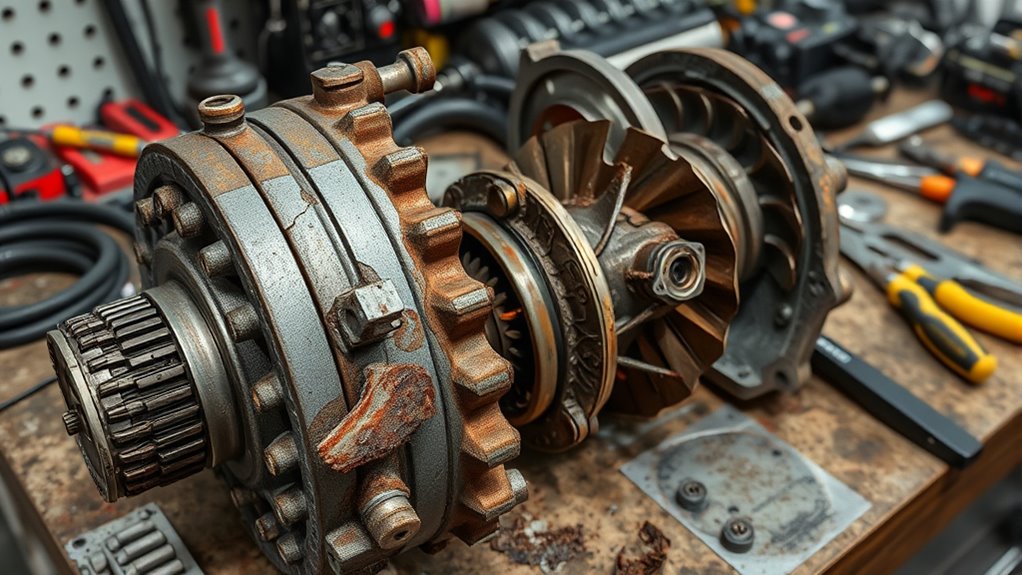
Inside, a turbine connects to the engine, while a stator and impeller are linked to the transmission. When the engine runs, the impeller pumps fluid, creating hydraulic pressure that spins the turbine.
This hydraulic fluid acts as both a lubricant and a power transfer medium, allowing the engine’s rotational force to be transmitted without a direct mechanical link. The stator redirects fluid flow to improve efficiency.
This setup helps the vehicle accelerate smoothly and decelerate seamlessly. It also amplifies torque, especially at low speeds, giving you a comfortable driving experience.
In essence, the torque converter acts like a hydraulic coupling, letting your vehicle accelerate smoothly without needing to engage a manual clutch.
Signs Your Torque Converter Might Be Failing
When your vehicle starts acting up, it might be a sign that your torque converter isn’t working right. You could notice things like shuddering, slipping, or a delay when shifting gears.
These symptoms often point to transmission problems caused by a failing torque converter. Using diagnostic tools can help confirm the issue by spotting abnormal transmission behavior or fluid problems.
You might also see higher engine RPMs without actually going faster or find that your car stalls when idling. Strange noises like whining or knocking can also be signs of trouble with the torque converter.
Pay attention to these warning signs because ignoring them could lead to more serious transmission damage. Regular maintenance and early diagnosis can save you from costly repairs, so if you notice any of these issues, have a professional check your vehicle’s torque converter as soon as possible.
Common Causes of Torque Converter Failure
Excessive heat is one of the main culprits when it comes to damaging your torque converter. If your transmission gets too hot or is constantly overworked, it can really take a toll on the converter’s components.
Another common issue is fluid contamination. When dirt or debris get into your transmission fluid, it can cause stress and wear down the parts inside the converter. Knowing about these risks can help you take better care of your transmission and keep it running smoothly.
Excessive Heat Damage
Excessive heat buildup within the torque converter is a common cause of failure, especially from prolonged heavy towing or aggressive driving. When the converter is under high stress, it generates a lot of heat that can damage internal parts.
To prevent this, focus on effective heat dissipation and thermal management solutions. Installing transmission coolers, ensuring proper airflow, and avoiding sustained high RPMs can make a big difference.
Regular maintenance helps keep your cooling systems working efficiently, reducing the risk of overheating. If heat isn’t managed properly, it can cause fluid breakdown, warping of parts, and eventually lead to failure.
Fluid Contamination Risks
Contamination of transmission fluid is a big factor that can cause torque converter failure. Dirt, debris, or metal shavings can get into the system if seals or filters fail.
Contamination can lead to reduced lubrication, which increases wear and causes overheating. Dirty fluid also makes it harder for the converter to transfer power smoothly, leading to slipping or sluggish performance.
Over time, contaminated fluid breaks down and loses its protective properties, speeding up damage. Regularly checking and changing your transmission fluid helps prevent these issues.
Making sure to fix leaks quickly and keep the fluid clean is key. Staying aware of potential contamination sources and understanding their effects can help extend your torque converter’s lifespan.
How Overheating Leads to Torque Converter Damage
When your transmission gets too hot, the fluid inside can start to break down. This means it won’t do a good job of lubricating and cooling all the parts, which is a big problem. If the fluid can’t keep things cool, the heat can cause serious damage to the transmission components over time.
That excess heat doesn’t just hurt the fluid—it can also lead to wear and tear on parts like the torque converter. If you catch the signs of overheating early, you can avoid costly repairs down the line. It’s always a good idea to keep an eye on your transmission temperature and address any issues before they become major problems.
Heat Causes Fluid Breakdown
Overheating causes the transmission fluid to break down, which can severely damage your torque converter. When the fluid temperature rises, its viscosity drops, reducing its ability to lubricate and transfer power effectively.
This thinning fluid can’t maintain proper lubrication, leading to increased wear and potential failure. Excessive heat also causes thermal expansion of the fluid, creating inconsistent flow and pressure issues within the converter.
As the fluid’s properties deteriorate, it loses its capacity to protect internal components, speeding up wear and increasing the risk of damage. Continuous overheating and fluid breakdown can compromise the entire transmission system.
That’s why it’s so important to keep temperatures in check. Regular maintenance and cooling system checks help prevent this breakdown, protecting your torque converter from heat-related failures.
Overheated Transmission Components
Excessive heat in your transmission can cause internal components to expand beyond their ideal ranges, leading to misalignment and increased stress on parts like the torque converter. Overheating causes the transmission fluid to break down faster, reducing lubrication and cooling efficiency.
This, in turn, accelerates wear on critical parts and can cause transmission failure. To prevent overheating:
- Regularly check and maintain fluid levels.
- Avoid towing beyond your vehicle’s capacity.
- Address cooling system issues promptly.
When the transmission runs too hot, it stresses the torque converter and increases the risk of damage. Overheated transmission components are a common cause of transmission failure, so keeping an eye on temperature levels is key to preserving your transmission’s health.
Signs of Excessive Temperature
Recognizing the signs of overheating is important because it helps you catch issues early before they cause serious damage to your torque converter.
Overheating often shows up through symptoms like slipping, delayed engagement, or a burning smell. You might also notice higher engine temperatures or see warning lights on your dashboard indicating temperature alerts.
Excessive heat can cause your transmission fluid to break down, leading to poor lubrication and increased wear. Ignoring these signs could result in internal damage or even complete failure of the converter.
Regularly checking fluid levels and quality, along with monitoring temperature gauges, helps you catch overheating early.
Staying alert to these signs means you can take quick action, like inspecting your cooling system or avoiding heavy loads, to prevent costly repairs caused by excessive heat.
How Transmission Fluid Protects Your Torque Converter
Transmission fluid plays an important role in safeguarding your torque converter by lubricating its moving parts and reducing friction. Proper fluid helps maintain smooth operation and prevents overheating, which can cause damage. Using the right fluid types, such as synthetic or conventional transmission fluid, guarantees peak protection and performance. Regular maintenance intervals are vital; neglecting these can lead to degraded fluid that loses its protective qualities.
Transmission fluid lubricates, cools, and protects your torque converter for smooth, reliable operation. Regular maintenance is essential.
Here’s how transmission fluid protects your torque converter:
- Lubrication: Keeps internal components sliding smoothly, preventing wear and tear.
- Cooling: Dissipates heat generated during operation, avoiding overheating.
- Contaminant Removal: Flushing out dirt and debris that can cause abrasion or blockages.
Sticking to recommended fluid types and maintenance intervals guarantees your torque converter stays protected, reducing the risk of failure and extending its lifespan. Proper care keeps your transmission running efficiently and reliably.
How Normal Driving Wears Out Your Torque Converter
Even during normal driving, your torque converter wears out over time as it keeps engaging and disengaging to transfer power from the engine to the transmission. This constant activity causes gradual internal wear on parts like the stator, turbine, and clutch plates.
Every time you accelerate, shift gears, or come to a stop, the torque converter works hard to smoothly transfer engine power. This repeated engagement creates friction and heat, which slowly degrade the internal components.
While normal driving usually causes minimal damage at first, not maintaining your vehicle can speed up wear. High-mileage cars or stop-and-go driving put extra stress on the torque converter, increasing the chance of fatigue.
Though wear is inevitable, understanding how regular driving affects your torque converter helps you see why regular inspections and maintenance are so important. Doing so can extend its lifespan and keep your transmission running smoothly.
How Dirty Transmission Fluid Shortens Your Converter’s Life
When transmission fluid gets dirty, it can really cut down your torque converter’s lifespan. Dirty fluid makes it harder for the converter to run smoothly because contaminants build up.
Over time, this buildup can cause more wear, overheating, and slipping. To avoid that, regular maintenance is key. Here are three ways dirty fluid affects your converter:
- Reduced Lubrication: Contaminants thicken the fluid, making it less effective at lubricating moving parts. That speeds up wear and tear.
- Overheating: Dirty fluid doesn’t cool properly, which increases the risk of overheating and damaging the converter.
- Slippage and Malfunction: Impurities lower the fluid’s viscosity, causing slippage and poor transmission performance.
Keeping your fluid clean with timely changes is crucial. Follow your maintenance schedule, and you’ll help your converter last longer and keep everything running smoothly.
Towing, Heavy Loads, and Aggressive Driving: Risks to Your Converter
Carrying heavy loads, towing trailers, or driving aggressively puts extra strain on your vehicle’s torque converter, increasing the risk of damage.
Exceeding your vehicle’s towing capacity or poorly managing loads forces the converter to work harder, which can lead to overheating and premature wear.
Aggressive driving like rapid acceleration, high-speed driving, or sudden stops adds stress that the converter isn’t designed to handle long-term. These actions cause excessive heat and strain, speeding up parts’ deterioration.
Proper load management is essential. Stay within recommended towing limits, evenly distribute weight, and avoid sudden acceleration or braking.
Ignoring these precautions increases the chances of torque converter failure, which can lead to costly repairs or replacements.
To protect your transmission, always consider your vehicle’s towing capacity and practice gentle driving habits when hauling heavy loads.
This proactive approach helps prevent unnecessary stress and extends your torque converter’s lifespan.
Maintenance Tips to Extend Your Torque Converter’s Lifespan
Regular maintenance is key to extending your torque converter’s lifespan. Keeping up with fluid changes and inspections can help catch problems early before they turn into costly repairs.
To get the most out of your converter, make sure to check and change your transmission fluid regularly. Low or dirty fluid can lead to overheating and slipping, which can cause it to fail sooner.
Also, keep an eye out for leaks and signs of wear. Regular visual checks can reveal fluid leaks or a burnt smell early, pointing to potential issues.
Finally, stick to the manufacturer’s maintenance schedule. Following the recommended intervals helps keep your transmission and torque converter in good shape for longer.
When to Repair or Replace Your Torque Converter
Knowing when your torque converter needs some attention can really save you a bunch of money and help avoid more serious issues down the line. If your car starts slipping, overheating, or making weird noises, it’s probably time to think about getting it checked out—whether that means repairs or a full replacement. Catching these signs early can make a big difference in figuring out the best move for your vehicle.
Signs of Malfunction
How can you tell if your torque converter is malfunctioning? A common sign is unusual noises, like grinding or knocking sounds, especially when shifting gears. You might also notice your transmission slipping, which causes the engine to rev higher without a corresponding increase in speed.
Another sign is poor acceleration and difficulty shifting smoothly. Overheating or strange smells can also indicate internal issues or overheating of the converter.
If you experience any of these signs, it’s a good idea to get a professional diagnosis. Repair or replacement might be necessary to prevent more damage.
Repair or Replacement Timing
Deciding whether to repair or replace your torque converter depends on how serious the problem is and how long it’s been affecting your vehicle’s performance. If the issue is minor, fixing things like flushing or replacing worn parts might be enough, saving you money and time.
But if your converter shows signs of major damage or keeps slipping, replacing it makes more sense financially. Putting off necessary repairs can cause more damage to the transmission, which will only increase repair costs later.
When figuring out the right timing, it’s best to talk to a trusted mechanic. They can assess how bad the failure is and advise you on the best course of action. Acting quickly helps you avoid more expensive repairs down the line.
In general, if the repairs are extensive or won’t fully restore proper function, replacing the torque converter is the most effective choice.
Frequently Asked Questions
Can a Faulty Torque Converter Affect Fuel Efficiency?
Yes, a faulty torque converter can affect your fuel efficiency. When it malfunctions, it causes performance issues like increased fuel consumption because the transmission struggles to transfer power smoothly.
You might notice your vehicle uses more fuel than usual, and acceleration becomes sluggish. Addressing torque converter problems promptly helps restore peak performance, reducing unnecessary fuel usage and preventing further damage to your transmission system.
How Long Does a Typical Torque Converter Last?
A torque converter usually lasts between 150,000 to 200,000 miles, but its lifespan can be surprising. You might notice signs of failure like slipping or shuddering before it finally goes out.
Ignoring these symptoms can lead to costly repairs. To keep it running smoothly, stay on top of regular transmission maintenance.
Be alert for subtle signs that failure might be near. Catching problems early can prevent unexpected breakdowns and expensive replacements.
Are There Specific Driving Habits That Damage the Torque Converter?
Yes, your driving behavior can damage the torque converter. Aggressive acceleration, sudden stops, and riding the clutch put extra strain on it, leading to wear.
To protect your converter, follow maintenance tips like avoiding aggressive driving, ensuring proper fluid levels, and getting regular inspections.
These habits help extend your torque converter’s lifespan and prevent costly repairs. Practice smooth driving and stay attentive to your vehicle’s needs.
What Are the Costs Associated With Torque Converter Repair or Replacement?
Think of your torque converter as the heart of your transmission. When it falters, repairs can get pretty costly. Repair costs usually range from $400 to $800, depending on how bad the damage is.
Replacement options are more extensive and can cost anywhere from $1,000 to $2,500 or more. Investing in proper maintenance can help you avoid these hefty expenses and keep your vehicle running smoothly.
Can Aftermarket Parts Improve Torque Converter Durability?
Yes, aftermarket parts can boost torque converter durability. They often offer benefits like better materials and design, which can lead to improved performance and a longer lifespan.
You might notice smoother shifting and better efficiency with these upgrades. Just remember, choosing high-quality aftermarket parts is key to ensuring durability and avoiding problems.
It’s always a good idea to consult with a professional to pick parts that suit your vehicle’s needs.
Conclusion
Think of your torque converter as the heart of your transmission, essential for smooth driving. When neglected, it’s like ignoring warning lights on your dashboard—eventually, it breaks down. Regular maintenance, like checking fluid levels and avoiding harsh driving, can keep your converter healthy.
Just as a well-tuned engine runs longer, your vehicle will serve you better with proper care. Don’t wait for a breakdown. Treat your torque converter like a trusted partner to keep your journey smooth.