When to Use Booster Car Seat: Age, Height & Safety Guide
Many parents feel overwhelmed trying to figure out the right time to switch their child to a booster car seat. You’re not alone—navigating age, height, and safety guidelines can be confusing.
You should start using a booster seat once your child outgrows their forward-facing seat with a harness, usually between ages 4 to 7, and meets height requirements of at least 4’9”.
They need to sit properly with the seat belt fitting snugly over the hips and across the chest. Proper fit reduces injury risks in a crash.
Keep in mind, understanding when and how to move safely is essential—more details can help guarantee your child’s safety.
Key Takeaways
- Use a booster seat after outgrowing a forward-facing seat, usually between ages 4 to 7, when your child exceeds height and weight limits.
- Most states require booster use until the child is 4 feet 9 inches tall or between 8 to 12 years old.
- The child should have a proper seat belt fit, with the lap belt across the hips and the shoulder belt crossing the chest.
- Signs your child is ready include sitting still with correct seat belt positioning and being tall enough to sit back comfortably.
- Transition to using just the seat belt when it fits snugly and your child can sit properly without slouching.
When Should Your Child Use a Booster Seat?
Wondering when your child should start using a booster seat? The answer depends on safety rules and the benefits a booster seat offers.
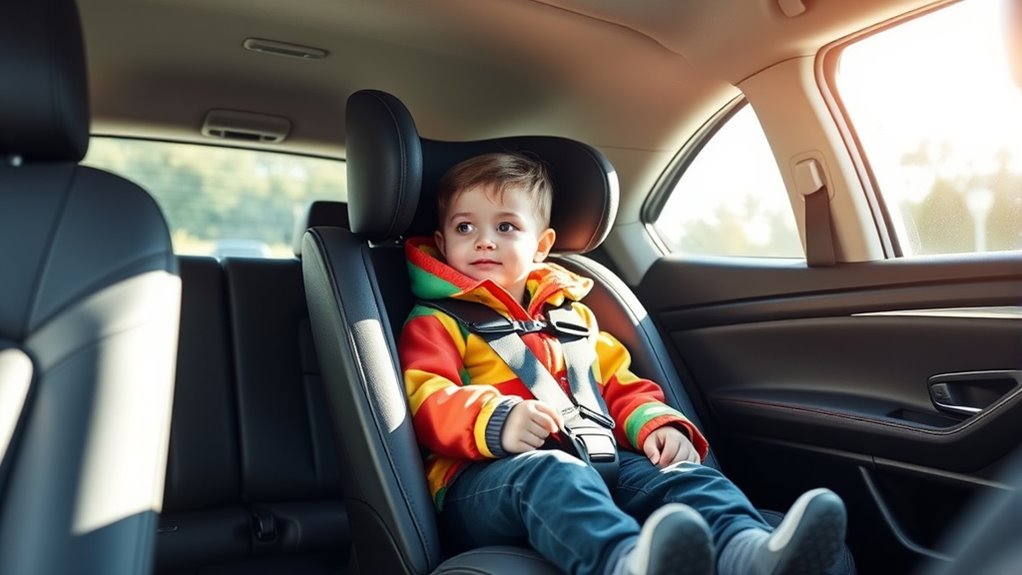
Typically, kids should use a booster seat once they outgrow their forward-facing car seat with a harness. This usually happens around age 4 to 7.
A booster seat helps position the seat belt correctly across their chest and hips, which is important for preventing injuries during a crash.
Safety laws vary by state, but most require children to use a booster until they reach a certain height or weight—often 4 feet 9 inches tall and between 8 to 12 years old.
Using a booster seat during this time makes sure the seat belt fits properly, reducing the risk of injury.
How Do You Know Your Child Is Ready for a Booster?
How can you tell when your child is truly ready for a booster seat? A key sign is that they can sit still with the seatbelt properly positioned across their shoulder and lap. Proper fit guarantees the booster’s safety benefits are maximized.
A child is ready for a booster when they can sit still with the seatbelt properly positioned across their shoulder and lap.
Here are three indicators:
- Height and Weight: Your child has outgrown their forward-facing harness seat, usually around 4’9” tall and 40-65 pounds.
- Seatbelt Fit: The lap belt fits snugly across their hips, and the shoulder belt crosses the chest without riding up on the neck.
- Comfort and Maturity: They can sit properly for the entire trip without slouching or unbuckling.
These signs show your child is ready to benefit from a booster seat’s safety features, which help with better seatbelt positioning and protection during a crash. Always consider safety first before making the switch.
What Are the Key Signs Your Child Can Transition to a Booster?
You’ll know your child is ready to move on to a booster when they consistently demonstrate proper seatbelt positioning and behavior during car rides. These signs show they can sit upright with their back against the seat and their knees bent comfortably at the edge of the seat.
According to safety regulations, the lap belt should lie flat across the upper thighs, not the stomach, and the shoulder belt should cross the chest without riding up on the neck or face. If your child can maintain this correct belt positioning without prompting, it’s a clear sign they’re ready for a booster.
They should also be able to stay seated still for the entire trip without slouching or unbuckling the seatbelt. Meeting these indicators guarantees your child’s safety and compliance with safety rules, making the switch to a booster a safe and logical step in their growth.
How to Ensure the Booster Seat Fits Your Child Properly
Making sure the booster seat fits your child properly is really important for their safety and comfort during every ride. A good fit helps keep your child secure and makes sure the seat belt works as it should.
Focus on how to adjust the booster seat and how those adjustments affect your child’s comfort. Start by checking the seat belt placement: the lap belt should sit snugly across your child’s upper thighs, not their stomach. The shoulder belt should cross the chest and shoulder, not the neck or face.
Next, adjust the seat height. Make sure the booster raises your child enough so that the vehicle’s seat belt fits correctly. This is crucial for both safety and comfort. Finally, confirm the fit by having your child sit back comfortably with their back against the seat and knees bent at the edge of the seat without slouching.
Remember to check these points regularly as your child grows. This will help keep them safe and comfortable on every trip.
What Types of Booster Seats Are Available and Which Is Best?
When it comes to booster seats, you’ve got a few different options to choose from. The main types are high-back boosters and backless boosters. High-back models provide more support for your child’s head and neck, especially if your car seats don’t have built-in head support. Backless boosters, on the other hand, are more portable and easier to move around, but they don’t offer that extra head support.
Some booster seats come with a harness, which adds an extra layer of security, especially for younger or smaller kids. Others rely solely on the car’s seat belt, which is usually fine for older children who meet the height and weight requirements. Understanding these differences can really help you decide what’s best for your child’s safety and comfort.
High-Back vs. Backless
When choosing between high-back and backless booster seats, understanding their differences can help you make the best decision for your child’s safety and comfort. High-back boosters offer advantages like better head and neck support, which can improve safety ratings, especially for children who need extra protection. They also provide added comfort factors and support for longer rides.
Backless boosters are known for their convenience, making them lightweight, portable, and easier to fit into small vehicles. Consider travel needs and installation techniques—high-backs often require seat belt guides, while backless models are simpler to use.
Price differences can influence your choice, but always prioritize size recommendations and safety ratings. Overall, both types serve different needs, so weigh these factors carefully before deciding.
Harness vs. Seat Belt
Booster seats mainly come in two types: those with built-in harnesses and those that rely only on the vehicle’s seat belt. Harness booster seats give extra security and help reduce movement during sudden stops. They’re great for younger or smaller kids who still need more restraint.
Seat belt booster seats use your car’s seat belt for safety, encouraging proper belt positioning for older children. Here’s a quick comparison:
| Feature | Harness Booster Seat | Seat Belt Booster Seat | Best For |
|---|---|---|---|
| Harness advantages | Extra security | Promotes seat belt safety | Younger children |
| Ease of use | More complex | Simpler to use | Older children |
| Safety focus | Restraint stability | Proper seat belt fit | All ages |
| Adjustability | Usually adjustable | Adjustable seat belt | Growing children |
Common Mistakes to Avoid When Transitioning to a Booster
Shifting your child to a booster seat might seem straightforward, but it’s easy to make mistakes that compromise safety. Many parents believe their child is ready just based on age, which can be misleading.
Instead, focus on your child’s height and weight, which are better indicators of readiness. Don’t rush the switch before your child’s shoulders are above the booster seat’s seat belt guides.
Also, never rely only on the seat belt fitting correctly. Ensure the lap belt sits low on the hips and the shoulder belt crosses the chest properly. Being aware of these mistakes helps keep your child safe.
How to Install and Use a Booster Seat Correctly
Installing and using a booster seat correctly is essential for your child’s safety. First, check that the booster seat has a sturdy design and proper belt guides. Place the booster on your vehicle seat and secure it with the seatbelt, ensuring it lies flat across your child’s lap and shoulder.
Make sure the lap belt sits snugly across the upper thighs, and the shoulder belt crosses the chest without slipping off. Proper positioning is key to keeping your child safe and comfortable.
Here are some installation tips to keep in mind:
| Tip | Explanation |
|---|---|
| Check for a snug fit | Tighten the seatbelt so it doesn’t move more than an inch side to side. |
| Use the vehicle’s seatbelt | Never rely on the booster’s latch system unless specified. |
| Read the manual | Follow the booster seat’s instructions for proper installation. |
Tips for Making the Transition Comfortable for Your Child
Shifting your child to a booster seat can go more smoothly if you focus on making them comfortable and confident. Using good change strategies and comfort techniques can help your child feel secure and relaxed.
To make the experience positive, start by explaining the change. Talk to your child about why they’re moving to a booster seat, highlighting safety and independence.
Explain the change to your child, emphasizing safety and growing independence to make the transition smoother.
Let your child be involved in the process. They can help with buckling up or adjusting the seat, which builds their confidence.
Place a favorite toy or blanket nearby to make the seat feel less unfamiliar and intimidating. Familiar comfort items can make a big difference.
Taking these steps can reduce anxiety and encourage cooperation. Remember to stay patient and positive, emphasizing that the booster seat keeps them safe.
Small adjustments like making sure the seat fits well and the harness is comfortable can make a big impact. By applying these strategies, you help your child feel secure during this important milestone.
How to Verify Your Child Is Using the Booster Seat Safely
How can you be sure your child is using the booster seat safely and correctly? First, make sure they’re sitting upright with their back flat against the seat. The lap belt should sit low across the hips, not the stomach. The shoulder belt should cross the chest and shoulder without rubbing the neck.
Follow booster seat guidelines and safety regulations to ensure a proper fit. Use this quick reference to check their position:
| Position Check | Correct Fit | Common Mistakes |
|---|---|---|
| Seat back flush against seat | Belt low on hips | Belt on stomach or neck |
| Child’s knees bend at seat edge | Shoulder belt crosses shoulder | Shoulder belt under arm |
| No slack in seat belt | Secure and snug | Loose or slipping belt |
| Child remains upright | Proper head support | Slouching or leaning |
Regularly check these points to confirm your child’s safety and ensure they’re following booster seat guidelines.
When Is It Time to Move Beyond the Booster Seat to a Seat Belt?
When you notice that your child’s seat belt fits just right and they seem ready to handle it on their own, it might be time to move out of the booster seat. Basically, you want to see a snug fit across their hips and shoulders—meaning the lap belt sits low on the hips, not the stomach, and the shoulder belt crosses the chest comfortably.
If everything looks good and your kiddo can sit still with that proper fit, they’re probably ready to use just the seat belt by itself for safety.
Proper Seat Belt Fit
At what point should your child move from a booster seat to just a seat belt? When the seat belt fits properly without the booster, it’s time to switch.
Proper seat belt positioning is key: the lap belt should lie flat across the upper thighs, not the stomach, and the shoulder belt should rest snugly across the chest and shoulder, not the neck or face. To guarantee this, you may need to make booster seat adjustments for a better fit.
Remember these points:
- The child’s back should be against the seat back.
- The knees should bend comfortably at the edge of the seat.
- The seat belt should fit snugly without slack.
If these criteria are met, your child is ready to graduate to just a seat belt.
Developmental Readiness Signs
Once your child’s seat belt fits properly without a booster, it’s important to check if they’re developmentally ready to ride safely using just the seat belt. Look for key milestones like sitting upright with little support and staying that way throughout the trip.
They should also sit comfortably with hips and thighs snug against the seat, so the lap belt lies flat across the upper thighs instead of the stomach. Additionally, their shoulders need to be tall enough so the shoulder belt sits snugly across the chest without riding up or causing discomfort.
If your child shows these signs, they’re probably ready to move from a booster to just a seat belt—making sure every ride is as safe as possible.
Frequently Asked Questions
Are Booster Seats Required by Law in All States?
Booster seat laws vary by state, so they’re not required in all states. In some places, children must use booster seats until they reach specific age, height, or weight limits, according to state regulations.
You need to check your state’s laws to guarantee you’re compliant. Even if not legally required everywhere, using a booster seat helps keep your child safe and secure during car rides.
It’s always a good idea to use a booster seat whenever possible. It’s a simple way to ensure your child’s safety and peace of mind while on the road.
Can a Booster Seat Be Used on an Airplane?
Yes, you can use a booster seat on an airplane, but it depends on airline policies and booster seat regulations.
Many airlines allow booster seats for added safety during travel, especially for children who meet size and weight requirements.
Always check with your airline beforehand, confirm your booster seat is FAA-approved, and follow safety guidelines to keep your child secure during the flight.
How Long Should a Child Stay in a Booster Seat?
Imagine your child’s safety journey as a river flowing steadily forward. They should stay in their booster seat until they outgrow its lifespan, usually around age 8 to 12, or meet certain height and weight guidelines.
Keep a close eye on these signs. When they surpass the booster seat’s limits, it’s time to switch to a seat belt. This way, their safety continues to flow smoothly downstream.
What Safety Features Should I Look for in a Booster Seat?
You should look for booster seats with high safety ratings to guarantee your child’s protection. Check for features like a sturdy frame, side-impact protection, and a secure harness system.
Also, prioritize seats with clear installation tips, making it easier to install correctly. Make sure the booster fits your vehicle well, and follow the manufacturer’s instructions closely to maximize safety and comfort for your child.
Can I Use a Booster Seat if My Child Has Special Needs?
Yes, you can use a booster seat if your child has special needs. Many booster seats have customizable adjustments that can help ensure a proper fit and comfort for children with unique requirements.
Look for models that provide extra support and adjustable features to meet your child’s specific needs. Always check with your child’s healthcare provider or a certified car seat technician to make sure the booster seat offers the necessary safety and support.
Conclusion
Remember, choosing the right booster seat is like planting a sturdy seed. When it’s properly fitted and safe, it helps your child grow into a confident and secure traveler.
Keep an eye on their age, height, and signs of readiness. Never rush the transition to a booster seat. Trust your judgment and the seat’s fit to ensure safety.
A well-chosen booster car seat is your child’s trusted compass on every journey. It guides them safely from one adventure to the next, making every trip more secure.