Why a Clogged Radiator Can Cause No Heat: Signs, Diagnoses, and Solutions
Are you tired of feeling cold in your own car, especially when you rely on the heater to stay warm? You’re not alone—many drivers struggle with no heat coming from their vehicle’s heating system. A common culprit? A clogged radiator can be the reason behind this frustrating issue.
A clogged radiator blocks coolant flow, which prevents proper heat transfer from your engine to the interior. This can lead to no heat or even cool air in the cabin. Signs include sudden temperature spikes, visible debris, or uneven heat distribution.
Diagnosing the problem involves checking coolant levels, inspecting hoses, and examining the radiator’s condition. Often, solutions require flushing or replacing the radiator altogether.
Regular maintenance can prevent this issue from happening, saving you time and money.
Keep going to learn how to spot these signs early and keep your heating system running smoothly.
Key Takeaways
- A clogged radiator blocks coolant flow, which stops heat from reaching the heater core. That’s why you might not feel warm air inside your vehicle.
- Look out for signs like uneven cabin temperature, coolant with visible debris, or the engine temperature gauge fluctuating.
- To diagnose, check your coolant levels, inspect the radiator for debris, and feel the radiator hoses to see if they’re unevenly warm.
- A blocked radiator usually happens because of sludge buildup, corrosion, or debris getting stuck inside.
- Fixing the problem might mean cleaning or flushing the radiator, replacing the coolant, or getting professional repairs to restore proper heat transfer.
Why Your Car’s Heater Isn’t Working: The Role of a Clogged Radiator
If your car’s heater isn’t working, a common culprit could be a clogged radiator. The radiator plays a vital role in maintaining your engine’s temperature, but it also impacts heater functionality.
A clogged radiator can cause your car’s heater to blow cool air or stop working entirely.
When the radiator gets blocked with debris, rust, or sediment, it can’t effectively circulate coolant. This reduces heat transfer, meaning less warm air reaches your cabin.
Without proper radiator maintenance, clogs develop over time, leading to poor heater performance. You might notice the heater blows cool air or only works intermittently.
To fix this, you need to clear out any blockages and restore proper coolant flow. Regular radiator maintenance, including flushing and inspecting for corrosion, helps prevent these issues.
Signs Your Radiator Might Be Clogged
If you notice your car’s temperature gauge suddenly shooting up or your engine getting too hot, it might be a sign that your radiator is clogged. It’s not something to ignore, because it can lead to more serious engine problems down the line.
You might also spot some visible debris, sludge, or even discoloration inside the radiator or the coolant reservoir. These are clues that the coolant isn’t flowing as it should, which usually means there’s a blockage. If you see any of these signs, it’s a good idea to have your radiator checked out sooner rather than later.
Unusual Temperature Fluctuations
Unusual temperature fluctuations in your radiator often signal underlying issues, especially if certain areas heat unevenly or suddenly cool down without warning. When your radiator struggles with proper temperature regulation, it can cause inconsistent heat distribution, making your space uncomfortable.
These fluctuations might feel like hot spots or cold patches, which means the flow of hot water isn’t steady. A clogged radiator can restrict water flow, leading to uneven heating. You may notice some parts are warmer than others or that the heat drops unexpectedly.
Such irregularities are a clear sign that your radiator could be clogged. Addressing the problem quickly can help restore consistent warmth and improve your heater’s overall efficiency.
Visible Debris or Sludge
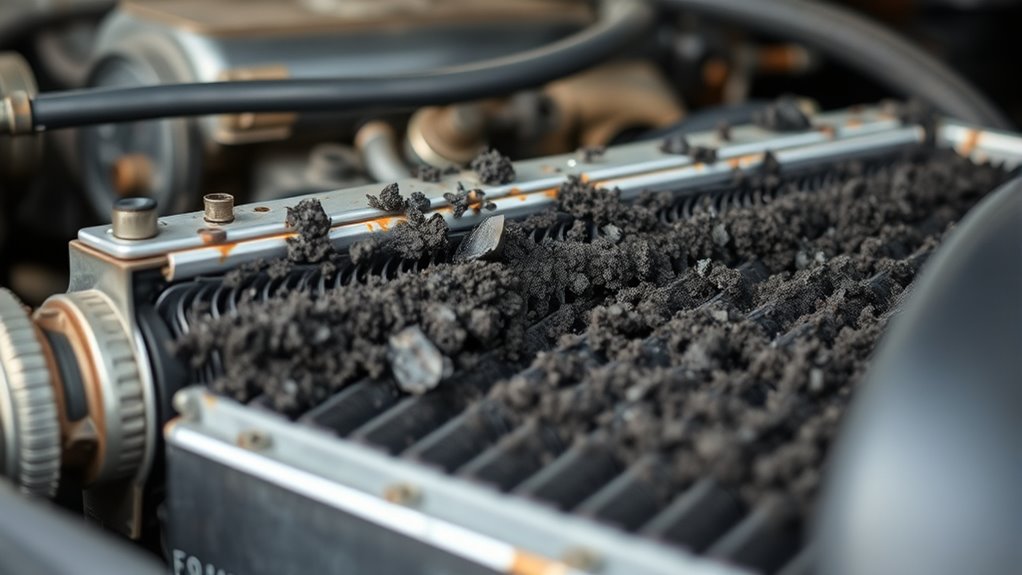
One of the clearest signs your radiator might be clogged is the presence of visible debris or sludge around the unit. During routine radiator maintenance, you might notice thick, dirty buildup or slimy residues near the radiator or its connections.
This sludge comes from corrosion, rust, and dirt building up over time, which blocks proper flow. If you see sludge, it’s a sign you need to prioritize sludge removal to restore efficient heating.
Ignoring this buildup can lead to less heat output and even complete blockages. Regular inspection and cleaning help prevent clogs and keep your radiator running smoothly.
Addressing visible debris early ensures your system stays free of obstructions, lasts longer, and works at its best.
How a Clogged Radiator Stops Your Car From Heating Up
A clogged radiator can stop your car from heating up because it blocks the coolant from flowing through the engine. When debris, sludge, or mineral buildup get in the way, the coolant can’t circulate properly.
This means the engine doesn’t run as hot as it should. As a result, your vehicle’s heating system doesn’t work well, making it hard to warm the cabin or keep the engine at the right temperature.
Regular radiator maintenance is key to preventing these problems. It helps ensure coolant flows smoothly and efficiently. Without proper flow, heat from the engine can’t transfer effectively to the heater core.
Regular radiator care ensures efficient coolant flow and optimal engine heating performance.
That’s why you might experience little or no warm air inside. A clogged radiator can also cause uneven heating, which might lead to overheating or underheating issues.
To keep your heating system working well, it’s important to clean or flush the radiator regularly and check for obstructions. Good radiator maintenance keeps your cooling system running smoothly and improves heating performance.
How Coolant Helps Prevent Radiator Clogs and Keeps Your Car Warm
Coolant plays an essential role in preventing radiator clogs by carrying away debris and buildup that can cause blockages. The coolant mixture, usually water, antifreeze, and corrosion inhibitors, helps keep the flow within your cooling system smooth.
By circulating efficiently, coolant prevents sediment and rust from settling on radiator walls, which reduces the risk of clogs. Regular radiator maintenance, like flushes and replacements, ensures the mixture stays effective and free of contaminants.
When coolant is fresh and properly balanced, it helps transfer heat away from your engine. This keeps your car warm in winter and prevents overheating. Neglecting coolant changes can lead to sludge and mineral deposits that block flow.
Proper coolant management not only extends your radiator’s life but also makes sure your heating system works reliably when you need it most. Staying on top of radiator maintenance is key to avoiding heat-related problems.
How to Check If Your Radiator Is Blocked
Wondering if your radiator is blocked? A quick check can save you from costly repairs and keep your radiator working properly.
Start by feeling your radiator hoses. If they’re hot at the engine but cool near the radiator, coolant might not be circulating well.
Next, look for cold spots or uneven heating on the radiator. You can also inspect it for visible debris or corrosion.
Here’s a simple guide:
| Step | What to Do |
|---|---|
| 1 | Feel radiator hoses for temperature differences |
| 2 | Look for debris or corrosion on the radiator |
| 3 | Check coolant level and flow during engine warm-up |
| 4 | Notice if the radiator heats unevenly |
| 5 | Use a radiator flush or pressure tester for a deeper check |
These steps can help you spot potential clogs and keep your radiator running smoothly. Regular maintenance improves coolant flow and prevents overheating.
Easy DIY Fixes for a Clogged Radiator
If your radiator is clogged, you can often clear the blockage yourself with some simple DIY methods. Start by turning off the system and letting it cool down.
Remove the radiator’s cover or access panel, then use a radiator cleaning brush or a long, flexible brush to scrub away any debris or buildup inside.
Remove the cover and gently scrub inside with a flexible brush to clear debris and buildup.
For tougher blockages, a mixture of vinegar and water can help dissolve mineral deposits. Pour it into the radiator, let it sit for about 30 minutes, then flush with clean water.
You can also use a commercial radiator cleaner if needed. Just be sure to rinse thoroughly to remove any remaining residue.
Regular cleaning can prevent future clogs and keep your heating system running smoothly. Remember to wear gloves and eye protection during cleaning and follow all manufacturer instructions for safety.
When to Consider Flushing or Replacing Your Radiator
While DIY cleaning can fix minor clogs, there are times when your radiator needs more extensive attention. If you notice persistent issues like no heat despite basic cleaning, it might be time for radiator maintenance beyond simple fixes.
Consider flushing your radiator if you haven’t done so in a while. The ideal flushing frequency depends on your system, but generally, it should be every 1-2 years. Signs like recurring clogs, corrosion, or sludge buildup indicate that a thorough flush is necessary.
If flushing no longer restores proper flow or heat output, replacing the radiator could be the best option. Over time, corrosion and internal damage can reduce its efficiency, making repairs impractical.
When you’re unsure, it’s a good idea to consult a professional to assess your radiator’s condition. Regular maintenance, including timely flushing or replacement, helps prevent future problems and keeps your heating system running smoothly.
Preventive Tips to Avoid Future Radiator Clogs
Preventing radiator clogs starts with regular maintenance and mindful usage. Schedule routine radiator checks to look for leaks, corrosion, and blockages. Regular inspections and cleaning help catch issues early before they turn serious.
Make sure your coolant is of good quality. Use the right type and replace it as recommended by your vehicle’s manufacturer. Over time, coolant breaks down and can form deposits that lead to clogs.
Flushing your cooling system periodically clears out debris and prevents mineral buildup. Keep an eye on the coolant level and top it off with fresh fluid if needed. Avoid mixing different coolant types, as incompatible formulas can cause sludge.
Finally, drive responsibly. Stay away from extreme engine temperatures and sudden stops that put extra stress on your cooling system. By sticking to regular maintenance and keeping coolant quality in check, you’ll reduce the chances of future clogs and keep your heating system running smoothly.
How a Professional Radiator Service Can Restore Your Car’s Heating
When your car’s heating system stops working effectively, a professional radiator service can quickly identify and fix the underlying issues. They focus on radiator maintenance to restore your vehicle’s heating efficiency, saving you time and money. Here’s what they typically do:
Professional radiator service restores heating efficiency, saving time and money by fixing underlying issues promptly.
- Inspect and Diagnose: They thoroughly examine your radiator for clogs, leaks, or corrosion, pinpointing the root cause of the problem.
- Flush and Clean: They perform a coolant flush to remove debris, rust, and buildup that hinder heat transfer, improving overall performance.
- Replace or Repair Components: If necessary, they replace faulty parts like the thermostat or radiator hoses to guarantee your heating system works smoothly.
A professional service not only restores your car’s heating capability but also prolongs the lifespan of your radiator. Regular radiator maintenance keeps your heating efficiency high and prevents future issues.
Other Common Causes of No Heat in Your Car
If your car isn’t giving off any heat, it could be due to a few different things. One common culprit is the thermostat, which is responsible for managing the engine’s temperature. If it’s stuck open or closed, that can mess with the heating process.
Sometimes, the issue might be as simple as blown fuses or faulty switches. These electrical components are vital for the heating system to work properly, so if they’re not functioning, you might not get any heat at all.
And don’t forget about coolant levels. If your coolant is running low, it can’t transfer heat effectively, leaving your car feeling pretty chilly inside. So, checking and topping off the coolant can sometimes solve the problem.
Thermostat Malfunctions
A malfunctioning thermostat is a common reason your car might not be providing heat because it directly controls the engine’s cooling system. If your heater isn’t working, it could be due to the thermostat sticking open or closed.
Different thermostat types like wax, electronic, or bi-metal can fail in various ways. To diagnose, you’ll want to perform thermostat testing. This involves checking if the thermostat opens and closes at the right temperature.
Here are some signs to watch for:
- The engine runs cold even after warming up.
- The heater blows cool air despite the engine being warm.
- The engine overheats quickly or runs too cool.
Testing helps determine if your thermostat is the culprit before you replace it. Making sure it works properly is essential for a functioning heating system.
Blown Fuses or Switches
Even if your thermostat is working fine, blown fuses or faulty switches can still stop heat from getting into your car’s cabin. A blown fuse breaks the electrical flow needed for the heater to run, so replacing the fuse is essential.
Start by checking the fuse box for signs of a blown fuse. Look for a broken filament or discolored glass. If you think a switch might be the issue, testing it can help you find out if it’s working right.
Faulty switches may not activate the heater circuit, cutting off the heat supply. Replacing the fuse or fixing the switch usually gets things back to normal. Always make sure you use the right fuse type and follow proper testing steps to avoid more electrical problems.
Doing this quick check can save you time and prevent unnecessary repairs.
Low Coolant Levels
Low coolant levels are a common reason why your car’s heater might not be producing warmth. Without enough coolant, the system can’t transfer heat effectively, leaving you cold. To prevent this, make sure to do regular coolant checks and radiator inspections.
Here’s what you should look for:
- Coolant Level: Check and top it off to the recommended level. Low levels often mean there’s a leak or it’s evaporated over time.
- Leaks or Damage: Look for puddles or stains under your vehicle, which could be signs of a coolant leak.
- Coolant Quality: Old or dirty coolant can mess with heat transfer. Consider flushing and replacing it if needed.
Keeping your coolant system in good shape helps your heater work properly and can prevent bigger radiator problems later on.
Frequently Asked Questions
Can a Clogged Radiator Cause Engine Overheating as Well?
Yes, a clogged radiator can definitely cause engine overheating. When your radiator isn’t properly maintained, debris and buildup block the coolant flow.
This leads to increased engine temperature, making radiator maintenance essential to prevent overheating issues. If you notice your engine running hot, check for radiator clogs and do the necessary cleaning or repairs.
Regular radiator maintenance keeps your cooling system working smoothly and helps you avoid costly engine damage.
How Long Does a Radiator Flush Typically Take?
Radiator flushes usually take about 30 minutes to an hour, depending on your vehicle. It’s a good idea to plan for this time to make sure everything gets cleaned properly.
During the process, you’ll drain the old coolant, flush the system, and refill it with fresh fluid. Following recommended flushing intervals helps prevent clogs and cooling problems.
Regular radiator flushes keep your cooling system clean and working efficiently. This can help you avoid costly repairs and overheating down the road.
Are There Specific Signs of a Failing Radiator Beyond Clogging?
You might notice leaks, unusual noises, or a drop in coolant levels as signs of a failing radiator beyond clogging.
Regular radiator maintenance tips include checking for corrosion or cracks, making sure hoses are secure, and inspecting for discoloration.
These common radiator issues can lead to overheating or inefficient heating. Addressing them early can help prevent costly repairs and keep your heating system running smoothly.
Is It Safe to Drive With a Partially Clogged Radiator?
Driving with a partially clogged radiator is like steering through a fog—you’re risking more than just a heat issue. It’s unsafe because restricted coolant flow can lead to engine overheating or damage.
Regular radiator maintenance keeps coolant flowing smoothly and prevents blockages. If you notice temperature spikes or reduced heat, it’s best to stop and address the clog before continuing.
Better safe than stranded with a broken engine!
What Are the Costs Associated With Radiator Replacement?
The costs of radiator replacement vary depending on your vehicle and the repair shop. Usually, you can expect to pay between $300 and $1,000.
When thinking about radiator maintenance, you might choose repairs or go for a full replacement. This depends on how severe the damage is.
Replacement options include standard, high-performance, or aftermarket radiators. Be sure to get a detailed estimate and think about the long-term benefits of investing in quality parts to keep your cooling system in top shape.
Conclusion
A clogged radiator isn’t just a minor annoyance. It can leave you stranded without heat in the dead of winter. Did you know that over 60% of radiator issues come from poor coolant maintenance?
Regular checks and timely flushing can save you hundreds in repairs and keep your car warm when you need it most. Don’t ignore the signs. Staying proactive guarantees your heating system stays efficient and reliable all season long.
A clogged radiator can cause no heat by blocking the flow of coolant, which prevents proper heating inside your vehicle. Recognizing the signs early is key to avoiding costly repairs.
If you notice your car isn’t heating up properly or it’s overheating, these could be signs of a blocked radiator. Diagnosing the issue early makes fixing it much easier and less expensive.
The solution often involves flushing the radiator and ensuring your coolant is fresh. Proper maintenance of your radiator is essential for keeping your heating system working smoothly.
Remember, a clogged radiator can cause no heat, but regular maintenance and quick action can keep your car warm and your worries at bay.