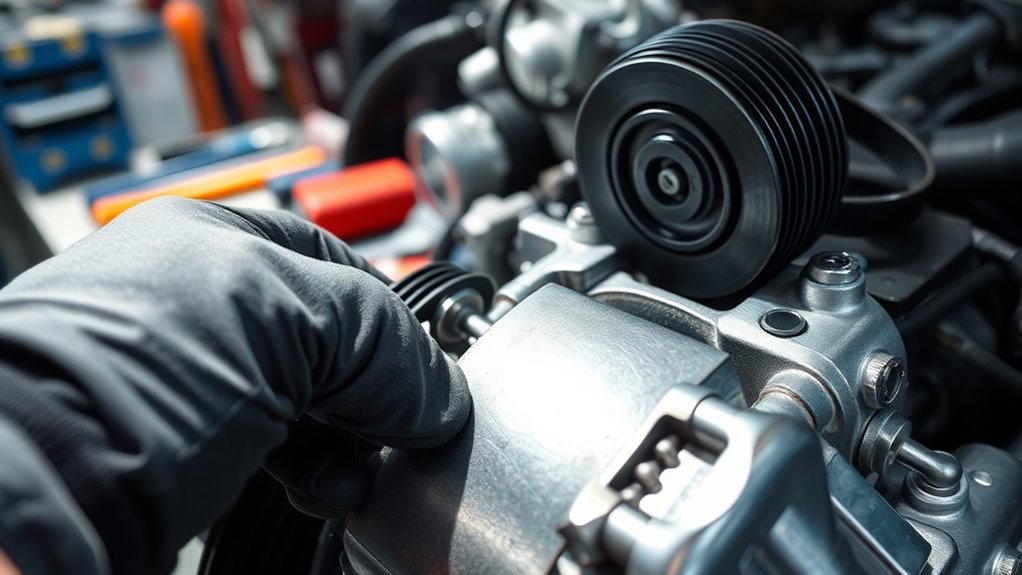
How to Quiet a Noisy Car AC Compressor: DIY Tips and Maintenance Guide
Dealing with a noisy car AC compressor can be really frustrating, especially when you’re trying to stay cool and comfortable. You’re not alone—many people struggle with the constant racket and want a simple fix.
Luckily, some DIY tips can help quiet things down and keep your system running smoothly.
To quiet a noisy car AC compressor, start by inspecting it for loose belts, worn bearings, or leaks, and tighten or replace components as needed.
Keep the compressor clean and guarantee proper belt tension and alignment. Check your refrigerant levels and refill if low, following manufacturer instructions.
Lubricate the compressor if you notice squealing or grinding sounds. For more detailed steps and safety tips, uncover how to effectively maintain and troubleshoot your AC system.
Key Takeaways
- Inspect and tighten or replace loose or worn drive belts to reduce noise and improve compressor operation.
- Check for refrigerant leaks and ensure proper system pressure to prevent excessive strain and noise.
- Lubricate the compressor as recommended to minimize friction and squealing sounds.
- Clean the compressor area regularly to prevent debris buildup that can amplify noise.
- Seek professional diagnosis for persistent or complex noises, especially if internal compressor issues are suspected.
How to Tell if Your Car AC Compressor Is Making Noise
Wondering how to tell if your car’s AC compressor is making noise? Pay attention to any unusual sounds when you turn on your AC. You might hear rattling, squealing, or grinding noises that weren’t there before.
These sounds often mean the compressor is struggling or failing, especially if they happen consistently or get worse over time. You can also listen for a loud humming or buzzing noise, which could point to internal issues.
Unusual, persistent sounds may indicate your AC compressor is failing or experiencing internal issues.
Try increasing the fan speed—if the noise gets louder, it’s a sign something might be wrong. Also, if the noise only happens when the compressor is engaged, that’s a red flag.
Regularly listening for these clues can help you catch problems early and avoid more damage. If you notice persistent or strange compressor sounds, it’s best to have a professional check your system to see if repairs or replacements are needed.
Common Causes of a Noisy Car AC Compressor
A noisy car AC compressor often signals underlying issues that need attention. One common cause is compressor wear, which happens over time as parts grind or become loose, leading to increased noise.
Another cause is a lack of proper noise reduction measures, allowing vibrations to amplify sounds. You might also hear noise from a refrigerant leak, which causes the compressor’s internal parts to work harder.
Worn or damaged bearings can create grinding or screeching sounds. Furthermore, loose or damaged mounting brackets can cause rattling noises.
Finally, debris or dirt buildup inside the compressor or on the pulley can cause imbalance, resulting in noise. Addressing these issues early can prevent further damage and help maintain quiet operation.
Regular maintenance and inspections are key to identifying these causes before they worsen, ensuring your AC runs smoothly and quietly.
Inspecting Your Car AC Compressor for Issues
When you’re inspecting your car’s AC compressor, start by giving it a good visual check. Look for any leaks or cracks because those can cause noise and make your AC less efficient. While you’re at it, pay attention to any unusual sounds—these can be a sign that some parts are loose or worn out.
Don’t forget to check the belt too. Make sure there aren’t any signs of wear or fraying because a damaged belt can not only make more noise but also lead to bigger issues down the line.
Visual Inspection for Leaks
When inspecting your car’s AC compressor for leaks, focus on visually checking the component and surrounding areas for any signs of fluid or residue. Leak detection relies on noticing visual signs like oily spots, stains, or crusty build-up around the compressor and hoses. Carefully examine the fittings, seals, and connections for any moisture or discoloration.
Look for oily streaks or residue on the compressor surface, cracks or damage to hoses and fittings, and wet spots or pooled fluid underneath the unit. Also, check for corrosion or rust around connections and any unusual grime buildup that might indicate slow leaks.
These visual signs can help you identify leaks early, preventing further damage and ensuring your AC system works quietly and efficiently.
Listen for Unusual Noises
Have you noticed any unusual noises when your car’s AC is running? Listening carefully can help you spot issues with your compressor types, like scroll, reciprocating, or rotary compressors.
Unusual sounds like grinding, squealing, or rattling often signal problems that need attention. These noises might mean worn bearings, loose parts, or refrigerant issues, all of which affect noise reduction.
Pay attention to when the sounds happen—whether during startup, operation, or shutdown—as this can help identify the source. Regularly listening for these clues allows you to catch problems early before they get worse.
If you hear persistent or loud noises, it’s a good idea to check further or get professional help. Doing so helps keep your compressor running smoothly and quietly.
Check for Belt Wear
Unusual noises can sometimes be caused by worn or damaged belts that drive your AC compressor. To check, inspect the belt tension and alignment. A loose or misaligned belt can create squealing or rattling sounds.
Look for signs like cracks, fraying, or glazing on the belt surface. Confirm the belt has proper tension—neither too tight nor too loose. Check that the belt tracks straight and sits correctly on pulleys to prevent slipping.
Here are some tips:
- Examine the belt for visible cracks or fraying
- Test belt tension by pressing down; it should have slight give
- Verify proper belt alignment on pulleys
- Look for shiny or glazed areas indicating slipping
- Adjust tension or replace if worn or misaligned
Proper inspection helps quiet your AC compressor and prevents further damage.
Simple Maintenance Tips to Quiet Your AC Compressor
Keeping your AC compressor in good shape isn’t too complicated, and it can really help cut down on the noise. First off, it’s a good idea to check the belts regularly. If you notice any that are worn out or loose, replacing them can stop that annoying squealing sound.
It’s also important to keep the compressor and the area around it nice and clean. Clearing away dirt and debris helps prevent vibrations and keeps everything running smoothly. Just a little bit of maintenance can make a big difference in keeping your AC quiet and functioning well.
Check and Replace Belts
The belts connected to your car’s AC compressor are crucial for its operation. Worn or loose belts can cause noise and make your system less efficient.
Check your belts regularly for cracks, fraying, or glazing. These signs mean you need to replace them. When inspecting, pay attention to whether you have serpentine or V-belts and make sure they match your vehicle’s specifications.
Proper tension is key. A loose belt can slip, while an overly tight one could damage components. To replace or adjust belts, follow these simple tips:
- Find out the correct belt type for your car.
- Carefully loosen the belt tensioner.
- Replace worn belts with new, matching ones.
- Make sure the belt has the right tension after installing.
- Check for smooth operation and listen for noise.
Keep It Clean
Keeping your AC compressor clean is one of the easiest ways to cut down on noise and keep everything running smoothly. Regular cleaning is a big part of AC maintenance and helps stop dirt and debris from causing strain or vibrations.
To keep it clean, check around the compressor and remove any dirt with a soft brush or compressed air. Just avoid harsh chemicals that might damage the parts. Keeping the cooling fins free of debris improves airflow and reduces strain and noise.
Making sure the compressor is free of grime not only keeps it quieter but also helps it last longer. Add routine cleaning into your AC maintenance schedule, especially before busy seasons, to keep your system quiet and efficient.
How to Safely Check and Refill Your Car’s Refrigerant
Before checking or refilling your car’s refrigerant, make sure your vehicle is parked on a level surface with the engine turned off. This helps ensure safety and accuracy during the process.
When handling refrigerant, be aware of the refrigerant types your car needs, usually R-134a or R-1234yf. Check your vehicle’s manual if you’re unsure.
To check refrigerant levels, use a manifold gauge set to read pressure properly. Make sure the gauges are attached securely for accurate readings.
When refilling, follow proper techniques to avoid overcharging, which can damage your system. Always use a recharge kit designed for your specific refrigerant type.
Follow the manufacturer’s instructions carefully during the refill process. Remember to wear protective gloves and eyewear for safety.
How to Tighten or Replace Worn Drive Belts
To guarantee your car runs smoothly, regularly check the drive belts for signs of wear or looseness. Start by inspecting the belt tension—if it feels loose or shows cracks, it needs tightening or replacing.
To tighten the belt, locate the tensioner pulley. Use a wrench to adjust it until the belt has proper tension, making sure it’s snug but not overly tight.
Proper belt alignment is essential, so check that the belt sits evenly on all pulleys. Misalignment can cause noise and wear out the belt faster.
If the belt is worn, cracked, or frayed, replace it with a new one that matches your vehicle’s specifications. When installing a new belt, double-check the tension and alignment before finishing up.
Correct tension and alignment help prevent slipping, reduce noise, and extend the life of your drive belts. This keeps your AC compressor and entire engine running quietly and efficiently.
When and How to Lubricate Your Car’s AC Compressor
Knowing when and how to lubricate your car’s AC compressor can help it run smoothly and avoid costly repairs. Proper lubrication techniques keep the moving parts well-oiled, which reduces friction and noise.
You should consider lubricating if you hear squealing sounds or if the compressor is unusually loud during operation. Using the right type of oil recommended by your vehicle’s manufacturer is key to preventing damage.
Here’s what you should do:
Check your owner’s manual for specific lubrication intervals. Identify the correct compressor oil type suitable for your system. Use a syringe or oil can for precise application.
Add oil through the access port or service port, then run the AC for a few minutes. This helps circulate the lubricant fully and ensures your compressor stays in good shape.
Troubleshooting Unusual Noises: When to Call a Professional
If your car’s AC compressor starts making unusual noises, it’s a sign that something may be wrong and needs closer inspection. Ignoring these sounds can lead to bigger problems and expensive repairs.
Use your ears to listen carefully—whether it’s a squeal, grind, or rattle—each can point to issues like worn bearings or loose parts.
If you’re unsure or the noise keeps going, it’s best to call in a professional. A qualified mechanic can perform a thorough inspection using specialized tools to find the exact problem.
They’ll check for refrigerant leaks, damaged parts, or compressor failure.
Remember, trying to fix complex issues without proper knowledge can make things worse.
When in doubt, trusting a pro makes sure the problem gets sorted out correctly, helping you avoid further damage and keep your AC running quietly.
Preventative Tips to Avoid Future AC Compressor Problems
To keep your AC compressor running smoothly, it’s a good idea to schedule regular system inspections. That way, you can catch any issues early before they turn into bigger problems. Also, don’t forget to check the refrigerant levels—if they’re too low or too high, it can cause some serious issues down the line. Staying on top of these maintenance tasks really helps prevent noisy operation and keeps your repairs to a minimum.
Regular System Inspections
Regular system inspections are essential for catching potential issues early and preventing costly damage to your AC compressor. During routine inspections, focus on system maintenance tasks like checking fluid levels, evaluating air flow, and monitoring performance degradation.
Regular checks help identify component wear and noise issues before they escalate. Conduct noise evaluations to detect unusual sounds, which may signal problems. Keep an eye on fluid levels and inspect for leaks to ensure everything runs efficiently.
Also, assess the condition of parts for possible replacement to prevent future failures. Efficient system operation depends on timely part replacements and consistent routine inspections. By staying proactive, you can maintain peak performance and extend the lifespan of your AC compressor.
Proper Refrigerant Levels
Maintaining proper refrigerant levels is essential for your AC compressor’s health because low or excessive refrigerant can lead to performance issues and damage. Using the right refrigerant types, such as R-134a or R-1234yf, guarantees compatibility with your system and peak operation.
Too little refrigerant causes the compressor to work harder, increasing noise and wear. On the other hand, too much refrigerant can create excess pressure, risking leaks or compressor failure. Regularly check refrigerant levels with a gauge and have a professional recharge if needed.
Proper refrigerant levels help with efficient cooling and reduce strain on your system. This keeps your AC quiet and functioning smoothly. Staying vigilant about refrigerant levels can prevent future compressor problems and ensure a quieter, more reliable AC.
Tools and Safety Precautions for DIY Car AC Repairs
Before you start working on your car’s AC compressor, gather the essential tools and prioritize safety. Make sure you have everything you need, like wrenches, screwdrivers, and a refrigerant gauge.
Safety gear is crucial—wear protective eyewear, gloves, and a mask to prevent injuries from refrigerant or debris. Keep your workspace organized to avoid accidents and make repairs easier.
Always familiarize yourself with emergency procedures in case of refrigerant leaks or other hazards. To protect your hearing, consider using noise reduction earmuffs.
Remember, safety isn’t just about gear; it’s about preventing accidents and working efficiently. Proper organization and safety precautions help you avoid mistakes and ensure a successful repair.
With the right tools and safety measures, you’ll confidently tackle your car’s AC compressor issues while staying safe throughout the process.
Frequently Asked Questions
Can a Noisy AC Compressor Cause Overall Vehicle Damage?
A noisy AC compressor can actually cause overall vehicle damage over time. The extra noise usually means the compressor is wearing out, and ignoring it can lead to failure.
When the compressor isn’t working right, it puts extra strain on other engine parts. This increases the chance of more serious damage down the line.
Getting the noise checked out early with proper maintenance can help reduce the noise and stop bigger issues from affecting your vehicle’s performance and lifespan.
How Long Does a Typical Car AC Compressor Last?
Your car’s AC compressor usually lasts around 8 to 10 years, but it can wear out sooner if you ignore it. Think of it as the heart of your AC system—neglect it, and it might give out much earlier.
Regular maintenance, like inspections and refrigerant checks, can help extend its lifespan. Keep it well-maintained, and you’ll stay cool for many seasons without the hassle of costly replacements.
Is It Safe to Drive With a Loud or Clicking AC Compressor?
Driving with a loud or clicking AC compressor isn’t safe because it signals problems with the compressor or loose parts causing noise.
These sounds often mean the compressor might fail soon, which could lead to more damage or a breakdown. If you hear persistent noise, it’s best to stop driving and have it checked out.
Continuing to use it could lead to costly repairs, so addressing the issue early helps keep you safe and ensures your AC works properly.
What Are the Signs of a Failing AC Compressor Beyond Noise?
If your AC compressor’s performance drops sharply and you can’t hear the usual sounds, you might be dealing with a failing compressor.
Signs include uneven cooling, strange smells, or oil leaks. You might also notice a sudden spike in electrical problems or the compressor turning on and off quickly.
These signs mean your compressor isn’t just noisy — it’s struggling to keep your car cool. It’s probably time to get it checked out or repaired.
Do Aftermarket Parts Affect the Compressor’s Noise Levels?
Using aftermarket parts can impact your AC compressor’s noise levels, often in a good way. Many aftermarket options provide benefits like increased durability and better noise reduction compared to original equipment.
When you choose quality aftermarket components, you might notice a quieter operation and improved performance. Just make sure you pick reputable brands, as poorly made parts could increase noise or cause other issues, negating the benefits of aftermarket upgrades.
Conclusion
Don’t ignore that faint hum turning into a roar. Your car’s AC compressor might be warning you of bigger issues ahead. With the right DIY tips and maintenance, you can quiet those unwanted noises and keep your cool on the road.
But remember, some problems need a professional’s touch before they get worse. So, are you ready to tackle the noise and see what’s really going on beneath the hood?
The next step could save you time, money, and a lot of frustration. Addressing a noisy car AC compressor early on can make all the difference.