How Long Do Iridium Spark Plugs Last? Mileage & Lifespan Guide
Are you tired of dealing with engine misfires, rough starts, or unexpected stalls? You’re not alone—many car owners struggle with knowing when their spark plugs need replacing.
If you’re using iridium spark plugs, understanding their lifespan can help you avoid surprises and keep your engine running smoothly.
Iridium spark plugs usually last between 60,000 and 100,000 miles, thanks to their durable materials and stable performance.
Factors like driving habits, engine maintenance, fuel quality, and operating conditions can influence their lifespan. If you drive gently and keep up with regular tune-ups, they may last longer.
To maximize their longevity and guarantee smooth engine performance, it’s helpful to understand what signs indicate they need replacement and how to care for them.
Key Takeaways
- Iridium spark plugs usually last between 60,000 to 100,000 miles, but this can vary based on your vehicle and driving habits.
- Keeping up with regular maintenance and inspections can help them last longer and keep your engine running smoothly.
- Things like aggressive driving, short trips, and harsh environmental conditions can shorten their lifespan.
- Using high-quality parts and making sure they’re installed correctly also helps extend how long they work well.
- You might notice signs of wear such as engine misfires, rough idling, lower fuel efficiency, or visible damage to the electrode.
What Are Iridium Spark Plugs and How Do They Differ?
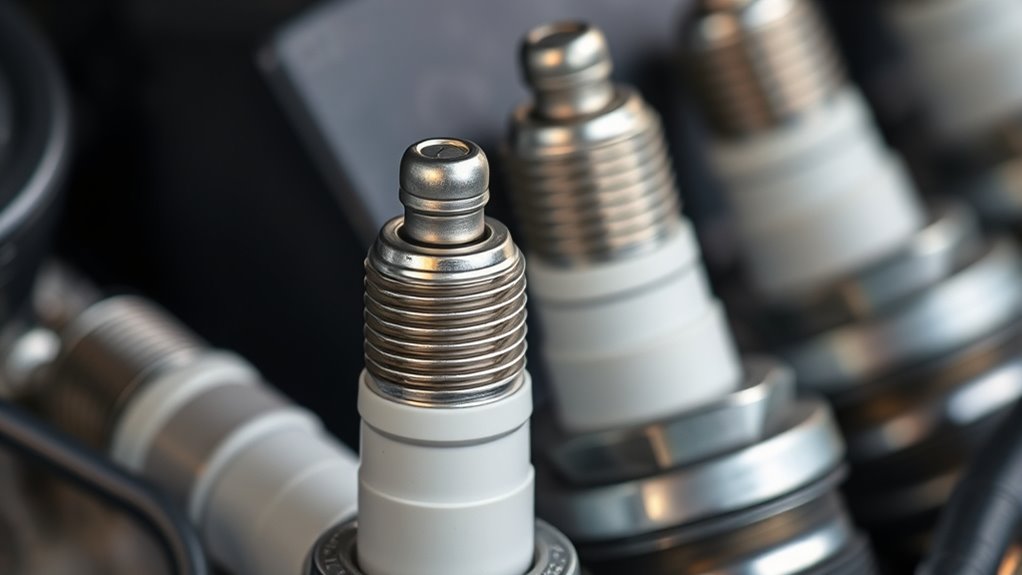
Iridium spark plugs are a type of ignition component designed to provide reliable, long-lasting performance. They stand out among spark plug types because of their durable iridium metal center electrodes, which are much harder and more resistant to wear than traditional materials.
This design allows them to generate a strong, consistent spark, boosting ignition performance over time. Unlike copper or platinum spark plugs, iridium plugs maintain their efficiency longer, reducing the need for frequent replacements.
Their small center electrode also produces a more focused spark, ensuring better combustion and smoother engine operation. You’ll notice that iridium spark plugs offer a more stable spark at higher temperatures, which improves overall ignition performance, especially in demanding driving conditions.
This makes them ideal for drivers seeking longevity and reliability without sacrificing engine efficiency. Overall, iridium spark plugs provide a significant upgrade in durability and ignition performance compared to other spark plug types.
How Long Do Iridium Spark Plugs Typically Last?
Iridium spark plugs generally last somewhere between 60,000 and 100,000 miles. But keep in mind, how long they actually last can depend on a bunch of things like your driving habits, the condition of your engine, and how well you take care of your car overall.
It’s a good idea to stay alert for signs that your spark plugs might be wearing out. Things like misfires, rough idling, or sluggish acceleration can all be clues that it’s time for a check-up. Staying on top of these signs can help keep your spark plugs in good shape and your engine running smoothly.
Typical Mileage Range
Typically, you can expect iridium spark plugs to last between 60,000 and 100,000 miles, making them a durable choice for most vehicles. Their lifespan matches high mileage expectations, providing long-lasting performance. Here’s a quick overview:
| Mileage Range | Expected Lifespan | Vehicle Type |
|---|---|---|
| 60,000-80,000 miles | Moderate durability | Compact cars |
| 80,000-100,000 miles | High durability | Sedans, SUVs |
| Over 100,000 miles | Exceptional longevity | Luxury vehicles |
This table shows that your mileage expectations are realistic, with many iridium spark plugs lasting well beyond 60K miles. Proper maintenance can help maximize their lifespan and ensure reliable engine performance for years.
Factors Affecting Longevity
The lifespan of iridium spark plugs isn’t just about their design; many factors can affect how they wear and perform over time. Proper maintenance is key—ignoring it can lead to deposits and corrosion that shorten their life.
Your ignition system’s condition also matters. Faulty wires or coils put extra stress on the plugs, causing uneven wear. Driving habits play a role too; short trips or aggressive acceleration speed up wear, while steady, long drives can help them last longer.
Fuel quality and engine tuning are important as well. They influence how long your iridium plugs stay in good shape. By sticking to a regular maintenance schedule and keeping your ignition system in check, you can get the most mileage out of your spark plugs.
Signs of Wear
Knowing when your spark plugs are worn out is key to keeping your engine running smoothly and efficiently. Signs of wear include rough idling, misfires, or trouble starting your vehicle.
Pay attention to how your spark plugs perform. If you notice a decline, they might be losing their ability to ignite the air-fuel mixture properly. Visual cues like eroded electrodes or heavy carbon build-up are clear signs that your iridium spark plugs are nearing the end of their lifespan.
You might also see decreased fuel efficiency or feel sluggish when accelerating. Regular inspections can help catch these issues early. If you notice any of these signs, it’s probably time to replace your spark plugs for a smoother-running engine.
What Factors Affect the Lifespan of Iridium Spark Plugs?
The quality of how the iridium spark plugs are made really makes a difference in how long they last. If they’re manufactured with care and precision, they tend to hold up better over time.
But it’s not just about the quality — your driving habits and the conditions you drive in also matter a lot. For example, frequent short trips, aggressive acceleration, or driving in really harsh conditions can wear out your spark plugs faster.
Knowing these factors can help you take better care of your spark plugs and get the most mileage out of them.
Quality of Manufacturing
Quality of manufacturing plays an essential role in determining how long your iridium spark plugs will last. When manufacturers follow strict standards, it ensures the spark plugs are built with precision and consistency, reducing defects that can shorten their lifespan.
Quality control processes make sure each plug meets these standards, catching issues early and maintaining reliability. Poor manufacturing practices can cause uneven electrode surfaces, weak insulation, or inferior materials, all of which reduce durability.
High-quality manufacturing ensures the spark plugs can handle the high temperatures and pressures in your engine without degrading prematurely. Investing in reputable brands that prioritize manufacturing standards and thorough quality control ultimately helps extend the lifespan of your iridium spark plugs, giving you better performance and value over time.
Driving Habits and Conditions
Your driving habits and the conditions you regularly encounter directly influence how long your iridium spark plugs last. Aggressive driving, like rapid acceleration and high RPMs, can cause them to wear out faster.
Environmental factors also matter. Extreme temperatures, humidity, or dusty environments can speed up deterioration. To make your spark plugs last longer, keep these tips in mind:
- Drive smoothly. Gentle acceleration and braking put less stress on the spark plugs.
- Avoid extreme conditions. Protect your vehicle from excessive heat, cold, or dust.
- Maintain regularly. Routine checks ensure your ignition system works properly and prevents unnecessary strain on the spark plugs.
Signs It’s Time to Replace Your Iridium Spark Plugs
Wondering if it’s time to replace your iridium spark plugs? Recognizing spark plug symptoms and replacement signs is key to keeping your engine running smoothly.
Common signs include rough idling, misfires, or sluggish acceleration. You might also notice lower fuel efficiency or trouble starting your vehicle. If these issues stick around, it’s probably time to check your spark plugs.
Here’s a quick guide:
| Symptom / Indicator | Possible Cause | Recommended Action |
|---|---|---|
| Rough idling | Worn or fouled spark plugs | Inspect and replace if needed |
| Engine misfires | Damaged or worn spark plugs | Replace to restore smooth operation |
| Poor acceleration | Spark plug deterioration | Check and replace promptly |
| Reduced fuel efficiency | Inefficient spark ignition | Consider replacing spark plugs |
Stay alert to these signs. Replacing spark plugs on time helps your engine run smoothly and prevents further damage.
How Driving Habits Impact Spark Plug Longevity
Driving habits directly influence how long your iridium spark plugs last. Aggressive driving, frequent short trips, and harsh acceleration can cause your spark plug maintenance to suffer, shortening lifespan. Poor driving conditions like stop-and-go traffic or rough roads also speed up wear.
To help your spark plugs last longer, try practicing smooth acceleration and braking. This reduces stress on the plugs and makes combustion more efficient. Limiting short trips where the engine doesn’t warm up fully can prevent carbon buildup and fouling.
Maintaining good driving conditions is key. Avoid excessive idling and aggressive driving, as these habits can cause unnecessary wear on your spark plugs. Making these small adjustments can go a long way in extending their lifespan.
Tips to Extend the Life of Your Iridium Spark Plugs
To get the most out of your iridium spark plugs, regular maintenance is key. Proper care helps them run efficiently and last longer.
Start by inspecting your spark plugs every 30,000 miles or as your vehicle manufacturer recommends. Keep them clean and free of carbon buildup, which can cause misfires and hurt performance.
Use a spark plug socket to gently remove and check the plugs for signs of wear or damage. When reinstalling, make sure they’re properly gapped according to your vehicle’s specifications.
Following these simple tips can prevent unnecessary wear and keep your engine running at its best. Also, avoid aggressive driving and skipping routine tune-ups, as these can put extra strain on your spark plugs.
Using high-quality fuel and keeping your engine air filter clean also helps maintain good spark plug performance. Regular spark plug maintenance not only extends their life but also ensures your vehicle runs smoothly and efficiently.
Iridium vs. Platinum and Copper Spark Plugs: Which Lasts Longer?
When you’re looking at iridium, platinum, and copper spark plugs, it’s all about durability and what they’re made of. Iridium plugs tend to last longer and keep their performance up with less hassle. They’re a popular choice if you want something that’s reliable and low-maintenance.
Understanding these differences can really help you pick the right spark plug for your car, especially if you’re aiming for better longevity and efficiency. So, whether you’re a car enthusiast or just want to keep your vehicle running smoothly, knowing what sets each type apart can save you time and money in the long run.
Durability And Material Composition
Among the different types of spark plugs, iridium options stand out for their exceptional durability compared to platinum and copper variants. Their superior material durability means they last longer and withstand wear better. Iridium’s high melting point and fine electrode tip improve corrosion resistance, making them ideal for demanding conditions.
When comparing material composition:
- Iridium’s hardness maintains electrode shape, reducing erosion.
- Platinum offers good corrosion resistance but wears faster.
- Copper, while highly conductive, has the lowest durability and corrodes quickly.
This means iridium spark plugs resist material degradation over time, ensuring consistent performance. Their strength against corrosion extends lifespan and boosts reliability, saving you money in the long run. Ultimately, iridium’s composition makes it the most durable choice for longevity.
Maintenance And Performance Longevity
Iridium spark plugs generally last longer than platinum and copper ones because of their better material qualities and resistance to wear. Keeping up with regular inspections and ensuring the spark plug gap is set correctly helps extend their lifespan.
When you take good care of your spark plugs, you’ll see better engine performance and improved fuel efficiency since the spark ignites the fuel mixture more effectively. Iridium plugs tend to perform well for longer, which means fewer replacements needed.
This durability not only saves you money but also helps your engine run smoothly over time. To get the most out of your iridium plugs, follow your vehicle manufacturer’s maintenance schedule and watch for signs of wear. That way, you can enjoy peak performance and long-lasting reliability.
How Often Should You Check Your Spark Plugs?
How often should you check your spark plugs? Regular spark plug maintenance is essential for keeping your engine running at its best. It’s a good idea to inspect your spark plugs every 30,000 miles or as your vehicle’s manufacturer recommends.
Checking your spark plugs regularly helps catch early signs of wear or fouling that could reduce efficiency. To keep things running smoothly, look out for a few key things:
- Check for corrosion or carbon buildup, which might mean it’s time for cleaning or replacing.
- Look for worn electrodes or cracks, as those can cause misfires.
- Make sure the spark plug gap is correct to ensure proper combustion.
Can Poor Fuel or Oil Quality Shorten Spark Plug Life?
Did you know that poor fuel or oil quality can greatly shorten the lifespan of your spark plugs? Low-quality fuel often has contaminants or additives that don’t burn cleanly, leading to carbon buildup on the spark plugs.
This buildup can cause misfires and reduce efficiency, making your spark plugs work harder and wear out faster. Likewise, poor oil quality can lead to incomplete combustion and sludge, which can coat the spark plugs and insulate the electrodes.
When that happens, the spark finds it harder to ignite the fuel-air mixture, increasing wear on the plugs. Using high-quality fuel and oil helps keep your engine clean and ensures proper combustion, which extends the life of your spark plugs.
Neglecting fuel and oil quality can speed up wear and mean more frequent replacements. That can end up costing you more in repairs and maintenance. So, always choose good-quality fuel and oil to protect your ignition system.
Practical Guide to Replacing and Maintaining Iridium Spark Plugs
Maintaining your iridium spark plugs is key to ensuring your engine runs at its best and lasts longer. Proper maintenance means sticking to a regular replacement schedule to avoid misfires and poor combustion.
When it’s time to replace them, do it carefully so you don’t damage the delicate electrode. Here are three essential tips to keep in mind:
First, follow the recommended replacement schedule—usually every 60,000 to 100,000 miles—to keep everything running smoothly.
Next, regularly inspect your plugs for signs of wear like eroded electrodes or buildup, which can reduce spark efficiency.
Finally, use the right tools and torque specs during installation to prevent damage and make sure the contact is just right.
Sticking to these steps helps your iridium spark plugs perform at their best, boosting fuel economy and extending engine life.
Frequently Asked Questions
Are Iridium Spark Plugs Suitable for All Vehicle Types?
Iridium spark plugs are suitable for most vehicle types, but it’s best to check your vehicle’s manual to make sure. Different spark plug types, like platinum or copper, might work better for older or specific engines.
Iridium plugs are known for their durability and improved performance, making them a popular choice for many modern cars. Always double-check compatibility before upgrading to ensure your engine runs smoothly.
This way, you’ll avoid potential issues and keep your vehicle running at its best.
How Do Climate Changes Affect Iridium Spark Plug Lifespan?
Climate changes can impact iridium spark plug durability by causing temperature fluctuations and humidity shifts. Extreme cold or heat can speed up wear or cause misfires, which reduces their lifespan.
Environmental factors like moisture or dirt can also lead to quicker degradation. These conditions may make the spark plugs wear out faster or malfunction more often.
To keep your spark plugs working well, it’s a good idea to inspect and replace them regularly, especially in harsh climates. Doing so helps ensure they perform efficiently and reduces environmental effects.
Can Aftermarket Iridium Spark Plugs Be Reliable?
Yes, aftermarket iridium spark plugs can be reliable if you choose high-quality options from reputable spark plug brands.
Look for brands known for their durability and consistent performance, since aftermarket quality varies.
While some cheaper options might underperform or wear out quickly, investing in well-reviewed spark plug brands helps ensure you get the longevity and efficiency you need.
Always check reviews and product specifications before making your purchase.
Is There Any Maintenance Required After Replacing Iridium Spark Plugs?
Replacing iridium spark plugs is like giving your engine a fresh pair of shoes—no major maintenance needed, but a few tips help.
You should check the spark plug gap and verify proper installation with correct torque. Spark plug cleaning isn’t necessary unless there’s visible buildup.
Follow installation tips closely, and your engine will run smoothly. Regular inspection during routine maintenance keeps everything in tip-top shape, guaranteeing maximum lifespan and performance.
Do High-Performance Vehicles Need Different Spark Plug Replacements?
High-performance vehicles often need different spark plug types to match their performance needs. You might require plugs with hotter or colder ratings, or special designs to handle more power and higher temperatures.
These vehicles are built for aggressive driving and increased performance, so standard iridium plugs might not cut it. Regular checks of your vehicle’s specs can help you choose the right spark plugs.
Upgrading to the appropriate type ensures better ignition, fuel efficiency, and engine longevity. This keeps your high-performance vehicle running smoothly and at its best.
Conclusion
By staying on top of regular maintenance, keeping an eye on mileage, and driving thoughtfully, you can extend the life of your iridium spark plugs. Regular inspections and proper care help keep your engine running smoothly and efficiently.
Remember, replacing spark plugs promptly can avoid future issues and help maintain performance. Proper upkeep and timely replacements are key to maximizing your iridium spark plugs’ lifespan.
Stay proactive with spark plug care, protect your vehicle’s health, and enjoy a smooth ride every time. With the right attention, your iridium spark plugs can deliver long-lasting, reliable performance on every journey.