Preventing Costly Repairs: How to Address Power Steering Fluid Leaks Under Your Car
Dealing with power steering fluid leaks can be frustrating and costly. Many drivers worry about those sudden puddles under their car or a drop in steering performance. You’re not alone—these issues happen more often than you might think.
To prevent costly repairs from power steering fluid leaks, regularly inspect your system for visible signs like wet spots or puddles and monitor fluid levels.
Address small leaks promptly by tightening fittings or replacing worn hoses and seals. Using the right fluid and parts guarantees smooth operation, while regular maintenance helps catch issues early.
Staying proactive saves you money over time. Keep going to learn more about maintaining your power steering system effectively and avoiding expensive repairs.
Key Takeaways
- Regularly check under your car for any visible leaks, wet spots, or puddles. Catching issues early can save you from bigger problems down the road.
- Keep an eye on your power steering fluid levels and address any drops right away. This helps prevent damage to the pump and avoids costly repairs.
- Inspect hoses, seals, and fittings for signs of wear or damage. Fix small leaks as soon as you notice them to keep everything running smoothly.
- Listen for whining noises or steering that feels stiff. These signs can point to fluid loss or other system issues that need attention.
- Always use high-quality, compatible fluids and parts. This helps maintain the system’s integrity and prevents premature component failure.
Understanding Power Steering Fluid Leaks and Why They Matter
A power steering fluid leak is a common issue that can affect how well your vehicle steers. Understanding the properties of the fluid helps explain why leaks matter.
Power steering fluid is hydraulic and has specific viscosity and lubricating qualities that keep steering smooth. When a leak happens, fluid escapes from hoses, seals, or connections, causing levels to drop.
This loss makes it harder for the system to generate the hydraulic pressure needed, which can make steering stiff or difficult. Ignoring leaks can lead to increased wear on the pump and other parts, eventually causing costly repairs.
Low fluid levels can also cause the pump to overheat or fail earlier than expected. Knowing why proper fluid properties are important highlights why maintaining the right level is crucial for safe, responsive steering.
Fixing leaks early helps prevent damage and keeps your vehicle running smoothly. This not only saves you money but also improves safety on the road.
How to Detect Power Steering Fluid Leaks Under Your Vehicle
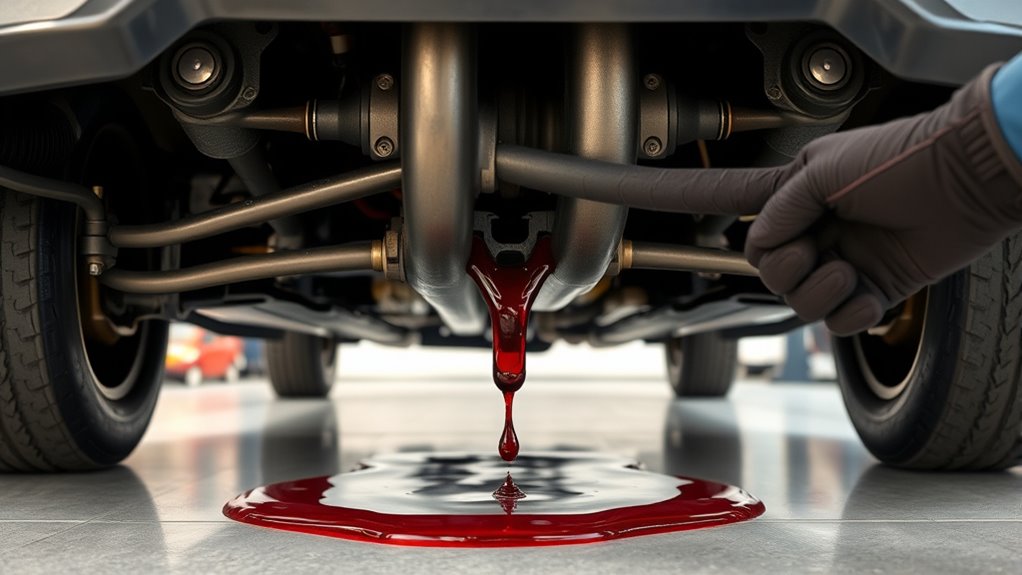
Want to know how to spot power steering fluid leaks under your vehicle? It’s pretty straightforward—just start with a quick visual check. Look underneath your car for any wet spots or puddles. If you see anything damp or oily, that’s a good sign there might be a leak.
Next, pay attention to the smell. Power steering fluid has a pretty distinct odor, so if you notice a weird or sweetish smell near your car, it could be leaking fluid. Also, keep an eye on how your steering feels. If it suddenly feels harder to turn or less responsive than usual, that’s another clue something’s wrong.
Catching these signs early can really save you from bigger problems down the road. So, a little regular inspection can go a long way in keeping your steering system in good shape.
Visual Inspection Techniques
Inspecting for power steering fluid leaks under your vehicle starts with a careful visual check. Look for signs of fluid beneath the car, especially around the power steering parts.
Pay attention to the fluid color. Fresh leaks are usually clear or reddish, but older leaks may turn darker. To help find leaks, check the table below:
| Fluid Color | Leak Detection Tip |
|---|---|
| Clear or Reddish | Check hoses and reservoir for leaks |
| Dark or Brown | Look for stains on the undercarriage |
| Milky or Foamy | Inspect for contamination or mixing |
| No Fluid Found | Confirm with other leak detection methods |
This quick visual check helps spot leaks early, saving you time and money.
Detecting Fluid Odor
Ever wondered how the smell of your vehicle can reveal a leak? Fluid characteristics and odor detection are key clues.
Power steering fluid has a distinct, slightly sweet or burnt odor that signals a leak. When you notice this smell near or inside your vehicle, it’s a red flag.
Pay attention to these signs:
- A persistent, strange odor that lingers after driving
- A sweet, syrupy scent indicating old, leaking fluid
- An acrid, burnt smell from overheated or deteriorated fluid
These olfactory cues can help you identify leaks early and prevent costly repairs. Your nose can be an effective tool if you know what to smell for.
Recognizing these subtle scent changes is essential for timely action before the leak worsens.
Monitoring Steering Performance
Monitoring your steering performance is an easy way to catch a power steering fluid leak early. Keep an eye on how your steering feels—if it gets heavier or harder to turn, that might mean fluid levels are low.
Listen for any strange noises like whining or squealing, as these often come with leaks. Also, notice if steering becomes less comfortable, with more effort needed or sluggish response.
Regularly check under your vehicle for fluid puddles or fluid around the power steering parts. Being alert to these signs helps you catch leaks before they cause bigger problems.
Keeping your steering in good shape not only makes driving safer but can also save you money on costly repairs later on.
Signs Your Power Steering System Might Be Leaking
If your steering suddenly feels tougher than it used to, that might be a sign something’s not quite right. You might also spot some fluid spots underneath your car—kind of like little puddles—and that’s definitely worth checking out. Oh, and if you smell something burning when you turn the wheel, it could be another clue that there’s a leak or other issue.
And don’t ignore those weird noises either—whining or squealing sounds when you turn could mean your power steering fluid is running low. Basically, if anything feels off, it’s a good idea to get it looked at before things get worse.
Unusual Steering Effort
Unusual steering effort is often one of the first signs that your power steering system might be leaking. When you notice it becoming harder to turn the wheel, it could be because of changes in steering sensitivity or fluid viscosity caused by a leak.
As fluid levels drop, the system struggles to respond smoothly, making steering feel heavy or unresponsive. You might also notice a delay in response or uneven steering effort. These subtle changes can be a warning sign of an upcoming problem.
Be alert to:
- Sudden difficulty turning the wheel with little effort
- A stiff or unresponsive steering feel
- Fluctuations in steering response while driving
Addressing these signs early can help you avoid costly repairs and keep your steering reliable and safe.
Visible Fluid Leaks
Visible fluid leaks are a clear sign that your power steering system may be leaking. If you see fluid pooling under your car, it could be coming from the reservoir, hoses, or seals.
Different fluid colors like green, red, or clear can help you identify where the leak is coming from. Checking the color makes it easier to pinpoint the issue.
Regular seal maintenance is essential because worn or cracked seals can cause leaks over time. Keep an eye on fluid levels and look for wet spots around hoses and connections.
Addressing leaks early can prevent further damage and save you money on repairs. If you spot a leak, don’t ignore it—taking care of it promptly keeps your steering smooth and reliable.
Strange Noises When Turning
Strange noises when turning often mean there could be a leak or something else wrong with your power steering system. You might hear loud steering noises, squeals, or groans when you turn the wheel. These sounds usually mean your power steering fluid is low or parts are wearing out. Ignoring these signs can lead to more costly repairs down the road.
Watch out for these warning signs:
- A sudden, loud noise when you turn
- Difficulty turning the wheel smoothly
- A constant groan or squeal during steering
These symptoms suggest there might be leaks or issues inside your power steering system. Fixing them early can save you money and keep your steering responsive.
What Causes Power Steering Fluid Leaks?
Power steering fluid leaks usually happen when a part of the steering system gets worn out or damaged. Common causes include hose wear, seal deterioration, or fluid contamination that weaken the system’s integrity. Environmental factors like extreme temperatures or moisture exposure speed up the deterioration process.
As the system gets older, parts become brittle and less effective at keeping pressure, which can lead to leaks. Improper installation can also cause loose fittings or misaligned parts, resulting in fluid loss. Temperature fluctuations cause expansion and contraction of components, stressing seals and hoses.
Why Regular Maintenance Helps Prevent Leaks
Regular maintenance is essential because it helps catch potential leaks before they become serious problems. Sticking to a consistent maintenance schedule allows you to spot early signs of wear or damage, preventing costly repairs later on. By following preventive practices, you keep your power steering system in good shape and reduce the risk of fluid leaks.
When you stay on top of maintenance, you can:
- Save money by avoiding expensive repairs caused by neglect.
- Ensure safety by keeping your steering responsive.
- Extend your vehicle’s lifespan through proactive care.
Regular check-ups include inspecting hoses, seals, and fluid levels, which can reveal issues before leaks happen. Preventive practices allow you to fix minor problems early, avoiding breakdowns and keeping your car running smoothly. Sticking to a maintenance schedule is your best defense against costly power steering fluid leaks.
How to Check Your Power Steering System for Leaks
Keeping an eye out for leaks is a key part of maintaining your power steering system. Start by inspecting the steering components, like hoses, the pump, and the rack, for any visible signs of fluid.
Look for wet spots, stains, or puddles underneath your car, especially around the power steering fluid reservoir. Be aware of fluid types—power steering fluid can be ATF or a specific hydraulic fluid—so check the fluid color and consistency.
If you notice a reddish or brownish fluid, it’s likely a leak. Check the level in the reservoir regularly; if it’s low, it could mean you have a leak. Also, listen for whining noises when turning the steering wheel, which may signal a fluid problem.
Regularly inspecting these areas helps you catch leaks early before they cause more serious damage or costly repairs.
How to Fix Small Power Steering Leaks Yourself
If you’re dealing with a small power steering leak and want to fix it yourself, the first step is to find where the leak is coming from. Check around the hose connections, the reservoir, and other common spots. Once you’ve pinpointed the source, gather some basic tools like wrenches and a good sealant. Having these ready makes the repair process much easier.
With everything in hand, you can start working on fixing the leak. Just take your time, and be careful to follow proper procedures. Fixing small leaks early on can save you from more serious problems down the road and keep your steering system running smoothly.
Identify Leak Sources
The first step in fixing small power steering leaks is to accurately locate where the fluid is escaping from. Proper leak detection is essential for effective fluid maintenance and preventing bigger issues later. Carefully inspect your power steering system, focusing on hoses, connections, and the pump. Look for wet spots, stains, or small drips that signal a leak. Use a flashlight to get a clear view in tight areas. Be thorough—small leaks can be sneaky but cause significant damage over time.
Feel for damp, sticky spots that indicate fluid seepage. Notice any hissing or whining sounds when steering. Watch for a drop in steering fluid levels.
Identifying the leak source guarantees you address the right problem before it worsens.
Gather Necessary Tools
Before you start fixing small power steering leaks, gather the essential tools you’ll need for the job. You’ll need a variety of tool types, including screwdrivers, pliers, and a wrench set, to remove and tighten fittings or components.
An oil catch pan is vital for collecting leaking fluid and preventing messes. A clean cloth or rags will help you wipe up spills and inspect parts.
A funnel makes refilling the fluid easier once repairs are complete. You might also need a flashlight to see into tight spaces clearly.
Having these essential items ready beforehand guarantees you won’t waste time searching during the repair. Organize your tools nearby for quick access, making the process smoother and more efficient.
Apply Basic Repairs
Start by inspecting the power steering system to find where the leak is coming from. Once you spot it, gather the right fluid types—whether it’s power steering fluid or transmission fluid—and stay consistent with your vehicle’s specs.
Using a repair kit designed for small leaks can make the job much easier and more effective. Follow the instructions carefully to seal minor cracks or loose fittings.
Remember, fixing small leaks early can prevent bigger problems down the line.
Feel confident in your ability to save money and avoid costly repairs.
Gain peace of mind by keeping your vehicle safe and reliable.
And enjoy the satisfaction of fixing it yourself and learning new skills.
When to Call a Professional for Power Steering Repairs
Wondering when it’s time to call a professional for power steering repairs? If you notice persistent difficulty turning the wheel, whining noises, or fluid leaks, it’s a sign you need expert help.
Don’t try to diagnose complex issues yourself. Instead, seek professional services for accurate power steering diagnostics. Professionals have the tools and expertise to identify the root cause of the problem efficiently.
If your vehicle exhibits sudden stiffness or the steering feels unresponsive, delaying repairs can lead to more significant damage and costly repairs down the line.
Remember, power steering systems are intricate, and handling repairs without proper knowledge can be risky. When in doubt, it’s best to trust a trained technician to assess the issue thoroughly and provide the appropriate fix.
Calling a professional at the first signs of trouble guarantees your safety and helps prevent small leaks or faults from turning into major, expensive repairs later.
Choosing the Right Power Steering Fluid and Replacement Parts
Choosing the right power steering fluid and replacement parts is key to keeping your vehicle’s steering system in top shape. Using the correct fluid types ensures peak performance and helps prevent leaks.
Always double-check fluid compatibility and your system’s requirements before topping up or replacing anything. Picking quality brands means better durability and reliable performance, which saves you money in the long run.
Always verify fluid compatibility and choose quality brands for lasting performance and cost savings.
Pay attention to seal materials because they play a big role in preventing leaks and maintaining system integrity. Follow the recommended replacement intervals and maintenance tips to keep everything running smoothly.
If you’re thinking about doing it yourself, make sure you have the right tools and know-how. This helps avoid mistakes that could lead to more damage down the road.
Be mindful of your choices and steer clear of subpar parts that could compromise your safety. Properly matching fluid types and parts to your vehicle’s specs can save you from costly repairs later.
Tips to Prevent Future Power Steering Leaks and Save Money
To prevent future power steering leaks and save money, regular maintenance is key. Catching issues early can save you from costly repairs later on.
Check your power steering fluid levels often and top off as needed. Low fluid can lead to leaks and damage. Keep an eye out for signs like puddles under your car or a whining noise when turning.
Inspect hoses, clamps, and the power steering pump for cracks or wear. If you find any damaged parts, replace them promptly. Keeping the system clean and free of debris also helps reduce strain on components, lowering the risk of leaks.
Schedule routine inspections with a mechanic to catch potential problems early. Address small leaks immediately because they tend to worsen over time.
Frequently Asked Questions
Can a Power Steering Fluid Leak Affect Vehicle Safety?
A power steering fluid leak can definitely affect your vehicle’s safety. When you have a leak, it can mess with how well your steering system works, making it harder to control your car, especially at lower speeds.
Keeping an eye on fluid levels and fixing leaks quickly helps prevent bigger problems. Ignoring leaks might lead to steering failure, which can increase your chances of accidents.
Regular maintenance is key to keeping your steering system smooth and safe. So, stay attentive to any signs of leaks and address them promptly to keep your drive safe.
How Long Can I Drive With a Power Steering Fluid Leak?
You shouldn’t drive long with a power steering fluid leak; it’s like steering a boat in a storm. Even a short drive can cause serious damage.
For safe power steering maintenance, check for signs of leaks and catch them early. If you notice fluid loss, get it fixed right away.
Driving with a leak risks damaging the pump or steering parts, which can lead to costly repairs. Always prioritize quick repairs!
Are Power Steering Leaks Covered Under Vehicle Warranties?
Power steering leaks are sometimes covered under your vehicle’s warranty, but it depends on the warranty terms. If the leak is caused by a manufacturing defect, there’s a better chance it will be covered.
However, if the leak happens because of wear and tear or poor maintenance, it probably won’t be included. To avoid costly repairs, get leak detection early and review your warranty details.
It’s a good idea to understand what your warranty covers when it comes to power steering system issues.
What Are the Risks of Ignoring a Power Steering Leak?
Ignoring a power steering leak risks serious damage to your steering system. As fluid escapes, your steering performance gets worse, making it harder to control your vehicle.
Without enough fluid, parts can wear out faster, leading to costly repairs. You might also notice increased effort when turning or strange noises coming from the steering.
Addressing leaks early helps keep your steering smooth and your vehicle safe. It also prevents small problems from turning into big, expensive repairs later on.
How Often Should I Inspect for Power Steering Fluid Leaks?
You should inspect for power steering fluid leaks at least once a month. Regular fluid maintenance helps you catch leaks early through simple leak detection, preventing costly repairs.
During inspections, check the power steering fluid reservoir and look under your car for puddles or stains.
Pay attention to any changes in steering effort or unusual noises, and address leaks promptly to maintain safe, smooth steering performance.
Conclusion
By staying vigilant and addressing leaks promptly, you can avoid costly repairs and keep your car running smoothly. Regular inspections and maintenance are your best armor against stubborn power steering fluid leaks.
Think of it as your personal code of chivalry for modern-day motoring. Remember, don’t wait for your vehicle to turn into a pumpkin.
Catch issues early, and your vehicle will serve you faithfully for many miles ahead, especially if you address power steering fluid leaks as soon as you notice them.