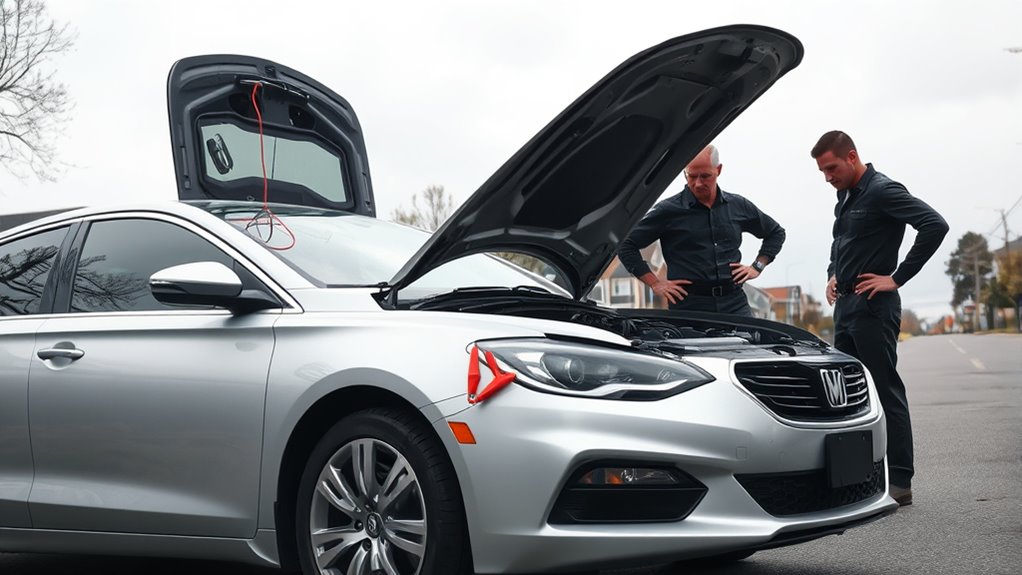
Car Dies After Jump Start: What Are The Reasons?
If your car keeps dying after a jump start, you’re not alone. Many drivers struggle with this frustrating issue, and it can be a real headache to figure out what’s wrong. Understanding the common causes can help you get back on the road faster.
If your car dies after a jump start, it’s often due to a failing battery or a malfunctioning alternator that can’t hold or recharge the charge.
Bad wiring or loose connections, especially around the terminals, can also disrupt power flow and cause stalling. Signs like slow starts, dim lights, or frequent jump starts point to deeper electrical issues.
If you want to understand how to fix these problems and keep your car running smoothly, keep exploring the details.
Key Takeaways
- A failing or weak battery might not hold the charge after a jump start, which can cause the car to stall.
- An alternator that isn’t working properly prevents the battery from recharging as the engine runs.
- Corroded or loose wiring and terminal connections can disrupt the electrical flow, leading to stalling.
- Electrical system problems, like faulty fuses or damaged wiring, may cause the car to die after a jump start.
- Issues with fuel delivery or the ignition system can also be reasons why the car stalls after a jump.
Why Does My Car Die After a Jump? Quick Answers
If your car dies shortly after a jump start, it usually points to an underlying issue with your electrical system or battery. A common cause is battery discharge, which happens when your battery isn’t holding a charge properly.
Even after a jump start, if the battery is weak or damaged, it can’t supply steady power, causing the engine to stall again. Sometimes, a jump just temporarily supplies power, but the main problem still remains.
If your alternator isn’t working right, it won’t recharge the battery while you drive. This leads to quick battery drain, meaning your car depends only on the jump start’s power, which isn’t enough for long-term running.
Constantly needing jump starts suggests there’s a deeper problem with your battery or electrical system that needs a professional check. Fixing these issues early can help prevent your car from dying unexpectedly after a jump.
How Do I Know If My Car Battery Is Failing?
Wondering if your car battery might be on its way out? Well, one of the easiest things to check is how old it is. Usually, batteries start to show signs of wear after about three to five years. If it’s been around that long, it might be time for a closer look.
You can also keep an eye out for some common signs. For example, does your car take a bit longer than usual to start? Are your headlights looking dimmer than they used to? These little clues can point to a failing battery. Plus, if you notice corrosion around the terminals or find yourself needing jump starts more frequently, those are definitely red flags.
The best thing you can do is have a professional inspect and test your battery. They can give you a clear idea of whether it’s still good or if it’s time for a replacement. So, if you’re experiencing any of these signs, don’t wait—getting it checked out can save you from unexpected breakdowns.
Battery Age and Wear
A car battery doesn’t last forever, and as it ages, its ability to hold a charge gets worse. If you’re often jump-starting or having trouble starting, it might be time for some battery maintenance or even a replacement. Usually, batteries over three to five years start showing signs of wear, especially in extreme weather.
To figure out how your battery is doing, check these signs:
| Indicator | Description |
|---|---|
| Reduced Power | The engine struggles to start or cranks slowly |
| Corrosion | Build-up around the terminals shows aging |
| Swollen Battery | Physical distortion indicates internal damage |
Keeping an eye on these signs helps you know when it’s time to replace your battery before it completely fails. Regular checks can help prevent unexpected breakdowns and keep your car running reliably.
Warning Signs Present
Recognizing the warning signs of a failing car battery can help you avoid unexpected breakdowns. Common symptoms let you know when your battery might be nearing the end of its life.
One clear sign is slow engine cranking or difficulty starting your car. You may also notice dimming headlights or electrical issues, especially when the engine is off.
Additionally, a check engine or battery warning light on your dashboard signals potential problems.
Be alert to these signs:
- Slow engine startup or frequent stalling
- Dim or flickering lights
- Unusual odors or corrosion around the battery terminals
Addressing these warning signs early can save you from getting stranded and help you decide if your battery needs replacing or further inspection.
Testing and Inspection
To see if your car battery is failing, you can do a simple test with a multimeter. Battery testing and inspection techniques help catch issues early, so you won’t get stuck unexpectedly.
First, set your multimeter to DC volts and connect it to the battery terminals. A healthy battery usually reads around 12.6 volts when the engine is off. If it shows below 12.4 volts, your battery might be weak.
Here’s a quick reference chart to help you interpret the readings:
| Voltage Reading | Battery Condition | Action Needed |
|---|---|---|
| 12.6V or higher | Good | No action needed |
| 12.4V – 12.6V | Fair | Consider testing further |
| Below 12.4V | Failing | Replace or recharge |
| Below 11.8V | Critical | Replace immediately |
Regular inspection techniques keep your battery reliable and working properly.
What Role Does the Alternator Play in Your Car’s Power?
The alternator is the engine’s powerhouse for electrical energy, constantly generating power while your car runs. Its main job is to keep the battery charged and support the electrical system, making sure everything from lights to the ignition works smoothly.
The alternator is essential for proper power management. It prevents your battery from draining when the vehicle is on. If it fails, your car may run briefly on stored energy but quickly stalls or dies, especially after a jump start.
Key points include maintaining the battery charge during operation, supplying power to electrical components, and preventing electrical system failure. A malfunctioning alternator can cause inconsistent power delivery, leading to sudden shutdowns or starting issues after a jump.
Understanding this role helps you see that a healthy alternator is critical for reliable vehicle operation. It helps you avoid situations where your car unexpectedly dies.
How Bad Wiring or Loose Connections Can Kill Your Car
Bad wiring or loose connections can really cause your car to stall unexpectedly. You know, especially if there’s corrosion or rust building up on the battery terminals—that can make things worse. When the connections aren’t tight or clean, it can mess with your car’s electrical system and leave you stranded.
And don’t forget about damaged wiring insulation. That can lead to shorts or other electrical failures, which definitely make your car unreliable. To avoid all these headaches, it’s a good idea to check your wiring regularly and keep those connections tight and clean. Doing so can really help prevent your engine from dying when you least expect it.
Corrosion and Rust Buildup
Corrosion and rust buildup can silently sabotage your car’s electrical system, especially when wiring connections become loose or corroded over time. This deterioration hampers electrical flow, making it harder for your vehicle to start or run smoothly.
To fight this, focus on prevention and rust removal regularly. Keep an eye on exposed wires and terminals, and apply protective coatings or dielectric grease to prevent moisture buildup.
Cleaning terminals with a wire brush can remove rust and restore good contact. Also, inspecting areas prone to moisture helps you catch early signs of corrosion.
Loose Battery Terminals
Loose battery terminals are a common but often overlooked cause of vehicle failure. When your terminals aren’t tightly connected, it can mess with the flow of electricity, making your car stall after a jump start.
Regular battery maintenance means checking and tightening these connections to prevent problems. Over time, terminals can become loose or develop corrosion, which blocks proper conduction.
To avoid issues, make it a habit to inspect the terminals regularly and clean away dirt, grime, or corrosion. A secure connection helps keep steady power flowing, reducing the chance of your car dying unexpectedly.
Don’t ignore loose terminals—tighten them properly and keep them clean. Doing so ensures reliable performance and helps prevent unnecessary breakdowns. Proper maintenance keeps your vehicle running smoothly.
Damaged Wiring Insulation
Damaged wiring insulation can silently cause serious problems for your vehicle. When insulation wears out or gets damaged, it exposes wires that can short-circuit or spark, especially after a jump start.
Performing a thorough wiring inspection is crucial to identify compromised areas. If you notice signs of damaged insulation, insulation repair is necessary to prevent further issues.
Ignoring this can lead to electrical failures that kill your car’s power or, worse, cause fires. Keep an eye out for frayed or cracked wires, corrosion around wire connections, and loose or exposed wiring connections.
Addressing these issues promptly helps maintain your vehicle’s electrical health and prevents unexpected stalls. Proper wiring inspection and insulation repair are key steps to guarantee your car runs smoothly after a jump start.
Symptoms That Indicate Electrical Problems Are Causing Your Car to Die
If your car keeps stalling or dying unexpectedly, electrical problems might be to blame. One common sign is flickering lights, which indicate inconsistent power flow. You might also notice strange noises from the dashboard or alternator area, signaling electrical issues.
These noises often sound like clicking or whining, and they happen when the electrical system struggles to supply steady power. Another clue is difficulty starting the vehicle, even after a jump start. If your dashboard lights dim or flicker during operation, it’s a sign that the electrical system isn’t functioning properly.
You may also experience erratic instrument panel readings or warning lights illuminating unexpectedly. These symptoms point to underlying electrical problems that can cause your car to die unexpectedly. Recognizing these signs early can help you address the issue before it leaves you stranded, ensuring your vehicle runs smoothly and reliably.
How to Diagnose Electrical Issues in Your Car Quickly
Diagnosing electrical issues in your car quickly involves a systematic approach to find the root cause without wasting time. Start by checking your vehicle’s electrical schematics to understand the wiring layout and how components connect.
Use diagnostic tools like a multimeter or an OBD-II scanner to test voltage levels, check for faults, and spot irregularities. These tools help verify if power is reaching critical parts or if there’s a short or open circuit.
To make your diagnosis easier, focus on these key steps:
- First, verify the battery voltage and connections to rule out simple power supply problems.
- Check fuses and relays for continuity, replacing any blown ones.
- Use your diagnostic tools to scan for error codes and interpret data logs for unusual readings.
When Should You Replace Your Car Battery or Alternator?
Wondering when to replace your car battery or alternator? Usually, a car battery lasts about 3 to 5 years, but things like climate and driving habits can shorten that lifespan.
If your car has trouble starting or stalls suddenly, it might be time to check the battery. An alternator’s efficiency also drops over time, typically after 80,000 to 150,000 miles.
When the dashboard warning light for the battery or charging system comes on, it’s a sign to get your alternator checked. Dimming headlights or electrical issues can also point to alternator problems.
Regular maintenance and inspections can help you catch these issues early. Replacing your battery or alternator when they show signs of wear can prevent your car from dying after a jump start and keep things running smoothly.
Tips to Prevent Your Car From Dying After a Jump Start
Sure! Here’s the modified version with a more conversational tone:
—
If you want to avoid your car dying again after a jump start, the first thing to remember is to connect the cables properly. It might sound simple, but doing it right can make a big difference. Once you’ve jumped your car, it’s a good idea to let the engine run for a few minutes. That helps give your battery a little boost and gets everything working smoothly.
Also, don’t forget to check your battery and alternator regularly. Catching any issues early can save you a lot of headaches down the road. Keep these tips in mind, and you’ll have a better chance of keeping your car running smoothly after a jump.
Proper Jump Starting Techniques
When jump-starting your car, using proper techniques can make all the difference in preventing your vehicle from dying again shortly afterward. Prioritize jump start safety by following these steps:
Connect the cables in the correct order: positive to positive, negative to negative, and avoid grounding on the battery itself. Keep the engine running on the donor vehicle for a few minutes to allow the dead battery to gain enough charge.
After the jump, let your engine run for at least 15 minutes to support battery maintenance and recharge. Proper jump start techniques help guarantee a stable restart and reduce risks.
Avoid rushing, and always double-check connections. These practices can help prevent future issues and extend your battery’s lifespan.
Check Battery and Alternator
After successfully jump-starting your car, it’s important to make sure the battery and alternator are in good shape to prevent the vehicle from dying again.
Start with battery maintenance by inspecting for corrosion, loose connections, or a weak charge. If your battery is old or shows signs of failure, consider replacing it.
Next, perform an alternator check to see if it’s charging the battery properly. Use a voltmeter to measure voltage; it should read around 13.8 to 14.4 volts when the engine runs.
A failing alternator can cause your battery to drain quickly, leading to engine stalls even after a jump start.
Regularly checking these components helps catch issues early, so your car runs smoothly and avoids unexpected breakdowns.
Step-by-Step Troubleshooting Before Visiting a Mechanic
Before heading to a mechanic, start by inspecting your car’s battery and connections. Proper battery maintenance ensures your electrical system works correctly and can prevent stalls after a jump start.
First, check the battery terminals for corrosion or loose connections. Tighten any loose cables and clean corrosion with a wire brush if needed. Next, examine the overall condition of the battery—if it’s swollen or cracked, it’s time to replace it.
Check battery terminals for corrosion and tighten loose cables before inspecting the overall battery condition.
Finally, verify the battery’s charge using a voltmeter. If the reading is below 12.4 volts, your battery is weak.
Consider these steps:
- Confirm terminals are clean, tight, and corrosion-free
- Test the battery’s voltage for adequate charge
- Inspect for signs of damage or swelling
If these checks don’t solve the problem, it’s time to look deeper into your electrical system or seek professional help. Doing this initial troubleshooting can save you time and money while helping identify potential issues with your car’s electrical system.
How to Fix Electrical Problems That Cause Your Car to Stall
Electrical problems are a common cause of stalling, and figuring out the root cause can save you time and money. Start with electrical diagnostics to identify issues like faulty relays, bad sensors, or failing alternators.
Use a multimeter to check voltage levels, making sure your battery and charging system are working properly. Next, do a wiring inspection to find damaged, frayed, or corroded wires that could disrupt the electrical flow.
Look for loose connections or corrosion on battery terminals, ground wires, and fuse boxes. Repair or replace damaged wiring as needed. If your car stalls suddenly, it might be due to a failing sensor or relay sending incorrect signals.
Address these issues quickly to prevent further damage. Keep in mind that persistent electrical problems often need professional diagnostics, but routine wiring checks and simple troubleshooting can often fix common causes of stalling and keep your vehicle running smoothly.
Frequently Asked Questions
Can a Faulty Fuel Pump Cause My Car to Die After a Jump Start?
Yes, a faulty fuel pump can cause your car to die after a jump start. When the fuel pump has issues like inconsistent fuel delivery or failing to maintain pressure, it can’t supply enough fuel once you’ve jumped the battery.
This can lead to the engine stalling shortly after the jump. Jump start problems often point to underlying issues like a bad fuel pump. If your car dies soon after a jump, it’s a good idea to get the fuel pump checked out, as it might be the cause.
How Do Temperature Changes Affect Car Battery Performance?
Temperature changes significantly affect your car battery’s performance. In cold weather, chemical reactions in the battery slow down, making it harder to hold a charge and start your car.
On the flip side, hot temperatures speed up battery wear and cause fluid to evaporate, which shortens its lifespan. To keep your battery in good shape, regular maintenance is key, especially before seasons change.
Make sure to protect your battery from extreme temperatures. Doing so helps ensure your car starts reliably and that your battery lasts longer.
Can Bad Spark Plugs Lead to My Car Stalling Post-Jump?
Did you know that failing spark plugs are responsible for about 30% of engine misfires? Yes, bad spark plugs can cause your car to stall after a jump start, especially if they’re of the wrong type or have worn out.
They influence ignition timing, which is essential for smooth engine operation. If your spark plugs are faulty, your engine won’t fire correctly, leading to stalls even after a jump-start.
Is There a Link Between Engine Control Unit (ECU) Issues and Stalling?
Yes, ECU issues can cause stalling symptoms. If your engine control unit (ECU) malfunctions, it may send incorrect signals to engine components, leading to irregular idling or stalling.
You should consider ECU diagnostics to identify these problems. Ignoring them could make stalling worse or cause more damage.
Regularly checking the ECU helps keep your vehicle running smoothly and prevents unexpected stalls after a jump start.
Do Aftermarket Accessories Impact Your Car’s Electrical System Stability?
You might be asking if aftermarket accessories impact your car’s electrical system stability. They can, especially if they add extra electrical load or cause battery drain.
Poor wiring or incompatible devices can disrupt the system, leading to instability. It’s a delicate balance—you don’t want to bite off more than you can chew.
Make sure that accessories are properly installed and compatible with your vehicle to keep your electrical system running smoothly.
Conclusion
When your car dies after a jump start, it’s easy to think it’s just a battery problem.
But sometimes, the issue runs deeper—wiring, alternator health, or electrical connections might be at fault.
Think of your car’s electrical system like a delicate bridge.
Every part needs to work together smoothly, or your vehicle’s power can suddenly fail.
Early signs can help you catch problems before they get worse.
Troubleshoot carefully and don’t overlook the hidden complexities beneath the hood.
Knowing why your car dies after a jump start is key to fixing the problem.
Mainly, it often comes down to issues with the battery, alternator, or electrical connections.