How to Adjust Car Seat Straps for Safety and Comfort
Many drivers struggle with getting their car seat straps just right—feeling uncomfortable or unsure if they’re safe. You’re not alone; adjusting seat belts properly can be tricky, but it’s so important for safety and comfort.
To adjust your car seat straps for safety and comfort, first guarantee the lap belt sits low across your hips and the shoulder strap rests midway over your shoulder.
Tighten the straps by pulling them slowly until there’s no slack, but they still feel comfortable.
Make sure the belt lies flat without twisting and fits snugly without causing discomfort.
If you want to master proper adjustments and avoid common mistakes, keep going for detailed tips and instructions.
Key Takeaways
- Make sure the lap belt sits low across your hips, and the shoulder strap rests midway over your shoulder for a proper fit.
- Adjust the strap tension so it feels snug but doesn’t restrict your movement or cause discomfort.
- Check for twists or debris in the belt to ensure it retracts smoothly and stays in the right position.
- Avoid placing the strap under your arm or behind your back, as that can compromise safety.
- Regularly inspect the seat belt for wear, damage, or malfunction, and replace it if needed.
How Do Seat Belt Systems Keep You Safe?
Seat belt systems play an essential role in keeping you safe by preventing serious injuries during a collision. They are designed based on extensive crash test data, which helps manufacturers improve their safety features.
When you’re in a crash, seat belts distribute the force across your strongest bones and muscles. This reduces the risk of severe injuries and keeps you securely in your seat.
Seat belts also prevent dangerous ejections or sliding that could cause further harm. Modern seat belts come with pretensioners, which tighten the belt instantly during a crash.
They also have load limiters that release some slack to reduce impact force on your chest. These safety features work together to absorb crash energy and protect your crucial organs.
How to Recognize the Right Fit for Your Seat Belt
Want to make sure your seat belt fits just right? It’s pretty simple—start by checking that the belt is sitting correctly across your chest and hips. You don’t want it too high or too low; it should sit snugly over your shoulder and across your pelvis.
Next, pay attention to the tension. The belt shouldn’t be so tight that it’s uncomfortable, but it also shouldn’t be loose enough to slide around. You should feel secure but still comfortable during your drive.
Doing these quick checks can really make a difference in keeping you safe and comfortable no matter where you’re headed. Just a little bit of attention to detail goes a long way!
Proper Belt Positioning
Making sure your seat belt fits properly is key to your safety, and knowing the right position can make all the difference. Proper belt positioning means the strap lines up with your body’s natural shape, and the harness is snug but not tight.
The lap belt should sit low across your hips, not your stomach, while the shoulder strap should rest midway over your shoulder and not slip off.
| Belt Position | Strap Alignment | Harness Adjustment |
|---|---|---|
| Low on hips | Straight across | Snug but comfortable |
| Mid-shoulder | No slack | Fits firmly, no slack |
| Tight but not squeezed | Aligned | Secure but free to move |
This helps ensure peak safety in any crash.
Correct Strap Tension
Finding the correct strap tension is key to maximizing your safety, and it’s easier than you might think. Proper tension keeps the seat belt in place during a collision.
To check the tension, use simple tension measurement methods like gently pulling the strap to feel for resistance. It shouldn’t be loose or overly tight.
Effective strap adjustment techniques include adjusting the retractor and slider to keep the belt snug across your chest and hips.
Look for these signs:
- The belt lies flat against your body without slack
- You can’t pinch excess strap at your shoulder
- The lap belt fits snugly over your hips
- The strap doesn’t shift when you move
- You feel secure, not restricted
Getting the right tension helps ensure your safety and comfort.
Comfortable Fit Guidelines
A properly adjusted seat belt not only keeps you safe but also feels comfortable during your drive. To ensure a comfortable fit, check the adjustable padding—this should sit snugly against your body without causing pressure or discomfort.
The strap materials are important too; they should be soft, durable, and free of rough edges that could irritate your skin. The belt should lie flat across your chest and lap, with minimal slack but not so tight it restricts movement or breathing.
When adjusting, make sure the belt is secure but not overly tight, allowing you to sit naturally. A good fit distributes force evenly and minimizes discomfort, making your drive safer and more enjoyable.
How to Adjust Your Seat Belt Step-by-Step
Adjusting your seat belt properly is key for safety and comfort. To do this effectively, follow these steps:
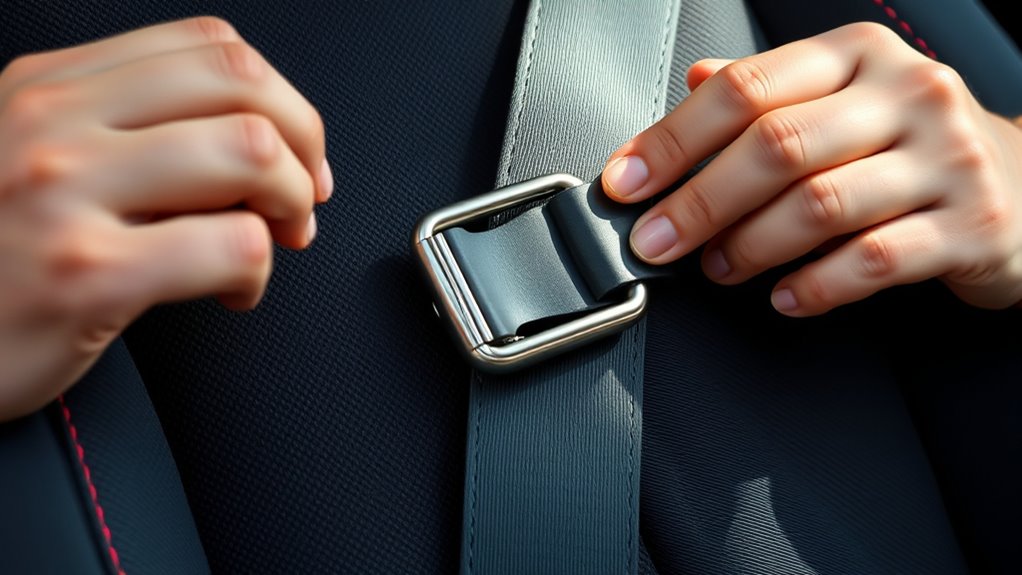
Sit upright and pull the seat belt across your chest and lap, making sure it lies flat without twists.
Adjust the shoulder strap so it rests snugly on your shoulder, not your neck or arm.
Use the seat belt height adjuster if available, setting it so the belt fits comfortably against your chest.
If the strap feels loose, pull the latch plate to tighten or loosen it for a better fit.
Regularly check your seat belt for wear. If you see any signs of damage, consider replacing it to stay safe.
How to Verify Your Seat Belt Fits Properly
Want to make sure your seat belt fits just right? It’s pretty simple—just check that it sits low across your hips and feels snug across your chest. You shouldn’t feel any pinching or discomfort; it should be comfortable enough to wear all the time.
A good fit means the seat belt stays put, even if you hit the brakes suddenly or get into a collision. So, take a moment to adjust it until it feels secure but still comfortable. It’s worth it for your safety!
Proper Seat Belt Position
Verifying your seat belt fits properly is essential for your safety. Checking its position is simple if you know what to look for.
Remember, seat belt history shows how safety standards have improved through innovations to better protect you. To confirm proper fit, make sure the lap belt sits snugly across your hips, not your stomach.
The shoulder strap should lie flat across your chest and collarbone, away from your neck. Ensure there’s no slack and that the belt stays in place during movement.
Here are some key points to verify:
- The lap belt sits low on your hips
- The shoulder strap crosses the center of your chest
- There’s no slack in the belt
- The belt remains in position during movement
- Your chest and hips are securely restrained
Adjusting for Comfort
Finding the right fit for your seat belt isn’t just about safety; it’s also about comfort. To make sure it feels good, start by adjusting the strap length so it sits snugly across your chest and hips without feeling tight or restrictive.
Use the adjustment features in your vehicle to fine-tune the strap’s position. Make sure the lap belt lies flat across your hips, not your stomach, and the shoulder strap rests comfortably across your shoulder without digging in or slipping off.
If the seat belt feels uncomfortable, try repositioning your seat or adding comfort accessories like seat belt pads. Regularly check that the belt remains comfortably fitted as you move or settle into different driving positions, ensuring both safety and comfort during every trip.
Ensuring Secure Fit
When verifying that your seat belt fits properly, make sure to do a quick check each time you buckle up. This helps ensure your strap adjustment keeps you safe.
Proper fit testing is key. Check that the lap belt rests snugly across your hips, not your stomach, and that the shoulder strap lies flat against your chest without slack.
Look for these cues to confirm a secure fit:
- The belt lies flat without twists
- The lap belt is low on your hips
- The shoulder strap stays in place during movement
- There’s no slack when you pull gently on the straps
- The seat belt feels snug but comfortable
Regularly testing and adjusting your straps helps prevent injuries in a crash. Remember, a secure fit is essential for maximum safety every time you drive.
Common Mistakes That Make Your Seat Belt Less Safe
Many common mistakes can compromise the safety of your seat belt, making it less effective in a crash. Seat belt misuse, like placing the strap under your arm or behind your back, reduces protection.
Ignoring safety reminders can lead to improper installation, which diminishes safety. Misconceptions, such as thinking the belt is only for adults, can cause you to neglect proper adjustments for children or teens.
Age-related wear, fabric fraying, and weakened components can cause the belt to fail during impact. Buckle malfunctions or latch issues, like stuck or broken parts, prevent proper locking and increase the risk of injury.
Failing to check the seat belt regularly allows these problems to go unnoticed. Ensuring the belt is in good condition and fitted correctly is essential for safety.
Avoid shortcuts or ignoring signs of damage, because these mistakes greatly lower your seat belt’s protective ability. Proper maintenance and awareness help keep you safe on every drive.
How to Ensure Seat Belt Comfort on Long Drives
Comfort is key when wearing your seat belt for long drives, since discomfort can lead to constant adjustments or even habits like loosening the strap, which can be dangerous.
To stay comfortable, try these long drive essentials and seat belt hacks:
Adjust the belt so it fits snugly across your chest and pelvis without digging in.
Use a seat belt pad for extra cushioning, which helps reduce chafing and pressure points.
Position the shoulder strap away from your neck by sliding it slightly across your shoulder.
Take regular breaks to stretch and readjust the belt to keep it comfortable.
Keep your seat upright and supportive to prevent slack and ensure the belt fits properly.
When and Why to Replace Your Seat Belt or Straps
Your seat belt or its straps should be replaced immediately if you notice signs of wear, damage, or deterioration. Over time, the lifespan of a seat belt diminishes. Safety regulations emphasize timely replacements to keep you protected.
Look for wear indicators like fraying, fading, or torn fabric. Also, check if the retraction mechanism is working properly. If you experience slack or difficulty tightening the straps, it’s a clear sign you need a replacement.
Regularly inspect your seat belt—monthly is a good rule of thumb. Avoid exposing it to extreme sunlight or chemicals, as these can speed up deterioration. Staying vigilant helps ensure your safety on the road.
| Wear Indicators | When to Replace | Importance |
|---|---|---|
| Frayed or torn fabric | Any visible damage | Compromises structural integrity |
| Faded or discolored | After prolonged use | Indicates material weakening |
| Loose retraction | Straps don’t retract fully | Reduces safety effectiveness |
| Cracks or brittle plastic | Upon any damage or aging | May cause failure during a crash |
Troubleshooting: What to Do If Your Seat Belt Won’t Tighten
If your seat belt won’t tighten properly, it can affect your safety during a ride. Belt retraction problems are common, but they usually have simple fixes. First, check for debris or twists in the belt that might block smooth retraction.
If the belt feels stuck or loose, try pulling it out slowly and gently to see if it resets. For latch issues, inspect the latch for dirt or damage and make sure it clicks securely into place.
Sometimes, resetting the retractor helps. Pull the belt all the way out and then let it retract slowly. If these tips don’t fix the problem, it might be a faulty retractor or latch assembly.
In that case, consider replacing or repairing the parts. Remember, a properly working seat belt is crucial for safety. Don’t ignore persistent issues that could compromise its effectiveness.
Different Types of Seat Belts : Which Is Right for You?
Understanding the different types of seat belts available can help you choose the best option for your vehicle and safety needs. You’ll find lap belts, shoulder belts, and hybrid systems, each offering unique benefits.
Lap belts wrap around your waist, providing basic restraint, while shoulder belts cross your chest for added security. Hybrid systems combine both, offering extensive protection.
When selecting a seat belt, consider adjustable features that guarantee a snug fit and ease of use. Always check safety ratings to verify your choice meets safety standards.
Proper installation tips include securing belts tightly and confirming they’re correctly positioned across your body. Regular maintenance checks help identify wear and tear, keeping your seat belts in peak condition.
Follow usage guidelines closely—wear your seat belt correctly every time you drive. By understanding these options, you can confidently select the right seat belt type that maximizes safety and comfort on the road.
Why Regular Seat Belt Checks Keep You Safe
Regular seat belt checks are essential because they confirm your safety features work properly when you need them most. Many people believe seat belts are foolproof, but seat belt myths can lead to complacency.
By regularly inspecting your seat belt, you verify it’s functioning correctly and won’t fail during an accident. Safety statistics show that wearing a seat belt dramatically reduces injury risk, but a damaged or improperly fitted belt can negate those benefits.
To stay protected, check for:
- Frayed or torn webbing
- Loose or broken buckles
- Proper tension and fit
- Any signs of wear or damage
- Correct retraction and locking mechanism
Performing these checks keeps your seat belt reliable and helps you avoid false confidence. Remember, a seat belt isn’t just a legal requirement. It’s your best defense in a crash. Regular inspections save lives.
Frequently Asked Questions
How Often Should I Check My Seat Belt Adjustments?
You should check your seat belt adjustments regularly, ideally once a month, to make sure they’re in good shape and properly aligned. Every time you get into your car, take a quick look to see if the straps are snug and correctly positioned.
If you notice any looseness, fraying, or misalignment, adjust them immediately for safety. Regular checks help keep you protected and comfortable, especially during sudden stops or accidents.
Can Seat Belt Straps Be Customized for Better Comfort?
Yes, you can customize seat belt straps for better comfort by adding strap padding or choosing custom seat belts designed for a better fit.
Strap padding cushions the belt against your skin, reducing irritation. Custom seat belts can be adjusted to match your body shape, making them more comfortable to wear.
Just make sure any modifications meet safety standards so your protection stays intact.
What Signs Indicate My Seat Belt Needs Replacement?
You should replace your seat belt if you notice signs of wear, like fraying, cuts, or missing stitching, which can compromise safety.
Also, if the latch doesn’t click securely or the belt retracts improperly, it’s time for a new one.
Regularly inspecting for these signs helps ensure your seat belt works correctly.
This way, you stay safe during every drive and reduce the risk of injuries if an accident happens.
Are There Specific Seat Belt Adjustments for Children?
Yes, there are specific seat belt adjustments for children. When using booster seats, make sure the harness fits snugly across their chest and hips, not the stomach.
Adjust the straps so they’re snug but comfortable, preventing slack that could compromise safety. Always check that the seat belt, including the harness, is properly positioned.
Never settle for a loose fit because the right adjustment could make the difference between safety and danger.
How Do Weather Conditions Affect Seat Belt Safety?
Weather conditions greatly impact seat belt safety. Extreme temperatures, like heat or cold, can weaken seat belt materials over time, reducing their effectiveness.
In hot weather, seat belts might become more brittle, while cold temperatures can make them less flexible. Furthermore, rain or snow can make seat belts slippery or less secure.
Always check your seat belts regularly and adjust or replace them if you notice damage caused by weather effects.
Conclusion
Remember, a properly adjusted seat belt is your best defense on the road. Take a moment to check and adjust your straps regularly—it’s a small effort that can make a big difference.
Don’t wait until it’s too late; safety is a continuous process. Keep your seat belt snug and secure, and stay safe every time you drive.
Adjusting your car seat straps for safety and comfort is essential. A well-fitted seat belt keeps you protected and comfortable during your journey.