How to Replace Spark Plugs: A Simple Step by Step Guide
Are you tired of dealing with rough engine performance or unexpected stalling? Many car owners struggle with maintaining their vehicle’s spark plugs, even though they play a crucial role in engine health.
Replacing spark plugs might seem daunting at first, but it’s easier than you think—and it can save you time and money in the long run.
To replace your spark plugs, start by locating the right ones for your vehicle and gathering the necessary tools like a spark plug socket, ratchet, torque wrench, and gap tool.
Carefully remove the old plugs by disconnecting the wires, then use the socket and ratchet to unscrew them.
Inspect the old plugs for wear, check and adjust the gap on the new ones, and screw them in by hand before tightening with a torque wrench.
Once installed, start your engine and observe how it runs—if you continue, you’ll find more tips to guarantee a smooth and efficient replacement.
Key Takeaways
- Gather all the tools you’ll need, along with the replacement spark plugs and some protective gear before you start.
- Carefully disconnect the spark plug wire or coil pack, making sure not to pull the wire itself.
- Remove the old spark plugs using a spark plug socket and ratchet, and apply penetrating oil if they’re stuck.
- Install the new spark plugs by hand first, then tighten them to the manufacturer’s specs with a torque wrench.
- Check and adjust the spark plug gap if needed, and then test the engine to ensure it runs smoothly.
Signs Your Spark Plugs Need Replacing
Your vehicle will give you clear signals when your spark plugs are failing. One of the most common signs is rough idling or difficulty starting your engine. If your engine misfires or runs unevenly, it could be due to worn-out spark plugs.
Pay attention to decreased fuel efficiency, as failing spark plugs can cause your engine to work harder, wasting gas. Another sign is a noticeable loss of power during acceleration.
If your vehicle stalls or hesitates, it might be time to check your spark plugs. Remember, spark plug lifespan varies but typically ranges from 30,000 to 100,000 miles depending on your vehicle and driving habits.
Proper ignition system maintenance helps prevent these issues, so don’t ignore early warning signs. Regular inspection and timely replacement of spark plugs keep your engine running smoothly and extend the life of your ignition system.
Gather the Tools and Materials You’ll Need
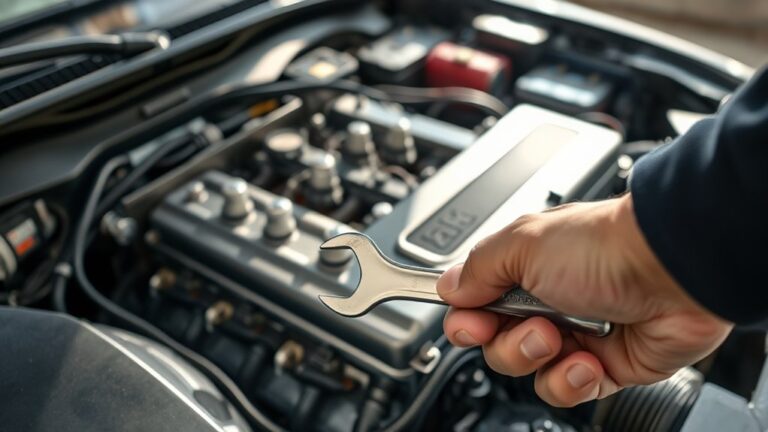
Before you get started, make sure you’ve got all the right tools on hand. You’ll want a spark plug socket, a ratchet wrench, and an extension to make the job easier. It’s also important to have the correct replacement spark plugs ready to go, along with any gaskets or anti-seize compound you might need.
And don’t forget about safety! Grab some gloves and safety glasses so you can work safely and comfortably. Having everything prepared beforehand will make the whole process smoother and less stressful.
Essential Tools List
Gathering the right tools and materials is key to a smooth spark plug replacement. Having the right tools on hand helps you avoid delays and makes sure you pick the correct spark plugs for your vehicle.
Refer to your maintenance schedule to know when to replace your plugs and what specifications to look for. It’s a good guide to ensure you’re using the right parts at the right time.
Here’s a quick list of essential tools:
| Tool/Material | Purpose |
|---|---|
| Ratchet wrench | Loosening and tightening spark plug sockets |
| Spark plug socket | Fitting and removing spark plugs |
| Torque wrench | Ensuring proper tightness based on manufacturer specs |
| Dielectric grease | Protects against corrosion and improves conductivity |
| Replacement spark plugs | The correct type for your engine, based on your maintenance schedule |
Necessary Replacement Parts
Having the right replacement parts on hand guarantees your spark plug change goes smoothly. First, identify your vehicle’s specific spark plug type—whether it’s copper, platinum, or iridium—as each has different durability and performance characteristics.
Check your owner’s manual for the recommended replacement intervals, which are typically every 30,000 to 100,000 miles. You’ll also need new spark plugs that match your vehicle’s specifications.
Make sure you have the correct socket and extension for removal, along with dielectric grease to prevent corrosion. Don’t forget to gather a spark plug gap tool to verify proper spacing.
Having these parts ready ensures a quick, efficient replacement process. This helps your engine run smoothly and maintain peak performance.
Protective Equipment Needed
To safely and effectively replace your spark plugs, you’ll need the right protective equipment to avoid injuries and damage. Start with safety goggles to protect your eyes from debris, dust, or accidental splashes of oil or coolant.
Mechanic gloves are essential to shield your hands from sharp edges, hot engine parts, and harmful chemicals. Wearing gloves also gives you a better grip on tools, reducing slips.
Make sure your gloves are durable and resistant to oils and chemicals commonly found in engine bays. This combo of safety goggles and gloves keeps you safe in tight or dirty spaces.
Always prioritize protective gear to make the spark plug replacement safer and more efficient.
Locate and Access Your Spark Plugs
Start by opening your vehicle’s hood and locating the engine. To find the spark plug locations, look for the small, cylindrical components connected by wires on top of the engine.
Most engines have multiple spark plugs, typically one per cylinder, arranged in a line or a specific pattern. Gaining good engine accessibility is key — remove any covers or components blocking your view.
In some vehicles, spark plugs are tucked deep within the engine bay, so you might need to move or remove parts like the intake manifold or air filter assembly. Use a flashlight if necessary to clearly see the spark plug boots and wires.
Take your time to identify each spark plug’s exact position before proceeding. Ensuring proper access now will make the removal and replacement steps much smoother later.
Remove Old Spark Plugs Safely and Efficiently
Carefully loosen the spark plug wire or coil pack from the top of the spark plug, making sure you don’t pull on the wire itself. This helps prevent damage to the electrical connection.
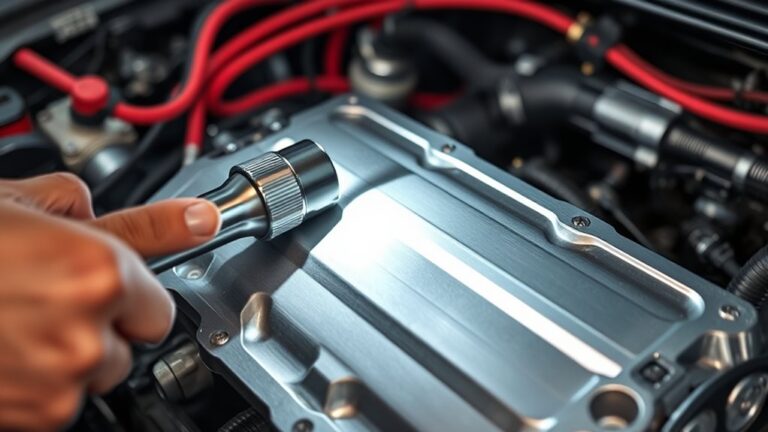
Once loosened, use a spark plug socket and ratchet to turn the plug counterclockwise. Different spark plug types—copper, platinum, or iridium—may need slightly different handling, but all should come out smoothly if you apply steady pressure.
If the plug is stubborn, avoid forcing it. Instead, gently wiggle it or use penetrating oil around the threads.
When removing the spark plug, keep track of its condition, as this can give you clues for your future installation. Be careful not to drop or damage the ceramic insulator.
Removing old spark plugs carefully ensures easy installation of new ones and helps prevent cross-threading or damage to the cylinder head. Proper removal sets the stage for a smooth replacement process.
Inspect Spark Plugs for Wear and Damage
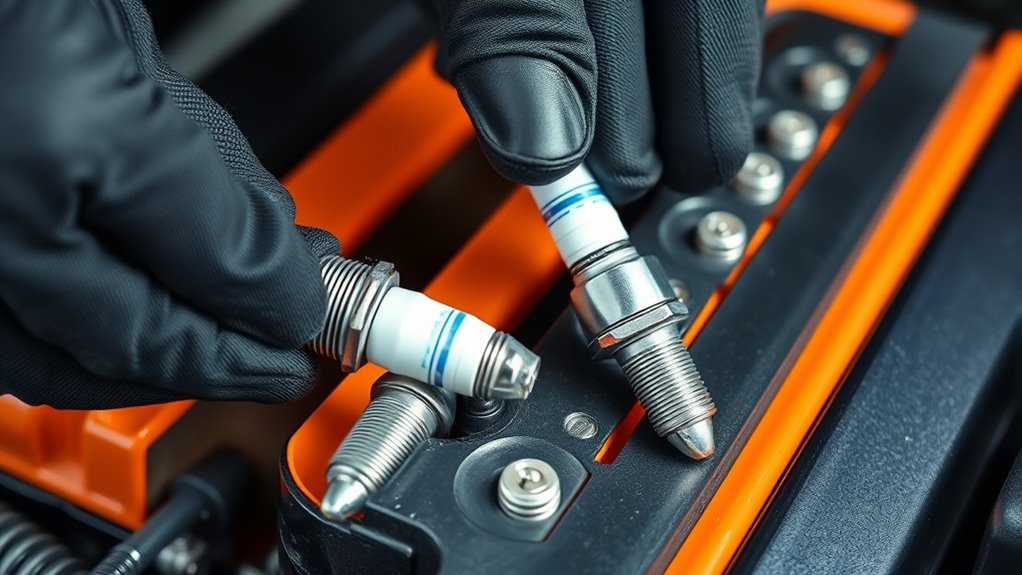
First off, take a good look at your spark plugs. Check the ceramic insulator and the metal shell for any cracks or damage—that can cause some serious issues if you don’t catch it early. Then, move on to the electrode; see if it’s excessively worn down or eroded, because that can really affect how well your engine runs.
Finally, grab a feeler gauge and measure the gap size. Make sure it lines up with what your vehicle’s manual recommends. Doing this simple check can make a big difference in keeping your engine running smoothly!
Visual Inspection for Cracks
A visual inspection is an essential step in evaluating the condition of your spark plugs. During this process, focus on crack detection by carefully examining the insulator and metal shell for any visible cracks or chips.
A thorough visual assessment helps identify potential damage that could cause misfires or engine trouble. Look for discoloration, burn marks, or signs of overheating, which can indicate underlying issues.
Cracks may be subtle, so inspect both the electrode and ceramic insulator closely. If you notice any cracks or damage, it’s best to replace the spark plug promptly.
Check Electrode Condition
Inspecting the electrode condition is key to making sure your spark plugs are working properly. Look for signs of electrode wear, like rounded or eroded tips, which can lower spark efficiency.
Check the electrode alignment too. It should be centered and evenly spaced from the ground electrode. Misaligned or uneven electrodes can cause misfires or poor engine performance.
If you see the electrode is worn down, damaged, or has deposits, it might be time to replace the spark plug. Keeping the electrode in good shape ensures a strong spark and efficient combustion.
Regular inspections help catch issues early. This keeps your vehicle running smoothly and prevents bigger engine problems down the line.
Assess Gap Size
Evaluating the gap size between the center and ground electrodes is key to making sure your spark plug fires properly. Different spark plug types might need specific gap measurements, so always check your vehicle’s manual.
To measure the gap, use a spark plug gap gauge or feeler gauge for accuracy. Compare your measurement to the recommended gap. If it’s too wide or narrow, gently bend the ground electrode to adjust it.
Getting the gap right ensures strong spark ignition and better fuel efficiency. Worn or damaged spark plugs often show irregular gaps or burn marks, which means they should be replaced.
Regularly inspecting and adjusting the gap keeps your spark plugs performing reliably, helping prevent misfires and engine problems.
Choose the Best Spark Plugs for Your Car
Are you unsure which spark plugs are right for your car? Choosing the best spark plugs depends on understanding spark plug types and heat range. The right type guarantees peak performance, fuel efficiency, and longevity.
Here’s a quick guide:
| Spark Plug Type | Best For | Key Feature |
|---|---|---|
| Copper | Budget, older engines | Good conductivity, shorter lifespan |
| Platinum | Daily drivers | Longer-lasting, improved durability |
| Iridium | High-performance cars | Superior wear resistance, excellent ignition |
The heat range is just as important. A spark plug with too high a heat range can cause pre-ignition, while a colder plug may foul easily. Always match the heat range recommended by your vehicle’s manufacturer for optimal performance.
Picking the right combination of spark plug types and heat range ensures your engine runs smoothly and efficiently.
Check and Adjust Spark Plug Gaps Before Installing
Before installing new spark plugs, it’s important to check and adjust their gaps to ensure proper ignition and engine performance.
Different spark plug types, like copper, platinum, or iridium, may have specific gap requirements. Always double-check the manufacturer’s specifications to be sure.
Use a gap measurement tool, such as a feeler gauge, to accurately measure the distance between the center and ground electrode.
If the gap is too narrow or too wide, carefully bend the ground electrode to adjust it without damaging the plug.
Properly gapped spark plugs create a strong spark, improve fuel efficiency, and lead to smoother engine operation.
Handle the plugs carefully to avoid damaging the electrodes. Taking the time to verify and adjust the gap before installation helps prevent misfires.
This also maximizes your engine’s performance. Remember, a correctly gapped spark plug is key to a reliable ignition system.
Install New Spark Plugs Correctly
To install new spark plugs correctly, start by carefully threading each plug into the spark plug hole by hand. This helps prevent cross-threading and damage to the threads.
Once hand-tight, use a torque wrench to tighten the plugs to the manufacturer’s recommended torque specifications. This ensures proper sealing without over-tightening, which could crack the ceramic insulator.
Pay attention to spark plug materials—copper, platinum, or iridium—since installation techniques can vary slightly depending on the type, especially regarding torque and handling.
To make the process smoother, use dielectric grease on the spark plug boots to prevent corrosion. Also, verify that the spark plug gap matches the manufacturer’s specs before installation.
Handle spark plugs carefully to avoid damaging the ceramic insulator. Following these tips will help ensure a proper and safe installation.
Test Your Engine After Replacing Spark Plugs
After swapping out your spark plugs, go ahead and start up your engine. Just listen to how it sounds—does it fire up smoothly? You want to make sure it’s running steadily without any misfires or rough idling.
And don’t forget to keep an eye on your fuel efficiency too. If everything’s working right, your engine should be running at its best, giving you good mileage and smooth performance.
Check Engine Performance
Once you’ve replaced your spark plugs, it’s important to test your engine to make sure everything’s running smoothly. Start your vehicle and listen for any unusual sounds or rough idling.
Check your dashboard for warning lights that might indicate a problem. Pay attention to how your engine responds during acceleration and deceleration to ensure smooth performance.
Proper engine tuning is key to getting the most out of your new spark plugs, especially if you’ve made any performance upgrades. To verify that you’re getting peak performance, consider these steps:
- Keep an eye on your fuel efficiency and compare it to previous readings
- Notice how quickly and smoothly your car accelerates
- Use an OBD-II scanner to check for any error codes
Taking these steps helps confirm your engine runs efficiently and that your new spark plugs are working correctly.
Observe Start-Up Behavior
Start your engine and pay close attention to how it begins to run. Notice the engine noise—does it sound smooth or rough? Observe the idle stability; it should stay steady without any fluctuations.
Any unusual noises or irregular idle might mean there’s an issue with the spark plug installation. Use this table to help interpret what you’re experiencing:
| Symptom | Possible Cause |
|---|---|
| Rough engine noise | Spark plug misfire or improper gap |
| Unstable idle | Worn or damaged spark plugs |
| Smooth, steady run | Proper spark plug installation |
If your engine sounds smooth and keeps a steady idle, you’re probably good to go. If not, double-check your spark plug connections and gaps before moving on.
Monitor Fuel Efficiency
Monitoring your fuel efficiency is a key step to make sure your new spark plugs are working properly. After you’ve replaced them, pay close attention to how your vehicle performs and use these tips to track any improvements.
Keep an eye on your fuel consumption and notice if there are any changes in your driving habits that could affect your mileage. You can track your miles per gallon over several drives to spot patterns and trends.
Try adjusting your driving habits too. For example, cut back on idling and avoid aggressive acceleration. Also, make sure your tires are properly inflated for the best fuel efficiency.
Tips to Extend Spark Plug Life and Maintain Performance
Proper maintenance and mindful driving habits can greatly extend the life of your spark plugs and keep your engine running smoothly. Regular spark plug checks are essential for maintaining good ignition performance.
Regular maintenance and careful driving extend spark plug life and ensure smooth engine performance.
Look for signs of wear like carbon buildup or worn electrodes and replace them when needed. Using the right gap size ensures efficient combustion and helps prevent misfires.
Avoid aggressive driving, such as rapid acceleration or heavy braking, which can put extra stress on your spark plugs. Keeping your engine air filter clean is also important since a clogged filter can lead to poor combustion.
Using high-quality fuel and oil supports optimal engine conditions. By paying attention to these tips, you’ll improve ignition performance, reduce misfires, and make your spark plugs last longer.
This not only saves you money but also boosts your vehicle’s overall reliability.
Frequently Asked Questions
Can I Replace Spark Plugs Myself Without Professional Help?
Yes, you can replace spark plugs yourself with the right tools and some DIY skills. It’s a manageable task if you follow safety precautions and know your vehicle’s specs.
Make sure to gather the necessary tools, like a spark plug socket and gap gauge. Taking your time and following a step-by-step guide will help ensure a successful replacement.
This can save you money and give you a real sense of accomplishment. So, with a little patience, you can definitely do it on your own.
How Often Should I Replace My Spark Plugs?
Think of your spark plugs like the heartbeat of your engine. They need regular checkups to stay in good shape.
You should replace your spark plugs roughly every 30,000 to 50,000 miles. This depends on your vehicle and the lifespan of the spark plugs.
Worn-out plugs can cause misfires and poor engine performance. Keeping an eye on their condition helps keep your engine running smoothly.
Regular replacements help ensure your engine stays healthy and responsive. It also prevents bigger problems down the road.
What Are the Signs of Incorrect Spark Plug Installation?
If your engine is misfiring or idling roughly, it might be a sign that the spark plugs weren’t installed correctly.
You might have used the wrong torque during installation, which can lead to poor contact or damage to the threads.
Keep an eye out for issues like difficulty starting the engine or reduced fuel efficiency.
Make sure the spark plugs are properly gapped, seated correctly, and tightened to the recommended torque.
Proper installation is key to ensuring your engine runs smoothly and avoiding future problems.
Are There Different Types of Spark Plugs for Various Engines?
Yes, there are different spark plug types designed for various engines. You need to consider engine compatibility when choosing spark plugs, like copper, platinum, or iridium, each offering different durability and performance.
Always check your vehicle’s manual to make sure you pick the right spark plug for your specific engine. Using the correct type helps maximize engine efficiency and prevents potential issues caused by incompatible parts.
How Do I Dispose of Old Spark Plugs Properly?
You should recycle old spark plugs to reduce environmental impact and explore recycling options in your area.
First, safely store the used spark plugs, making sure they don’t come into contact with any hazardous materials.
Then, take them to a local recycling center or an auto parts store that accepts metal components.
By choosing recycling over disposal, you help prevent pollution, conserve resources, and promote eco-friendly practices.
Always follow your local disposal regulations to ensure safety and environmental responsibility.
Conclusion
Replacing your spark plugs might seem intimidating, but with the right steps, you can do it yourself and keep your engine running smoothly. Remember, a stitch in time saves nine—addressing small issues early prevents bigger problems later. Regular maintenance guarantees your car stays reliable and efficient.
So don’t wait for trouble to strike. Take charge of your vehicle’s health and enjoy the smoother ride that comes with fresh spark plugs.