What Happens When Your Torque Converter Goes Out: Signs & Prevention Tips
Many drivers face the frustrating issue of a failing torque converter, and you’re not alone in this struggle. It can be stressful trying to figure out what’s wrong and how to fix it.
When your torque converter fails, you might notice slipping, rough shifting, or sluggish acceleration, along with warning lights and strange noises.
Overheating transmission fluid and delayed gear engagement are common signs. Poor maintenance, overheating, or contaminated fluid often cause these issues.
Catching problems early and maintaining proper fluid levels can prevent costly repairs.
If these symptoms sound familiar, you’re about to uncover more on how to identify and prevent further damage to your transmission.
Key Takeaways
- A failing torque converter can cause slipping, shuddering, and sluggish acceleration, which all impact your vehicle’s overall performance.
- Watch out for warning signs like delayed shifting, overheating, strange noises, and transmission fluid that’s dark and smells burnt.
- Overheating and contaminated fluid are common causes, often due to poor maintenance or aggressive driving habits.
- Make sure to regularly check and change your transmission fluid, follow the manufacturer’s maintenance schedule, and keep an eye out for early signs of trouble.
- Small issues might be fixable, but severe damage usually means the converter needs replacing. Staying proactive can save you money in the long run.
What Is a Torque Converter and How Does It Work?
A torque converter is an essential part of automatic transmissions that smoothly transmits power from the engine to the drivetrain. It uses fluid dynamics to do this, making the ride smoother and more seamless.
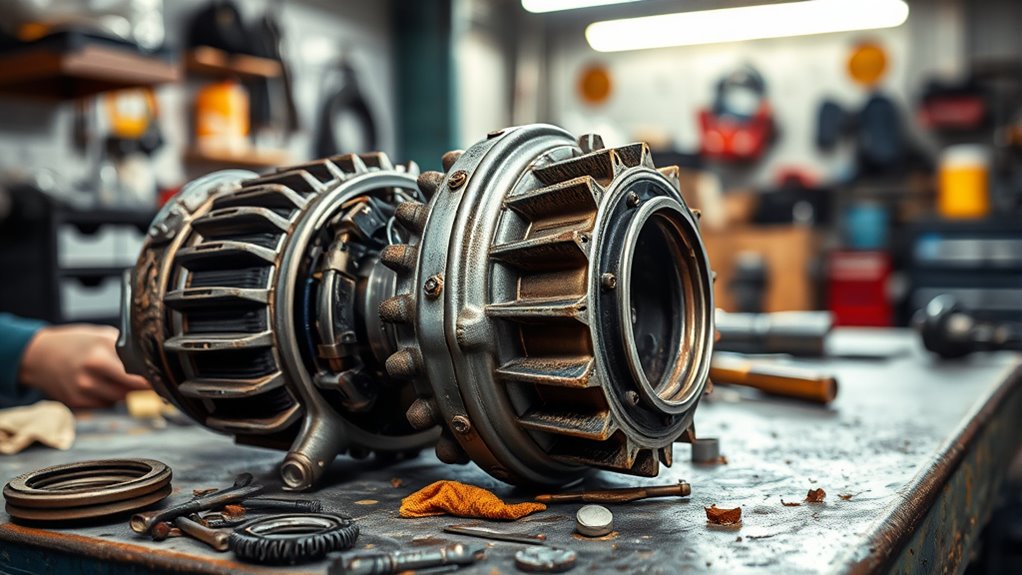
Inside, you’ll find a pump, turbine, and stator working together. Fluid acts as the medium to transfer power between these parts. When your engine runs, the pump pushes transmission fluid onto the turbine blades.
This causes the turbine to spin and transfer motion to the transmission. The stator redirects the fluid flow, boosting efficiency and multiplying torque, especially at low speeds.
This process helps your vehicle accelerate smoothly without needing to use a clutch manually. The fluid dynamics inside the converter keep power transfer seamless, absorbing shocks and reducing vibrations.
Basically, it acts as a buffer between your engine and transmission. This allows for smooth engagement and disengagement, keeping everything running reliably.
Top Signs Your Torque Converter Is Failing
Your vehicle’s performance can reveal warning signs of a failing torque converter, often before more serious damage occurs. One common symptom is slipping or shuddering during acceleration, which means it’s not transferring power smoothly.
A failing torque converter can cause slipping and shuddering during acceleration, indicating potential transmission issues.
You might also notice your engine revs higher than usual without a corresponding increase in speed. Another sign is a delayed engagement when shifting from park to drive, suggesting internal transmission issues.
Overheating the transmission can also point to torque converter problems, leading to smells or warning lights. If your car stalls or struggles to move when in gear, that’s a strong indicator the torque converter isn’t working properly.
Recognizing these symptoms early can help you avoid costly repairs. Regularly monitor your vehicle’s performance and seek professional diagnostics to catch issues before they get worse.
What Happens When Your Torque Converter Fails?
When your torque converter starts to fail, you’ll probably feel a loss of power in your transmission. That means acceleration might become sluggish, or sometimes you just can’t get the car to accelerate at all. It’s like your vehicle isn’t responding the way it should, and that can be pretty frustrating.
You might also notice some odd behavior from your car, like shuddering or slipping when you’re driving. These little signs are clues that something’s not right with your converter. If you start experiencing these issues, it’s a good idea to get it checked out sooner rather than later, because it’s a sign that your torque converter isn’t working properly and needs some attention.
Loss of Transmission Power
A failing torque converter can cause a noticeable loss of transmission power, making your vehicle feel sluggish or unresponsive. When its efficiency drops, it struggles to transfer engine power smoothly to the transmission.
This inefficiency leads to decreased acceleration and overall performance. Contaminated or low transmission fluid can make things worse by hindering the converter’s proper operation.
You might notice your car has trouble maintaining speed or stalls when stopped. The power loss isn’t always sudden but can gradually get worse as the torque converter deteriorates.
Addressing this quickly can prevent further damage and help restore proper transmission function. Regularly checking and maintaining your transmission fluid and watching for signs of wear can keep the torque converter working efficiently.
Unusual Vehicle Behavior
As a torque converter starts to fail, you’ll notice changes in how your vehicle behaves on the road. You might feel unpredictable acceleration, like the car suddenly speeds up or stalls without warning.
Strange vibrations can also occur, especially when shifting gears or cruising at steady speeds. These signs indicate there’s a problem with your transmission system.
Here’s what to look out for:
| Symptom | Description | Possible Cause |
|---|---|---|
| Unpredictable acceleration | Sudden surges or stalls | Faulty torque converter |
| Strange vibrations | Shaking while driving | Transmission imbalance |
| Gear slipping | Gears shift unexpectedly | Transmission issues |
| Delayed engagement | Sluggish response when shifting | Converter or clutch failure |
| Overheating | Excessive heat from transmission | Friction from converter failure |
Stay alert to these signs to avoid causing more damage.
Common Causes of Torque Converter Failure
Many factors can lead to torque converter failure, often stemming from issues within the transmission system. Overheating problems are common, caused by heavy towing, aggressive driving, or low transmission fluid levels, which damage internal components.
Fluid contamination from dirt or metal shavings can also impair the converter’s operation, leading to slipping or failure. Wear components like bearings and clutch plates naturally degrade over time, especially with age that weakens the system’s integrity.
Improper installation or poor-quality parts can cause misalignment or extra stress, increasing the risk of failure. Excessive torque from high-performance engines or aggressive driving puts added strain on the converter.
Neglecting maintenance, such as infrequent fluid changes or ignoring warning signs, accelerates wear and tear. All these issues, combined with age and prolonged use, can ultimately cause the torque converter to fail prematurely.
When to See a Mechanic for Torque Converter Problems
If your car starts shifting oddly, or you hear strange noises, it’s probably a good idea to see a mechanic. You might also notice your vehicle feeling sluggish or less responsive than usual. These are common signs that something might be wrong with the torque converter.
Ignoring these signs can lead to bigger issues down the road, and repairs could end up being more costly. So, if any of this sounds familiar, it’s best to get it checked out sooner rather than later. Addressing the problem early on can save you time, money, and a lot of headaches.
Persistent Shifting Issues
Persistent shifting issues can be a clear sign that your torque converter is struggling. You might notice uneven gear changes, delayed responses, or the transmission feeling like it’s slipping.
These shifting symptoms often point to underlying transmission problems that need quick attention. When these issues keep happening, it’s important to get transmission diagnostics to find out what’s really going on.
Ignoring them can lead to more damage and expensive repairs. If you notice any of these signs, don’t wait too long:
- Jerky or rough gear shifts
- Delay in acceleration or deceleration
- Transmission slipping out of gear
- Unusual feeling during shifting
Seeing a mechanic quickly helps ensure the problem gets diagnosed properly and prevents further damage. Addressing shifting problems early can save you money and keep your vehicle running smoothly.
Unusual Transmission Noise
Unusual noises coming from your transmission can be a clear sign that your torque converter is having issues. You might notice strange sounds like whining, grinding, or rattling while driving. These unusual sounds often point to a failing torque converter or other transmission problems. If you hear persistent torque converter noise, it’s a good idea to see a mechanic before things get worse.
| Sound Type | Possible Cause | When to Act |
|---|---|---|
| Whining | Low fluid or bearing failure | During driving, seek help soon |
| Rattling | Loose components or debris | When heard, schedule inspection |
| Grinding | Clutch or gear engagement issues | Immediate mechanic visit |
Quick action can save you from costly repairs later.
Decreased Vehicle Performance
When your vehicle’s performance starts to decline, it’s often a sign that your torque converter isn’t working properly. You might notice sluggish acceleration, stalling, or trouble shifting gears. These issues suggest reduced torque converter efficiency and put extra strain on your transmission.
Poor transmission fluid quality can also cause problems, leading to overheating and slipping. If you experience any of these symptoms, it’s a good idea to see a mechanic.
Look out for signs like loss of acceleration or slow response, frequent gear slipping, or hard shifts. An overheating transmission warning light or unusual vibrations while driving are also red flags.
Addressing these issues early can help prevent bigger problems down the road. Regularly check your transmission fluid and keep it clean to maintain your torque converter’s performance and your vehicle’s overall health.
Don’t ignore these warning signs—they’re a clear indication to get professional help.
Tips to Prevent Torque Converter Malfunctions
To help prevent torque converter malfunctions, regular maintenance is essential. Proper care involves staying on top of your vehicle’s recommended service schedule.
Make sure to regularly check and change your transmission fluid, as dirty or low fluid can cause overheating and wear. Preventive maintenance also means inspecting for leaks or signs of fluid degradation, which can damage the converter.
Regularly check and change transmission fluid to prevent overheating and damage to the converter.
Avoid aggressive driving habits like rapid acceleration and heavy towing that put extra strain on your transmission. Pay attention to unusual vibrations, slipping gears, or delayed engagement, and get them checked out promptly.
Keeping your transmission system in good shape reduces the risk of torque converter problems and helps it last longer. Having a professional perform routine inspections can catch potential issues early, saving you money and preventing breakdowns.
Consistent torque converter care and preventive maintenance are your best defenses against costly repairs down the line.
Should You Repair or Replace Your Torque Converter?
Deciding whether to repair or replace your torque converter depends on how bad the damage is and what it costs. If the problem is minor, fixing it usually costs less, so repairs can be a good choice.
But if the converter is badly worn or broken inside, replacing it might be more cost-effective in the long run. Consider these points:
- Small issues like slipping or shuddering can often be fixed with repairs, saving you money.
- Major damage or internal failure usually means you need a full replacement.
- Repair costs can add up and may be close to the price of a new converter.
- Replacement options include new units, rebuilt, or remanufactured converters.
At the end of the day, weigh how serious the problem is against the repair costs. If fixing it is too expensive or unlikely to restore full function, replacing the torque converter is usually the smarter move.
How to Save Money on Torque Converter Repairs
If you want to save some cash on torque converter repairs, the best thing you can do is stay on top of regular maintenance checks. Catching problems early can make a big difference because the sooner you notice an issue, the easier and cheaper it usually is to fix.
It’s also really important to address any problems as soon as you spot them. Ignoring small issues can lead to bigger, more costly repairs down the line. So, staying proactive can save you quite a bit in the long run.
And one more tip — go for high-quality parts when it’s time for replacements. While they might cost more upfront, they tend to last longer and work better, which means fewer repairs and more savings over time.
Regular Maintenance Checks
Regular maintenance checks are essential for catching potential torque converter issues early and avoiding costly repairs down the line.
By following a consistent maintenance schedule, you can monitor fluid quality, inspect transmission fluid, and spot early signs of wear.
Use diagnostic tools during inspections to detect problems before they become serious.
Pay attention to your driving habits, as aggressive driving can put extra strain on the torque converter.
Keep track of repair history and consult service manuals for recommended inspection intervals.
Proper cleaning techniques and performance tuning can also extend the life of your transmission components.
Staying proactive with these checks helps you find issues early, saving money and preventing sudden failures.
Regular maintenance is your best defense against unexpected, costly repairs.
Address Issues Promptly
Addressing torque converter issues promptly can save you a lot of money and prevent more serious damage.
Regular maintenance helps catch problems early, so you won’t have to deal with costly repairs later. Keep an eye out for signs like slipping gears, shuddering, or strange noises, and don’t ignore warning lights.
Checking and maintaining proper transmission fluid levels is crucial because low or dirty fluid can cause the torque converter to fail. If you notice anything unusual, get your vehicle inspected right away.
Taking quick action stops minor issues from turning into big, expensive repairs. Staying alert and fixing problems early keeps your vehicle running smoothly and your repair costs manageable.
Consistent maintenance and prompt responses are your best defense against serious torque converter damage.
Choose Quality Parts
Choosing high-quality parts for your torque converter repairs might cost more upfront, but it can save you money in the long run by preventing recurring issues and reducing the need for future replacements. Using OEM or reputable aftermarket parts guarantees the components meet the original torque specifications, which is essential for proper performance.
Investing in quality parts also allows for potential performance upgrades, enhancing your vehicle’s efficiency and durability. Cheaper alternatives may seem tempting but often lack the precision needed for smooth operation.
- Use parts that meet or exceed manufacturer torque specifications
- Opt for reputable brands known for durability
- Consider performance upgrades that improve efficiency
- Prioritize parts designed for your vehicle’s specific needs
Signs You Need a New Torque Converter
Wondering if your torque converter might be failing? One of the first signs is strange transmission behavior. During diagnostics, you might notice slipping or delayed gear engagement.
Strange transmission behavior like slipping or delayed shifts may indicate a failing torque converter.
If your vehicle feels like it’s jerking or hesitating, that’s a red flag. Abnormal transmission fluid conditions, like dark, burnt-smelling fluid or low levels, can also point to internal issues.
You might also experience higher engine RPMs without a corresponding increase in speed, which suggests the converter isn’t transferring power properly. Overheating transmission fluid can cause the converter to work harder and potentially fail.
Additionally, strange noises like whining or grinding when the vehicle is in gear are signs to get your transmission checked. Addressing these symptoms early can help prevent more damage and costly repairs. Stay alert to these warning signs.
Final Tips for Maintaining Your Transmission
To keep your transmission running smoothly, regular maintenance is essential. Make sure to check the fluid quality often, since clean, properly filled fluid helps everything run smoothly and prevents overheating.
It’s also a good idea to schedule routine inspections so you can catch any problems early before they get worse. Staying on top of these checks can really extend your transmission’s lifespan and save you money on repairs.
Here are some final tips:
- Regularly monitor fluid levels and quality, topping off or changing fluid as needed
- Follow your vehicle manufacturer’s recommended maintenance schedule
- Pay attention to unusual noises or shifting problems
- Keep an eye on warning lights and address issues promptly
Frequently Asked Questions
How Long Does a Typical Torque Converter Last Before Failing?
A typical torque converter lasts around 150,000 miles, but it can vary depending on your driving habits and how well you maintain your vehicle.
You might notice signs of failure like slipping, overheating, or shuddering before it completely goes out. Keep an eye out for these issues so you can catch them early.
Regular inspections and fluid changes can help extend its life. Proper care ensures your torque converter lasts longer and keeps your transmission running smoothly.
Can a Faulty Torque Converter Cause Damage to Other Transmission Components?
When your torque converter shows signs like slipping or overheating, it’s a warning that something’s wrong with your transmission.
A faulty torque converter can cause damage to other transmission parts, speeding up wear and tear.
If you ignore these symptoms, it could lead to expensive repairs or even total transmission failure.
Stay alert, fix torque converter issues early, and keep your transmission in good shape.
Is Driving With a Failing Torque Converter Safe?
Driving with a failing torque converter isn’t safe because it can cause serious transmission problems and sudden breakdowns. You might notice signs like slipping, rough shifting, or even the engine stalling.
Regular converter maintenance helps catch issues early and can prevent costly repairs down the line. Ignoring these signs risks damaging other parts and could leave you stranded unexpectedly.
For safety and to keep your vehicle running smoothly, it’s best to address torque converter problems right away and avoid driving until repairs are done.
What Is the Average Cost to Replace a Torque Converter?
Replacing a torque converter usually costs between $600 and $1,200, depending on your vehicle’s make and model. The price can change based on whether you choose a standard or high-performance torque converter.
Use a symptoms checklist to catch issues early. If you notice slipping, rough shifts, or engine stalling, it’s a good idea to get a professional diagnosis.
Getting it replaced promptly can prevent further transmission damage and keep your vehicle running smoothly.
Can You Repair a Torque Converter Without Replacing It?
You can sometimes breathe new life into a struggling torque converter through careful maintenance, but it’s not always a sure fix. If you notice issues like slipping or overheating, options might include rebuilding or replacing the unit.
Keep in mind that repairing a torque converter is complex work, and in many cases, replacing it is the most reliable choice. Regular maintenance can go a long way in preventing these problems before they start.
Conclusion
If you notice signs like slipping or strange noises, don’t ignore them—your transmission’s health is at stake. For example, imagine driving smoothly until your car suddenly stalls; that’s a clear sign of a failing torque converter.
Address issues promptly by consulting a mechanic. Regular maintenance can prevent costly repairs and keep your vehicle running reliably.
Stay vigilant, and your transmission will thank you for it. When your torque converter goes out, catching it early saves you time and money.