Exploring the Water Resistant Features of Electric Cars: Can They Drive Through Water Safely?
Many people worry about driving their electric cars in wet conditions, especially when it comes to crossing shallow water. You’re not alone—navigating through puddles or light floods can feel risky.
Thankfully, modern electric vehicles are designed with advanced water-resistant features to help ease those concerns. Electric cars are built with advanced water-resistant features such as sealed electrical systems, waterproof materials, and sealed enclosures to help them handle shallow water crossings.
Most models can safely drive through puddles and light floods, but you should always follow manufacturer guidelines and avoid deep water that could reach critical components.
While their sealed systems improve wet-weather performance, knowing their limits is key. Staying informed will help you understand just how safe and capable these vehicles truly are.
Key Takeaways
- Modern electric cars have sealed electrical systems and high ground clearance, which help with shallow water crossings.
- Ingress Protection (IP) ratings show how water-resistant a vehicle is, but they don’t guarantee safe water crossing.
- Waterproof materials, gaskets, and sealed enclosures protect critical electrical parts from water damage.
- Regular maintenance, inspections, and following the manufacturer’s advice are key to keeping your EV water-resistant.
- Driving through deep or unknown water can be risky. EVs are built for mild water exposure, not for flood conditions.
Can Electric Cars Safely Drive Through Water?
Can electric cars safely drive through water? The answer depends on their water safety features and driving capabilities. Most modern electric vehicles are designed with high ground clearance and sealed electrical systems, allowing them to handle shallow water crossings without issues. These vehicles are built to prevent water from entering sensitive components, ensuring safe operation.
However, not all electric cars are meant for water crossings. Driving capabilities vary among models; some are better equipped for wet conditions than others. Always check your car’s specifications and manufacturer guidelines before attempting to drive through water.
Even with advanced water-resistant features, deep or rushing water can pose risks. For safety, avoid water crossings if you’re unsure about your vehicle’s water safety or if water levels are high. Proper understanding of your electric car’s driving capabilities guarantees both safety and peak performance in wet conditions.
How Do Electric Vehicles Protect Their Electrical Components From Water?
Electric vehicles use a bunch of advanced methods to protect their electrical parts from water damage. They seal sensitive components with waterproof materials to stop water from getting in. Electrical insulation is key, with parts coated or enclosed to keep moisture out. Engineers design sealed enclosures that prevent water from reaching critical electrical systems, even during deep water crossings.
Some key protective measures include waterproof gaskets and seals that fit tightly around connectors and enclosures. They also use water-resistant coatings on circuit boards and wiring to prevent rust and corrosion. Specialized electrical insulation materials resist moisture and help prevent short circuits.
Drainage systems are included inside enclosures to divert any water that might collect away from important parts. These strategies make sure that even if water contacts the vehicle, the electrical systems stay safe, working properly, and protected from damage. This combination of waterproof materials and insulation techniques is essential for safe and reliable operation in wet conditions.
What Waterproof Features Do EVs Have?
Electric vehicles are designed with some pretty smart waterproof features to handle wet conditions. For example, they often have sealed battery compartments and waterproof cable connectors to keep water from getting inside. That way, even if you’re driving through puddles or heavy rain, water doesn’t mess with the car’s important electronics.
Plus, many EVs come with enhanced electronic modules that are built to resist water damage. These features work together to make sure your vehicle stays safe and keeps working properly, no matter how damp the weather gets. So, you can enjoy driving your EV in the rain without worry!
Sealed Battery Compartments
A sealed battery compartment is an essential waterproof feature that protects the heart of an electric vehicle. It guarantees water ingress can’t reach the battery, helping to keep it durable and safe during water exposure.
This seal prevents moisture from causing corrosion or electrical faults, even when you’re driving through puddles or shallow water. The compartment is made with strong materials and tight seals to withstand water pressure and prevent leaks.
Moreover, the sealed enclosure limits dust and dirt entry, further protecting the battery’s function. This feature is key to making sure your EV stays reliable in wet conditions and helps extend the battery’s lifespan.
Proper sealing directly boosts the vehicle’s overall water resistance, giving you confidence to drive through various weather scenarios. The use of waterproof sealant materials, gaskets or rubber seals, a reinforced enclosure design, and pressure-tested compartments all contribute to this protection.
Waterproof Cable Connectors
Waterproof cable connectors are made to keep electrical connections secure and dry, even in wet conditions. They use waterproof materials like rubber seals and special coatings to stop water from getting in, making sure they work reliably.
These connectors are built tough to resist corrosion and wear from moisture exposure. That means your electric vehicle’s delicate wiring stays protected during rain or water crossings.
Their sturdy design not only prevents electrical failures but also helps the connectors last longer. By using waterproof materials and focusing on durability, automakers boost safety and reliability in their EVs.
This feature lets you drive confidently through wet environments, knowing your car’s electrical system is well-protected from water damage.
Elevated Electronic Modules
To protect vital electronic modules from water damage, manufacturers design raised enclosures that keep these components above potential water exposure. This approach enhances safety and electronic durability, making sure essential systems stay operational even in tough conditions.
By lifting electronic modules, EVs reduce the risk of water getting in during heavy rain or flooding. These modules are usually sealed tightly and placed in areas less likely to encounter water, which boosts their resilience.
This design feature is key for maintaining vehicle reliability and safety. Raised enclosures prevent water contact with sensitive electronics, and sealed housings improve durability. Overall, it helps reduce the risk of electrical failures when exposed to water.
How Do Batteries and Chargers Handle Water Exposure?
You might be curious about how electric car batteries and chargers handle water exposure. Well, manufacturers use advanced sealing technologies to make sure moisture doesn’t get inside the batteries. This way, even if the car encounters some water, the batteries stay safe and dry.
When it comes to chargers, water-resistant designs are a big help. Charging ports are built to keep water out, so you don’t have to worry about splashes or rain messing things up while you’re plugging in. Plus, many vehicles have emergency water protection features that kick in if unexpected water contact happens, adding an extra layer of safety and peace of mind.
Battery Sealing Technologies
Battery sealing technologies are essential for ensuring electric cars can withstand water exposure without compromising safety or performance. These advancements protect the battery pack from water ingress, helping it stay durable even in wet conditions.
You benefit from innovative materials like rubber gaskets and advanced sealants that create tight barriers. Proper sealing prevents corrosion, electrical shorts, and potential failures.
Manufacturers focus on robust designs that withstand pressure and environmental factors, ensuring long-lasting protection. They use techniques like welded enclosures and waterproof seals.
These methods keep water out while allowing heat to dissipate. Overall, battery sealing technologies are crucial for helping electric vehicles handle water challenges without risking damage or safety issues.
Water-Resistant Charging Ports
Water-resistant charging ports are designed to prevent water from entering and damaging the electrical components during wet conditions. They use waterproof materials like rubber seals, gaskets, and protective covers to block water ingress, ensuring safe charging.
These ports often feature spring-loaded or locking covers that seal tightly when not in use, preventing water from getting inside during rain or splashes. Advanced designs incorporate specialized coatings and corrosion-resistant materials to withstand moisture without degrading.
Emergency Water Protection
When water unexpectedly contacts electric vehicle components, safety features are designed to protect the system from damage. Your car’s batteries and chargers include emergency water protection to ensure safety.
These features include sealed enclosures, rapid disconnects, and insulation barriers that stop water from reaching sensitive parts. In emergencies, they activate automatically, isolating the battery and cutting off power to prevent short circuits or fires.
This design helps you feel confident in waterlogged situations. It’s important to understand these protections for safe driving through water or splashes. Proper maintenance and awareness ensure these safety features work effectively, reducing risks during water exposure.
Your electric vehicle’s water safety features are essential for reliable performance in tough conditions. They include sealed battery enclosures to prevent water ingress, automatic disconnects to isolate affected components, insulation barriers to protect electronics, and system alerts to notify you of water-related issues.
Is It Safe to Drive Your Electric Car Through Puddles and Shallow Floods?
Is it safe to drive your electric car through puddles or shallow floods? Generally, whether it’s safe depends on how deep the water is and how water-resistant your vehicle is.
Shallow floods are more risky because water can quickly reach important parts of your car if it’s deeper than a few inches. Even if your electric car is water-resistant, it’s best to avoid standing water whenever you can.
Water can damage electrical systems or hide hazards underneath, like potholes or debris. When you see a puddle, slow down to prevent splashing and steer clear of water deeper than what your car’s manufacturer recommends.
What Are Manufacturer Guidelines for Water Resistance?
Want to get a good handle on your electric car’s water resistance? The best place to start is by checking out the manufacturer’s ratings and what they actually mean. These ratings give you a good idea of how much water your car can handle without any issues.
It’s important to follow those recommended limits for water exposure—going beyond them could lead to damage. And don’t forget to give your vehicle a quick check now and then for any signs of wear or leaks. Staying in the know like this helps keep your car protected and running smoothly for the long haul.
Manufacturer Water Resistance Ratings
Manufacturers specify water resistance ratings to help you understand how well electric cars can handle exposure to water. These ratings are based on manufacturer testing aligned with industry standards, ensuring consistent benchmarks across models.
They indicate the level of water exposure an electric vehicle can withstand without damage. Usually, ratings are given using the IP (Ingress Protection) scale, which measures protection against water ingress.
A higher IP rating means the vehicle has greater water resistance. Keep in mind, these ratings are guidelines, not guarantees for all water conditions.
Manufacturers test vehicles under controlled conditions to establish these ratings. This helps consumers make informed decisions about water exposure and driving safety.
Proper Water Exposure Limits
Understanding the manufacturer’s guidelines for water exposure helps you stay within safe limits and avoid potential damage. These guidelines tell you how much water your electric car can handle without risking safety or system failure.
They usually include ratings like IP (Ingress Protection) codes that show water resistance levels. For example, a vehicle rated IP68 can handle continuous immersion in water, but not all electric cars have this rating.
It’s really important to follow the manufacturer’s recommendations, especially when driving through puddles, rain, or flooded areas. Going beyond the specified limits can damage seals, electrical parts, and safety systems.
Staying within these limits keeps your electric car safe to use and helps maintain its water resistance over time.
Maintenance and Inspection Tips
Regular maintenance and inspections are essential for confirming your electric car’s water resistance remains effective over time. Follow the manufacturer’s maintenance schedules closely, paying attention to specific water resistance checks.
Use proper inspection techniques to identify potential vulnerabilities, such as seal damage or corrosion. Regularly inspect door seals, trunk gaskets, and battery compartments for signs of wear or moisture intrusion.
Keep an eye on any warning indicators related to water ingress. Schedule professional inspections periodically to verify that all components maintain their water-resistant properties.
What Limits the Water Resistance of Electric Vehicles?
While electric vehicles are designed to withstand water exposure, several factors can limit their water resistance. One major factor is design limitations. Certain components, like the battery pack and electrical systems, must be carefully sealed.
Design limitations and wear can reduce an electric vehicle’s ability to handle water exposure effectively.
If seals or enclosures aren’t perfectly constructed, water can seep in, risking damage. Manufacturing imperfections or wear over time can also compromise water resistance.
The vehicle’s airflow systems, such as vents and cooling channels, are also vulnerable points. These areas need specialized design to prevent water ingress, but they can still be weak spots if not maintained properly.
High-pressure water jets during cleaning or heavy rain can challenge the integrity of seals and protective barriers. Ultimately, while manufacturers aim to maximize water resistance, inherent design limitations and wear can restrict a vehicle’s ability to handle deep water or prolonged exposure.
How Do Electric Cars Perform in Wet Conditions Compared to Traditional Vehicles?
Electric cars generally handle wet conditions better than traditional vehicles because their electrical systems are sealed and designed to resist water intrusion. This means you can drive confidently in rain without worrying about electrical issues.
Modern electric vehicles often have advanced traction control systems that help keep you stable on slippery roads, reducing the chance of skidding. Their better weight distribution also improves grip and handling in wet conditions.
Plus, regenerative braking systems help you stop safely even in rain, adding an extra layer of confidence. But remember, no vehicle is completely immune to water hazards, so cautious driving is always important.
What Safety Tips Should You Follow When Driving in the Rain?
Driving in the rain needs extra caution to keep you safe on wet roads. To avoid accidents, follow key rain driving tips and be careful on slippery surfaces.
Slow down because wet pavement reduces tire grip. Keep a safe distance from the car in front so you have enough time to stop if needed. Avoid sudden moves like sharp turns or braking hard, as they can cause hydroplaning.
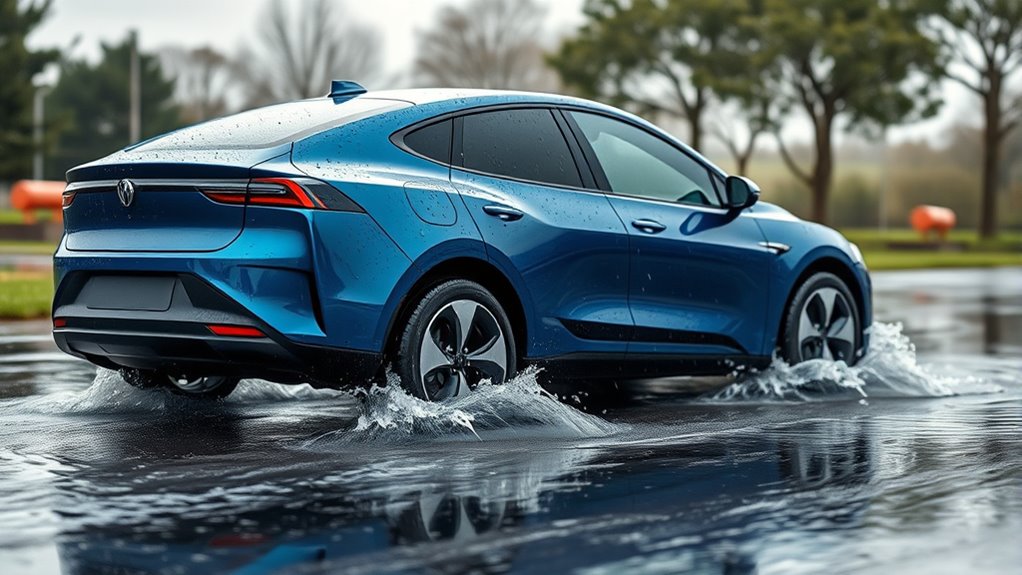
Here’s a quick visual to picture the scene:
| Wet Road Conditions | Safe Driving Tips |
|---|---|
| Puddles & standing water | Steer clear of large puddles to avoid hydroplaning. |
| Reduced tire grip | Slow down and increase following distance. |
| Slippery surfaces | Brake gently and avoid abrupt movements. |
Are Electric Vehicles Suitable for Flood-Prone Areas?
Flood-prone areas pose big challenges for electric vehicles (EVs), especially during heavy rains and rising water levels. While EV makers often highlight water resistance, safety in floods is still a concern. High water levels can threaten how well the vehicle works, risking damage to electrical parts and batteries.
You should check whether the EV’s waterproof ratings, like IP ratings, actually protect against deep water crossings. Even if the car is built to resist water, driving through flooded streets can be be unpredictable and dangerous.
Here are some key points to consider:
- Waterproof ratings and certifications for specific water depths
- The risk of water getting inside and affecting electrical parts
- What to do if water enters the vehicle
- Alternatives like avoiding flooded roads for safety
In the end, some electric cars are made for mild water exposure. But generally, they’re not suitable for flood-prone areas where water can quickly become dangerous.
Frequently Asked Questions
How Deep Can an Electric Car Safely Wade Through Water?
You can typically wade through water up to about 6 to 12 inches deep with an electric car, depending on its safety ratings and design. Always check your vehicle’s specific water resistance specs, usually found in the owner’s manual, to avoid damage.
Water deeper than the recommended level risks short circuits, damaging electrical parts, and compromising safety. When in doubt, it’s best to steer clear of driving through water that exceeds the manufacturer’s specified limits.
Are There Specific Maintenance Checks for Water Resistance in EVS?
A stitch in time saves nine, and that’s true for water resistance in EVs. You should regularly check for water ingress and follow the maintenance tips recommended by the manufacturer.
These checks include inspecting seals, gaskets, and the battery compartment. Staying proactive ensures your electric car remains water-resistant and safe.
Don’t wait for issues to show up—routine maintenance keeps your EV performing well, even in wet conditions.
Do Water-Resistant Features Affect the Overall Vehicle Lifespan?
Water-resistant features generally don’t hurt your electric car’s overall lifespan. In fact, design innovations focus on improving durability by sealing critical components effectively. Proper maintenance keeps these features working well, helping your vehicle last longer.
While water resistance helps protect your car from water damage, neglecting these features or exposing your EV to extreme conditions can pose long-term risks. It’s best to follow the manufacturer’s guidelines and stay attentive to ensure your car stays protected.
Can Water Exposure Impact the Resale Value of Electric Cars?
Water exposure can negatively impact your electric car’s resale value because buyers might worry about hidden damage.
Resale trends show that vehicles with questionable water resistance often sell for less.
Market perception can shift if buyers are concerned about potential issues beneath the surface.
To protect your investment, keep detailed maintenance records.
Make sure your car’s water-resistant features are intact to reassure future buyers about its durability.
Are There Differences in Water Resistance Standards Among EV Brands?
You’ll find differences in water resistance standards among EV brands because each company has its own testing methods and sets different levels of water resistance.
When you’re comparing brands, check out their specific testing protocols to see how well their electric cars handle water exposure.
Some brands might highlight higher IP ratings, which suggest better water resistance, while others may have more limited standards.
Always review these standards before choosing your EV if water-related conditions are a concern.
Conclusion
So, next time you see a puddle, remember: electric cars are built to brave the rain, not drown in it. Their waterproof features and protective systems act like an umbrella—shielding essential components from water’s wrath.
But don’t forget, your cautious driving is the true storm shield. With proper care and awareness, you can confidently navigate wet roads.
This way, water becomes just another part of your journey—like a boat sailing smoothly through the storm. Electric cars are designed to handle water safely, giving you peace of mind on rainy days.