How to Jump a Car With a Battery Charger: Easy Step by Step Guide
Feeling stranded with a dead car battery is a common frustration that many drivers face. You’re not alone—sometimes, it’s just bad luck or forgetfulness.
Luckily, jump-starting your car with a battery charger is a simple fix you can do yourself.
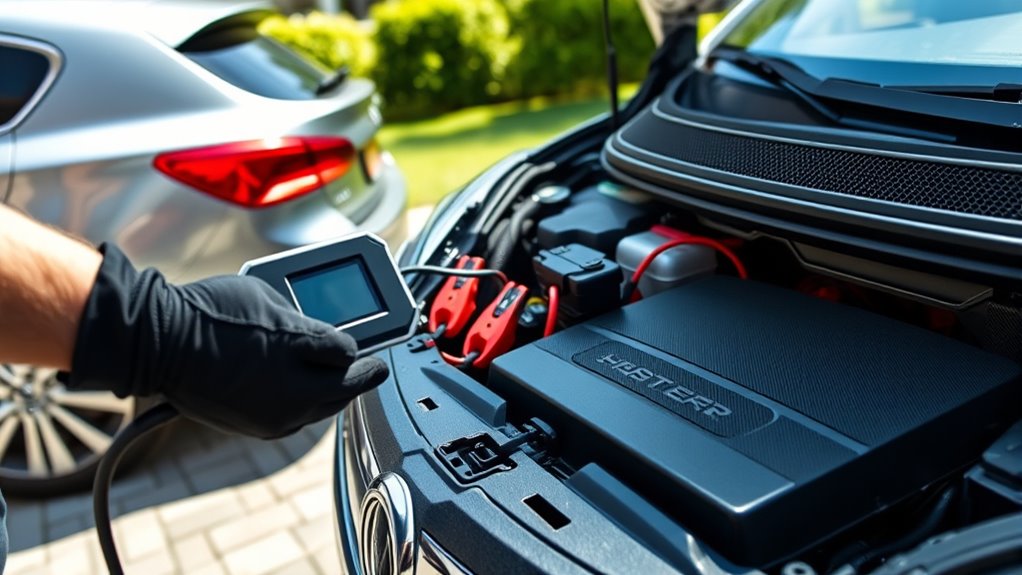
To jump-start your car with a battery charger, first verify both vehicles are off. Then attach the charger’s red clamp to the positive terminal and the black clamp to the negative terminal securely.
Turn on the charger and start your car, giving it 10-15 minutes to recharge the battery.
Afterward, disconnect in reverse order. If you want to master each step and avoid common mistakes, keep exploring this guide for detailed tips.
Key Takeaways
- Make sure both vehicles are turned off and in park or neutral before you connect the charger.
- Attach the positive (red) clamp to the battery’s positive terminal first, then connect the negative (black) clamp.
- Start the charging process and keep an eye on the connections. Once done, turn on the vehicle to start the engine.
- After the engine runs smoothly for about 10-15 minutes, disconnect the clamps in reverse order.
- Keep the engine running afterward so the alternator can recharge the battery.
What Is Jump-Starting a Car With a Battery Charger?
If your car’s battery is dead, jump-starting it can quickly get you back on the road. Using a battery charger is a reliable way to do this, especially if you want to keep your battery healthy.
Battery maintenance means regularly charging your battery so it doesn’t die unexpectedly. When choosing a charger, you’ll find different types, like trickle chargers and smart chargers.
Regularly charging your battery helps prevent unexpected dead spots and keeps it healthy.
Trickle chargers provide a slow, steady charge, which is perfect for maintaining a healthy battery during storage. Smart chargers automatically adjust their charging rate, making them safer and more efficient.
These chargers are designed to safely restore your dead battery without overcharging or damaging it. By understanding the different types, you can pick the right one for your needs.
This way, your battery stays in top shape. Jump-starting with a charger is simple and effective, especially if you follow good battery maintenance practices.
What Do You Need to Jump-Start Your Car Safely?
Before you try to jump-start your car, gather the right tools and safety gear to make sure everything goes smoothly and safely. First, you’ll need a reliable battery charger. Keep in mind, there are different types of chargers, so pick one that’s suitable for your vehicle.
Next, safety gear is a must. Wear gloves and safety glasses to protect yourself from sparks or acid spills. Also, make sure your car is in park or neutral with the parking brake on to prevent any movement.
Having insulated tools nearby, like pliers or screwdrivers, is a good idea in case you need to make adjustments. These precautions help reduce risks and make the process safer and more effective.
Understanding the different battery charger types can influence how you prepare, so get familiar with them beforehand. Always put safety gear first to keep yourself protected.
Gathering everything ahead of time makes the jump-start quicker, safer, and more efficient. It helps you avoid potential hazards and ensures the process is smooth.
How to Connect Your Car Battery Charger Correctly
When you’re connecting your car battery charger, the first thing to do is identify the positive and negative terminals on both the charger and the battery. It’s pretty important to get this right to avoid any mishaps.
Next, start by attaching the positive (red) cable to the positive terminal on the battery. Once that’s in place, connect the negative (black) cable to the negative terminal. Make sure all your connections are snug and secure—loose connections can cause problems or even be dangerous.
Before you flip on the charger, give everything one last check to ensure all the cables are properly connected. Once you’re sure, you can turn on the charger and let it do its job safely.
Identify Charger Terminals
The battery terminals are the key connection points for your charger, so identifying them correctly is essential. First, check your battery’s terminal colors: usually, red indicates the positive terminal, and black shows the negative.
Second, consider your battery types—some may have different markings, but the color coding generally remains consistent. Third, confirm you recognize the terminals’ shapes; positive often has a plus (+) sign, while negative has a minus (–).
Fourth, verify that the terminals are clean and free of corrosion to guarantee a solid connection. Correctly identifying these terminals prevents damage and promotes safety during charging.
Always double-check the markings and colors before proceeding to connect the charger. This step sets the foundation for a safe and effective jump-start.
Connect Positive First
When connecting your car battery charger, always attach the positive (red) clamp first. This step is essential for battery safety because it minimizes the risk of sparks or short circuits.
Carefully connect the red clamp to the positive terminal of the dead battery, making sure it’s secure. Properly attaching the positive cable first also helps protect your vehicle’s electrical system during charger maintenance.
After that, connect the negative (black) clamp to a grounded metal surface away from the battery to complete the circuit. Always double-check that the clamps are firmly attached before turning on the charger.
Following this sequence reduces the chance of accidents, keeps your equipment in good condition, and ensures a safe, effective jump-start process.
Double-Check Connections
Before turning on the charger, double-check that both clamps are securely attached to the correct terminals and grounding point. Proper connection safety is essential to prevent sparks or damage. To guarantee a safe setup, follow these steps:
- Confirm the positive clamp is connected to the positive terminal on the battery and the negative clamp to the chassis or grounding point.
- Tighten each clamp firmly to avoid accidental disconnection during charging.
- Inspect the clamps for corrosion or damage, which can affect connection safety and charger maintenance.
- Verify that the charger is off before making or adjusting connections to prevent electrical hazards.
Taking these precautions helps maintain the charger’s performance and guarantees safe, effective battery charging.
Step-By-Step: How to Jump-Start Your Car With a Battery Charger
Before you get started, make sure you have your battery charger ready and that both cars are turned off. It’s always best to double-check this so everything’s safe and ready to go.
Next, connect the charger properly, just like the manufacturer recommends. Take your time to do it right—this step is super important for safety and to make sure your car gets the jump-start it needs.
Once everything’s connected the right way, go ahead and start the charging process. Keep an eye on it, and soon enough, your car should be good to go!
Preparing Your Equipment
Gather all the necessary equipment before you start. First, check that your battery charger is in good shape and well-maintained to avoid safety issues.
Next, grab the jumper cables, making sure they’re clean and free of corrosion. Then, find your vehicle’s owner manual to understand the battery’s specs and safety tips.
Wear protective gloves and eye protection to keep yourself safe. Make sure the charger’s settings match your battery’s type and voltage.
Check the battery terminals for corrosion or dirt and clean them if needed. Having everything ready helps ensure a smooth jump-start and reduces risks.
Proper preparation protects your vehicle’s electrical system and keeps you safe during the process.
Executing the Jump Start
To start the jump-start process, position the vehicle with the good battery close to the dead one, but make sure they don’t touch. Before connecting the charger, check safety precautions: wear gloves and eye protection, and make sure both vehicles are off.
Connect the positive (red) clamp to the dead battery’s terminal first, then to the good battery’s positive terminal. Next, attach the negative (black) clamp to the good battery’s negative terminal, then secure the other black clamp to a metal, unpainted part of the dead vehicle’s engine block.
Turn on the charger and let it run for a few minutes. If the engine doesn’t start, check the connections. Always disconnect the clamps in reverse order, and avoid sparks or smoke during the process.
What Should You Do After Your Car Starts?
Once your car engine roars to life, it’s important to keep the momentum going safely. This is the time for post-start maintenance to protect your battery health and ensure reliable performance.
First, keep the engine running for at least 10-15 minutes. This allows the alternator to recharge the battery properly. Next, gently drive around, avoiding high speeds or sudden stops, to help stabilize the battery’s charge.
Check your dashboard for any warning lights and address them promptly. Once parked, turn off the engine and inspect the battery terminals for corrosion or loose connections.
Regularly monitoring your battery health and doing these steps helps prevent future issues and extends your battery’s life. Proper post-start care keeps your vehicle reliable and improves your overall maintenance routine.
Common Mistakes to Avoid When Jump-Starting
Jump-starting a car can be straightforward, but many people make common mistakes that can damage the vehicle or compromise safety. Always prioritize safety precautions like wearing gloves and eye protection to prevent injuries. Avoid connecting the clamps in the wrong order, which can cause sparks or damage the battery.
Don’t forget to check your battery’s condition regularly. Poor battery maintenance can lead to unexpected failures. Here’s a quick overview of mistakes to avoid:
| Mistake to Avoid | Why It Matters |
|---|---|
| Connecting clamps incorrectly | Causes sparks, potential damage, or injury |
| Not turning off electronics | Prevents power surges and damage |
| Ignoring safety precautions | Reduces risk of accidents or injuries |
| Using the wrong charger | Can harm the battery or vehicle systems |
Stay attentive, follow proper procedures, and protect both yourself and your vehicle.
How to Choose the Right Battery Charger for Your Vehicle
Choosing the right battery charger can seem overwhelming, but understanding your vehicle’s needs makes it simpler. First, identify your vehicle’s battery size and type, as this influences the battery charger types suitable for your car.
Second, consider charger features like adjustable amperage. This allows for faster charging or gentle maintenance, depending on your battery’s condition. Third, evaluate whether you want a basic charger or one with advanced safety features such as spark-proof connections or automatic shut-off.
Fourth, think about portability and power source. Do you need a compact charger for emergencies or a heavy-duty model for regular use? By focusing on these factors, you’ll select a charger that efficiently and safely restores your battery.
Troubleshooting: Car Won’t Start After Jump-Starting
Even after successfully jump-starting your car, it might still refuse to start. This can be really frustrating, but it’s often due to battery health issues or other underlying problems.
First, check the battery terminals for corrosion or loose connections. Poor contact can prevent the car from starting. If the battery is old or has been repeatedly discharged, its capacity may be compromised, making it unable to hold a charge.
Check for corrosion and loose connections at the battery terminals to ensure proper contact.
In this case, try testing the battery with a multimeter or have it tested at an auto parts store. If the battery checks out fine, the problem could be with the alternator or the starter motor.
Always make sure your battery connections are clean and tight. Consider replacing the battery if it’s nearing the end of its lifespan. Remember, understanding your battery’s health is key to figuring out why your car won’t start even after a jump.
When Should You Call a Professional?
Have you tried everything, and your car still won’t start? If that’s the case, it’s probably time to call a professional. Persistent battery issues or repeated jump-starts could mean there’s a deeper problem.
If you’re unsure about charger safety or feel uncomfortable with the process, don’t risk injuring yourself or damaging your vehicle. Consider calling a mechanic if:
- The battery shows signs of physical damage like cracks or leaks.
- Your car still won’t start after multiple jump-start attempts.
- You suspect there are electrical issues beyond just a dead battery.
- You’re unsure about the proper safety procedures during charging or jump-starting.
Ignoring these signs can make the problem worse or create safety hazards. A professional can diagnose and fix the root cause efficiently, keeping your vehicle safe and running smoothly.
Tips to Keep Your Car Battery in Good Condition
Keeping your car battery in good shape is all about regular checks to catch any problems early on. It’s a good idea to peek at your battery now and then, just to make sure everything looks okay and there are no signs of corrosion or leaks.
Also, knowing the right way to charge your battery is super important. Overcharging or undercharging can really shorten its lifespan, so try to follow the proper charging techniques. It might seem small, but these little habits make a big difference.
Regular Battery Checks
Regularly checking your car battery is key to avoiding unexpected breakdowns. Keeping an eye on its condition can help extend its lifespan and save you from costly repairs.
Here are some easy maintenance tips: Inspect the terminals for corrosion or loose connections. Also, check the battery case for cracks or leaks.
Use a multimeter to test the voltage and make sure it’s within the proper range. Don’t forget to clean the terminals and tighten any loose connections.
Regular checks help you catch issues early so your battery stays in good shape. Staying on top of these simple steps can prevent sudden failures and keep your car reliable.
Proper Charging Techniques
To guarantee your car battery stays healthy, it’s vital to use proper charging techniques. Different battery types, like lead-acid or AGM, need specific methods to prevent damage and ensure they last longer.
Always follow the manufacturer’s instructions for your battery type, and use a charger that’s compatible. Charging safety is really important—avoid overcharging, which can cause overheating or leaks.
Keep the charger’s settings appropriate for your battery, and watch the process closely. If you notice any irregularities like swelling or excessive heat, disconnect immediately.
Proper charging not only extends your battery’s life but also keeps you safe. Regularly check your charging equipment and be cautious, especially when dealing with different battery types, to maintain peak performance and avoid hazards.
Frequently Asked Questions
Can I Jump-Start a Car With a Damaged or Leaking Battery?
You shouldn’t try to jump-start a car with a damaged or leaking battery because it can be dangerous. Leaking batteries can cause acid burns and release toxic fumes, so it’s really important to stay safe and avoid contact.
Also, make sure your charger matches your vehicle’s battery type. If the battery is damaged, it’s better to replace it rather than risking more damage or injury.
Always follow safety guidelines to get the best results and stay safe.
Is It Safe to Jump-Start a Car in the Rain or Wet Conditions?
Jump-starting a car in rain or wet conditions isn’t entirely safe because water increases the risk of electrical shorts or shocks.
If you have to do it, make sure the area is as dry as possible. Wear rubber gloves and boots for added protection, and keep the clamps and battery away from water.
Always prioritize safety by avoiding wet conditions if you can. It’s better to wait for the weather to clear for a safer jump-start.
How Long Should I Leave the Charger Connected After the Car Starts?
You should leave the charger connected for about 20 to 30 minutes after your car starts.
Ironically, this is the perfect window for battery maintenance, making sure your battery gets a proper boost without overcharging.
During this time, your battery absorbs enough charge to help prevent future starting issues.
Can Using a High-Capacity Battery Charger Damage My Vehicle’s Battery?
Using a high-capacity battery charger can potentially damage your vehicle’s battery if you’re not careful. Different charger types, such as trickle chargers or fast chargers, need specific safety tips to prevent overcharging or overheating.
Always follow safety guidelines like setting the right voltage and current, and keep a close eye on the process. Properly matching the charger type to your battery’s needs helps avoid damage and ensures safe, effective charging.
What Signs Indicate My Battery Needs Replacement Instead of Jump-Starting?
If your battery shows warning signs like slow engine cranking, dim headlights, or you’re needing jump-starts often, it might be time to think about replacing it. Battery age matters too; most last around 3-5 years.
When you notice these warning signs, don’t wait too long. Replacing the battery early can prevent unexpected breakdowns and ensure your car starts reliably. Regular checks and timely replacements help keep your vehicle running smoothly without relying on jump-starts.
Conclusion
Now that you know how to safely and simply jump-start your car with a battery charger, you’re ready to handle roadside surprises.
Keep these tips in mind, stay alert, and practice regular maintenance to keep your motor happy.
Remember, patience and preparation are key to smooth, trouble-free drives.
With a little know-how and a dependable charger, you’ll confidently tackle car crises and enjoy your next adventure.