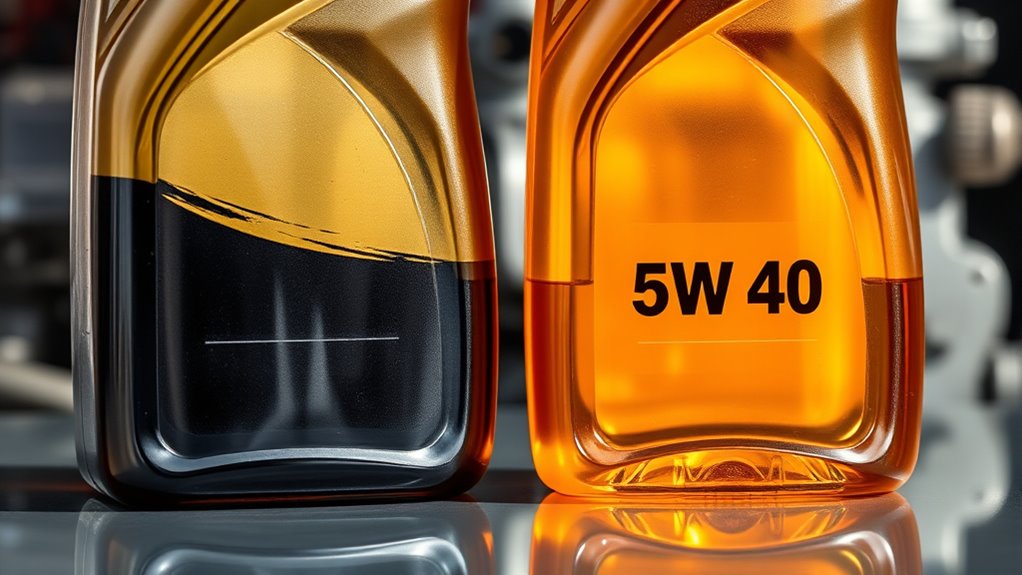
10W 40 Vs 5W 40 Motor Oils: Choosing the Best Option for Your Engine
Are you often confused about which motor oil is best for your vehicle? You’re not alone; many car owners struggle to choose the right type, especially with so many options out there.
Finding the perfect oil can make a big difference in your engine’s performance and longevity.
Choosing between 10W-40 and 5W-40 motor oils depends on your engine’s needs and climate. If you face cold winters, 5W-40 offers better cold start protection and fuel efficiency.
For hot climates or high-load conditions, 10W-40 provides thicker film protection at higher temperatures.
Older engines benefit from the thicker oil, while modern engines prefer the thinner consistency.
To guarantee peak performance, consider your vehicle and environment—more details can guide your best choice.
Key Takeaways
- 5W-40 is better for cold starts and cold climates because of its lower winter viscosity rating.
- 10W-40 works better in hot climates, offering thicker protection at high temperatures.
- Older or high-mileage engines might benefit from 10W-40’s thicker consistency to help reduce wear and seal leaks.
- 5W-40 can improve fuel efficiency and cold start performance, making it a good choice for colder environments.
- Always check your vehicle’s manufacturer recommendations to make sure the oil matches your engine’s specs and operating conditions.
What Are 10W-40 and 5W-40 Motor Oils?
10W-40 and 5W-40 are types of motor oils designed to lubricate your engine efficiently across different temperatures. These oils mainly differ in their formulation and viscosity grades, which affect how they flow at various temperatures.
The numbers before the “W” show the oil’s viscosity in winter. So, 5W-40 is thinner at cold starts than 10W-40. This means 5W-40 flows more easily when the engine is cold, helping with quicker lubrication during cold starts.
Both oils share the same high-temperature viscosity grade of 40. This means they maintain a thick, protective film when your engine reaches normal operating temperature.
Knowing their formulation helps you understand how each oil performs under specific conditions. Essentially, these oils protect your engine by providing proper lubrication, reducing wear, and ensuring smooth operation across a range of temperatures.
How Do Viscosity and Temperature Affect Motor Oil Performance?
Viscosity and temperature are key factors in how motor oil performs. They directly affect how well the oil lubricates your engine. The viscosity index shows how much the oil’s thickness changes with temperature; a higher index means more stability across different temperatures.
Viscosity and temperature influence oil performance and engine lubrication stability across various conditions.
When temperatures go up, oil becomes thinner, which can reduce its ability to form a good protective film. Cold weather, on the other hand, causes the oil to thicken, making it harder for the engine to start. That’s why choosing the right viscosity and temperature range is so important.
Oils like 10W-40 and 5W-40 are designed to work well within specific temperature ranges. The “W” indicates winter performance. The viscosity index helps you see how well the oil keeps its viscosity as temperatures change.
Matching your oil’s viscosity to your engine’s operating temperature ensures proper lubrication. This helps reduce wear and extends your engine’s life.
Which Oil Is Best for Cold Weather or Hot Climates?
In cold weather, you’ll want to go for thinner oils like 5W-40 because they flow more easily when it’s chilly outside. This helps your engine start smoothly and gets things running without a hitch. On the other hand, if you’re in a hot climate, thicker oils like 10W-40 are better because they hold up better at high temperatures, providing a strong protective film for your engine. So, it’s a good idea to think about your climate when picking your oil—doing so can make a real difference in keeping your engine running smoothly all year round.
Cold Weather Viscosity
When temperatures drop, choosing the right motor oil is essential to ensure your engine starts smoothly and runs efficiently.
For cold weather, viscosity ratings are especially important.
Lower cold temperature viscosity ratings, like 5W, help the oil flow quickly at low temps, giving better engine lubrication during startup.
The “W” stands for winter, showing how well the oil works in cold conditions.
On the other hand, 10W oils have higher cold temp viscosity ratings, which can make cold starts less smooth in very chilly weather.
If you live in a region with harsh winters, a 5W oil makes starting easier and reduces wear.
Always think about your climate when choosing an oil with the right cold weather viscosity for maximum engine protection.
Hot Climate Performance
Choosing the right motor oil for hot climates helps keep your engine protected and running well in high temperatures. In hot weather, oil helps cool the engine and prevents it from breaking down, which can cause damage.
A thicker oil like 10W 40 maintains better viscosity when it gets hot, ensuring your engine stays lubricated. It reduces the risk of oil thinning out and losing its protective qualities.
On the other hand, 5W 40 is thinner at startup, which can be good for cold weather. But it might break down faster in extreme heat, so it’s not always the best choice for hot climates.
To keep your engine cool and prevent oil breakdown, look for oils with high-quality additives designed for hot conditions. Remember, your choice of oil impacts your engine’s longevity and overall performance in high temperatures.
Is 10W-40 Suitable for Older or High-Mileage Engines?
Thinking about using 10W-40 for your older or high-mileage engine? Well, it could be a good option because its thicker viscosity helps reduce engine wear and can even help seal leaks. That said, it’s important to check if it’s compatible with your engine’s needs.
Before making the switch or sticking with this oil, take a look at your engine’s condition and what the manufacturer recommends. Sometimes, a thicker oil like 10W-40 works well for high-mileage engines, but other times, your engine might prefer a different type. It’s always best to double-check so you keep your engine running smoothly!
Oil Viscosity and Engine Wear
Older or high-mileage engines often benefit from thicker oils like 10W-40 because they tend to have more engine wear and larger clearances that can trap thinner oils. Thicker oil helps keep proper lubrication, reducing the risk of oil breaking down and providing consistent protection.
It creates a stronger film between moving parts, which is especially important when engine components are more worn. Thicker oils can compensate for increased clearances in older engines and help prevent oil leaks and consumption.
They also support better lubrication under high temperatures and stress. While 10W-40 offers these advantages, it’s important to match the oil’s viscosity to your engine’s specific needs for optimal performance and wear protection.
Compatibility With Old Engines
Because thicker oils like 10W-40 create a stronger, more stable film between engine parts, they’re often recommended for older or high-mileage engines. This helps improve engine compatibility by providing better lubrication where seals and components may have worn.
The oil formulation of 10W-40 helps reduce leaks and oil consumption common in aging engines, offering extra protection against wear. But it’s important to consider your engine’s specific needs; some high-mileage engines may benefit from thicker oil, while others might need a lighter formulation.
Always check your vehicle’s manufacturer recommendations and ask a mechanic if you’re unsure. Using the right oil ensures your engine performs well and lasts longer, especially as it gets older.
How Do 10W-40 and 5W-40 Impact Fuel Efficiency?
Have you ever wondered how different motor oils influence your vehicle’s fuel efficiency? Both 10W-40 and 5W-40 can impact your engine’s performance and fuel consumption differently.
Generally, 5W-40 oils flow more easily at cold starts, reducing the effort your engine needs to start smoothly. This can lead to better fuel efficiency, especially in colder climates.
5W-40 oils ease cold starts, boosting fuel efficiency in colder climates.
On the other hand, 10W-40 oils are slightly thicker at startup, which might increase internal resistance and slightly decrease fuel economy.
To put it simply:
- Thinner oils like 5W-40 improve cold start performance and fuel efficiency.
- Thicker oils like 10W-40 may cause a slight drop in fuel economy but offer better viscosity at higher temperatures.
Your driving conditions and climate play a big role in how much these oils impact engine performance and fuel consumption.
Choosing the right oil helps optimize your engine’s fuel efficiency, saving you money over time.
Which Oil Provides Better Engine Protection and Longevity?
When it comes to protecting your engine and helping it last longer, cold start performance is a big deal. That’s because your engine is under the most stress right when you start it up. If the oil flows smoothly during those cold starts, your engine gets the protection it needs right from the get-go.
Viscosity stability is also super important. It means the oil can keep doing its job even when temperatures change a lot. Whether it’s hot or cold outside, you want an oil that sticks to its performance and keeps your engine parts well-lubricated. Plus, resistance to engine wear is crucial because it helps parts move smoothly over time, preventing damage and extending the engine’s life.
Cold Start Performance
Cold start performance is really important for protecting your engine and making it last longer, especially when it’s cold outside. When temperatures drop, the benefits of cold start oil become crucial because thinner oil flows more easily, helping reduce wear when you start your engine.
The lower viscosity of 5W 40 allows the oil to circulate quickly and form a protective film faster, giving your engine better performance in cold weather. On the other hand, 10W 40 can be a bit thicker, which might slow down oil flow at low temperatures.
To get the best cold start performance, keep these points in mind:
- 5W 40 provides quicker lubrication during cold starts, helping to reduce engine wear.
- Thinner oil helps your engine run better in low temperatures.
- Both oils protect your engine, but 5W 40 is usually better in cold conditions.
Choosing the right oil can really impact your engine’s health and how long it lasts, especially when it’s chilly outside.
Viscosity Stability
Viscosity stability is essential because it determines how well an oil maintains its protective properties over time and under varying engine conditions. When choosing between 10W-40 and 5W-40, consider their viscosity consistency and temperature resilience.
5W-40 tends to have better viscosity stability at cold temperatures, ensuring easy cold starts and smoother engine operation. Its thinner base oil maintains flow and protection in a wider temperature range, especially in extreme cold.
Conversely, 10W-40 offers solid viscosity stability at higher operating temperatures, providing durable protection in warmer climates. Both oils resist thinning or thickening over time, but 5W-40 generally preserves viscosity consistency better across fluctuating temperatures.
This can translate into improved engine protection and longevity. Ultimately, the right choice depends on your climate and engine demands.
Engine Wear Resistance
Choosing the right motor oil can really make a difference in your engine’s wear resistance and how long it lasts. Both 10W 40 and 5W 40 oils do a good job of lubricating, but they protect differently.
Generally, 5W 40 offers better engine wear resistance during cold starts, helping reduce metal-on-metal contact when temperatures drop. This can help your engine last longer by minimizing wear over time.
On the other hand, 10W 40 can handle higher temperatures better, providing reliable lubrication in hot conditions. To get the best protection, think about your driving environment and what your engine needs most.
Cold weather starts are easier with 5W 40 because it’s thinner and lubricates faster. If you mostly drive in hot climates, 10W 40 is better for sustained protection.
When Should I Use 10W-40 Instead of 5W-40?
Wondering when to choose 10W-40 over 5W-40? You should consider using 10W-40 if your engine runs in hotter climates or deals with heavier loads. Thicker oil at operating temperature helps maintain better engine performance.
Since 10W-40 has a higher viscosity when hot, it creates a thicker oil film that reduces wear and protects engine parts. This thicker oil also contains additives designed to boost lubrication, especially in older engines or those with higher mileage.
If your vehicle often tows, hauls, or runs in warm environments, 10W-40 can offer better protection. On the other hand, if you want improved cold-start performance and fuel efficiency, 5W-40 is usually the better pick.
Ultimately, your driving conditions and engine needs decide whether the thicker consistency and additives of 10W-40 make it the right choice for you.
Is 5W-40 a Better Choice for Modern or High-Performance Engines?
Is 5W-40 the better choice for modern or high-performance engines? Many newer engines benefit from advanced engine technology that demands higher performance, which 5W-40 oil provides. Its viscosity at operating temperature offers excellent lubrication and protection under intense conditions.
This oil is designed to handle the demands of turbocharged engines, high RPMs, and rapid temperature changes common in modern vehicles with complex systems.
Consider these points:
- It guarantees peak performance by maintaining stability during high-stress driving.
- It supports efficient fuel consumption and reduces engine wear.
- It’s ideal for engines with tighter tolerances and advanced technology.
If you have a high-performance or modern engine, 5W-40 often meets or exceeds the requirements needed to keep your engine running smoothly and efficiently. Its formulation aligns with the latest engine technology, making it a smart choice for demanding performance scenarios.
Are There Downsides to Using 10W-40 or 5W-40?
While 10W-40 and 5W-40 oils are popular choices for many vehicles, they do come with potential downsides worth considering. One concern is their formulation of oil additives, which can vary between brands and affect engine performance.
Some additives may not be compatible with older engines or specific engine components, leading to issues like deposits or reduced lubrication. These oils are designed for certain temperature ranges, and using them outside their recommended climate can cause engine wear or inefficient operation.
If your engine isn’t compatible with these oils, you might notice increased oil consumption or decreased fuel efficiency. It’s important to check your vehicle manufacturer’s specifications to see if these oils are suitable.
While these oils can provide good protection in many cases, mismatched oil types and incompatible additives can pose risks. This is especially true for engines with specific requirements or older models.
How to Choose the Right Motor Oil for Your Driving Environment?
Choosing the right motor oil depends heavily on your driving environment, as different conditions demand different formulations. If you often drive in extreme temperatures, a synthetic oil that maintains viscosity better can support fuel economy and reduce engine wear.
Selecting the right motor oil depends on your driving environment and conditions.
For city driving with lots of stop-and-go traffic, a thinner oil like 5W-40 can improve cold starts and engine responsiveness. Off-road or dusty conditions may require oils with better additives for engine maintenance and dirt protection.
Think about these factors: temperature extremes, driving style, and road conditions. Cold climates need low-viscosity oils for easier startups, while aggressive driving benefits from thicker oils for better engine protection.
Dusty or rough roads call for oils with extra additives to keep your engine clean. Matching your driving habits and environment helps ensure maximum fuel economy and keeps your engine healthier longer.
Always check the manufacturer’s recommendations to find the best oil for your vehicle.
Frequently Asked Questions
Can 10W-40 and 5W-40 Be Mixed Safely?
You can mix 10W-40 and 5W-40, but it’s not ideal. Oil compatibility is usually safe if both meet your vehicle’s manufacturer recommendations.
However, differences in viscosity might affect how your engine runs. Mixing can also dilute the additive protections that oils provide.
Think about the temperature. 5W-40 flows better in cold weather, while 10W-40 offers thicker protection when it’s hot.
For the best engine health, it’s better to stick with one type of oil or check with your manufacturer for advice.
Are Synthetic Versions of These Oils Available and Better?
Yes, synthetic versions of both 10W-40 and 5W-40 oils are available and often better. Synthetic oils improve engine protection, cold start performance, and last longer.
Compared to conventional oils, synthetic blends deliver superior performance, especially in extreme temperatures and tough conditions. If you want better engine longevity and efficiency, switching to synthetic can be a smart move.
It gives you more protection and smoother operation overall, making your engine run better and last longer.
How Often Should I Change Each Type of Oil?
You need to change your oil more often than you think. Don’t risk your engine’s life! For 10W 40 or 5W 40, aim to change the oil every 3,000 to 5,000 miles or every 3 to 6 months, whichever comes first.
Regular oil changes keep your engine performing at its best, help prevent costly damage, and make sure your vehicle runs smoothly for years to come.
Do These Oils Meet Specific Industry or Manufacturer Standards?
Yes, both 10W-40 and 5W-40 oils meet specific industry and manufacturer standards. They usually carry API ratings, like SN or SN Plus, which show their quality and performance.
Their viscosity grades also ensure proper protection across different temperatures. Be sure to check your vehicle’s manual to confirm the recommended API rating and viscosity grade.
This way, you can pick an oil that matches your engine’s needs and meets industry standards.
Is There a Significant Cost Difference Between the Two?
The cost comparison between 10W 40 and 5W 40 oils is usually minimal, with 5W 40 often slightly more expensive due to its advanced formulation.
This small difference typically doesn’t impact performance considerably. If you prioritize better cold-start performance, the extra cost of 5W 40 might be worthwhile.
But for regular use, both oils offer similar performance, so your choice shouldn’t heavily depend on price alone.
Conclusion
Choosing between 10W-40 and 5W-40 isn’t just a simple decision—it’s the key to unlocking your engine’s full performance and lifespan.
Pick the wrong one, and you might risk engine failure faster than a racecar in the final lap. So, stay informed, consider your climate and engine type.
When you choose the right oil, your engine will run smoother than a silk road. Don’t settle—select the perfect oil and give your engine the royal treatment it deserves.
Remember, for optimal results, choose between 10W-40 and 5W-40 motor oils carefully.