Car Hesitates And Sputters When Accelerating 9 Causes And Solutions Explained
Many drivers have experienced that frustrating moment when their car hesitates and sputters during acceleration. You’re not alone—this is a common issue that can leave you feeling stuck and unsure of what’s wrong.
If your car hesitates and sputters during acceleration, it could be caused by issues like clogged fuel injectors, dirty air filters, worn spark plugs, or faulty sensors such as the MAF.
Vacuum leaks or a failing fuel pump may also be to blame.
Regular maintenance, including inspecting and replacing parts when necessary, can prevent these problems.
If problems persist, learn more about diagnosing and fixing these common causes to keep your engine running smoothly.
Key Takeaways
- Fuel supply issues like clogged injectors or filters can cause hesitation and sputtering when you’re accelerating.
- Worn spark plugs or faulty ignition coils can mess up combustion, leading to rough acceleration and engine hesitation.
- A dirty air filter or a malfunctioning throttle body can restrict airflow, making the engine sputter.
- Vacuum leaks or faulty sensors like the MAF sensor can also cause hesitation and poor acceleration.
- Regular maintenance, including checking fuel system parts and replacing spark plugs, helps prevent engine hesitation.
Why Does My Car Hesitate and Sputter During Acceleration?
Have you ever pressed the gas pedal and felt your car hesitate or sputter? This issue often points to problems affecting engine performance, which directly impacts how smoothly your car accelerates. When your engine isn’t running at its best, it can struggle to deliver consistent power, causing hesitation.
Common causes include a faulty fuel supply, like clogged fuel injectors or a dirty fuel filter, which restricts proper fuel flow. Additionally, ignition system issues such as worn spark plugs can lead to incomplete combustion, resulting in sputtering.
Clogged fuel injectors and worn spark plugs can cause engine sputtering and poor acceleration.
These problems also lower fuel efficiency, making your vehicle burn more fuel than necessary. Poor engine performance during acceleration is a sign that something’s wrong inside. Addressing these issues promptly helps restore smoothness and efficiency.
Regular maintenance, including checking fuel and ignition components, can prevent these symptoms and keep your engine running reliably.
How to Check and Replace Your Car’s Air Filter
Want to check your car’s air filter? First, you’ll need to find it—you usually find it behind the engine cover or inside the intake box. Once you’ve located it, take out the filter and give it a good look. If it’s full of dirt and debris or looks clogged, then it’s probably time to swap it out.
Replacing the filter is pretty straightforward. Just pop in a new one that fits snugly, and make sure everything is secured back in place. That’s it! Easy peasy.
Locating The Air Filter
Locating your car’s air filter is the first step in checking or replacing it. Usually, it’s hidden behind the engine cover or inside the intake manifold.
To find it, open the hood and look for a black plastic box, typically near the top or side of the engine. Use this visual guide:
| Location | Description | Access Point |
|---|---|---|
| Under the hood | Near the engine bay | Side or top-mounted |
| Air filter box | Rectangular plastic casing | Clipped or screwed shut |
| Intake duct | Connects to the throttle body | Flexible or rigid pipe |
Knowing where it is makes maintenance easier and helps keep your engine running smoothly. Regular checks can improve fuel efficiency and performance, preventing hesitation or sputtering when you accelerate.
Replacing The Air Filter
Replacing your car’s air filter is a simple process that can really boost engine performance. Regular maintenance ensures your engine gets clean air, which makes a big difference.
To replace it, find the air filter housing—usually in the engine bay—and open it. Take out the old filter and check for dirt, debris, or damage. If it looks dirty or clogged, it’s time for a new one.
Insert the new filter, making sure it fits snugly. Then, reassemble the housing tightly. A clean air filter improves airflow, which helps prevent hesitation and sputtering when you accelerate.
This quick step not only improves engine efficiency but also helps your vehicle last longer. Regularly replacing your air filter is an easy, cost-effective way to keep your car running smoothly.
Signs Your Spark Plugs Are Causing Engine Sputter
If your engine starts sputtering or stalls when you’re trying to accelerate, it could be a sign that your spark plugs are causing the problem. Worn-out or fouled plugs can lead to misfires, which makes your engine run rough. Also, if the gap on your spark plugs isn’t set quite right, it can cause inconsistent ignition, making things worse.
But keep in mind, issues with your ignition system—like faulty wires or coils—can also contribute to these symptoms. So, it’s a good idea to check all the related components to get to the root of the problem.
Worn Or Fouled Spark Plugs
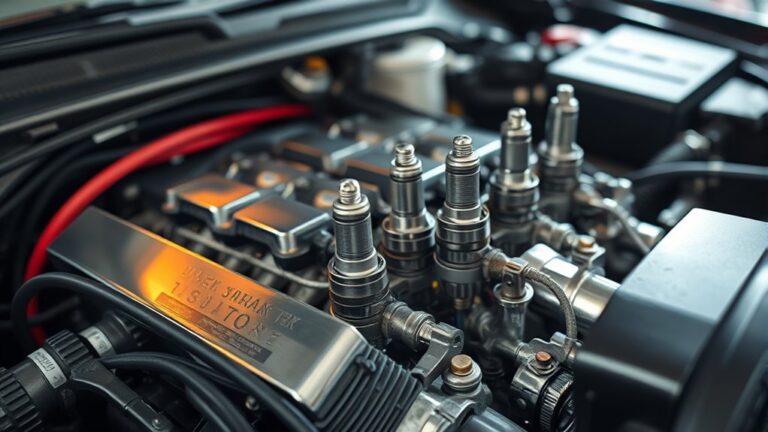
Worn or fouled spark plugs are a common cause of engine sputtering during acceleration. When spark plugs get dirty, worn out, or coated with carbon deposits, they can cause misfires and irregular combustion.
This affects your engine’s performance, making acceleration sluggish or uneven. If your engine hesitates or sputters, it’s a sign that spark plug maintenance might be overdue.
Regularly inspecting and replacing spark plugs helps ensure efficient combustion and smooth engine operation. Fouled plugs often lead to rough idling, poor fuel economy, and difficulty accelerating.
Addressing worn or fouled spark plugs quickly restores proper spark timing, improves engine performance, and prevents further damage. Don’t ignore these signs—keeping your spark plugs in good shape is key to a reliable, smoothly running vehicle.
Spark Plug Gaps Mismatch
When spark plug gaps are mismatched, your engine can start to sputter during acceleration. Incorrect gap sizes disrupt proper spark plug function, leading to inconsistent ignition sparks.
This misfire reduces engine performance, causing hesitation and rough running. If your spark plugs aren’t gapped correctly, the combustion process becomes inefficient, which can trigger hesitation or sputtering.
Regularly checking and adjusting spark plug gaps ensures they match the manufacturer’s specifications. This promotes maximum engine performance and prevents extra strain on your ignition system.
Mismatched gaps also decrease fuel efficiency and increase emissions. Addressing this issue promptly helps improve acceleration smoothness and overall engine reliability.
Proper spark plug maintenance, including gap adjustments, is essential for preventing engine sputter and maintaining peak performance.
Ignition System Problems
Misfiring spark plugs can cause your engine to sputter during acceleration, which is a sign of ignition system problems. You might notice rough idling, difficulty starting, or a loss of power.
These issues often come from faulty ignition parts like ignition coils or a malfunctioning distributor. When the ignition coil fails, it can’t produce enough spark, leading to misfires. A bad distributor can mess up the timing, causing uneven combustion.
Here’s a quick overview:
| Issue | Symptoms | Solution |
|---|---|---|
| Ignition coil issues | Engine sputters and misfires | Replace the coil |
| Distributor malfunction | Rough running or no spark sometimes | Repair or replace the distributor |
| Bad spark plugs | Poor acceleration and hesitation | Replace the spark plugs |
| Worn spark wires | Intermittent misfiring | Replace the wires |
Fixing these problems helps restore smooth acceleration and better engine performance.
How to Diagnose and Fix a Faulty Mass Airflow Sensor
A faulty mass airflow (MAF) sensor often causes your car to hesitate and sputter during acceleration, so it’s an important component to check.
To diagnose issues, start by scanning for trouble codes with an OBD-II scanner. Common codes like P0101 or P0113 point to MAF sensor problems.
Next, inspect the sensor and its wiring for dirt, damage, or loose connections. If cleaning the sensor doesn’t fix the issue, replacing the sensor is usually necessary.
When replacing the MAF sensor, make sure you buy the correct part that fits your vehicle. Disconnect the negative battery terminal, remove the old sensor, and install the new one securely.
After replacing it, clear any stored codes and take your car for a test drive to see if the problem is gone.
Proper diagnostics and timely replacement can restore smooth acceleration and eliminate hesitation caused by a faulty MAF sensor.
What’s Throttle Body Trouble and How to Fix It?
A faulty throttle body can cause your vehicle to stall, hesitate, or have rough acceleration because it controls the airflow into the engine. When it malfunctions, your engine may struggle to get the right amount of air, leading to poor performance.
To fix this, focus on throttle maintenance, especially cleaning procedures, to remove dirt, carbon buildup, or debris that can clog the throttle plate. Regular cleaning helps ensure smooth airflow and prevents hesitation.
Here are some simple steps to keep your throttle body in top shape:
- Remove the throttle body and check for dirt or carbon deposits.
- Use a throttle body cleaner to thoroughly clean the inside components.
- Reinstall and reset the throttle position sensor if needed.
Performing these cleaning steps regularly can improve acceleration and prevent issues caused by a dirty throttle body. Keeping the throttle clean is a simple but effective way to maintain your vehicle’s performance.
How to Identify and Repair Fuel Pump Problems
Since the fuel pump is responsible for delivering gasoline from the tank to the engine, any problems with it can cause your vehicle to stall, hesitate, or fail to start altogether.
To identify fuel pump issues, start by listening for unusual pump noise. If it’s louder or irregular, that’s a red flag. You can also check fuel pressure with a gauge; low or inconsistent pressure indicates a failing pump.
Listen for irregular pump noise or check fuel pressure; low or inconsistent readings signal potential fuel pump failure.
If your engine sputters when accelerating or struggles to reach higher RPMs, these are signs of fuel delivery issues. To repair, first verify the fuel pump’s electrical connections are secure.
If the pump noise is abnormal or fuel pressure is off, replacing the fuel pump might be necessary. Always use quality replacement parts and follow safety protocols when working with fuel systems.
If you’re unsure, it’s best to consult a professional mechanic to diagnose and fix the problem accurately.
Vacuum Leaks: Causes and How to Seal Them
Vacuum leaks are a common cause of engine problems, often causing rough idling, poor acceleration, and lower fuel efficiency. These leaks happen when vacuum hoses or the intake manifold develop cracks or get disconnected, letting unmetered air into the engine. This messes up the air-fuel mixture and can cause hesitation or sputtering when you accelerate.
To spot a vacuum leak, look for visible cracks or loose connections in the vacuum hoses attached to the intake manifold. You might also hear a hissing sound or see the check engine light turn on.
Check the hoses for tears or loose fittings. Listen carefully around the intake manifold for a hissing noise. You can also spray an aerosol or carb cleaner around the hoses and gasket — if the engine idle changes, you’ve likely found a leak.
Fixing leaks usually means replacing damaged hoses or resealing the intake manifold gasket. This helps restore proper vacuum pressure and keeps your engine running smoothly.
When to Seek Help for Persistent Engine Hesitation
Persistent engine hesitation during acceleration isn’t something to ignore, especially if it happens regularly or gets worse over time. When your engine performance feels inconsistent or sputters during acceleration, it’s a clear sign something’s wrong.
If basic troubleshooting, like checking for loose hoses or inspecting the air filter, doesn’t fix the issue, it’s time to seek professional help. Continuing to drive with unresolved hesitation can lead to more significant engine damage or decreased fuel efficiency.
You should consider seeing a mechanic if your car struggles to accelerate smoothly, if the hesitation comes with strange noises, or if the engine warning light turns on. A professional can run in-depth diagnostics to find the root cause, whether it’s a faulty sensor, fuel system issue, or ignition problem.
Don’t delay—addressing persistent engine hesitation promptly helps keep your vehicle performing well and safe to drive.
Quick Tips to Keep Your Engine Running Smoothly
Maintaining a well-tuned engine is key to preventing hesitation and guaranteeing smooth acceleration. Regular engine maintenance can keep your vehicle running efficiently and improve fuel efficiency.
Start by checking and replacing your air filter. A clean filter allows better airflow, boosting performance. Also, keep up with scheduled oil changes to prevent engine wear and maintain peak operation.
Using high-quality fuel and fuel system cleaners can prevent deposits that cause sputtering and hesitation. Here are quick tips to keep your engine running smoothly:
- Regularly inspect and replace spark plugs to ensure proper ignition.
- Use recommended fuel additives to keep fuel injectors clean.
- Keep your tires properly inflated to reduce strain on the engine and improve fuel efficiency.
Frequently Asked Questions
Can Low Transmission Fluid Cause Hesitation During Acceleration?
Yes, low transmission fluid can cause hesitation during acceleration. When the fluid level drops too low, it can affect how the transmission performs, leading to slipping or delayed gear changes.
Regularly checking and topping up your transmission fluid helps keep things running smoothly. If you notice hesitation, it’s a good idea to inspect the fluid level and fix any issues quickly.
Doing this can prevent bigger problems and help your vehicle perform at its best.
How Does a Faulty Oxygen Sensor Affect Engine Performance?
A faulty oxygen sensor can turn your engine into a sluggish turtle, drastically impacting engine performance. When it malfunctions, it sends incorrect data to the engine control unit, which can cause poor fuel mixture and reduced efficiency.
This can lead to rough idling, increased emissions, and hesitation during acceleration. Addressing oxygen sensor issues promptly helps restore peak engine performance and keeps your vehicle running smoothly and efficiently, rather than limping along like a wounded animal.
Can Worn Timing Belts Lead to Engine Sputtering?
Worn timing belts can definitely cause engine sputtering because they control the synchronization of your engine’s valves. When a timing belt weakens or slips, the engine’s timing gets off, leading to poor engine performance and sputtering during acceleration.
You might notice hesitation, rough running, or misfires. Regularly inspecting and replacing your timing belt ensures it keeps the engine running smoothly, preventing sputtering and maintaining peak performance.
Is a Dirty Fuel Injector Responsible for Engine Hesitation?
Think of your fuel injector as the heart of your engine’s bloodstream. A dirty fuel injector can stall its rhythm, causing hesitation.
When you perform fuel injector cleaning, you clear the build-up, restoring injector performance. This improves fuel flow, helping your engine run smoothly without hesitation.
How Do I Know if My Catalytic Converter Is Clogged?
You’ll notice catalytic converter symptoms if your engine performance issues include loss of power, poor acceleration, or increased exhaust emissions.
A clogged catalytic converter restricts exhaust flow, causing your car to hesitate or sputter when accelerating.
You might also experience a sulfur smell or see a check engine light.
To confirm, get a professional diagnosis or perform a backpressure test.
These steps help identify if your catalytic converter’s clogged and needs replacement.
Conclusion
If you ignore these warning signs, your car’s hesitation could turn into a major engine problem, throwing your daily drive into chaos. Address issues like clogged filters, faulty sensors, or vacuum leaks quickly to avoid bigger trouble.
You’re not just fixing a sputter—you’re preventing a breakdown that could leave you stranded in the middle of nowhere. Stay alert, do regular maintenance, and keep that engine running smoothly.
Remember, catching these issues early with car hesitation and sputtering when accelerating can save you time, money, and stress. Keep your vehicle in top shape to ensure a reliable, trouble-free ride.