5 Common Signs of Loose Power Steering Belt & How to Fix
Dealing with a loose power steering belt can be frustrating, especially when it affects your ability to steer smoothly. You’re not alone—many drivers struggle with steering issues caused by a worn or slack belt.
Fortunately, spotting the signs early can save you time and money on repairs.
If your power steering belt is loose, you’ll notice difficulty turning the wheel, especially at low speeds, along with increased effort and heavier turns. You might also hear squealing or grinding noises, and feel vibrations through the steering wheel during sharp turns.
Check the belt for cracks, fraying, or slack—if it’s worn or loose, tightening or replacing it can fix the problem.
Keep an eye on these signs to maintain smooth steering, and uncover more tips if you keep exploring.
Key Takeaways
- Difficulty turning the steering wheel, especially at low speeds, can mean the belt is loose or slipping.
- Squealing or grinding noises when you steer often point to a worn-out or slipping belt.
- If you feel vibrations in the steering wheel, especially during sharp turns, it might be a sign of a loose or damaged belt.
- Check for visible cracks, fraying, or glazing on the belt. If you see any, it’s time to replace or tighten it.
- Make it a habit to check the belt tension regularly. About half an inch of give at the midpoint usually means it’s properly tensioned.
Identify the Signs of a Loose Power Steering Belt
One of the first signs of a loose power steering belt is difficulty turning the steering wheel, especially at low speeds. As the belt starts to wear or slip, you’ll notice more effort needed to steer, making turns feel heavier than usual.
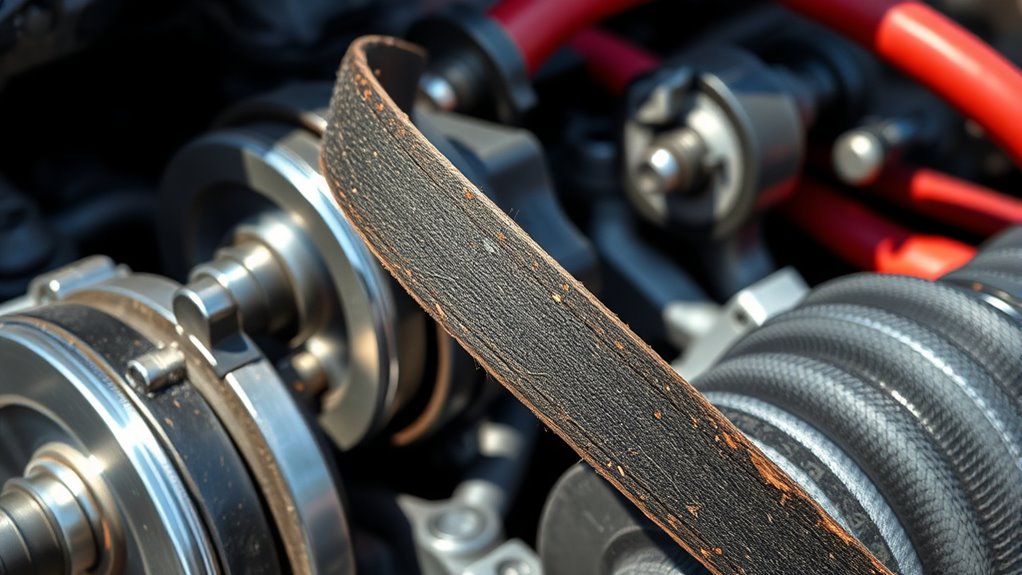
Over time, a worn or slipping belt can become frayed or cracked. This leads to slipping and inconsistent power assistance, causing steering problems because the pump isn’t getting enough power to run smoothly.
You might also feel that the steering is less responsive or sluggish. Plus, a loose belt can slip off the pulley completely, causing a sudden loss of power steering.
Regularly check the belt for signs of wear, cracks, or looseness. Catching these signs early helps keep your steering smooth and responsive, and prevents further damage to the system.
Listen for Noises and Feel Vibrations When Steering
When your power steering belt is loose, you might notice strange noises or vibrations when turning the wheel. These sounds, like squealing or grinding, usually mean the belt isn’t gripping properly and can affect how well your steering responds.
You may also feel vibrations through the wheel, especially during sharp turns or at low speeds. This happens because a loose belt can slip or slip unevenly, making your steering feel less smooth.
As the belt wears or gets loose, your steering might become less responsive or jerky. Paying attention to these signs helps you catch problems early before they get worse.
Listening for unusual noises and feeling for vibrations can alert you to a loose or worn belt. This can help you decide when to make adjustments or replace the belt.
Proper belt maintenance keeps your steering smooth, safe, and responsive. It also helps prevent further damage or costly repairs down the line.
How to Check Your Power Steering Belt’s Tension and Condition
To check your power steering belt’s tension and condition, start by making sure the engine is off and the vehicle is on a level surface.
Inspect the belt for signs of wear like cracks, fraying, or glazing. Proper tension is important; if the belt feels loose or squeals, it might need adjusting.
Look for visible cracks or glazing on the belt surface, and check for fraying or missing chunks of material.
Also, see if the belt has excessive slack or feels loose when pressed. If you find it hard to turn the power steering pulley by hand, that could be a sign of trouble.
To test the tension, press down on the belt at its midpoint. It should have about half an inch of give.
If the belt is too loose or shows signs of wear, you’ll want to adjust the tension or replace it. This helps keep the system running smoothly and prevents further damage.
Easy Home Fixes for a Loose Power Steering Belt
If your power steering belt feels loose but hasn’t shown serious signs of wear, you can often tighten it yourself with some basic tools. Start by locating the belt and checking its tension.
Most vehicles have an adjustment mechanism or a tensioner pulley; check your owner’s manual for specific instructions. To tighten the belt, loosen the lock nut or bolt, then rotate the tensioner or move the pulley to increase tension.
Once the belt feels firm but not overly tight, tighten the lock nut securely. Proper belt maintenance is key to ensuring peak steering performance and avoiding future problems.
Regularly inspecting and adjusting your belt helps keep steering smooth and prevents slippage. Keep an eye on the belt’s condition and tension over time, especially if you notice looseness or noise.
This simple home fix can save you time and money while keeping your vehicle running smoothly.
When to Seek Professional Help for Power Steering Belt Problems
While a slightly loose power steering belt can often be adjusted at home, certain signs indicate it’s time to seek professional help. If you notice persistent squealing noises, difficulty turning the steering wheel, or the steering fluid level dropping unexpectedly, it’s a sign that the belt may be severely worn or slipping.
Furthermore, if the belt shows visible cracks, fraying, or glazing, replacing it is necessary to prevent further damage. Ignoring these signs can lead to a complete belt failure, making steering difficult or unsafe.
A professional mechanic can perform a thorough belt replacement and inspect the steering fluid system for leaks or contamination. You should also seek help if you’re unsure about the belt’s condition or if previous adjustments haven’t resolved the issue.
Prompt professional intervention guarantees your power steering system remains reliable and helps prevent more costly repairs down the line.
Frequently Asked Questions
Can a Loose Power Steering Belt Cause Steering to Become Unresponsive?
Yes, a loose power steering belt can cause steering to become unresponsive. When the belt isn’t tight enough, it can’t properly drive the power steering pump, which affects how well your steering works.
You might notice that turning the wheel takes more effort or that it’s harder to maneuver your vehicle. To fix this, check the belt tension and tighten or replace it if it’s worn or loose.
Making sure the belt is in good shape will help your power steering function smoothly again.
How Often Should I Inspect My Power Steering Belt?
You should check your power steering belt every 10,000 to 15,000 miles or at least once a year, whichever comes first. Regular tension checks are important to prevent slipping or failure.
When you inspect, look for signs of wear, cracks, or looseness. Keeping the belt at the right tension helps your steering stay responsive and safe.
Don’t skip these routine checks, as neglect can lead to costly repairs or steering problems later on. Staying on top of belt maintenance keeps your car running smoothly.
What Tools Are Needed to Replace a Power Steering Belt?
Did you know that a loose power steering belt can cause steering issues and noise?
To replace it, you’ll need basic tools like a socket set, wrenches, and a belt tension gauge.
The replacement process involves loosening the tensioner, removing the old belt, and installing the new one.
Then, you’ll want to adjust the belt tension properly.
Having these tools on hand makes the job easier and helps ensure the belt is tensioned correctly for smooth steering.
Are There Any Risks in Driving With a Loose Power Steering Belt?
Driving with a loose power steering belt can be risky for your vehicle. It might cause annoying noises and reduce the belt’s tension, making it harder to steer.
If the belt gets too loose, you could experience difficulty turning the wheel or even a sudden loss of steering assist. That can be dangerous, especially while driving at high speeds or in traffic.
Ignoring these signs can lead to the belt breaking or other engine problems. It’s a good idea to check and tighten the belt early to keep everything running smoothly.
Make sure the belt has the right tension so you can drive safely without worrying about unexpected issues.
How Long Does It Typically Take to Replace a Power Steering Belt?
Replacing a power steering belt usually takes about 30 minutes to an hour, depending on your vehicle’s make and model.
This task restores power steering efficiency and helps prevent further damage.
Regular belt replacement, generally every 60,000 to 100,000 miles, keeps things running smoothly.
If you’re comfortable working on cars, you can do it yourself. Otherwise, a professional mechanic can get it done quickly.
Conclusion
As you drive, think of your steering wheel as the heartbeat of your journey—steady and confident. When the power steering belt loosens, that rhythm falters, and you might hear whining noises or notice stiff turns. Those are warning signs you shouldn’t ignore.
With a little inspection and care, you can tighten the power steering belt and get back to smooth sailing. Keep an ear out for unusual sounds and your hands ready—your car’s heartbeat should stay strong.
A well-maintained power steering belt keeps your steering easy and responsive. If you notice signs of a loose belt, addressing it early ensures safe and confident driving every time.