Unveiling the Meaning of Engine Misfire: Causes, Symptoms, and Solutions
Dealing with engine misfires can be frustrating and stressful, especially if you’re unsure what’s causing the problem. Many people struggle with rough running, loss of power, and strange vibrations, but you’re not alone in facing these issues.
An engine misfire happens when one or more cylinders fail to ignite properly, causing rough running, loss of power, and vibrations. Common signs include sputtering sounds, poor acceleration, increased fuel use, and the check engine light.
Causes range from faulty spark plugs and ignition coils to fuel issues or mechanical damage. Addressing these early is essential to prevent costly repairs.
If you keep exploring, you’ll find out how to identify and fix these problems effectively.
Key Takeaways
- Engine misfire happens when cylinders don’t ignite properly, leading to rough running, vibrations, and lower performance.
- Common causes include faulty spark plugs, ignition coils, fuel system problems, or mechanical issues like damaged valves.
- Symptoms often include rough idling, stalling, knocking sounds, higher fuel consumption, and the check engine light turning on.
- To diagnose, technicians usually do visual inspections, run OBD-II scans, and check components like spark plugs, fuel injectors, and timing.
- Fixing the issue might involve replacing faulty ignition parts, cleaning fuel injectors, fixing vacuum leaks, or doing mechanical repairs as needed.
What Is an Engine Misfire and How Does It Affect Your Car?
An engine misfire happens when one or more cylinders don’t ignite properly, disrupting the smooth running of your engine.
This can make your car feel rough, sluggish, or hesitant. When a misfire occurs, the engine struggles to produce power efficiently, which can lead to poor acceleration and higher fuel use.
Diagnosing the cause of a misfire helps pinpoint issues like faulty spark plugs, ignition coils, or fuel injectors.
Understanding how a misfire impacts your car’s performance is key to catching problems early and avoiding bigger damage.
If you ignore it, a misfire can cause serious engine damage, leading to costly repairs down the line.
Knowing what causes engine misfires and how they affect your vehicle puts you in a better position to act quickly.
Regular maintenance and proper diagnostics ensure your engine runs smoothly, boosting reliability and helping it last longer.
How Do You Recognize the Symptoms of a Misfiring Engine?
So, if your engine is misfiring, you’ll probably notice some odd sounds coming from under the hood. It might run roughly or jerk around, especially when you’re idling or trying to speed up. Sometimes, it’s like the engine is struggling to keep its rhythm.
You might also see a dip in your fuel efficiency—that’s a sign your engine isn’t running as smoothly as it should. And during your drive, you could feel hesitation or jerking movements, almost like the engine is skipping a beat. If you notice any of these signs, it’s a good idea to get your engine checked out before the problem gets worse.
Unusual Engine Sounds
When an engine misfires, it often makes unusual sounds that can alert you to a problem. You might notice a rough, sputtering engine noise, like a misaligned drum or inconsistent knocking. These strange sounds are signs that something’s not quite right.
You could also feel unusual vibrations through the steering wheel, pedals, or seat, which might mean the engine is out of balance. A sudden, irregular popping or banging noise might happen during acceleration or deceleration, pointing to misfiring cylinders.
Pay attention to these signals, as they often come before more serious issues develop. Recognizing unusual engine sounds early can help you catch a misfire before it causes more damage.
Listening carefully and noting any strange noises or vibrations is key to catching the problem early.
Decreased Fuel Efficiency
Decreased fuel efficiency is often one of the first signs that your engine is misfiring. When this happens, you’ll notice your vehicle uses more fuel than usual, wasting money and reducing performance. Misfires cause uneven combustion, which hurts fuel economy.
To fix this, consider using specialized fuel additives that help improve combustion and clean your fuel injectors. Proper engine tuning can also help restore efficiency by optimizing the air-fuel mix and ignition timing.
Watch out for these signs:
- Increased trips to the pump
- Rough acceleration
- Poor engine response
- Higher emissions
- Unusual engine smells
If you notice any of these, diagnosing the problem early can save you time and money. Regular maintenance, including engine tuning and using fuel additives, can prevent misfires and keep your vehicle running smoothly.
Rough Idle or Jerking
A rough idle or jerking sensation often signals that your engine is misfiring, disrupting smooth operation. You might notice your engine hesitating or experiencing rough acceleration, especially when pressing the gas pedal.
This uneven running can cause the engine to shake or jerk unexpectedly. You may also feel a stumble or stumble during acceleration, indicating inconsistent combustion.
These symptoms are common signs of a misfiring engine, often caused by issues like faulty spark plugs, fuel delivery problems, or ignition system faults. If you experience engine hesitation along with rough idling, it’s a clear sign something’s off.
Addressing these symptoms promptly can prevent further damage and restore smooth, reliable engine performance.
What Causes an Engine to Misfire? Common Fuel, Spark, and Mechanical Issues
Engine misfires often come from issues with fuel delivery, spark generation, or mechanical parts. Poor-quality fuel can cause inconsistent burning, leading to misfires.
If your air intake system is dirty or clogged, it restricts airflow and messes up the fuel-air mixture needed for proper ignition. Faulty spark plugs or worn ignition coils can’t produce a strong enough spark, resulting in incomplete combustion.
Mechanical problems like a damaged valve or piston can also interrupt the cycle and cause misfire symptoms. Common causes include contaminated fuel, dirty air filters, worn spark plugs, or issues with fuel injectors and the fuel pump.
To fix these problems, check your fuel quality, make sure the air intake is clean, and inspect your ignition parts and mechanical components. Keeping fuel and air delivery in check is key to preventing misfires and keeping your engine running smoothly.
How to Diagnose an Engine Misfire: Tools and Simple Checks
Sure! Here’s a more conversational version of your text:
—
If you’re trying to figure out why your engine is misfiring, the first thing you should do is give everything a quick visual check. Look for obvious issues like loose wires or damaged spark plugs—that can often be the culprit.
Next, grab a basic diagnostic tool like an OBD-II scanner. It’s pretty handy because it can read error codes from your car’s computer, helping you pinpoint where the problem might be.
From there, it’s a good idea to follow some simple troubleshooting steps. Check out the ignition components, like the coils and wires, and take a look at the fuel lines. These quick checks can help you identify the cause quickly and get your engine running smoothly again.
Visual Inspection Techniques
When diagnosing an engine misfire, start with a thorough visual inspection to spot obvious issues. Look for cracked or damaged spark plug wires, burnt or oily spark plugs, and worn or broken ignition coils.
Use an inspection checklist to systematically evaluate key components. Check for frayed or loose wiring, leaks around the intake manifold, and damaged vacuum hoses.
Pay attention to corrosion on battery terminals, cracked engine covers, and signs of fluid leaks. These simple checks can often reveal the cause of a misfire early on, saving you time.
Conduct the visual inspection in a well-lit area, and use a mirror if needed to see hard-to-access spots. This quick approach helps narrow down potential issues before moving on to more detailed diagnostics.
Basic Diagnostic Tools
After completing your visual inspection, the next step is to use basic diagnostic tools to find the root cause of the misfire. Start with a simple scan using an OBD-II scanner, which pulls diagnostic trouble codes (DTCs) that point to specific issues.
These codes help you narrow down whether the problem is with the ignition system, fuel delivery, or sensors. Engine diagnostics also include checking live data streams, like misfire counters and sensor readings, to spot any irregularities.
Make sure your scanner is compatible with your vehicle before you begin. By analyzing these codes and data, you can more quickly identify possible causes, saving you time and effort.
Basic scanning is a straightforward yet powerful way to diagnose engine misfires before moving on to more complex troubleshooting.
Common Troubleshooting Steps
Once you’ve completed your initial diagnostic scan, the next step is to perform some basic troubleshooting checks to pinpoint the misfire. Start by inspecting the fuel injector connections for corrosion or looseness, as faulty injectors can cause uneven fuel delivery.
Check the engine timing to verify that the timing belt or chain hasn’t slipped, which can disrupt proper engine operation. You should also listen for irregular engine sounds or rough idling.
Examine the spark plugs for signs of wear or fouling, and validate the fuel pressure using a gauge. These simple checks can help identify common causes of misfires before moving on to more advanced diagnostics.
- Inspect fuel injector wiring and connections
- Confirm proper engine timing alignment
- Check spark plug condition and gap
- Test fuel pressure with a gauge
- Listen for irregular engine sounds
What Should You Do Immediately When Your Engine Misfires?
If your engine starts misfiring, the first thing to do is stay calm and avoid driving aggressively. Sudden acceleration or high speeds can make the problem worse. Keep a steady speed and try to reduce engine load to protect your engine.
If the misfire gets worse or you notice strange noises or vibrations, pull over safely as soon as you can. Once stopped, turn off the engine and check for obvious problems like loose wires or leaks.
| Action | Why It Matters | Potential Outcome |
|---|---|---|
| Stay calm and drive slowly | Prevents further damage to the engine | Keeps engine components safe |
| Pull over promptly | Ensures your safety and prevents accidents | Avoids dangerous situations |
| Turn off the engine | Stops further damage from happening | Prevents the misfire from worsening |
| Quick visual check | Helps spot obvious issues like loose wires | Guides immediate troubleshooting |
Doing these steps quickly can help protect your engine and keep you safe on the road.
Troubleshooting Fuel System Problems That Cause Misfires
Fuel system problems are a common cause of engine misfires, and troubleshooting them requires a systematic approach. Start by inspecting the fuel injectors, as issues like clogging or failure can disrupt fuel delivery and lead to misfires.
Check the air-fuel mixture because an incorrect ratio can cause rough running or hesitation. Make sure the fuel filter isn’t clogged, as that can restrict flow and cause inconsistent fuel supply.
Test the fuel pump for proper pressure since weak or failing pumps reduce fuel delivery. Also, consider possible leaks in fuel lines or vacuum hoses that can affect mixture stability.
Inspect fuel injectors for clogs or damage. Test the fuel pressure with a gauge, and check for vacuum leaks impacting the air-fuel mixture. Replace clogged fuel filters and verify the fuel pump’s operation and pressure.
Troubleshooting Ignition System Issues Leading to Misfires
If your engine’s misfiring, it could be due to a problem with the ignition system. You might want to start by inspecting your spark plugs—look for any signs of wear, damage, or buildup that could be causing issues. Sometimes, simply replacing worn-out plugs can make a big difference.
Next, it’s a good idea to check the ignition coil. Make sure it’s working properly because a faulty coil can lead to weak or inconsistent sparks. Testing it with a multimeter or having a professional take a look can help confirm if it’s the culprit.
Fixing these issues usually helps your engine run smoothly again and can prevent those pesky misfires from happening in the future.
Ignition Coil Problems
Ignition coil problems are a common cause of engine misfires, disrupting the spark needed for proper combustion. Over time, their lifespan varies, but heat, vibration, and electrical issues can cause them to fail.
Knowing about different ignition coil types helps you spot potential problems. For example, coil-on-plug designs tend to be more prone to failure than traditional models.
When an ignition coil malfunctions, you might notice rough idling, lower fuel efficiency, or difficulty starting your engine. Troubleshooting usually involves checking for cracks, corrosion, or worn-out insulation.
Here are some key points to keep in mind:
- The type of ignition coil affects its durability and repair options
- Heat and vibration speed up coil wear
- Regular inspections can help extend the life of your ignition coils
- Faulty coils can cause misfires, hesitation, or stalling
- When coils fail, replacement is often necessary
Spark Plug Malfunctions
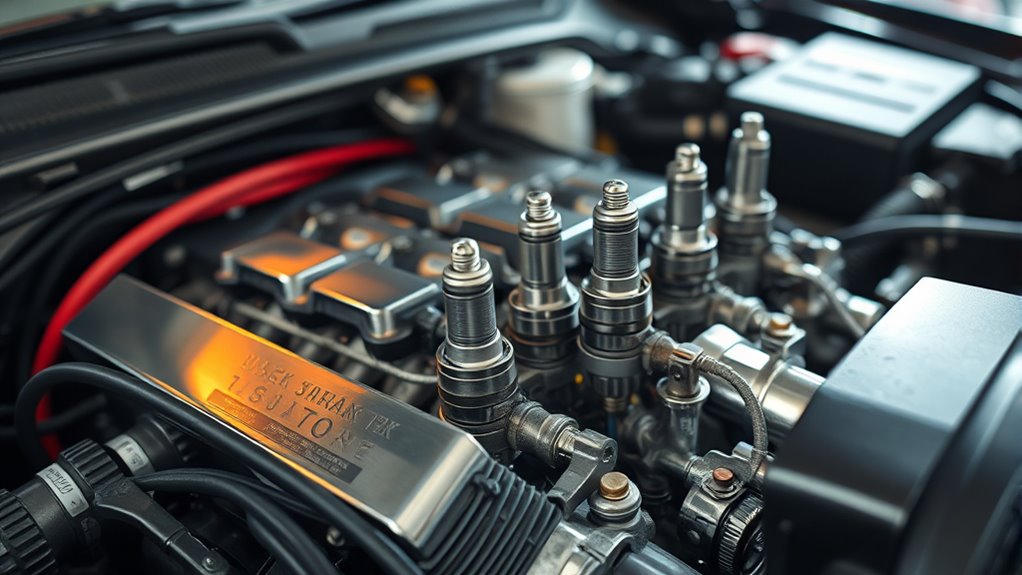
Spark plug malfunctions are a common cause of engine misfires, disrupting the spark needed for combustion. Different types—like iridium, platinum, or copper—affect durability and performance.
Using the wrong spark plug or neglecting maintenance can lead to misfires, rough idling, or poor acceleration. Worn or fouled plugs might not produce a strong enough spark, resulting in incomplete combustion.
Regularly inspecting and replacing spark plugs according to your vehicle’s schedule can prevent these issues. Look for signs like worn electrodes, carbon buildup, or corrosion.
Ensuring spark plugs are properly gapped and clean helps guarantee reliable ignition. Addressing problems early restores smooth engine operation and avoids further ignition system trouble.
When Are Mechanical Repairs Necessary for Engine Misfires?
Mechanical repairs become necessary when diagnostic efforts point to physical issues within the engine components. If your engine misfire persists despite fixing spark plugs or ignition issues, it’s time to evaluate mechanical repairs. Ignoring these problems can lead to higher repair costs and reduced engine longevity.
You should seek repairs if you notice worn or damaged piston rings, faulty valves, or timing chain issues. Cracked or warped cylinder heads, damaged or broken camshaft components, and leaking or failed head gaskets are also signs.
Addressing these problems early preserves your engine’s health and prevents costly damage down the line. Mechanical repairs are often more intensive but essential when the root cause involves physical damage rather than simple adjustments.
Skipping these repairs might save money initially but will likely lead to more expensive repairs later, which can compromise your engine’s lifespan and safety. Recognizing when to invest in mechanical repairs guarantees your vehicle remains reliable and efficient.
Tips to Prevent Engine Misfires and Keep Your Engine Running Smoothly
Regular maintenance is key to preventing engine misfires and keeping your engine running smoothly. Sticking to a routine of preventive care helps catch issues early before they cause problems.
Regular inspections of spark plugs, ignition coils, and fuel injectors can spot wear or damage that might disrupt performance. Keep an eye on fluid levels and replace filters as your vehicle’s manufacturer recommends.
Using quality parts and following your maintenance schedule reduces the risk of misfires caused by faulty components. Pay attention to warning signs like rough idling, poor acceleration, or increased fuel consumption, and address them promptly.
Don’t ignore small issues—what seems minor now can turn into bigger problems later. Consistent preventive maintenance and regular inspections will keep your engine running efficiently, reduce misfires, and help your vehicle last longer.
How Do Professional Mechanics Fix Engine Misfires Effectively?
When a vehicle has an engine misfire, professional mechanics start by diagnosing the root cause with specialized tools and techniques. They often use diagnostic scan tools, perform compression tests, and measure fuel pressure to find the exact issue.
After pinpointing the problem, they develop targeted repair strategies to fix it efficiently. These can include replacing faulty spark plugs or ignition coils, repairing or replacing fuel injectors, and addressing vacuum leaks or intake manifold issues.
Sometimes, they check and update the ECU software or repair and replace worn-out sensors like the MAF or oxygen sensors. This systematic approach helps ensure the engine runs smoothly again.
Frequently Asked Questions
Can Engine Misfires Cause Long-Term Engine Damage?
Yes, engine misfires can cause long-term damage if you don’t address them quickly. During diagnostics, you might notice the engine running rough or feeling less powerful, which signals something’s wrong.
Ignoring these signs can lead to serious issues like damaged pistons, valves, or even problems with your catalytic converter. The longer you wait, the more costly the repairs can get.
Regular maintenance and fixing problems early can help prevent major damage. This not only saves you money but also keeps your engine running smoothly for longer.
How Does Altitude Affect Engine Misfire Chances?
Altitude effects can increase your engine misfire chances because higher elevations decrease air density. This means less oxygen gets into the combustion chamber, which can cause problems.
This imbalance makes the air-fuel mixture too rich, leading to misfires. As you go higher, your engine has a harder time maintaining proper combustion.
To keep things running smoothly, you might need to adjust your fuel mixture or use altitude-compensating systems. These help your engine perform better at different elevations.
Are There Specific Driving Habits That Increase Misfire Risk?
Certain driving techniques, like rapid acceleration or frequent abrupt stops, can increase your risk of engine misfire.
Poor fuel quality also plays a role, especially if you regularly use low-grade fuel.
To minimize misfires, practice smooth driving habits and choose high-quality fuel.
Avoiding aggressive driving and making sure your fuel meets your vehicle’s specs helps keep your engine running smoothly and reduces the chances of misfire.
Can Using Incorrect Fuel Lead to Engine Misfires?
Like a chef choosing the right ingredients, using incorrect fuel can cause engine misfires. Poor fuel quality or an octane rating that doesn’t match your vehicle’s requirements can disrupt the combustion process.
When you use low-quality or wrong-octane fuel, your engine struggles to ignite properly, leading to misfires, reduced performance, and potential damage. Always check your owner’s manual to verify you’re fueling with the correct fuel for smooth, reliable operation.
What Are the Environmental Impacts of Engine Misfires?
Engine misfires can negatively impact the environment by increasing emissions, which may lead to violations of emission standards. When your engine misfires, it burns fuel less efficiently, reducing fuel efficiency and causing more pollutants to be released into the air.
This not only harms air quality but also contributes to global warming. Addressing misfires promptly helps protect the environment and keeps your vehicle within regulatory emission limits.
Conclusion
Sometimes, a simple misfire can be a sign of bigger issues hiding beneath the surface.
Paying close attention to symptoms and addressing problems early can help you avoid costly repairs.
This is actually the very thing that inspired you to learn about engine misfires in the first place.
Keep your engine running smoothly with regular checks and quick fixes, and you’ll enjoy worry-free driving whenever you hit the road.
Remember, understanding engine misfire causes, symptoms, and solutions can help you stay ahead of potential problems.