How to Put Car Seat in Car Without Base: Easy Step by Step Guide
Many parents and caregivers find installing a car seat without a base to be a bit daunting. You’re not alone—this can be tricky, especially if you’re new to it or don’t have the base on hand.
Don’t worry, though, because with a few simple steps, you can do it confidently and safely.
To install a car seat without a base, start by preparing your car—clear clutter and check the seat belt.
Follow your seat’s manual to position the seat at the correct angle, then thread the seat belt through the designated path and lock it in place.
Tighten the belt so the seat doesn’t move more than an inch. Confirm the harness fits snugly and the seat is secure.
Keep going for detailed tips to get it just right.
Key Takeaways
Verify that the car seat is compatible with belt installation and follow the manufacturer’s instructions carefully.
Position the seat at the correct recline angle, usually around 45 degrees for rear-facing seats.
Thread the seat belt correctly through the designated path and lock it securely to hold the seat in place.
Make sure the seat is tightly secured with less than one inch of movement side to side or front to back.
Double-check the harness, recline angle, and seat belt engagement. If you’re unsure, seek professional help.
Can I Install My Car Seat Without a Base?
Absolutely, you can install your car seat without a base, but it depends on the type of seat you have. Many car seats, especially convertible and all-in-one models, are designed to be used with or without a base.
Check your seat’s safety features and manufacturer instructions to see if it’s suitable for no-base use. Installing without a base can be safe if you do it correctly, but you need to be careful and precise.
Verify your seat’s instructions to ensure safe installation without a base and follow proper safety procedures carefully.
Follow the installation tips provided by the manufacturer, making sure the seat is tightly secured using the vehicle’s seat belt or LATCH system. Ensure the seat doesn’t move more than an inch side to side or front to back once installed.
Proper installation is key for safety, so double-check all connections and angles before placing your child. If you’re unsure, consult your car seat manual or ask a certified Child Passenger Safety Technician for help.
How to Prepare Your Car for No-Base Car Seat Installation
Preparing your car properly is essential before installing a no-base car seat to ensure safety and ease. First, clear out the backseat area and remove any clutter that might get in the way of the installation.
Next, check that your vehicle’s seat belt system is working correctly. A properly functioning seat belt is vital for keeping the car seat secure.
Use this quick reference table to guide you:
| Step | Action | Purpose |
|---|---|---|
| 1 | Check seat belt function | Confirm proper locking mechanism |
| 2 | Clean the seat surface | Provide a stable, clean base |
| 3 | Read your car seat manual | Follow manufacturer instructions |
| 4 | Adjust seat position if necessary | Achieve proper angle and fit |
Following these tips will help you create a safe environment for your child. It ensures the car seat is properly prepared and installed securely.
Choosing the Right Car Seat for No-Base Setup
When choosing a car seat for a no-base setup, it’s important to pick one designed specifically for belt installation. Not all seats work with this method, so look for models that clearly state their compatibility with seat belts and are approved for belt installation.
Pay attention to features like adjustable harness systems, easy-to-follow belt guides, and clear installation instructions. These make securing the seat safer and simpler for you.
Safety ratings matter a lot too. Choose a seat with high safety scores from trusted organizations to ensure maximum protection for your child.
Also, consider the seat’s size and weight limits to match your child’s growth. A well-designed seat with reliable safety features will give you peace of mind knowing your little one is protected without a base.
Always double-check that the seat meets or exceeds current safety standards before making your decision.
Step-by-Step: Installing a Rear-Facing Car Seat Without a Base
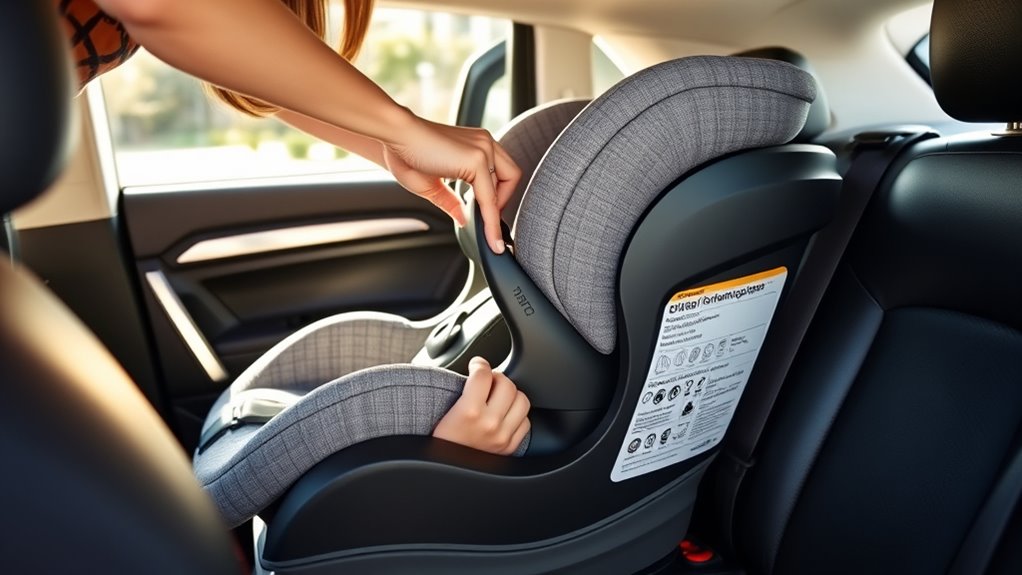
Installing a rear-facing car seat without a base might seem tricky at first, but with the right steps, you can do it safely and confidently. Start by placing the seat in the back seat, making sure it’s at a 45-degree angle for the proper recline, which is really important for safety.
Next, use your vehicle’s seat belt to secure the seat tightly, threading it through the correct belt path. Lock the seat belt according to your car’s instructions, and make sure there’s minimal movement—less than an inch side to side or front to back.
Double-check that the seat is stable by giving it a firm shake. Common worries include the wrong angle or loose installation, so take your time to verify each step. Always refer to both the car seat and vehicle manuals for specific guidance.
Proper installation maximizes safety and keeps your child protected in case of sudden stops or collisions.
Step-by-Step: Installing a Forward-Facing Car Seat Without a Base
To secure a forward-facing car seat without a base, start by positioning the seat correctly in your vehicle’s back seat. Confirm it’s facing forward and centered, with enough space around it.
Check that the seat’s recline angle is appropriate for your child’s age and size, following the manufacturer’s guidelines for forward facing safety. Most seats have indicators to help you achieve the correct angle.
Use your vehicle’s seat belt to secure the seat tightly, threading it through the designated belt path. Make sure the seat doesn’t move more than one inch side to side or front to back once installed.
Follow the installation tips provided by the manufacturer, as these are essential for proper safety. Double-check that the seat is securely anchored and that the harness system is correctly adjusted to fit snugly around your child.
Proper installation guarantees maximum safety and peace of mind during every trip.
How to Secure and Tighten the Seat Belt Properly
To keep your child safe, it’s really important to make sure the seat belt is positioned the right way across the car seat. Take your time to lock the belt securely so it doesn’t loosen up as you drive. Once it’s locked, give it a little tug to check that it’s snug enough—that way, it won’t move around if there’s a sudden stop or accident. Getting the belt fitted and tightened just right is key to making sure your child stays safe and protected while on the road.
Proper Belt Positioning
Securing the seat belt properly is essential for your child’s safety and comfort. Start by adjusting the belt so it lies flat against your child’s chest and hips, avoiding any twists.
Follow the correct belt routing to confirm the belt is positioned correctly across the child’s body. Make sure the lap belt stays low on the hips, not the stomach, and the shoulder belt crosses the chest and shoulder without cutting into the neck.
Tighten the belt firmly so there’s little slack, but don’t over-tighten, which could cause discomfort. Use the installation tips to double-check that the belt is snug and secure, and that the seat doesn’t shift more than an inch in any direction.
Proper belt positioning is key to maximizing safety and guaranteeing a comfortable ride.
Locking the Seat Belt
Once you’ve positioned the seat belt correctly across your child’s body, locking it in place makes sure it stays secure during travel. Different seat belt types, like lap belts and three-point belts, need specific locking methods.
For most belts, you’ll need to pull the belt all the way out to engage the locking mechanism, then let it retract slightly to tighten. Some vehicles have a seat belt lock feature, so check your car’s manual for tips.
Make sure the belt is snug but not too tight—there should be no slack around the car seat. Double-check that the belt clicks into the buckle securely.
Locking the seat belt properly prevents movement during sudden stops, keeping your child safe and ensuring the seat stays securely installed.
Checking Tension and Fit
Making sure the seat belt is properly tensioned is really important for your child’s safety. Start by checking the tension: pull on the belt to see if it’s snug but not too tight.
You should be able to fit no more than one finger between the belt and your child’s chest or hips. Then, verify the fit by making sure the belt lies flat against your child’s body without slack or movement.
Check that the lap belt is low on the hips and not above the stomach. The shoulder belt should cross the chest without rubbing or sliding off. Adjust the belt as needed, tightening it firmly but comfortably.
Proper tension and fit are key for maximum protection during sudden stops or crashes.
Check Your Installation: Ensure Your Car Seat Is Tight and Secure
After you’ve installed the car seat, give it a good, firm shake at the base. You want to see if it moves more than an inch side to side or front to back. If it does, it’s not quite tight enough yet.
Making sure the seat is snug and secure is super important for your child’s safety. When it’s properly installed, you can rest easy knowing your little one is protected and that the seat will stay put during the ride.
Test for Tight Fit
To confirm your car seat is securely installed, give it a firm shake at the base. If it moves more than an inch side to side or front to back, it’s not tight enough. Checking for a snug fit is essential to meet safety rules and keep your child safe.
Use your body weight to press down on the seat while testing, and watch for any excessive movement. Remember, proper installation tips include tightening the straps and making sure the seat doesn’t shift easily.
A tight fit reduces the risk of the seat tipping or sliding during sudden stops or accidents. Always double-check your setup after installation since a secure seat is key for safety and compliance with safety regulations.
Check for Movement
Once you’ve confirmed the seat feels snug by giving it a firm shake, focus on checking for any movement. A secure fit is key for car seat safety, so try to move the seat side to side and front to back.
If you notice any wiggle, tighten the seat belt or adjust the installation method. Different seat belt types, like lap belts or combination belts, need specific tightening techniques to ensure a solid hold.
Make sure the seat doesn’t shift more than an inch in any direction. Properly checking for movement helps verify your installation is safe and reliable.
Common Mistakes to Avoid When Installing Without a Base
Installing a car seat without a base can be straightforward, but it’s easy to make mistakes that compromise safety. Common errors include improper seat angle, loose harness straps, and incorrect tether usage. To avoid these, follow proper installation tips and safety guidelines.
Always verify the seat is tightly secured, with minimal movement at the belt path. Double-check the recline angle for your child’s age to ensure comfort and safety.
| Mistake | How to Avoid It |
|---|---|
| Not tightening the seat belt | Pull the belt firmly until snug |
| Incorrect harness placement | Follow manufacturer instructions |
| Failing to check seat angle | Use your vehicle’s recline indicator |
| Not securing tether strap | Always attach and tighten correctly |
| Rushing installation | Take your time to verify proper fit |
How to Test If Your Car Seat Is Installed Correctly
After securing your car seat, it’s important to verify it’s installed correctly before your child rides.
Try to move the seat side to side and front to back. It shouldn’t shift more than an inch when tested at the belt path or base.
Check that the seat is at the right recline angle, especially for infants, by following the manufacturer’s safety guidelines.
Make sure the harness straps are snug and lie flat without slack, and that the chest clip is at armpit level.
Confirm the seat is tightly secured, with minimal movement, and that the seat belt or LATCH system is properly engaged.
Always double-check your installation against the vehicle and car seat manufacturer’s safety guidelines.
Proper testing helps ensure your car seat offers maximum safety for your child during every trip.
When to Get Help From a Child Passenger Safety Technician
Knowing when to seek help from a Child Passenger Safety Technician (CPST) can make a big difference in guaranteeing your child’s car seat is installed correctly and safely. If you’re unsure about your installation, it’s best to consult a qualified technician to confirm proper child safety.
Consult a Child Passenger Safety Technician to ensure your child’s car seat is installed safely and correctly.
You should consider reaching out if:
- You’re unable to secure the car seat tightly without movement.
- The seat doesn’t fit properly in your vehicle.
- You’re confused about harness adjustments or positioning.
- Your car’s seat belt or LATCH system isn’t working as expected.
- You want a professional to double-check your installation for peace of mind.
A CPST has the necessary qualifications to provide expert guidance on child safety. They can spot issues you might overlook and ensure your child’s seat is installed correctly.
Seeking help from a qualified technician is a smart step to keep your child safe and compliant with safety standards.
Frequently Asked Questions
Can I Use Any Car Seat Without a Base in My Vehicle?
You can use many car seats without a base, but it’s important to check if they’re compatible with your vehicle.
Not all car seats work with every car, so be sure to read the manufacturer’s instructions carefully.
Focus on proper installation techniques, making sure the seat is secure and at the right angle.
Always follow safety guidelines to ensure your child’s seat is installed correctly, whether you’re using a base or not.
Are There Specific Safety Standards for No-Base Car Seat Installation?
Yes, there are strict safety regulations for no-base car seat installation. You need to follow the installation guidelines carefully, or your child’s ride could become dangerous.
Always check that your car seat meets local safety standards. Make sure it’s tightly secured using the vehicle’s seat belt or LATCH system.
Ignoring these safety rules can lead to serious injury. So, follow every step carefully to keep your little one safe and give yourself peace of mind.
How Do I Know if My Seat Belt Is Compatible With My Car Seat?
You can find out if your seat belt works with your car seat by checking the types—lap, shoulder, or combo belts—and comparing them with your car seat’s instructions.
Look for seat belt testing info in your vehicle’s manual or on a label, making sure it meets safety standards. If your seat belt fits snugly and clicks into the latch, it’s probably compatible.
Always follow your car seat manufacturer’s guidelines for safety to ensure everything is properly secured.
What Are Signs of an Improper No-Base Car Seat Installation?
Imagine trying to fit a puzzle piece in the wrong spot—that’s what improper no-base car seat installation feels like. Signs include an improper angle, where the seat tilts or wobbles, and looseness when testing for movement.
These issues raise safety concerns and could put your child’s protection at risk during a crash. Always double-check the angle and make sure the seat is secured tightly.
This way, you can be confident your child’s safety is prioritized and the seat is installed correctly.
Can I Install a Car Seat Without a Tether Strap?
You can install a car seat without a tether strap in some cases, especially if your vehicle’s lower anchors provide a secure connection. Tether straps offer added benefits like reducing forward movement during a crash, but it’s not always necessary.
If your car seat and vehicle support alternative methods, like using the seat belt properly with the lower anchors, you can still ensure safety without the tether. Just make sure to follow the manufacturer’s instructions closely for the best results.
Conclusion
Installing your car seat without a base might seem tricky, but with patience, preparation, and attention to detail, you can do it confidently. Take your time and follow each step carefully.
Double-check your work to ensure everything is secure. Avoid rushing through the process to prevent mistakes.
Trust your instincts and test the installation before placing your child in the seat. If something feels off, recheck your work.
Don’t hesitate to seek help if you’re unsure. Remember, your child’s safety depends on a secure fit, so stay vigilant and keep their safety your top priority. Putting the car seat in without a base is doable with the right approach.