4 Reasons for Car Overheating While Idling! (With Effective Solutions!)
Are you tired of your car overheating while idling? Many drivers struggle with this frustrating issue, especially when they’re just trying to relax or get somewhere quickly.
You’re not alone—car overheating during idle is a common problem that can cause stress and worries about engine damage.
If your car overheats while idling, it could be due to a faulty cooling fan stopping airflow, low coolant levels, or blocked radiator fins.
A malfunctioning thermostat or water pump can also disrupt proper coolant circulation, causing excessive heat.
Furthermore, debris or damaged hoses may leak or restrict flow.
Staying on top of regular inspections and maintenance helps prevent these issues.
Keep going to uncover detailed solutions to keep your engine cool.
Key Takeaways
- A malfunctioning cooling fan or debris blocking airflow reduces radiator cooling efficiency when idling.
- Low or contaminated coolant levels impair heat transfer, causing the engine temperature to rise.
- A stuck thermostat or faulty water pump disrupts proper coolant circulation during idling.
- A damaged radiator cap or leaks can lead to reduced system pressure and overheating risks.
- Dirty radiator fins or clogged hoses hinder airflow and coolant flow, increasing engine temperature.
Why Does My Car Overheat When Idle?
When your car overheats while idling, it’s usually because of a problem with the cooling system that stops heat from dissipating properly. A common culprit is a malfunctioning cooling fan, which should turn on to cool the radiator when the engine gets hot.
Overheating at idle often signals cooling system issues, like a faulty fan or low engine oil.
If the fan isn’t working, heat can build up, especially since your car isn’t moving to create airflow naturally. Also, your engine oil is essential for cooling and lubricating engine parts. If the oil is old or low, it won’t absorb heat efficiently.
This can lead to higher engine temperatures because the oil isn’t doing its job properly. Sometimes debris or a faulty relay can prevent the cooling fan from turning on, or low oil levels can cause the engine to run hotter.
Regularly checking your cooling fan and engine oil levels can help prevent overheating during idle. Keeping these in check ensures your engine runs smoothly and stays cool when you’re not driving.
How to Check Your Car’s Cooling System Step-by-Step
To make sure your cooling system is working properly, start by inspecting your radiator and its parts. Check the coolant levels first—make sure they’re at the recommended level in both the radiator and the overflow tank.
If the coolant is low, top it off with the right type to prevent your engine from overheating. Then, look at the radiator for any visible leaks, cracks, or blockages that might affect its performance.
Next, feel the radiator hoses; they should be firm but not overly stiff or soft, which can indicate proper pressure. Check for signs of corrosion, debris, or build-up that could block airflow or coolant flow.
Also, make sure the radiator cap seals tightly and isn’t damaged. A faulty cap can cause pressure loss and lead to overheating.
Diagnose and Fix Thermostat and Water Pump Problems Causing Overheating
A faulty thermostat or water pump can really cause your engine to overheat when you’re idling. If the thermostat gets stuck closed, it blocks coolant flow, leading to overheating. Similarly, a malfunctioning water pump can stop coolant from circulating properly, raising engine temperatures.
To diagnose these issues, look for signs like fluctuating engine temperatures or coolant leaks. These clues can point you toward the problem.
To fix them, start by testing the thermostat. Remove it and check for sticking or corrosion. If it shows signs of failure, replace it. Also, examine the water pump for leaks or strange noises. Make sure the drive belt is tight and in good condition.
Finally, flush and refill the cooling system. This removes blockages and air pockets that could cause overheating. Addressing these problems quickly helps prevent engine damage and keeps your car cool while idling.
Regular inspections of your cooling system components will keep everything running smoothly and avoid future overheating issues.
Simple Maintenance Tips to Prevent Overheating During Idle
Regular maintenance of your cooling system can prevent overheating issues while idling. Start by checking your coolant levels regularly. Low coolant reduces the system’s ability to transfer heat and can cause overheating.
Routine cooling system checks prevent overheating during idling. Keep coolant levels optimal for efficient heat transfer.
Top off the coolant with the recommended type if needed, and always make sure the radiator is filled properly. A well-maintained radiator works efficiently, helping to dissipate heat from the engine.
Clean the radiator fins to remove debris and dirt that can block airflow. This is especially important during idle when airflow is reduced. Also, inspect hoses for leaks or cracks and replace any damaged parts promptly.
Make sure the radiator cap maintains proper pressure to prevent coolant loss. Regularly flushing the cooling system can help remove rust and sediment that hinder radiator efficiency. By keeping coolant levels right and ensuring the radiator works well, you’ll greatly reduce the chances of your car overheating while idling.
Frequently Asked Questions
Can a Faulty Radiator Cap Cause Engine Overheating While Idling?
Yes, a faulty radiator cap can cause engine overheating while idling. The cap helps maintain the right pressure in the cooling system.
If it’s damaged or worn out, it can lead to coolant leaks or improper pressure regulation. Regular radiator maintenance includes replacing the cap when needed.
This helps prevent overheating and keeps your cooling system working properly. By making sure your radiator cap is in good shape, you can avoid engine damage during idling.
How Does Ambient Temperature Influence Car Overheating During Idle?
Higher ambient temperatures can raise your engine temperature during idle conditions, making overheating more likely. When it’s hot outside, your cooling system has to work harder, but sometimes that’s not enough.
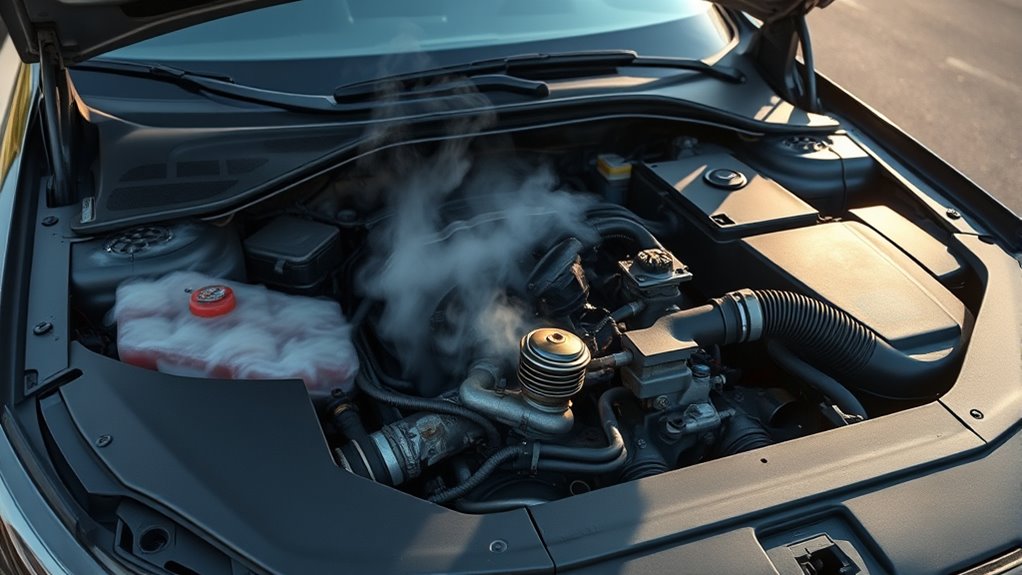
If it’s very hot, your engine’s temperature may climb, and you might notice your temperature gauge rising or see steam. To prevent this, check that your radiator is in good shape and keep the cooling system topped up.
Avoid long idling sessions on very hot days to help prevent overheating. Proper maintenance and awareness can make a big difference in keeping your engine cool.
Are There Specific Warning Signs Before a Car Overheats at Idle?
Think of your car’s warning signs as a prelude to trouble. Before overheating at idle, you might notice the temperature gauge creeping up or see coolant leaks under your vehicle.
These signals act like sirens warning you to act. Don’t ignore them; they show your cooling system is struggling. Recognizing these early signs can help prevent engine damage and keep your car running smoothly.
Can Using the Wrong Type of Coolant Lead to Overheating Issues?
Yes, using the wrong coolant types can cause overheating issues. If you pick incompatible coolant or forget to add the right additives, your cooling system won’t work as well as it should.
This can lead to poor heat transfer, especially when the engine is idling, and cooling efficiency is really important. Be sure to use the recommended coolant types and additives for your vehicle.
That way, you can prevent overheating and keep your engine running smoothly.
How Often Should I Have My Cooling System Inspected for Potential Problems?
Did you know that neglecting cooling maintenance can cause your vehicle to overheat and lead to costly repairs? It’s a good idea to have your cooling system inspected at least once a year or every 12,000 miles—whichever comes first.
Regular inspections help catch potential issues early, which can prevent overheating while you’re idling or driving. Staying proactive with cooling system maintenance keeps your car running smoothly.
Conclusion
If your car overheats while idling, don’t ignore the warning signs. Regular maintenance like checking your cooling system and replacing faulty parts can save you from costly repairs and breakdowns.
Remember, overheating is a common issue with simple solutions—so you don’t have to be a mechanic to fix it. Stay proactive, follow the steps, and keep your engine cool.
Don’t let overheating ruin your drive. Take action today to ensure a smoother, safer ride and keep your engine running efficiently.