Top Aftermarket Catalytic Converter for Hondas
Many Honda owners know how frustrating it can be to find a reliable aftermarket catalytic converter that actually fits and passes emissions.
You’re not alone—navigating options can be confusing and overwhelming.
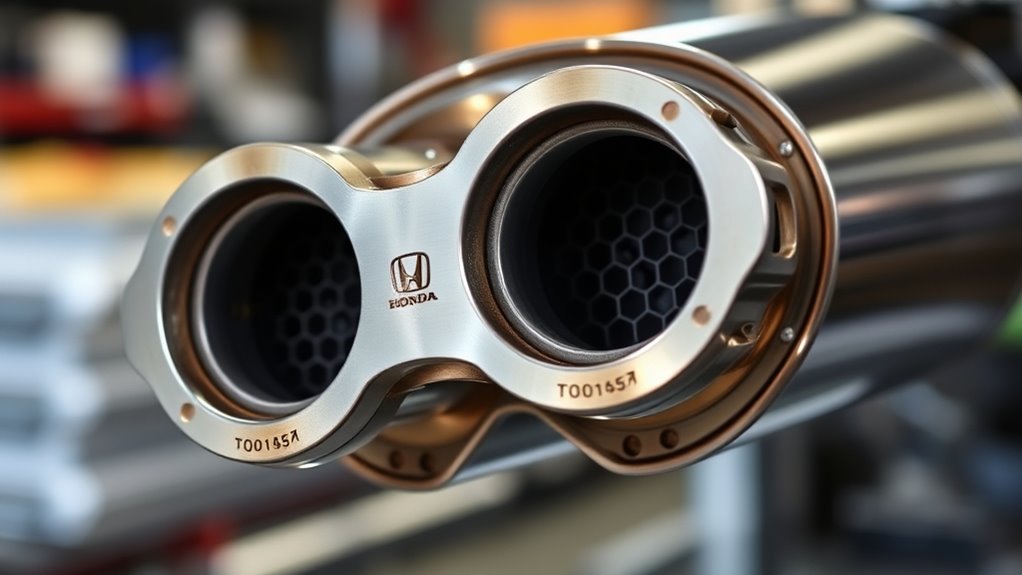
If you want the top aftermarket catalytic converter for your Honda, choose a high-quality, certified model designed specifically for your make and model.
Look for options that meet emissions standards like EPA or CARB, and prioritize durable materials such as stainless steel or ceramic.
Reputable brands with good reviews offer better performance and long-term reliability.
To find the best fit and guarantee compliance, check compatibility and proper installation tips.
There’s more to consider for ideal results, but with the right choice, you’ll enjoy better performance and peace of mind.
Key Takeaways
- Prioritize reputable brands with positive customer reviews and proven durability for Honda-specific models.
- Make sure the converter meets local emissions regulations, like EPA or CARB certification.
- Choose models made with high-quality materials like stainless steel for better longevity and performance.
- Verify compatibility with your Honda’s make, model, and exhaust system to ensure a proper fit and efficiency.
- Consider premium aftermarket options for improved performance, longer lifespan, and environmental compliance.
How to Choose the Best Aftermarket Catalytic Converter for Your Honda
Choosing the right aftermarket catalytic converter for your Honda starts with understanding your vehicle’s specific needs and local regulations. Start by exploring various aftermarket options, making sure they meet emissions standards in your area. Not all converters are created equal, so look for models designed for your Honda’s make and model to guarantee a proper fit.
Consider the performance benefits of each option, such as improved exhaust flow and increased horsepower, which can elevate your driving experience. Quality materials like ceramic or stainless steel typically last longer and provide better durability.
Don’t forget to verify compatibility with your existing exhaust system to avoid installation issues. While price is important, investing in a reputable brand guarantees you get a converter that delivers reliable performance and meets legal standards.
Key Features to Consider When Buying a Honda Catalytic Converter
When shopping for a Honda catalytic converter, it’s vital to focus on key features that guarantee compatibility, durability, and performance. Look for converters made from high-quality materials like stainless steel, which resist corrosion and last longer.
Consider the design and construction, confirming it meets your Honda’s specifications for a perfect fit. A converter that offers performance improvement can boost your vehicle’s power and efficiency, so check for models with optimized flow rates.
Furthermore, pay attention to the catalyst’s ability to reduce harmful emissions, minimizing environmental impact. Certification from organizations like the EPA or CARB guarantees the converter complies with environmental standards.
Durability is important, especially if you drive often or in harsh conditions. Ultimately, selecting a converter with these features helps you achieve better performance while supporting eco-friendly driving.
Prioritize quality and compatibility to maximize the benefits of your aftermarket upgrade.
What Size and Fit Do You Need for Your Honda Model?
Ever wondered how to make sure your aftermarket catalytic converter fits just right with your Honda? The trick is knowing your Honda’s dimensions and fit details.
You need to consider your model’s compatibility since each vehicle has its own exhaust alignment and installation needs. Size differences can also depend on the age of your car and its performance specs.
Here’s a quick guide to help you out:
| Honda Model | Size Variations | Fit Specifications |
|---|---|---|
| Civic | Compact, Standard | Precise exhaust mounting points |
| Accord | Larger, Extended | Alignment for ideal flow |
| CR-V | Mid-size, SUV | Durable fit for off-road use |
Always check your Honda’s specific dimensions to match the converter’s size. Getting the right fit ensures your car runs smoothly and performs efficiently.
Top Honda Catalytic Converter Brands Compared
When you’re picking out a catalytic converter for your Honda, it’s a good idea to look into the brand’s reputation. You want something reliable and trustworthy, right? Spending a little extra on a well-known brand can save you headaches down the road.
Of course, price is also a factor. You don’t want to break the bank, but at the same time, you don’t want to go for the cheapest option and end up with poor quality. Finding that sweet spot between quality and affordability is key.
To help you out, let’s take a quick look at some of the top brands out there. Comparing these can give you a better idea of what’s available and what might work best for your Honda.
Brand Reputation and Trust
Choosing a reputable brand for your Honda’s aftermarket catalytic converter is essential because it directly impacts your vehicle’s performance and lifespan. Brand reliability is key—you want a brand known for consistent quality and durability.
Customer feedback offers valuable insights into how well a converter performs in real-world conditions. It helps you gauge trustworthiness and makes your decision easier.
Brands with strong reputations usually have fewer complaints and higher satisfaction rates. This gives you peace of mind that your investment will last.
Look for brands recommended by mechanics and positive reviews from other Honda owners. Trustworthy brands prioritize quality, meet industry standards, and stand behind their products.
Choosing the right brand ensures your vehicle runs smoothly and stays eco-friendly over time.
Price and Value
While brand reputation guides you toward quality, understanding the balance between cost and value helps you make a smart investment. When evaluating top Honda catalytic converter brands, a thorough cost analysis and value comparison reveal which options deliver durability without breaking the bank.
You want reliability but not at an inflated price. Look for brands that offer affordable prices paired with long-lasting performance.
Here’s what to keep in mind:
- High upfront cost but exceptional longevity
- Mid-range prices with solid durability
- Budget options that may need replacement sooner
- Brands providing warranty and support for peace of mind
Focusing on value guarantees you get the best performance for your money. It helps minimize future expenses and keeps your vehicle running efficiently.
Are High-Performance Catalytic Converters Worth It for Your Honda?
Are high-performance catalytic converters worth the investment for your Honda? If you’re looking for better performance, these converters can offer noticeable benefits like increased horsepower and improved throttle response.
They often optimize exhaust flow, helping your engine breathe more efficiently. But keep in mind, some high-performance models might require more precise fitting or modifications, which can lead to higher labor costs or technical challenges.
If your main goal is to boost your car’s overall performance and you’re okay with potential installation issues, a high-performance converter could be a good upgrade.
On the other hand, if passing emissions tests or keeping things simple is your priority, a standard aftermarket converter might be enough.
In the end, weighing the benefits against the installation challenges will help you decide if the performance gains are worth the extra effort and expense for your specific Honda model.
Tips for Installing Your Honda Aftermarket Catalytic Converter
- Carefully align the exhaust components for a proper fit. Take your time to make sure everything lines up correctly before tightening.
- Tighten all bolts evenly to prevent leaks. Working gradually around each bolt helps create a secure seal.
- Use anti-seize compound on bolts for easier future removal. This will save you a lot of hassle down the line.
- Test drive and listen for unusual noises or leaks. If you hear anything off, double-check your connections.
Following these tips guarantees a smooth installation, maximizing your converter’s lifespan and performance.
Will Your Honda’s Converter Pass Emissions Tests?
Wondering if your Honda’s converter will pass the emissions tests? It’s pretty important to know whether it’s up to snuff since things like how efficient the catalyst is and whether everything’s working properly can really make a difference.
Getting familiar with the testing process can help you get ready and increase your chances of passing on the first try. Making sure your converter is in good shape not only saves you time but can also save you from those costly re-tests.
Emissions Standards Compliance
Ensuring your Honda’s aftermarket catalytic converter meets emissions standards is key for passing tests and avoiding fines. Staying compliant with emissions rules not only keeps you legal but also helps reduce your vehicle’s environmental impact.
Choose converters that are certified and designed to meet or go beyond legal requirements. This way, you’re making a smart choice for your car and the planet.
Think about how your decision affects:
- Your community’s health by cutting down on harmful pollutants
- Your wallet by avoiding costly fines and repairs
- The environment through a smaller carbon footprint
- Your peace of mind knowing you’re helping keep the air cleaner
Catalyst Efficiency Factors
The efficiency of your Honda’s catalytic converter is key to passing emissions tests. Different types, like OEM replacements or high-performance aftermarket options, can impact how well emissions are reduced.
Factors like catalyst material quality, design, and proper installation all matter. High-quality catalysts with advanced coatings work better and cut harmful emissions more effectively.
The design also affects how thoroughly exhaust gases are treated, which influences emissions compliance. Regular maintenance, like ensuring a proper fit and avoiding damage, helps keep your converter working efficiently.
If your converter isn’t functioning well, emissions reduction drops, and you risk failing tests. Choosing a reputable aftermarket converter made for your Honda’s model and that meets standards can improve your chances of passing and staying eco-friendly.
Testing Procedures Explained
Understanding how your Honda’s emissions are tested can help you know if your aftermarket catalytic converter will pass.
During performance testing, your vehicle’s exhaust gases are analyzed to make sure emissions meet legal standards. Durability checks see how well the converter holds up over time, resisting heat and corrosion.
To pass these tests, your converter needs to reduce pollutants effectively and stay reliable. Key steps include monitoring emissions during a simulated drive cycle and verifying catalyst efficiency with specialized equipment.
They also evaluate the build quality for long-term durability and confirm that your converter complies with local emissions laws. These procedures help ensure your aftermarket converter can handle real-world driving, pass emissions tests, and stay at peak performance.
Common Problems With Aftermarket Honda Converters and How to Prevent Them
While aftermarket Honda converters can be a budget-friendly choice compared to OEM parts, they often come with common issues that can impact your vehicle’s performance and lifespan. One of the main problems is installation errors. If the converter isn’t fitted properly, it can cause exhaust leaks or sensor errors.
When the converter isn’t aligned correctly or mounting points aren’t secure, you might notice poor engine performance or increased emissions. This can lead to issues like reduced power, rough idling, or check engine lights. To avoid these problems, make sure you pick a converter that matches your specific Honda model.
Having a qualified mechanic install the converter is a good idea. Double-check the fit before finishing the job, and ensure all sensors and connections are properly secured. Regular inspections after installation can catch issues early, helping you keep your vehicle running smoothly and avoid costly repairs later on.
Budget vs. Premium Honda Catalytic Converters: Which Is Right for You?
Choosing between budget and premium Honda catalytic converters depends on your priorities and budget. Budget options are appealing if you want to save upfront, but they may lack long-term reliability and extensive warranty coverage.
Premium converters offer superior performance, better brand comparisons, and often come with thorough warranties that protect your investment. Keep in mind, installation costs might be higher with premium options due to their complexity and quality.
Premium converters provide better performance, stronger warranties, and may incur higher installation costs due to their quality.
However, they often last longer and reduce environmental impact over time. Reading user reviews can reveal real-world durability and performance insights, helping you decide.
If you prioritize environmental responsibility and long-term savings, premium converters could be the smarter choice. But if you’re on a tight budget and need a quick fix, a reliable budget option might suffice initially.
Ultimately, weigh your budget against the benefits of premium performance and peace of mind for lasting reliability.
How to Maintain and Inspect Your Honda Catalytic Converter for Long-Term Performance
Regularly inspecting and maintaining your Honda’s catalytic converter is key to keeping it working efficiently and lasting longer. Start with simple checks, like noticing any strange exhaust smells, increased emissions, or a drop in fuel economy.
Visually inspect the converter for damage, corrosion, or soot buildup. Cleaning the catalytic converter can help remove carbon deposits that block performance; you can use special cleaning products or have a professional do it.
Keep an eye on your engine’s performance. If you notice misfires or rough idling, it might mean the converter is clogged or failing. Make sure your engine runs smoothly and that your oxygen sensors are working properly, as they impact the converter’s efficiency.
Regular maintenance, timely inspections, and cleaning can extend your catalytic converter’s life and prevent costly replacements. Staying proactive with these checks helps ensure your Honda’s converter remains effective, eco-friendly, and reliable over the long term.
Frequently Asked Questions
How Long Does an Aftermarket Catalytic Converter Typically Last on a Honda?
An aftermarket catalytic converter on your Honda usually lasts between 70,000 to 100,000 miles. But how long it actually lasts can depend on things like your driving habits, your engine’s condition, and the quality of the converter itself.
To get the most out of it, make sure to do regular inspections, use good quality fuel, and fix any exhaust leaks quickly. Taking good care of your converter helps prevent damage from contaminants and keeps it working efficiently for years.
Are Aftermarket Honda Catalytic Converters Legal in All States?
An ounce of prevention is worth a pound of cure.
The legality of aftermarket Honda catalytic converters varies by state, so it’s important to check local regulations and make sure they meet state requirements.
Some states, like California, have strict emissions laws, which can make certain aftermarket parts illegal unless they’re certified. Always double-check your state’s rules before installing to avoid fines or legal issues.
This way, you can keep your vehicle street-legal and avoid any unexpected problems down the road.
Can I Upgrade My Honda’s Converter Without Affecting Warranty Coverage?
Upgrading your Honda’s converter can impact warranty coverage, so it’s important to consider the warranty implications before making any changes.
If the aftermarket converter is installed properly and doesn’t cause damage or emissions problems, your warranty might stay intact. However, some manufacturers could void parts of your warranty if they find the upgrade problematic.
For performance improvements, look for high-quality aftermarket options. It’s also a good idea to talk to your dealer or manufacturer first to make sure your upgrade won’t void your warranty.
What Are Signs My Honda’s Catalytic Converter Needs Replacement?
If your Honda shows signs like reduced acceleration, strange smells, or higher emissions, it might be time to replace the catalytic converter.
You could also notice performance issues, such as rough idling or lower fuel efficiency.
These signs mean your catalytic converter isn’t working properly.
It’s important to address these issues quickly to prevent more damage and keep your car running smoothly.
Don’t ignore these signals. Replacing the converter on time helps restore your car’s performance and keeps emissions in check.
Do Aftermarket Converters Affect My Honda’s Fuel Efficiency?
Aftermarket catalytic converters can impact your Honda’s fuel efficiency, but it really depends on the quality and fit. A well-made converter keeps your vehicle performing well and ensures emissions standards are met without hurting your mileage.
On the other hand, poor-quality or incompatible converters might decrease efficiency and even increase emissions. To keep your Honda running smoothly and efficiently, it’s best to choose a reputable aftermarket converter that matches your vehicle’s specs and emissions requirements.
Conclusion
Choosing the right aftermarket catalytic converter for your Honda is like finding a trusted partner. You want reliability, performance, and peace of mind.
By considering key features, brands, and your specific needs, you’ll be able to make a confident decision. It’s all about finding what works best for your ride.
Remember, investing wisely today ensures your Honda runs smoothly tomorrow. A quality converter keeps your vehicle performing at its best.
Don’t let a faulty converter be the thorn in your side. Instead, embrace the road ahead with confidence and pride.
Your journey starts with the right choice for a top aftermarket catalytic converter for Hondas. Make it count.