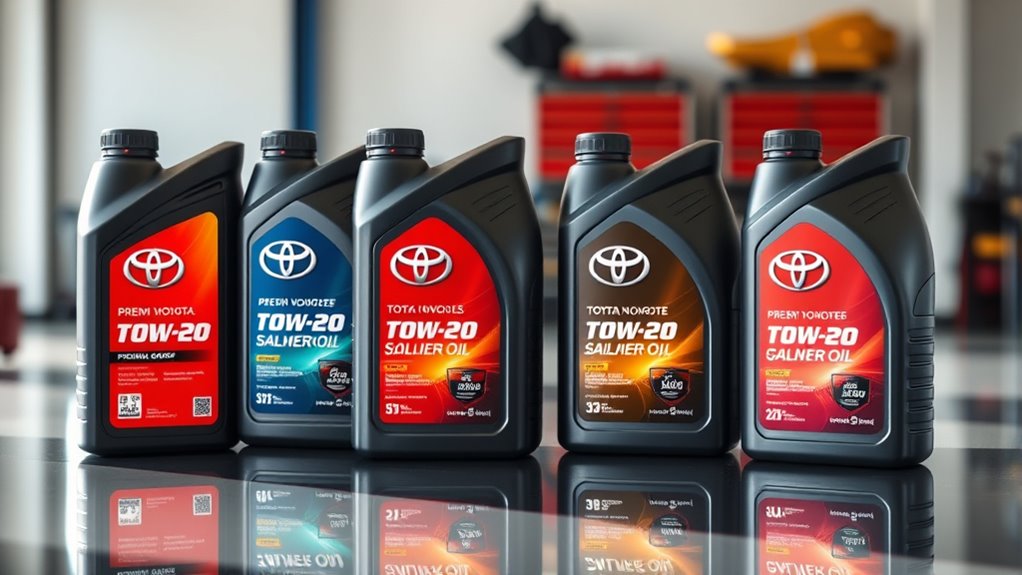
Top 5 Best 0W 20 Oils for Toyota Owners Revealed
Feeling overwhelmed trying to find the best 0W-20 oils for your Toyota? You’re not alone—many owners struggle with choosing the right oil to keep their engines running smoothly. The right oil can make all the difference in performance, protection, and longevity.
If you’re looking for the best 0W-20 oils for your Toyota, you should consider Mobil 1 Advanced Full Synthetic, Valvoline SynPower, Castrol GTX Magnatec, Pennzoil Platinum, and Royal Purple Synthetic. These oils offer superior protection, stability, and engine cleanliness, ideal for various driving conditions.
Choosing the right type—synthetic, conventional, or blend—depends on your engine’s age and your driving habits.
Keep going to learn more about making the perfect choice for your vehicle’s needs.
Key Takeaways
- Prioritize oils that meet Toyota’s specifications for the best engine protection and performance.
- Go for synthetic options like Mobil 1 or Valvoline for better protection and longer-lasting engine health.
- Think about your driving conditions—cold weather or heavy loads might need specialized formulas.
- Stick with reputable brands known for keeping engines clean and offering quality additive packages.
- Regularly check your oil level and change it on schedule to keep your engine healthy and get the most out of your oil.
How to Choose the Right 0W-20 Oil for Your Toyota Engine
Choosing the right 0W-20 oil for your Toyota engine starts with understanding your vehicle’s specific requirements. First, check your owner’s manual to find the recommended oil viscosity; 0W-20 is common for many models, but some might need a different grade.
Opting for the correct viscosity guarantees ideal lubrication and engine performance. You want an oil that flows easily at cold start to protect engine parts and maintains proper film strength at operating temperature.
Choosing the right viscosity ensures optimal engine lubrication and protection at all temperatures.
This balance directly impacts engine longevity, helping prevent premature wear and damage. Consider your driving conditions too—severe cold climates or frequent short trips may require a high-quality oil with improved properties.
Always choose oils that meet or exceed manufacturer specifications; this assures compatibility and reliability. By paying close attention to your vehicle’s guidelines and choosing an oil with the appropriate viscosity, you’ll support your engine’s health and longevity.
Keeping your engine running smoothly for years to come is easier when you pick the right oil.
Understanding Different Types of 0W-20 Oil: Synthetic, Conventional, and Blends
Understanding the different types of 0W-20 oil—synthetic, conventional, and blends—is important for choosing the right one for your Toyota. Each type differs in viscosity, additives, and how they perform.
Synthetic oils are designed for better protection, offering improved stability, better flow in cold temperatures, and resistance to breakdown. They’re great for demanding driving conditions.
Conventional oils are more budget-friendly and work well for older engines. However, they might not offer the same level of protection or last as long as synthetic options.
Blended oils combine features from both synthetic and conventional oils, balancing cost and performance. They provide decent protection and moderate improvements in oil viscosity.
When choosing, think about your driving habits and engine needs. Synthetic oils usually have advanced additives that keep your engine clean and protect against wear.
Conventional oils may lack some of these high-performance additives but still meet basic lubrication requirements. Blends offer a middle ground with decent protection and cost efficiency.
Knowing these differences helps you make a smart choice for your engine’s performance and longevity.
Best 0W-20 Oils for Toyota: Top Picks for Protection and Efficiency
In relation to maintaining your Toyota’s performance and extending its engine life, selecting the right 0W-20 oil is essential. The best options offer excellent oil compatibility, ensuring the oil works seamlessly with your vehicle’s engine components.
These oils deliver significant performance benefits, such as improved fuel efficiency, smoother operation, and reliable cold-start performance. Top picks include synthetic formulations like Mobil 1 Advanced Full Synthetic, which provide superior protection against wear, sludge, and thermal breakdown.
Valvoline SynPower Full Synthetic is another excellent choice, known for its durability and engine cleanliness. For those seeking affordability without sacrificing quality, Castrol GTX Magnatec is a reliable blend that improves oil film strength.
Whichever you choose, prioritize oils that meet Toyota’s specifications to optimize engine protection and efficiency. Remember, the right oil not only keeps your engine running smoothly but also helps prevent costly repairs over time.
Factors to Consider When Selecting 0W-20 Oil for Your Driving Needs
Selecting the right 0W-20 oil depends on your driving habits and the conditions your vehicle faces daily. Your choice affects engine performance, longevity, and fuel efficiency.
When choosing oil viscosity, think about how your engine works in different environments. For example, if you often drive in cold weather, a high-quality 0W-20 oil helps with quick starts and smooth operation.
If you frequently haul heavy loads or drive in hot climates, look for oils designed to handle higher temperatures and stress.
Key factors to consider include:
- Driving conditions: Cold starts, stop-and-go traffic, or long highway drives all impact oil performance needs.
- Engine age and wear: Older engines may benefit from oils with specific additive packages.
- Manufacturer recommendations: Always follow your vehicle’s manual for the best oil viscosity and specs.
How to Change and Maintain Your 0W-20 Oil for Long-Lasting Performance
Changing and maintaining your 0W-20 oil regularly is key to keeping your engine running smoothly and ensuring it lasts a long time.
Regularly changing 0W-20 oil keeps your engine smooth and prolongs its lifespan.
To do an oil change, first make sure your engine is cool. Lift your vehicle safely and drain the old oil into a container.
Next, replace the oil filter with a new one that’s suitable for your Toyota, then fill with fresh 0W-20 oil up to the recommended level.
Check your vehicle’s manual for the exact oil capacity to avoid overfilling.
It’s a good idea to check your oil level monthly and look for leaks or signs of contamination.
Avoid overfilling, as it can cause engine damage.
Use a clean funnel when adding oil and dispose of used oil responsibly at a recycling center.
Regular oil changes, usually every 5,000 to 7,500 miles, help prevent engine wear and keep your car performing its best.
Staying consistent with these maintenance tips will keep your engine efficient and extend its lifespan.
Frequently Asked Questions
Is 0W-20 Oil Suitable for Extreme Cold Climates?
Yes, 0W-20 oil is suitable for extreme cold climates because it offers excellent cold weather performance. It ensures your engine starts easily even in freezing temperatures.
Its low viscosity allows for quick lubrication, providing better engine protection during cold starts. This oil flows more easily at low temperatures, reducing wear and tear.
It helps your vehicle run smoothly despite the harsh cold, ultimately enhancing your engine’s longevity and reliability.
How Often Should I Change 0W-20 Oil in My Toyota?
Think of your engine as a well-oiled symphony. It needs tuning to stay in harmony.
You should change your 0W-20 oil every 6,000 to 10,000 miles or every 6 to 12 months, depending on how you drive.
Regular oil changes keep your engine running smoothly and prevent wear and tear.
Always check your Toyota’s owner manual or ask a mechanic for personalized advice. This way, you keep your ride running at its best.
Can I Mix Different Brands of 0W-20 Oil?
You can mix different brands of 0W-20 oil, but it’s not ideal. Oil compatibility can vary between brands, and mixing them might impact how well your engine performs.
For the best results, stick to the same brand and type of oil recommended for your Toyota. This helps ensure consistent quality and proper lubrication.
Using the same oil brand and type also helps your engine run smoothly and prevents potential issues caused by incompatible or mixed oils.
Does 0W-20 Oil Affect My Vehicle’s Fuel Economy?
Switching to 0W-20 oil is like giving your engine a boost of efficiency. It reduces friction, helping your vehicle run smoother and more economically.
This lightweight oil also extends oil life, so you’ll need fewer oil changes and can enjoy better fuel economy over time.
Are There Eco-Friendly 0W-20 Oil Options Available?
Yes, eco-friendly 0W-20 oil options are available. You can find synthetic alternatives designed to reduce environmental impact, offering better biodegradability and fewer harmful emissions.
Look for biodegradable options labeled as eco-friendly or environmentally responsible. These oils typically meet or exceed industry standards while supporting your efforts to minimize your vehicle’s ecological footprint.
Choosing such options helps protect the environment without sacrificing engine performance.
Conclusion
So, you’ve made it through the oil jungle—impressive! Now, you’re all set with the best 0W-20 oils for your Toyota, ready to keep that engine purring smoothly. Who knew choosing oil could be this exciting?
Just remember, even the best oil can’t fix a bad driving habit. So, keep up with maintenance, and your Toyota will thank you—probably with years of reliable service and maybe a little less whining.
When it comes to protecting your engine, using top-rated 0W-20 oils for Toyota is a smart move. It’s the key to keeping your ride running smoothly and efficiently.