Signs of Cracked Engine Block: Detection, Prevention & Maintenance Tips
Dealing with a potential cracked engine block can be stressful, especially when your car starts showing strange signs. You’re not alone—many drivers struggle with identifying early issues before they turn into costly repairs.
If your engine shows signs like overheating, coolant leaks, or white smoke from the exhaust, it may have a cracked engine block. Visible cracks or leaks, sudden loss of coolant, and engine misfires are key indicators to watch for.
Keep up with regular inspections and maintain your cooling system to prevent damage.
To catch issues early and avoid costly repairs, it’s essential to know these signs; continue exploring to learn more about prevention and maintenance.
Key Takeaways
- Visible cracks, leaks, or fresh fluid stains can be signs of potential engine block damage. Keep an eye out for these warning signs.
- Overheating, sudden coolant loss, and dashboard temperature warnings are common indicators that something’s wrong.
- White exhaust smoke and engine misfires often point to a cracked engine block, so don’t ignore these symptoms.
- Regularly check your coolant levels, oil quality, and engine temperature to catch issues early.
- If symptoms persist, it’s best to get a professional evaluation with pressure tests or thermal imaging for an accurate diagnosis.
How Do You Know If Your Engine Block Is Cracked?
Wondering how to tell if your engine block is cracked? The first step is understanding engine block materials like cast iron or aluminum, which influence how cracks develop and show.
Cracks can sometimes be hidden, but symptoms often include coolant leaks, overheating, or oil mixing with coolant. Visual inspection might reveal a crack if you see visible damage or coolant seeping from the engine.
You may also notice a loss of compression or strange noises during operation. Recognizing early signs can save you money and time. Small cracks can sometimes be sealed with epoxy or specialized repair kits.
But larger issues usually require extensive welding or even replacing the engine block entirely. Being attentive to these clues helps you decide whether your engine needs professional diagnosis or immediate repair, preventing further damage down the line.
Signs of a Cracked Engine Block You Should Recognize
Sure! Here’s the modified version with a more conversational tone:
—
You might spot some visible cracks or leaks on your engine—that’s usually a pretty clear sign something’s wrong. If your engine keeps overheating or you notice sudden spikes in temperature, those are also good clues that there could be an issue. And hey, if your coolant levels suddenly drop without explanation, it might be because a crack is causing leaks somewhere.
—
Let me know if you’d like it to be more casual or detailed!
Visible Cracks or Leaks
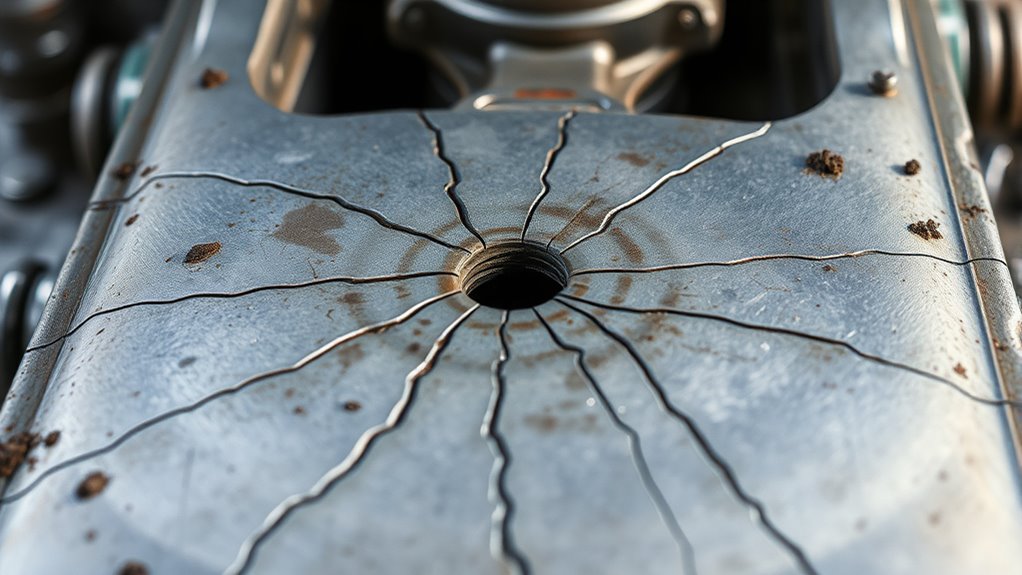
Visible cracks or leaks are some of the most obvious signs of a cracked engine block. You might notice coolant or oil seeping from the engine, which points to a leak.
During crack analysis, look closely for any visible fractures on the engine surface. These cracks can be tiny hairline marks or more noticeable.
Leak detection becomes easier if you regularly check your engine for fresh fluid spots or stains. Sometimes, leaks hide behind components, so careful inspection is key.
Keep an eye out for puddles under your vehicle or a sudden drop in fluid levels. Addressing visible cracks or leaks quickly can prevent further engine damage and help decide if you need professional repair or replacement.
Overheating Engine Signs
An overheating engine is one of the most common warning signs of a cracked engine block. If you notice your engine temperature rising quickly or staying high despite normal driving, it could be a crack.
Keep an eye on coolant levels since a drop might suggest leaks caused by the crack. This can lead to insufficient cooling and more damage.
Persistent overheating can cause serious problems, so don’t ignore it. Check your dashboard for temperature warnings and regularly monitor coolant levels.
If your engine feels unusually hot to the touch or if the temperature gauge fluctuates unexpectedly, it’s a sign you should investigate further. Addressing overheating early can prevent bigger issues, including engine failure.
Loss of Coolant
Losing coolant is a strong sign that your engine block might be cracked. If your coolant levels drop without any visible leaks, it could mean coolant is leaking inside the engine because of a crack.
This loss can happen gradually or suddenly, often with overheating or steam coming from under the hood. Look for puddles or stains under your vehicle, especially near the engine.
If coolant keeps decreasing even after you top it off, it suggests there’s internal leakage. A cracked engine block allows coolant to escape inside, making it harder to see at first.
Regularly check your coolant levels and watch for sudden drops. Catching the problem early can prevent serious engine damage.
How Overheating Can Signal Engine Damage
When your engine starts to overheat, it’s often a sign of underlying issues, like a cracked engine block. Overheating pushes the engine temperature beyond normal, stressing its parts.
This excessive heat can weaken components, warp metal, or even crack the engine block. You might see the temperature gauge needle climbing quickly or staying in the red zone.
Other signs include steam coming from under the hood, a burning smell, or coolant loss without any leaks. Ignoring overheating can lead to serious, long-term damage.
High engine temperatures speed up wear and tear, increasing the chances of cracks forming in the engine block. Catching overheating early is key to preventing costly repairs.
If you notice these signs, it’s important to get your engine checked out promptly. Addressing overheating quickly can save you from major engine damage down the line.
Detecting Engine Cracks Through Coolant Leaks
Detecting engine cracks through coolant leaks is one of the simplest ways to spot potential damage early. If your engine develops a crack, coolant can escape, causing visible leaks under your vehicle or around the radiator and hoses.
Regularly inspecting for coolant leaks during routine engine checks can help catch problems before they get worse. Look for puddles of coolant, which might be bright green, orange, or pink depending on your coolant type.
Also, keep an eye out for a sweet smell around your vehicle or slimy residue near engine components, as these can indicate a leak. Monitoring your coolant levels is important too; a sudden drop suggests a leak in the engine block or related parts.
Addressing coolant leaks quickly can prevent further damage and costly repairs. Staying vigilant during routine maintenance helps you catch cracks early and keeps your engine running smoothly.
White Smoke From Exhaust: a Warning Sign of Engine Cracks
Have you noticed white smoke billowing from your exhaust? This is often a sign of an underlying issue, possibly a cracked engine block.
During exhaust analysis, white smoke can indicate coolant entering the combustion chamber, which points to cracks or leaks. Smoke diagnosis is essential here—persistent white smoke that doesn’t clear quickly usually signals coolant burning alongside fuel.
If the engine’s cooling system is compromised, you might also notice overheating or milky oil, further confirming internal cracks. Don’t ignore this warning; white smoke shows your engine’s integrity may be compromised.
Addressing it early can prevent severe damage and costly repairs. Regular inspections and attentive exhaust analysis help catch these signs before they escalate.
If you see white smoke, consider consulting a mechanic immediately. They can conduct a thorough smoke diagnosis to determine whether a cracked engine block is the culprit.
Engine Misfires That Could Indicate a Crack
If your engine starts misfiring, it could actually be a sign that there’s a crack somewhere in the engine block. You might notice things like rough idling, a sudden loss of power, or your engine hesitating during acceleration. These are pretty common symptoms that can point to a crack, but it’s good to keep an eye on them.
Figuring out what’s causing those misfires can help you determine if a crack is to blame. Sometimes, it’s something simpler like spark plug issues or fuel problems, but if those are ruled out, a crack in the engine block might be the culprit. So, if your engine keeps misfiring and the usual fixes don’t work, it’s worth having a mechanic take a closer look.
Symptoms of Engine Misfire
Ever notice your engine hesitate or stumble unexpectedly? That’s a common symptom of an engine misfire, which could signal underlying issues like a cracked engine block.
You might feel a rough idle, a noticeable loss of engine performance, or vibrations that seem out of place. Your vehicle may also stall or struggle to accelerate smoothly.
Ignition problems often cause misfires, but if these issues stick around even after checking spark plugs or wires, a crack in the engine block could be the culprit.
You might also see increased exhaust smoke or unusual engine noises. Recognizing these symptoms early helps prevent further damage and ensures proper diagnosis.
If your engine keeps misfiring, it’s a sign to get your vehicle inspected before more serious problems develop.
Causes Behind Engine Misfire
While ignition problems like faulty spark plugs or worn wires often cause engine misfires, persistent issues despite fixing these can point to something more serious—like a crack in the engine block. A crack can interfere with the proper combustion process, leading to misfires.
Common causes include spark plug issues that don’t ignite the fuel mixture consistently, or an irregular fuel mix that causes uneven burning. Leaks allowing air or coolant into cylinders can also affect compression.
Damage from a crack can create low compression or misfiring cylinders. These problems lead to inconsistent power, rough idling, and reduced engine performance. If misfires keep happening even after fixing spark plugs and fuel issues, a crack in the engine block might be the cause. It’s worth getting it inspected further.
Tips to Prevent Engine Cracks and Keep Your Engine Healthy
Maintaining proper cooling and avoiding extreme temperature fluctuations are key to preventing engine cracks. Keeping the temperature steady helps reduce stress on engine parts and prevents cracks from forming.
Regularly check your engine oil; clean, adequate oil ensures proper lubrication and helps dissipate heat. Avoid sudden engine startups or shutdowns, as they can cause thermal stress.
Proper maintenance of cooling systems, like coolant levels and radiator condition, is also essential. Make sure to inspect radiator, hoses, and coolant regularly to prevent overheating.
| Tip | Why It Matters | How to Implement |
|---|---|---|
| Monitor engine oil quality | Ensures optimal lubrication and cooling | Change oil regularly and follow manufacturer specs |
| Maintain consistent temperature | Prevents thermal stress and cracking | Use temperature control systems and warm up the engine before driving |
| Check cooling system components | Avoid overheating or uneven cooling | Inspect radiator, hoses, and coolant levels regularly |
| Avoid extreme driving conditions | Reduces stress on engine parts | Drive smoothly, avoid rapid acceleration or deceleration |
Regular Inspection Checks to Catch Cracks Early
Regularly inspecting your engine is a smart way to catch cracks early before they turn into bigger problems. Just take some time to do visual checks—look for any leaks or cracks that might be developing. Also, keep an ear out for unusual sounds or if the engine seems to be overheating; these can be signs something’s not quite right.
And don’t forget about scheduled maintenance checks. Staying on top of those helps ensure all the parts stay in good shape and can help prevent issues from getting worse down the line. It’s all about catching small problems early and keeping your engine running smoothly.
Visual Inspection Techniques
Conducting visual inspections is key to catching cracked engine blocks early. Look for clues like small cracks or coolant leaks around the engine.
Use tools like a flashlight or mirror to get a better view of hidden areas. Focus on surfaces that look discolored, warped, or have unusual deposits.
Keep an eye out for streaks of oil or coolant, which might indicate a crack. Also, check the engine block for corrosion or chipped paint, signs of underlying damage.
Regular inspections help you spot issues before they get worse, saving you money on repairs. Stay vigilant and use proper tools to catch cracks early and keep your engine healthy.
Monitoring Engine Performance
Since early signs of a cracked engine block can be subtle, it’s important to pay close attention to how your engine performs during everyday driving. Regular monitoring can help you catch problems early before they get worse.
Watch out for strange engine noises, rough idling, or a sudden drop in power. Using engine diagnostic tools can help identify underlying issues like coolant leaks or overheating, which might point to a crack.
Keep an eye on warning lights on your dashboard, especially the check engine light. Monitoring your engine’s temperature gauge is also key—frequent overheating could indicate internal damage.
By staying alert to these signs, you can spot potential cracks early and get repairs done in time. This prevents costly engine failures and keeps your vehicle running smoothly.
Consistent performance checks are your best defense against hidden engine issues.
Scheduled Maintenance Checks
Scheduling routine maintenance checks is essential for catching potential engine cracks early. Regular inspections help you spot issues before they escalate.
During these checks, focus on oil change intervals and fluid levels, which can reveal early signs of trouble. Keep an eye out for:
- Unusual coolant or oil discoloration, indicating leaks or cracks
- Sudden drops in fluid levels that suggest seepage
- Tiny cracks or corrosion around the engine block during visual inspections
- Overheating signs, such as temperature gauge spikes or frequent temp fluctuations
Maintaining Your Cooling System to Prevent Engine Damage
Maintaining your cooling system in good shape is key to preventing engine damage, especially a cracked engine block. Regular radiator maintenance helps ensure your system runs efficiently, preventing overheating and stress on engine parts.
Start with a coolant flush every 30,000 miles or as your vehicle’s manufacturer recommends. Fresh coolant improves heat transfer and fights corrosion, which can weaken engine components.
Check hoses and the radiator regularly for leaks, cracks, or blockages. Replace any damaged parts promptly to keep everything working smoothly. Also, keep coolant levels proper and verify the mixture is correct to avoid overheating.
Keep an eye on your temperature gauge during drives. Sudden spikes can signal cooling issues that need attention. Don’t forget to clean debris or dirt from the radiator fins to improve airflow.
When to Seek Professional Help for Engine Cracks
Regularly maintaining your cooling system helps prevent engine cracks, but problems can still happen even with good care. You should seek professional help if you notice symptoms like persistent overheating, coolant leaks, or visible cracks on the engine block.
These signs mean it’s time for an engine diagnostics check to see how serious the crack is. If your engine runs rough, makes knocking sounds, or if you suddenly lose power, getting a professional assessment is essential to avoid further damage.
When you take your vehicle to a mechanic, they’ll perform detailed inspections like pressure tests and thermal imaging to find hidden cracks. Acting quickly with professional help can save you from costly repairs down the line.
Remember, early detection with expert evaluation keeps your engine reliable and safe on the road.
- Cracks visible to the naked eye
- Sudden overheating episodes
- Unexplained coolant loss
- Engine performance drops
Frequently Asked Questions
Can a Cracked Engine Block Cause a Complete Engine Failure?
Yes, a cracked engine block can cause complete engine failure. When engine stress and thermal expansion happen, they can make the crack worse, leading to loss of compression, oil leaks, or coolant mixing.
These issues hurt engine performance and durability, eventually causing it to seize or stop running altogether. Ignoring early signs speeds up the damage, so fixing cracks early helps prevent total engine failure and costly repairs.
Are There Specific Driving Conditions That Increase the Risk of Engine Cracks?
Ever feel like your engine’s under siege? Extreme temperatures and high mileage can wear down your engine, increasing the risk of cracks. Cold weather causes metal to contract, while heat expands it, stressing the engine block.
Over time, high mileage weakens internal components, making cracks more likely. To keep your engine safe, avoid aggressive driving in extreme conditions and ensure regular maintenance, giving your engine the resilience it needs.
How Long Can an Engine Run With a Small Crack Before Major Damage Occurs?
You can often run your engine for a short time with a small crack before major damage happens, but it’s risky. Coolant leaks and pressure from the crack can speed up engine failure, especially if you ignore warning signs.
Over time, that crack can get worse. This might lead to overheating, engine misfires, and expensive repairs. To prevent serious damage, it’s best to fix any signs of a crack as soon as you notice them.
Don’t push your engine beyond its limits. Addressing issues early can save you a lot of money and hassle later on.
What Are the Costs Associated With Repairing a Cracked Engine Block?
Think of your engine as a fragile heart; repairing a cracked engine block is like mending that heart’s broken chamber. Repair methods vary, from welding to replacing the block, with costs ranging from $1,000 to over $4,000 depending on damage severity and labor.
You might spend less on minor fixes, but extensive repairs or a full replacement will hit your wallet harder. That’s why early detection is so important to avoid bigger expenses down the road.
Can Synthetic Oil Help Prevent Engine Cracks?
Synthetic oil benefits can help prevent engine cracks by providing better lubrication and resisting breakdown under high temperatures. Unlike conventional oil, synthetic types maintain consistent viscosity, which helps reduce metal-to-metal contact.
This reduction minimizes stress on engine components and helps prevent cracks caused by thermal expansion or metal fatigue. Using synthetic oil regularly supports your engine’s integrity and longevity, especially in demanding driving conditions.
Conclusion
So, next time your engine starts acting up—whether it’s overheating, strange smoke, or coolant leaks—don’t ignore these warning signs.
It’s kind of ironic how something so solid like an engine can crack so easily under pressure. Regular checks and maintenance can save you a lot of money in the long run.
Missing those small signs could turn a tiny crack into a costly disaster. Stay vigilant and keep your engine running smoothly.
Remember, catching issues early can prevent a cracked engine block from causing bigger problems down the road.