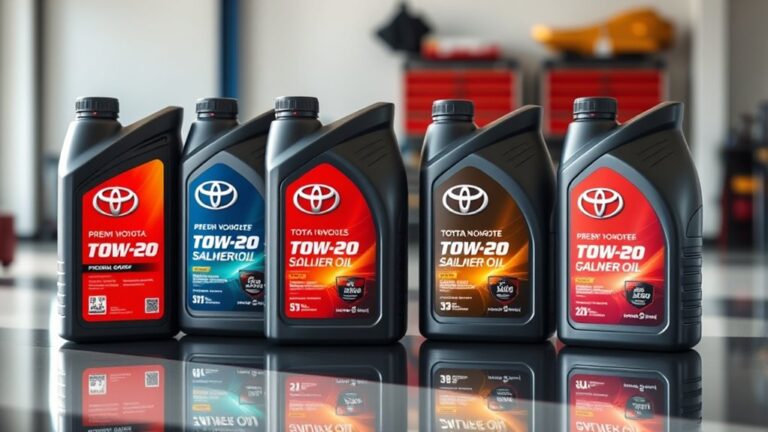
Top Choice: Discover the Best Oil for Toyota Engines
Are you tired of guessing which oil is best for your Toyota? You’re not alone—many car owners struggle with choosing the right motor oil to keep their engines running smoothly.
Choosing the best oil for your Toyota depends on your driving habits, climate, and the vehicle’s specifications. Synthetic oils offer superior protection and longer intervals, while conventional oils are more affordable for daily use.
Always check Toyota’s recommended viscosity and specifications, like 5W-30 or SN ratings. Using the right oil helps keep your engine running smoothly, boosts fuel efficiency, and extends its life.
If you want to learn more about making the best choice, keep exploring.
Key Takeaways
- Choose synthetic oils like 0W-20 or 5W-30 for better protection and longer intervals in Toyota engines.
- Always verify the oil’s viscosity and specifications, such as SN or SM, as recommended in your owner’s manual.
- Pick oil based on your driving conditions. For colder climates, lower viscosity oils are usually better.
- Regularly check your oil and filters, and change them as needed to keep your engine running smoothly and prevent damage.
- Avoid using the wrong viscosity or low-quality brands to ensure your engine stays healthy and efficient.
Why Choosing the Right Engine Oil Matters for Your Toyota
Choosing the right engine oil is essential because it directly impacts your Toyota’s performance and longevity. Using the correct oil helps optimize engine performance, ensuring smooth operation and reliable power delivery.
Choosing the right engine oil enhances your Toyota’s performance and extends its lifespan.
It also plays a critical role in extending engine longevity by reducing wear and tear over time. Proper oil selection can improve fuel efficiency, saving you money at the pump.
Furthermore, following the manufacturer’s recommended maintenance schedule and using suitable oil with the right additives helps prevent deposits and corrosion. Oil choice also influences environmental impact, as some oils burn cleaner and produce fewer emissions.
Cost considerations matter too. Premium oils may cost more upfront but can lower long-term repair costs. Finally, using the right oil is often linked to warranty implications—using non-spec oils could void coverage.
Understanding Oil Types: Synthetic, Conventional, and Bends
Understanding the different types of engine oil helps you make better decisions for your Toyota’s maintenance. There are three main categories: synthetic, conventional, and blends.
Synthetic oils offer advantages like better engine protection, improved flow at low temperatures, and longer intervals between oil changes. Conventional oils tend to break down faster and aren’t as resistant to high temperatures.
Oil blends combine synthetic and conventional oils, giving you a middle ground in cost and performance. They’re a good option if you want some benefits of synthetic oil without the higher price.
Here’s a quick comparison:
| Oil Type | Synthetic Advantages | Drawbacks/Considerations |
|---|---|---|
| Synthetic | Better protection, longevity | Higher cost |
| Conventional | Affordable, widely available | Shorter lifespan, less resistant |
| Oil Blends | Cost-effective, decent performance | Limited synthetic benefits |
Knowing the right oil classification helps you pick the best oil for your Toyota, keeping your engine healthy and running smoothly.
How to Read and Interpret Toyota’s Oil Specification Guide
Ever wonder how to make sense of Toyota’s specific oil requirements? It starts with understanding the oil specification, which acts as a reading guide for what your engine needs. Look for the oil category, like SN or SM, on the label—these details show if the oil is compatible with Toyota engines.
The specification details reveal the oil’s performance level, ensuring it meets Toyota’s standards for viscosity, additives, and durability. Always check the oil’s viscosity grade, such as 5W-30, to match your vehicle’s engine needs. This guarantees proper lubrication and protection.
Reading the guide carefully helps you avoid oils that don’t meet Toyota’s standards, which could cause engine problems. Remember to change your oil at the recommended intervals and always verify the specifications before buying.
Which Engine Oil Is Best for Your Toyota and Driving Habits
Selecting the right engine oil for your Toyota depends on your driving habits and the conditions your vehicle faces daily. If you often drive long distances, go for oils that support engine longevity and keep performance high over time.
For city driving or stop-and-go traffic, choose oils that boost fuel efficiency and protect against engine wear. Seasonal changes also matter; you might need different viscosities for cold winters versus hot summers.
Here are some key considerations:
- Driving Habits & Conditions: Aggressive driving or short trips may need oils with better additives for extra protection.
- Engine Compatibility & Maintenance Tips: Always match your oil to your Toyota’s specifications for proper lubrication.
- Cost & Brand Loyalty: Balance your budget with trusted brands known for consistent quality and durability.
Top Brands and Products for Toyota Engines
In relation to maintaining your Toyota’s engine health, choosing the right oil brand can make a big difference. Top brands like Mobil 1, Castrol, and Toyota’s own synthetic oils use advanced technology to ensure your engine performs at its best and stays protected.
These brands include performance boosters and oil additives that help reduce wear and tear, especially for high-mileage vehicles. When comparing options, think about eco-friendly choices that lessen environmental impact without sacrificing quality.
Toyota’s own formulations focus on improving fuel efficiency and extending engine life, making them a smart pick for modern drivers. High-mileage oils often contain special additives to help restore engine seals and cut down on oil consumption, helping your vehicle last longer.
Whether you care most about brand reputation, cutting-edge technology, or eco-friendliness, choosing a proven product from a trusted brand keeps your engine in top shape. Investing in quality oil from top brands maximizes your Toyota’s performance and durability over time.
How Viscosity Affects Oil Performance and How to Pick the Right Grade
Your engine’s lubrication really hinges on picking the right oil viscosity. Basically, it determines how easily the oil flows when temperatures change. If the oil’s too thick, it might not circulate well, especially when it’s cold outside. On the flip side, if it’s too thin, it might not provide enough lubrication when things heat up. Both scenarios can lead to engine wear over time.
Impact on Lubrication Flow
Viscosity plays an essential role in how effectively engine oil flows through your Toyota’s engine, directly impacting lubrication and overall performance. When choosing the right oil, understanding its influence on oil flow helps maximize lubrication efficiency.
Consider these points:
- Thick oils may slow down oil flow, leading to delayed lubrication during startup.
- Thin oils improve oil flow but might not maintain enough film thickness under high stress.
- Proper viscosity provides a balance, ensuring smooth oil flow and effective lubrication at operating temperatures.
Picking the correct grade affects how well the oil circulates, reduces engine wear, and boosts performance. Your choice should match your driving conditions and engine needs for the best lubrication.
Choosing Appropriate Viscosity
Choosing the right oil viscosity is key to guaranteeing your Toyota engine runs smoothly and efficiently. The viscosity range indicates how thick the oil is at different temperatures, impacting oil compatibility and flow.
Using oil with too high a viscosity can hinder startup and reduce fuel economy, while too low a viscosity might not provide enough lubrication under load. Check your vehicle’s owner’s manual for the recommended viscosity grade, usually expressed as numbers like 0W-20 or 5W-30.
Picking the right viscosity helps ensure peak protection, especially in extreme temperatures. It also maintains proper oil flow, reducing engine wear and boosting performance.
Always follow the manufacturer’s recommendations for the best oil compatibility and viscosity range for your specific Toyota model.
Climate and Driving Conditions: How They Influence Your Oil Choice
Your climate and driving habits really play a big role in deciding what kind of oil is best for your Toyota. If you live somewhere with extreme temperatures, whether it’s scorching hot or freezing cold, it can affect how thick or thin your oil should be to keep everything running smoothly.
And if you’re someone who drives a lot or tends to be a bit aggressive behind the wheel, your oil might wear out faster. That’s why it’s important to pick an oil that can handle your specific driving style and climate.
Getting the right oil means your engine stays protected and runs well, no matter what kind of weather or driving conditions you face.
Temperature Impact on Viscosity
Temperature plays an essential role in how engine oil performs, especially since extreme weather conditions can greatly affect its viscosity. When temperatures fluctuate, viscosity changes occur, impacting lubrication and engine protection.
In cold weather, oil becomes thicker, making startup harder and reducing flow. Conversely, in hot climates, oil thins out, risking inadequate lubrication.
To manage this, consider oils designed for specific temperature ranges:
- Cold climates: Use oils with low cold-start viscosity ratings to guarantee quick circulation.
- Moderate temperatures: Select multi-grade oils that adapt across a broad temperature spectrum.
- Hot weather: Opt for high-temperature viscosity ratings to maintain film strength.
Understanding how viscosity changes with temperature helps you choose the best oil for your Toyota’s climate.
Driving Frequency and Style
How often and how you drive can really affect what type of oil is best for your Toyota. If you mostly take short trips, the oil can break down faster, which means you might need to change it more often. This also impacts engine performance over time.
If you tend to drive aggressively or spend a lot of time in stop-and-go traffic, synthetic oils are a good choice because they offer better protection. Seasonal changes matter too—cold weather needs oils that flow easily at low temperatures, while hot weather calls for thicker oils to keep everything stable.
Regular maintenance is key to keeping your oil performing well and lasting longer. Here’s a quick guide to help you choose the right oil based on your driving habits:
| Driving Style | Seasonal Impact | Maintenance Tip |
|---|---|---|
| Short trips often | Cold weather needs thinner oil | Change oil more frequently |
| Long-distance | Hot weather benefits from thicker oil | Use high-quality oil for engine health |
| Aggressive driving | Both seasons require synthetic oils | Check oil regularly |
Tips to Maximize Oil Effectiveness and Protect Your Engine
Regularly checking and maintaining the correct oil level is essential for maximizing its effectiveness and protecting your engine. When your oil is at the right level, your engine runs smoothly and stays clean.
To boost oil performance, consider adding oil additives designed to improve lubrication and reduce wear. Following a consistent maintenance schedule guarantees you change your oil before it degrades, preventing engine damage.
Here are three tips to help protect your engine:
- Stick to your recommended oil change intervals, as outlined in your vehicle’s maintenance schedule.
- Use high-quality oil suited for your Toyota, and consider oil additives for extra protection.
- Regularly inspect your oil for contamination or thinning, and top up if needed.
Common Mistakes When Changing or Choosing Engine Oil for Toyota
One common mistake when changing or choosing engine oil for your Toyota is picking the wrong oil type or viscosity. Many people fall for myths, like thinking thicker oil always offers better protection or that synthetic oil isn’t needed.
Using the wrong viscosity can cause poor engine lubrication, increased wear, and lower fuel efficiency. Another mistake is ignoring your vehicle’s owner’s manual, which clearly states the recommended oil grade.
Some folks assume all oils are the same, but each engine has specific needs. Also, skipping high-quality oil brands can lead to contamination or poor performance.
Finally, many avoid regular oil changes because they believe oil lasts longer than it actually does. To keep your engine healthy and long-lasting, understand your Toyota’s specific oil needs, choose the right viscosity, and follow recommended change intervals.
When and How to Perform an Oil Change for Optimal Toyota Performance
Figuring out the right time to change your oil is pretty important if you want your Toyota to run smoothly. Usually, it’s a good idea to do it every 5,000 to 7,500 miles, but it’s also worth checking your owner’s manual for the manufacturer’s recommendation. Picking the right type of oil makes a big difference in keeping your engine happy and performing at its best, especially when you’re driving in different conditions like hot weather or lots of stop-and-go traffic.
To get the job done right and without any hassle, it’s best to follow a simple step-by-step process. That way, you can be confident your oil change is thorough and efficient, keeping your Toyota in tip-top shape for the miles ahead.
When to Change Oil
Ever wondered the best time to change your Toyota’s oil? Knowing when to do it is key to keeping your engine running smoothly.
Usually, you should follow your vehicle’s maintenance schedule, but here are some general guidelines:
- Change every 5,000 to 7,500 miles if you’re using conventional oil.
- Go for an oil change every 10,000 miles or once a year if you’re using synthetic oil.
- After extreme driving conditions like towing or short trips, change the oil sooner.
Keep an eye on your odometer and stick to your Toyota’s maintenance schedule to avoid issues. Regular oil changes help keep your engine clean and well-lubricated, preventing unnecessary wear.
When you’re unsure, check your owner’s manual or ask a trusted mechanic to find out the best oil change timing for your specific model.
Proper Oil Selection
Selecting the right oil for your Toyota is key to keeping your engine running smoothly and lasting longer. Choose oils with the right additives that boost lubrication and help reduce wear, supporting engine health.
Think about your driving environment and the seasons. Extreme temperatures can cause oil to break down faster, so pick oils suited for your climate and conditions.
Don’t forget to regularly check and swap out your oil filters during oil changes. This helps keep contaminants out and maintains optimal engine performance.
Sticking to your vehicle’s maintenance schedule for oil changes is essential. It ensures your engine stays in top shape and prevents potential issues down the line.
Different driving situations like city traffic, highway cruising, or off-road adventures might need specific oil types or viscosities. Picking the right one can improve efficiency and protect your engine.
Step-by-Step Process
Performing an oil change at the right intervals is key to keeping your Toyota’s engine running smoothly and lasting longer. Here’s a simple step-by-step guide:
Start by warming up your engine for a few minutes. Then, turn off the car and safely lift the vehicle if needed.
Next, drain the old oil by removing the drain plug. Once the oil has drained, replace the plug securely.
Refill with new oil, making sure you select the right type with proper engine oil additives. Check the oil level with the dipstick and add more if needed.
Frequently Asked Questions
Can Using the Wrong Oil Void My Toyota’s Warranty?
Using the wrong oil can potentially void your Toyota’s warranty if it doesn’t meet the required oil specifications and warranty requirements. Toyota recommends specific oil types, like synthetic or conventional, with certain viscosity grades.
If you ignore these guidelines and cause engine damage, your warranty might not cover the repairs. Always check your owner’s manual and make sure the oil you choose meets Toyota’s specifications to keep your warranty intact.
How Often Should I Change My Toyota’s Engine Oil?
You should change your Toyota’s engine oil every 5,000 to 10,000 miles, depending on driving conditions.
It’s easy to forget how important oil changes are when you’re busy, but skipping them can hurt your engine’s performance over time.
Regular oil changes help keep your engine running smoothly and efficiently.
Trust your Toyota’s maintenance schedule, and you’ll enjoy reliable performance and peace of mind for miles to come.
Is There a Recommended Oil Change Interval for Hybrid Toyota Models?
You should change the oil in your hybrid Toyota every 10,000 to 15,000 miles, depending on your driving conditions.
Use the right hybrid oil types, like synthetic blends or full synthetic oils designed for hybrid engines.
When choosing an oil filter, pick one compatible with your vehicle’s specifications.
Regular oil and filter changes help keep your hybrid running at its best and improve fuel efficiency.
Are There Specific Oils for High-Mileage Toyota Engines?
High-mileage benefits are real, and using specific oils for high-mileage Toyota engines can make a difference. These oils often contain seal conditioners and additives that help reduce leaks and engine wear.
Synthetic options improve performance, offering better protection and longevity as your engine ages. Switching to a high-mileage oil helps maintain efficiency and extend your engine’s lifespan.
This is especially true for older models with extensive miles under the hood. Using the right oil can really make a difference in keeping your engine running smoothly.
How Does Engine Age Affect Oil Choice for Toyota Vehicles?
As your Toyota engine ages, you should choose oil with a different viscosity to accommodate wear and leaks. Typically, a higher viscosity oil offers better protection for older engines.
You might also consider synthetic options because they provide superior lubrication and stability over time. Regularly check your owner’s manual to see recommended oil types and viscosities to keep your engine well-lubricated and running smoothly as it ages.
Conclusion
Choosing the right oil for your Toyota is like giving your engine a tailored suit—fit really matters. I once saw a friend’s engine run smoother after switching to synthetic oil, which helped him avoid costly repairs later.
Remember, your driving habits and climate are your guiding stars. By picking quality oil and changing it on time, you’re not just maintaining your car—you’re investing in its longevity.
Treat your Toyota well, and it’ll keep you moving mile after mile. When it comes to the best oil for Toyota engines, making the right choice is key to keeping your vehicle running smoothly for years to come.