Why Do Brakes Squeak When Stopping Slow? | Causes, Solutions & Maintenance Tips
Many drivers find themselves frustrated when their brakes squeak when stopping slowly. You’re not alone—this is a common issue that many people struggle with, and it can be both annoying and concerning.
If your brakes squeak when you stop slowly, it’s often caused by dust, debris, or moisture build-up on your brake pads or rotors. Worn-out pads exposing metal or uneven rotor surfaces can also create noise.
Regular maintenance helps prevent these issues, like cleaning components and inspecting pad wear.
Persistent squeaking may signal the need for repairs, so staying aware of signs and solutions can keep your brakes functioning smoothly—and there’s more to learn about keeping them in top shape.
Key Takeaways
- Cold weather and humidity can cause brake pad glazing and rust buildup, which can make your brakes squeak when you’re stopping slowly.
- Dust, debris, or moisture getting between brake components can cause temporary squeals during gentle braking.
- Worn or uneven brake pads and rotors increase friction, often leading to noise at low speeds.
- Lack of proper lubrication or debris on brake contact points can also cause squeaking when braking softly.
- Regular inspections and maintenance are key to catching and fixing issues that lead to squeaking when you brake slowly.
Why Do Brakes Squeak When I Stop?
Have you ever wondered why your brakes squeak right when you come to a stop? The answer often involves brake noise caused by stopping issues. When your brakes squeak, it’s usually a sign that something isn’t quite right, and ignoring it can lead to more serious problems down the line.
Brake squeaking signals stopping issues; ignoring it can lead to serious vehicle problems.
Brake noise may come from dust or debris caught between the brake pad and rotor, or worn-out components that no longer grip smoothly. Sometimes, moisture or rust buildup can also cause squealing during stopping.
These noises aren’t just annoying—they can signal underlying issues that affect your stopping ability. If you notice persistent squeaking, it’s important to inspect your brakes promptly.
Addressing brake noise early can prevent further damage and ensure your stopping problems are resolved. This keeps your vehicle safe and your driving smooth.
How Brake Pads and Rotors Cause Squealing
Brake pads and rotors work closely together to stop your vehicle, but when their surfaces get uneven or worn out, they can start squealing. This happens because the materials or surface conditions change, causing vibrations and noise.
Here’s what might be going on:
Worn brake pads can expose metal, leading to metal-on-metal contact that squeals loudly. Different brake pad materials may also produce squealing if they don’t match well with your rotor surface.
Uneven rotor surfaces can create hotspots or grooves, which make the pads vibrate and squeal. Additionally, if there’s no proper lubrication or debris buildup, friction increases, resulting in noise during slow stops.
Keeping an eye on the rotor surface and choosing the right brake pad materials is key. When these parts wear or become uneven, squealing is almost unavoidable. Regular inspections help prevent long-lasting noise and keep your braking smooth and safe.
Can Rust or Moisture Make Your Brakes Squeal?
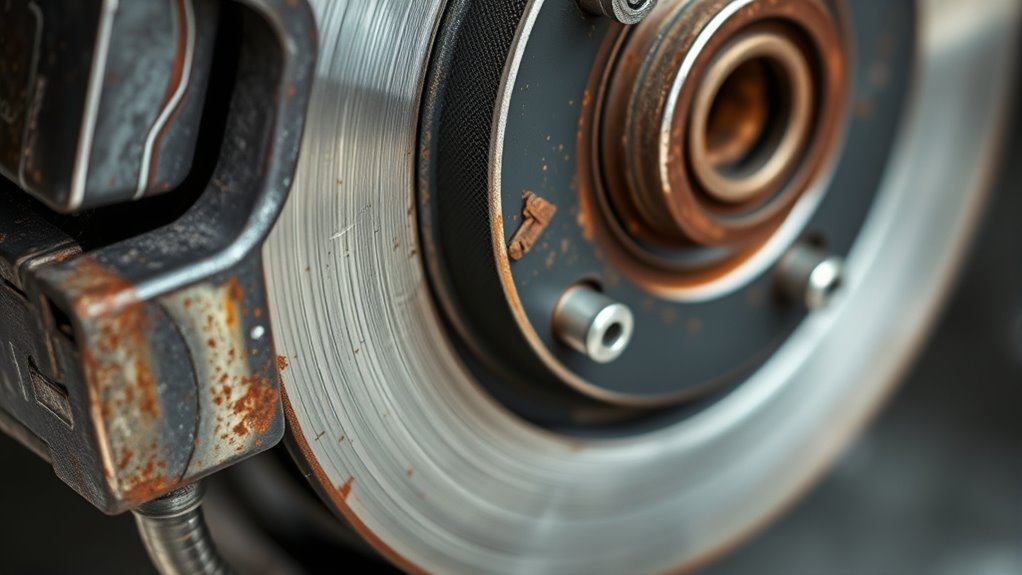
Rust or moisture on your brake components can cause squealing, especially when they’re fresh or just starting to form. When you neglect proper brake maintenance, moisture effects can lead to rust buildup on rotors and calipers.
This rust creates a thin, uneven layer that interferes with smooth braking, resulting in squeaks. Usually, the noise is temporary and will go away after driving a few miles as the rust wears off or gets cleaned away.
Moisture can also cause brake dust to stick to the surfaces, which makes the squeal worse. To prevent this, regularly inspect your brakes, especially after rain or car washes.
Applying a brake lubricant or anti-squeal compound during maintenance can help reduce the moisture effects that lead to squealing. Remember, keeping your brake components dry and clean minimizes rust formation and ensures quieter, more effective braking.
Proper brake maintenance is key to avoiding unnecessary squeaks caused by rust or moisture.
Are Worn Brake Pads the Main Cause of Squeaking?
Worn brake pads are a common cause of squeaking when you stop, especially if the noise keeps going even after moisture and rust issues are sorted out. When the pads wear down to their limit, the built-in wear indicator starts scraping against the rotor, making that high-pitched squeal you hear. This isn’t just annoying—it’s a warning that your brake system needs attention.
Worn brake pads cause squeaking signals that your brake system needs attention.
If you ignore this, worn pads can reduce your safety and lead to costly repairs. Here are some signs to watch for:
- Increased noise levels indicate brake pad wear and the need for replacement.
- You may notice reduced braking performance as the pads thin out.
- Vibrations or pulsing during stopping can mean uneven wear.
- Persistent squeaking even after trying to reduce noise confirms worn pads are the main cause.
Replacing worn brake pads restores quiet and ensures safe stopping. Don’t wait—addressing brake pad wear keeps your brakes working smoothly.
How Brake Dust and Debris Lead to Squeaky Brakes
When brake dust and debris build up on your brake parts, they can make your brakes squeak even if the pads are still in good shape. Dust creates a gritty layer between the pad and rotor, which causes noise when you brake.
Debris impact can also damage the rotor surface, making it uneven and leading to squealing. Regular cleaning with brake sprays and gentle brushing helps remove dust and debris before it causes problems.
Neglecting this buildup can reduce braking performance and increase noise. Checking your brakes more often helps catch dust early and prevents debris from causing more serious damage.
Proper cleaning and timely maintenance are key to reducing noise, extending your brake system’s life, and ensuring safe, quiet stops. Staying proactive with brake care keeps squeaking at bay and improves overall brake performance.
Do Cold Weather and Humidity Affect Your Brakes?
Cold weather and humidity can really affect how your brakes work, making squeaking noises more noticeable. The moisture can cause metal parts to rust or corrode, which leads to more squeaking when you stop slowly. Here’s what you should know:
- Rust Build-Up: Moisture causes rust on brake components, creating a rough surface. This can lead to squeaks and make your brakes less effective.
- Brake Pad Glazing: Cold temperatures can harden brake pads, making them less responsive and more likely to squeak.
- Condensation: Humidity forms a thin film of moisture on brake parts, causing friction changes that produce noise.
- Reduced Friction: Moisture can temporarily lower brake performance, making them less responsive and noisier.
Knowing how cold weather and humidity affect your brakes helps you spot when moisture is the cause of squeaking. This way, you can get timely maintenance and keep your brakes working smoothly.
How Can You Tell When Your Brakes Need Repair?
If your brakes start making strange noises or just don’t feel as responsive as they used to, that’s usually a sign something’s not quite right. You might hear squeaking, grinding, or even a high-pitched squeal when you’re trying to stop slowly.
These kinds of sounds often mean it’s time to get your brakes checked out before the problem gets worse. It’s always better to catch these issues early so you can stay safe on the road!
Unusual Brake Noises
Unusual noises from your brakes often signal that something isn’t right and may need attention. If you hear squealing, grinding, or squeaking, don’t ignore it. These sounds can indicate issues like worn brake materials or inadequate noise reduction.
Here are key signs to watch for:
- High-pitched squeal when stopping slowly, signaling worn brake pads.
- Grinding noises that suggest metal-on-metal contact.
- Squeaks that come and go with different speeds or weather conditions.
- Unusual vibrations or sounds when braking, hinting at uneven brake wear.
Addressing these noises early can prevent costly repairs. Proper maintenance, including replacing brake materials when necessary, helps keep noise to a minimum and guarantees your brakes perform safely and quietly.
Reduced Braking Efficiency
Sometimes, your brakes may feel less responsive, making it harder to stop quickly or smoothly. This reduced braking efficiency can be caused by low brake fluid levels, which prevent proper pressure build-up in the system.
If your brake alignment is off, the pads might not contact the rotor evenly, decreasing stopping power. You might notice a longer stopping distance or a spongy feeling when pressing the brake pedal.
Regularly check your brake fluid to make sure it’s at the correct level. If your brakes feel less effective, it’s a sign you need to get them checked.
Misaligned brakes or contaminated brake fluid can compromise safety, so addressing these issues promptly is important. Keeping your braking system in good shape ensures your vehicle stops reliably when you need it to.
Tips to Prevent Brake Squeal With Regular Maintenance
Regular brake inspections are a great way to catch any problems early before they turn into loud squeals. It’s always a good idea to check your brakes regularly to keep everything in top shape.
Taking care of your brake pads, like cleaning them and replacing any that are worn out, can really help cut down on the noise. When your brake pads are in good condition, they’re less likely to squeal when you hit the brakes.
Just staying on top of regular maintenance makes a big difference. It helps ensure your brakes stay quiet and work effectively whenever you need them.
Regular Brake Inspections
Scheduling regular brake inspections is essential to catch issues early before they lead to squeaking or other problems. The importance of brake inspections is in spotting wear or damage before it gets worse, which saves you money and keeps you safe.
By making routine maintenance a priority, you can:
- Prevent sudden brake failures that could cause accidents.
- Reduce costly repairs by fixing small problems early.
- Ensure consistent braking performance for your peace of mind.
- Extend your brake system’s lifespan through proactive care.
Regular inspections help you stay ahead of brake squeal and keep everything working properly. Don’t wait until you hear that annoying squeak—be proactive and prioritize routine maintenance to keep your brakes quiet and reliable.
Proper Brake Pad Care
Maintaining your brake pads properly is key to preventing squealing during stops. Regularly inspect your brake pad materials for wear and replace them before they get too thin.
Using the right brake pad materials can reduce noise and improve performance. Proper care also involves cleaning brake components to remove dust and debris that can cause squeal.
Avoid letting your brake pad lifespan extend beyond recommended limits, as worn pads are more prone to noise and damage. Applying a brake lubricant to caliper contact points can help prevent squeal caused by vibrations.
Consistent maintenance keeps your brake system in top shape, minimizes noise, and prolongs the life of your brake pads. Staying attentive to brake pad care ultimately guarantees safer, quieter stops.
How to Fix Squeaky Brakes: DIY Tips and When to Call a Pro
If your brakes squeak when stopping slowly, you might be able to fix the issue yourself before heading to a mechanic. Start with these DIY tips to restore quiet braking:
- Inspect your brake pads and choose the right brake pad selection to ensure proper fit and material compatibility. Worn or low-quality pads often cause squeaking.
- Apply brake lubrication techniques by using high-temperature brake grease on contact points, avoiding the pad surface. This helps reduce noise caused by metal-to-metal contact.
- Clean the rotors and pads with a brake cleaner to remove dust and debris that cause squeal.
- Test drive your vehicle and listen for improvements. If squeaking persists, consider professional help, especially if uneven wear or glazing is evident.
Signs You Should See a Mechanic for Brake Issues
While some brake squeaking can be fixed with simple DIY solutions, persistent or severe problems usually need a professional. If your brake pedal feels spongy or unresponsive, it’s a clear sign something’s wrong.
Low brake fluid levels or contaminated fluid can reduce braking performance and should be checked by a mechanic. If the squeak gets worse or you hear grinding sounds, it might mean worn brake pads or damaged rotors that need expert attention.
Don’t ignore warning signs like a soft pedal, longer stopping distances, or a brake warning light on your dashboard. These could be signs of potential safety issues.
Regular inspections can help catch problems early, but if you notice any of these signs, schedule a visit to your mechanic promptly. Addressing brake issues early keeps you safe and keeps your vehicle running smoothly.
Frequently Asked Questions
Can Brake Squealing Indicate a Safety Issue?
Yes, brake squealing can be a sign of safety issues, especially if it’s caused by worn brake pads or excessive brake wear.
When your brakes squeak, it often means the components might be compromised and may not work properly in an emergency.
Ignoring these sounds could lead to reduced braking performance, which increases the risk of accidents.
It’s a good idea to get your brakes checked as soon as possible to keep you safe on the road.
Do Aftermarket Brake Pads Cause More Squeaking?
Yes, aftermarket brake pads can cause more squeaking, especially if they’re made from different materials or aren’t installed properly. Some aftermarket pads use harder compounds or less effective lubricants, which can lead to noise.
Proper installation is key to making sure they fit snugly and work smoothly. This can help reduce squeaking and improve overall performance.
If you notice increased noise after installing new pads, it’s a good idea to check the materials and make sure they were installed correctly.
How Long Does Brake Squeal Typically Last?
Brake squeal usually lasts a few seconds to a minute after you start braking, especially during slow stops. It’s pretty common and often goes away on its own.
Proper brake maintenance, like cleaning and inspecting your brake pads and rotors, can help reduce that noise. Regular check-ups keep everything running smoothly and quietly.
If the squealing keeps going longer than a minute, it might be a sign of worn components or that you need new brake pads.
Staying on top of maintenance ensures your brakes stay quiet and work effectively. That way, you get better noise reduction and safer stopping every time.
Are Ceramic Brake Pads Quieter Than Metallic Ones?
Ceramic brake pads are quieter than metallic ones, like whispers in a library. Their ceramic advantages include less noise and reduced brake dust, making your rides smoother.
In contrast, metallic drawbacks involve more noise and potential squeaking, especially when stopping slowly. If you want a quieter experience, ceramic pads are your best choice. They’re designed to minimize the sounds that metallic pads often produce during braking.
Does Driving Style Affect Brake Squeal Frequency?
Yes, your driving style impacts how often your brakes squeal.
Aggressive braking or sudden stops tend to cause more brake wear, which can lead to increased noise.
Gentle, smooth braking helps reduce stress on brake components and cuts down on squealing.
By driving more smoothly, you can extend brake life and make your stops quieter and more comfortable.
Changing how you drive can make a noticeable difference in how often your brakes squeal.
Conclusion
So, next time your brakes squeak when you’re stopping slowly, don’t ignore it. It could be a sign of wear, rust, or debris lurking somewhere in your system.
Regular maintenance can catch these issues early, but some problems might surprise you with how quickly they escalate. Are you prepared for what might happen if you delay?
Stay vigilant—your brakes might be telling you more than you think. The real trouble could be just around the corner, especially if you notice brake squeaking when stopping slowly.