Car Hesitates When Warmed Up 8 Common Reasons And Fixes
Feeling frustrated because your car hesitates when warmed up? You’re not alone—many drivers struggle with this common issue, especially during hot weather. It can be annoying and sometimes concerning, but understanding the causes can help you fix it faster.
If your car hesitates when warm, it could be due to several common issues like poor fuel quality, clogged injectors, faulty sensors, ignition problems, or vacuum leaks.
Hot weather can worsen fuel evaporation and airflow, causing rough performance.
Regular maintenance, like checking filters and sensors, can help prevent these problems. If issues persist, it’s a good idea to get professional diagnostics.
Keep moving forward to uncover more about what might be causing your car’s hesitation and how to fix it.
Key Takeaways
Engine sensor malfunctions or calibration issues can cause hesitation when the engine is warm.
Fuel quality, clogged filters, or evaporation problems impact fuel delivery during warm-up.
Ignition system wear or coil issues lead to misfires and rough performance when hot.
Air intake leaks or dirty filters disrupt airflow, causing hesitation in warm engine conditions.
Vacuum leaks and dirty sensors like MAF can mimic problems, so diagnostic testing is often needed.
Why Does My Car Hesitate When It’s Warm?
Ever wonder why your car sometimes hesitates or stalls after it warms up? One common reason is changes in engine temperature affecting how your vehicle runs. As the engine heats up, components expand, and sensors adjust, which can sometimes cause hesitation.
Engine temperature changes can cause hesitation or stalling after warming up.
Fuel evaporation plays a big role here. When the engine reaches its ideal temperature, the fuel vaporizes more efficiently. But if the fuel system isn’t working properly, it can lead to inconsistent fuel delivery. This inconsistency causes the engine to struggle briefly to maintain power, leading to hesitation or stalls.
Also, if your car’s sensors, like the coolant temperature sensor, give faulty readings because of incorrect engine temperature data, it confuses the engine control unit (ECU). This miscommunication messes with fuel mixture adjustments and can make the engine hesitate once warmed up.
Understanding how engine temperature and fuel evaporation affect your vehicle can help you figure out why it stalls or hesitates after warming up.
Common Causes of Warm-Engine Hesitation
When your engine warms up and starts to hesitate, there are several common causes to consider. One key factor is the fuel system. If fuel injectors are clogged or the fuel filter is dirty, the engine may not get a steady flow of fuel, leading to hesitation.
A faulty fuel pump can also cause fuel delivery issues, especially when the engine is hot. Ignition timing is important too; if it’s off, the spark might fire too early or too late, causing rough performance when warmed up.
Worn spark plugs or ignition coils can contribute by failing to produce a strong spark at the right time. These problems disrupt the combustion process, resulting in hesitation.
To fix these issues, inspect and replace clogged fuel system components. Make sure the ignition system is properly timed and working correctly. Addressing these causes can help restore smooth engine performance when warm.
How Fuel Quality and Delivery Impact Warm-Weather Performance
As temperatures rise, the quality and delivery of your fuel become more important for your engine’s performance. Hot weather can cause fuel to evaporate faster, leading to inconsistent fuel flow.
If your fuel has impurities or isn’t fresh, it can cause hesitation or stalling when your engine warms up. Using fuel additives can help improve stability and prevent problems from moisture or deposits.
Impure or stale fuel can cause hesitation and stalling as your engine warms up. Additives help prevent moisture and deposits.
It’s also crucial to check your fuel filters regularly. Clogged filters restrict flow and reduce combustion efficiency. When filters are dirty, your engine struggles to get the right amount of fuel, especially in warm conditions.
Poor fuel quality and delivery issues can make your car hesitate or stall after warming up. To avoid this, fill up with reputable fuel, consider additives for extra protection, and keep your fuel filters clean and in good shape.
Check Your Sensors and Air Intake to Prevent Hesitation
First off, give your sensors a quick test to make sure they’re working properly. If they’re giving faulty readings, it can lead to hesitation when you’re driving. After that, take a look at your air intake system — check for any blockages or leaks that might mess with the airflow. Doing regular maintenance, like cleaning your filters and checking those sensor connections, can really help prevent these problems from happening and keep your drive smooth.
Sensor Functionality Checks
Making sure your sensors and air intake system are working properly is key to preventing hesitation when your engine warms up. Start by checking sensor calibration, since inaccurate readings can mess with the fuel mixture.
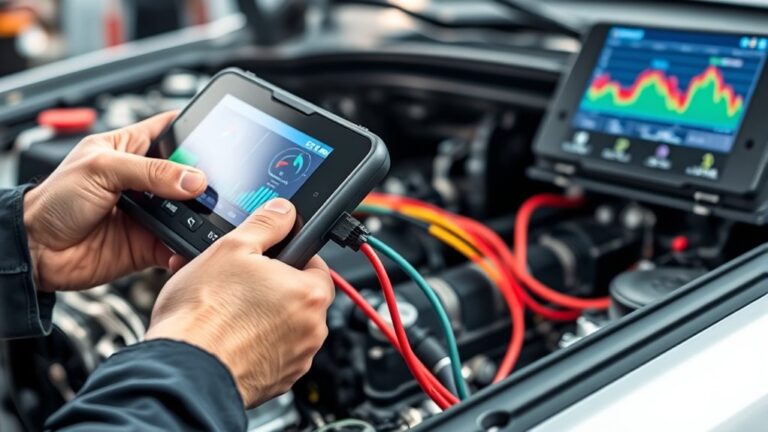
Use diagnostic tools to scan for error codes that point to faulty sensors like the mass airflow or oxygen sensors. Regularly inspect wiring connections to make sure signals aren’t disrupted.
Test sensors with a multimeter or specialized diagnostic equipment to see if they respond correctly to temperature and airflow changes. Keep in mind:
- Confirm sensor calibration to ensure accurate readings.
- Use diagnostic tools to quickly identify malfunctions.
- Inspect wiring for corrosion or damage.
- Test sensors physically for proper operation.
Addressing these issues promptly helps keep your engine running smoothly when it’s warm.
Air Intake Inspection
Since the air intake system plays an essential role in delivering the right amount of air to your engine, inspecting it thoroughly can help prevent hesitation when your engine warms up. Start by checking the air filter; a dirty or clogged filter restricts airflow, causing rough idling and hesitation. Replace it if it looks dirty or hasn’t been changed recently.
Next, examine the intake manifold for leaks or blockages, which can disrupt air delivery. Make sure all hoses and connections are secure, free of cracks, and properly sealed. A clean, unobstructed air intake guarantees your engine receives the correct air-fuel mixture, especially when warm.
Regularly inspecting these components helps maintain smooth engine operation and reduces hesitation issues as your engine reaches operating temperature.
Preventative Maintenance Tips
Regularly checking your sensors and air intake parts is essential to prevent hesitation issues as your engine warms up. Well-maintained sensors ensure accurate readings for optimal fuel delivery and ignition timing.
Keep up with oil changes, spark plug maintenance, and transmission fluid checks to avoid misfires and sluggish responses. Also, monitor coolant levels to prevent overheating, which can impact sensor performance.
Incorporate these preventative steps:
- Schedule regular brake inspections and tire rotations for better overall vehicle health.
- Test battery health to avoid electrical glitches that can affect sensor operation.
- Clean or replace air filters to make sure air intake isn’t obstructed.
- Verify sensor connections and clean intake components to keep airflow smooth.
Staying on top of these tasks helps your car run smoothly, especially during warm-up, reducing hesitation and boosting reliability.
What Ignition System Problems Cause Car Hesitation When Warm?
When your car hesitates only after it warms up, the ignition system could be the culprit. One common issue is ignition coil problems. As the engine heats up, a faulty coil may fail to deliver a strong spark, causing misfires and hesitation.
You might notice rough idling or sluggish acceleration when the engine is warm. Furthermore, spark plug wear can contribute to the problem. Over time, spark plugs degrade, especially under heat stress, resulting in weak or inconsistent sparks.
This leads to incomplete combustion and engine hesitation. If your ignition coil or spark plugs are worn or damaged, your car’s performance will suffer once it’s warmed up. Addressing these issues typically involves replacing worn spark plugs or faulty ignition coils.
Regular inspection and maintenance can prevent these problems from escalating, ensuring your engine runs smoothly whether cold or warm.
How the Mass Air Flow Sensor Affects Your Car’s Performance
The mass air flow (MAF) sensor plays an essential role in your car’s engine performance by measuring how much air is entering the engine. If it’s not working correctly, your car may hesitate, especially when warmed up.
The MAF sensor measures incoming air to ensure optimal engine performance and smooth operation.
A dirty or faulty MAF sensor can give incorrect readings, leading to a poor fuel mixture and rough idling. To fix this, you might need to clean the sensor or perform a proper mass airflow calibration to restore accuracy.
Here are four key points to keep in mind:
- Sensor cleaning: Regularly clean the MAF sensor to prevent dirt buildup that can impair its function.
- Calibration check: Make sure the sensor’s calibration is accurate for consistent performance.
- Symptoms of failure: Hesitation, rough idle, or stalling often point to MAF sensor issues.
- Replacement necessity: If cleaning and calibration don’t help, replacing the sensor may be the best option for peak performance.
Proper maintenance of the MAF sensor helps your engine run smoothly and avoid hesitation when warmed up.
Troubleshooting Vacuum Leaks in Warm Engines
A vacuum leak can cause drivability issues similar to a faulty MAF sensor, especially once the engine warms up. To troubleshoot, start with vacuum testing. Locate vacuum hoses and connections, listening for hissing sounds that indicate leaks.
Use a vacuum gauge or smoke machine for more accurate identification of leaks. When testing, watch for engine performance; a sudden drop in vacuum pressure suggests a leak.
You might notice rough idling, hesitation, or poor acceleration. Once you find a leak, replace cracked or disconnected hoses. Tighten loose fittings and make sure all vacuum lines are seated properly.
Keep in mind that as the engine warms, rubber hoses and gaskets can expand or degrade, increasing the chance of leaks. Addressing vacuum leaks quickly restores proper engine performance and smooth operation.
This prevents further drivability issues as the engine heats up.
When to Seek Professional Diagnostics and Repairs
While some minor vacuum leaks can be fixed with simple troubleshooting, persistent or worsening drivability problems mean it’s time to see a professional. A mechanic uses advanced diagnostic tools to find the root cause of hesitations when your engine is warm.
Ignoring ongoing issues can lead to bigger damage and higher repair costs down the line. Watch for signs that you need expert help, like if hesitation gets worse after basic fixes, or if your check engine light comes on.
If your engine stalls or misfires despite trying to fix it yourself, that’s another sign. Also, if repair costs start climbing beyond simple DIY fixes, it probably indicates a more complex problem.
Getting professional diagnostics ensures your repairs are accurate and saves you money in the long run. Skilled technicians can spot issues that basic troubleshooting might miss, preventing more engine damage and costly repairs later on.
Frequently Asked Questions
Can a Dirty Fuel Filter Cause Hesitation Only When the Engine Is Warm?
Yes, a dirty fuel filter can cause hesitation only when the engine is warm. When the filter gets clogged, it hampers fuel delivery, especially under increased engine demand as it warms up.
This issue might not show when cold, but during engine diagnostics, you’ll notice the hesitation as the fuel flow becomes restricted. Replacing the fuel filter is a simple fix that often restores smooth engine performance when warm.
How Does a Failing Coolant Temperature Sensor Affect Engine Performance?
A failing coolant temperature sensor messes with your engine’s coolant function, causing inaccurate temperature readings. This can lead to poor fuel mixture, rough idling, and hesitation when the engine warms up.
Sensor symptoms include erratic temperature gauge readings and check engine light activation. When the sensor malfunctions, your engine may run too rich or too lean, reducing performance and efficiency, especially during warm-up.
Replacing the sensor restores proper function and smooths engine operation.
Is It Normal for Spark Plugs to Cause Hesitation After Engine Warms Up?
Yes, spark plugs can cause hesitation after the engine warms up, especially if you’re using the wrong types or if they’re worn out.
Poor ignition timing can also lead to this issue, causing misfires or rough acceleration. When the engine heats up, these problems tend to become more noticeable.
Making sure you have the right spark plugs for your vehicle and keeping the ignition timing in check can help prevent hesitation.
Can Transmission Issues Contribute to Hesitation During Warm-Up?
Yes, transmission issues can cause hesitation during warm-up. Low or dirty transmission fluid affects gear shifting and torque converter function, leading to sluggish responses.
If you have clutch problems, especially in manual transmissions, it can also contribute to hesitation. When these components don’t operate smoothly, your car struggles to transfer power efficiently.
This results in noticeable delays or hesitation during warm-up. Regular maintenance of transmission fluid and clutch systems helps prevent this issue.
How Do Exhaust System Blockages Influence Warm-Engine Hesitation?
Exhaust system blockages can cause warm-engine hesitation by creating exhaust restriction, which increases engine backpressure.
When the exhaust flow is impeded, your engine struggles to expel gases efficiently, leading to a temporary loss of power and rough running.
This backpressure can make your car hesitate or stumble during warm-up.
To fix this, inspect and clear any blockages like clogged catalytic converters or mufflers, ensuring smooth exhaust flow and peak engine performance.
Conclusion
Don’t let a hesitant engine stall your day. Think of your car’s performance as a symphony—every part needs to work in sync. When it stumbles as it warms up, it’s like a violin out of tune.
Understanding these common causes and fixes can help you take control. Keep an eye on sensors, fuel quality, and leaks. Addressing small issues early can save you from bigger problems later.
And don’t hesitate to call in the pros if needed. Proper maintenance of your car’s sensors and fuel system can make all the difference in preventing hesitation when warmed up.