Unlocking Engine Power: Finding the Best Air Fuel Ratio for Optimal Performance
Many car enthusiasts and drivers alike struggle with getting their engine to perform at its best. Finding the right air-fuel ratio can feel like a mystery, but it’s key to unlocking maximum power and efficiency. You’re not alone—this is a common challenge for many.
To release your engine’s maximum power, you need to find the ideal air-fuel ratio, usually around 14.7:1 for gasoline engines. This ratio guarantees complete combustion, boosting performance and efficiency while reducing emissions.
Too rich or lean mixes can cause power loss or engine issues. Monitoring with sensors, gauges, or dyno tests helps you fine-tune the mixture.
Keep exploring to uncover how proper tuning transforms your engine’s performance and longevity.
Key Takeaways
- Achieve complete combustion by maintaining the optimal air-fuel ratio for maximum engine power and efficiency.
- Use Lambda sensors and wideband gauges for real-time monitoring and precise adjustments.
- Properly tune fuel injectors and check for leaks to ensure correct fuel delivery and mixture balance.
- Adjust ratios based on engine type, load, and modifications to prevent knocking and optimize performance.
- Regularly analyze exhaust gases and perform dyno tests to maintain the ideal air-fuel mixture.
Why Air-Fuel Ratios Matter for Engine Performance
Understanding why air-fuel ratios matter is essential because the right balance directly impacts your engine’s power, efficiency, and longevity. When you enhance the air-fuel ratio, you improve fuel combustion, ensuring the engine runs smoothly and produces maximum performance.
Proper air-fuel ratios boost engine power, efficiency, and longevity by optimizing combustion and performance.
A proper mixture creates a more complete burn, reducing fuel wastage and emissions. During performance tuning, adjusting this ratio helps you access more horsepower and torque, making your vehicle more responsive.
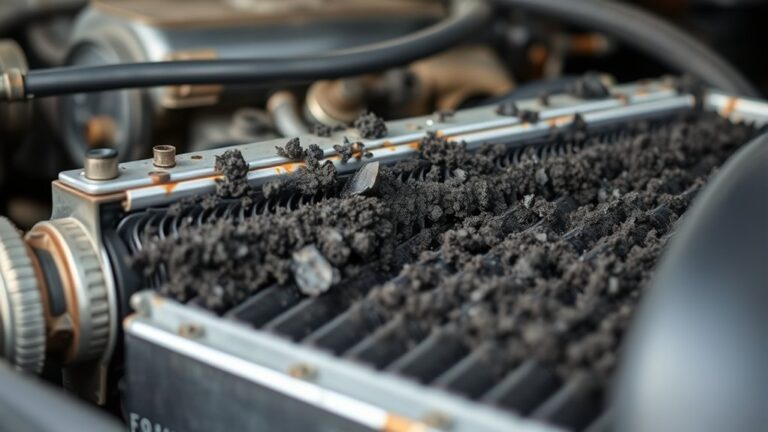
Too rich a mixture (more fuel) can cause fouling and lower efficiency, while too lean (more air) risks knocking and engine damage. Finding the ideal air-fuel ratio is key to achieving top performance without harming the engine.
It allows you to fine-tune your engine’s operation, so it runs well under different conditions. Ultimately, understanding and controlling this balance helps you get the most out of your engine while keeping it reliable and long-lasting.
How Air-Fuel Mixture Affects Power and Fuel Efficiency
The air-fuel mixture directly influences both your engine’s power output and fuel efficiency. Mixture dynamics determine how well the fuel combines with air, affecting combustion efficiency.
A proper balance guarantees complete burning, delivering maximum power without wasting fuel.
When the mixture is too rich (more fuel), you get a quick boost in power, but fuel consumption and emissions go up.
On the other hand, a lean mixture (more air) improves fuel economy but can cause engine knocking or hesitation.
Achieving the ideal air-fuel ratio improves combustion efficiency, helping your engine produce consistent power while saving fuel.
Proper mixture control also reduces harmful emissions and helps your engine last longer.
If the mixture isn’t just right, you’ll notice decreased performance and higher fuel costs.
That’s why fine-tuning the mixture for your engine is key to getting both power and efficiency, making your ride smoother and more economical.
Signs Your Air-Fuel Ratio Might Be Off
If your engine starts to run a bit rough or doesn’t feel as powerful as it usually does, there’s a good chance your air-fuel ratio might be off. You might also notice some unusual smoke coming from the exhaust, which is a sign something’s not quite right with the mixture. Catching these signs early can save you from more serious engine problems later on.
Changes in Engine Performance
When your engine’s air-fuel ratio strays from the ideal point, you’ll notice noticeable changes in performance. You may experience rough idling, hesitation during acceleration, or reduced power output. These signs often indicate that your engine tuning isn’t satisfactory, affecting combustion dynamics.
Poor fuel quality can also contribute, causing inconsistent burning and efficiency loss. If you’ve recently installed performance upgrades, they might be disrupting the proper air-fuel balance. You might also notice increased fuel consumption or engine knocking—both signs that the mixture isn’t right.
Addressing these issues promptly guarantees your engine runs smoothly and efficiently. Maintaining the correct air-fuel ratio is essential for peak performance, helping you get the most out of your vehicle’s power and longevity.
Unusual Exhaust Smoke
Unusual exhaust smoke can be a sign that your engine’s air-fuel ratio isn’t quite right. The color and thickness of the smoke can help you figure out what’s going on.
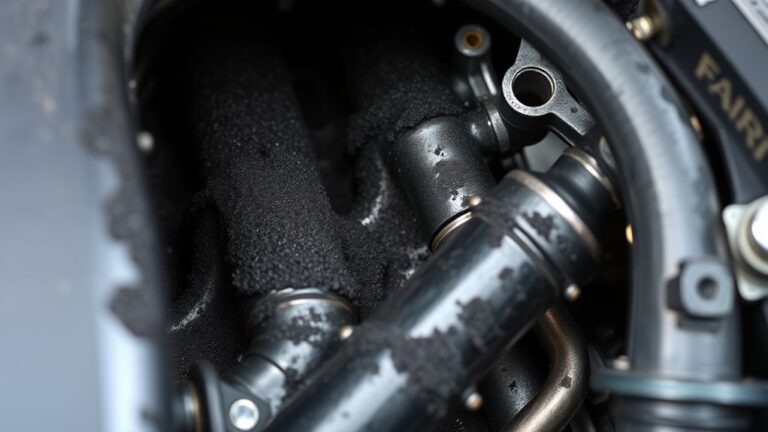
White smoke usually means coolant is burning, which could point to a rich mixture or head gasket problems. Black, thick smoke means too much fuel is being burned, so your mixture is too rich.
Blue-tinted smoke is a sign of oil burning, which might happen from improper combustion or worn piston rings. Thin gray smoke suggests incomplete combustion, possibly from a lean mixture or clogged injectors.
Keep an eye on the colors and thickness of the smoke. They’re useful clues to diagnose issues and help you adjust your air-fuel ratio for smooth engine performance.
How to Measure Your Engine’s Air-Fuel Ratio
Want to get the most out of your engine? The key is knowing how to measure its air-fuel ratio accurately. There are a few ways to do this, like using a wideband O2 sensor or hooking up a diagnostic scanner. It really depends on what setup you have and what you’re comfortable with.
Once you’ve got the data, the next step is understanding what it means. Being able to interpret those numbers will help you fine-tune your engine so it runs at peak efficiency. It might take a little practice, but it’s worth it for that smooth, powerful performance.
Methods for Measurement
Measuring your engine’s air-fuel ratio accurately is key to boosting performance and running efficiently. You have several methods to choose from:
First, you can use Lambda sensors to directly monitor exhaust gases, giving you real-time data. This helps you see exactly how your engine is running at any moment.
Another option is installing Wideband gauges for precise and continuous readings during tuning. They make it easier to dial in the perfect mixture on the fly.
You can also do Dyno testing to see how your modifications impact the air-fuel mix under load. It’s a great way to get real-world results.
Performing Exhaust analysis and Emission testing can confirm if you’re hitting the ideal ratios and staying compliant with regulations.
Additional techniques include Fuel mapping, which adjusts fuel delivery for the best results, and adding Performance chips for automatic tuning. Each method helps you fine-tune your setup so your engine runs at its best.
Interpreting Air-Fuel Data
How do you make sense of the data from your air-fuel ratio measurements? First, focus on proper sensor calibration to make sure your sensor gives accurate readings. Once calibrated, interpret the data by comparing it to ideal ratios like 14.7:1 for normal combustion.
Look for patterns that show rich or lean mixtures and adjust accordingly. Keep in mind that fluctuations can indicate issues with fuel delivery or the sensor itself. Consistently good data interpretation helps you fine-tune your engine for better performance.
Use a reliable gauge or ECU to monitor your air-fuel ratio in real-time. Cross-reference these readings with your vehicle’s specifications to get the best results. Accurate interpretation is key to improving power, efficiency, and engine longevity.
The Ideal Air-Fuel Ratio for Different Engine Types
Different engine types need specific air-fuel ratios to perform well. For carburetor tuning or fuel injector adjustments, the ideal ratio varies. Turbocharger considerations often lean toward a richer mixture to prevent knocking, while diesel engines rely on a much leaner ratio for better efficiency. When you’re doing performance upgrades or tweaking software, understanding these differences is key.
Different engine types require specific air-fuel ratios for optimal performance and efficiency.
Key factors include:
- Engine load effects: Heavier loads call for richer mixtures, which influence ignition timing and fuel quality.
- Aftermarket modifications: They can change airflow, so you might need to adjust ratios to get the best power.
- Fuel quality impact: Better fuel quality can sometimes allow for leaner ratios without losing performance.
- Turbocharger considerations: Increasing boost usually requires richer ratios to prevent knocking and keep your engine healthy.
How to Fine-Tune Your Air-Fuel Ratio for Optimal Results
Want to fine-tune your air-fuel ratio for the best performance? Start by adjusting the fuel mixture to suit your engine’s specific needs. It’s all about finding that sweet spot where your engine runs smoothly and efficiently. Keep an eye on how well your engine is combusting — that’s the key to making sure you’re getting maximum power without wasting fuel.
To get accurate readings and make precise adjustments, it’s a good idea to use proper tuning tools like a wideband O2 sensor. These tools help you see exactly where your mixture stands, so you can tweak it just right. With a little patience and the right equipment, you’ll be able to optimize your air-fuel ratio for top-notch results.
Adjusting Fuel Mixture
Adjusting your fuel mixture is key to fine-tuning your engine’s air-fuel ratio for the best performance. To do this:
Start with fuel injector calibration to make sure the fuel delivery is correct. Check for leaks or blockages that could affect the flow.
Next, perform an idle mixture adjustment to set the right fuel level at idle, so the engine runs smoothly.
Use a diagnostic tool or air-fuel ratio meter to keep an eye on the mixture as you make adjustments.
Finally, fine-tune by gradually changing the mixture, listening for smoother idling and better throttle response.
Monitoring Combustion Efficiency
Once you’ve set the fuel mixture, monitoring combustion efficiency is key to keeping your engine running at its best. Regular combustion analysis helps you see if your air-fuel ratio is just right, so you can optimize efficiency.
By checking engine performance metrics like exhaust gases and power output, you can fine-tune your setup. Tools like O2 sensors or exhaust gas analyzers give you real-time feedback. Here’s a quick comparison:
| Indicator | What It Tells You |
|---|---|
| Oxygen Levels | How efficient the combustion is |
| Exhaust Temperature | How complete the combustion is |
| Power Output | Overall engine performance |
| Fuel Consumption | Fuel efficiency |
Focusing on these indicators helps you adjust your mixture precisely, boosting performance and cutting emissions.
Using Proper Tuning Tools
Using proper tuning tools is essential for accurately fine-tuning your air-fuel ratio and maximizing engine performance. Tuning gauges help you monitor real-time data, ensuring precise adjustments.
Performance chips let you reprogram your engine’s computer, which can improve fuel delivery. To get the best results, follow these simple steps:
- Connect your tuning gauges to monitor the air-fuel mixture during testing.
- Use performance chips to adjust fueling settings based on gauge feedback.
- Keep testing different ratios and pay attention to how the engine responds and how efficient it runs.
- Once you find the perfect tune, double-check your readings with your gauges to ensure peak performance.
These tools make it easier to find the right balance, helping your engine run smoothly and efficiently at its best.
Best Tools for Measuring and Adjusting Air-Fuel Mixtures
To fine-tune your engine’s air-fuel mixture, you’ll need reliable tools designed for accurate measurement and adjustment. Digital gauges give you real-time data on air and fuel ratios, making it easier to monitor changes precisely.
Digital gauges provide real-time, precise data to fine-tune your engine’s air-fuel mixture effectively.
Tuning software allows you to analyze data logs, spot inconsistencies, and make informed adjustments to your fuel injectors and performance chips. Exhaust analyzers measure emissions and exhaust gases, showing whether your mixture is lean or rich.
Engine diagnostics tools help detect issues with lambda sensors or other components that affect mixture quality. Upgrading air filters can influence airflow, and dyno testing shows how modifications impact performance under load.
Adjustments based on these measurements help optimize your engine’s efficiency, power, and emissions. By combining these tools, you gain a thorough understanding of your air-fuel ratio, ensuring your engine runs at peak performance with minimal guesswork.
Benefits of Optimizing Your Air-Fuel Ratio for Performance and Emissions
Adjusting your air-fuel ratio can really boost your engine’s performance and cut down on harmful emissions. When tuned right, you’ll notice quicker responsiveness and smoother running.
It also helps keep combustion stable, which means fewer misfires and less rough running. Here are some of the main benefits:
- Emission reduction: Proper tuning lowers pollution by reducing unburned fuel and excess emissions.
- Performance improvement: A good ratio delivers maximum power and quick throttle response during acceleration.
- Fuel economy: Efficient combustion uses less fuel, saving you money and helping the environment.
- Engine longevity: Better combustion means less wear and tear, which can extend your engine’s lifespan through cleaner operation.
Troubleshooting Common Air-Fuel Ratio Problems
When your engine isn’t running smoothly or doesn’t respond quite right, it’s often a sign of air-fuel ratio issues. A lean mixture, with too much air and not enough fuel, can cause hesitation, rough idling, and poor acceleration.
On the other hand, a rich mixture, with excess fuel, may produce black smoke from the exhaust, sluggish performance, and higher fuel consumption. To troubleshoot, start by checking for vacuum leaks, which often cause a lean mixture.
Next, inspect the fuel injectors and fuel pressure regulator for clogs or faults that lead to a rich mixture. A faulty oxygen sensor can also send incorrect signals and disrupt the balance.
Additionally, examine the air filter and intake system for blockages or leaks that can skew the mixture. Accurate diagnosis is key to fixing the problem and restoring your engine’s optimal performance.
Maintaining the Correct Air-Fuel Balance Over Time
Maintaining the correct air-fuel balance over time needs regular attention and adjustments to keep your engine running smoothly and efficiently. Focus on key areas to do this effectively:
Regular maintenance and adjustments ensure your engine runs smoothly and efficiently over time.
- Fuel system maintenance: Regularly inspect and clean fuel lines and components to ensure consistent fuel delivery and prevent imbalances.
- Air filter cleanliness: A dirty air filter restricts airflow, which can disrupt the ideal mixture. Replace or clean it as needed.
- Injector calibration: Properly calibrated injectors deliver the right amount of fuel. Periodic calibration helps keep the mixture just right.
- Engine diagnostics: Use diagnostic tools to monitor engine performance and catch issues early, so you can make timely corrections.
Frequently Asked Questions
How Does Altitude Affect Ideal Air-Fuel Ratios?
Altitude affects ideal air-fuel ratios because lower oxygen availability at higher elevations demands adjustments. You’ll need to lean out the mixture to keep the engine running smoothly, since less oxygen limits combustion.
Tuning implications include changing fuel delivery to optimize performance and prevent knocking. By accounting for altitude, you ensure your engine runs efficiently, smoothly, and retains power no matter the elevation.
Can Aftermarket Modifications Impact Air-Fuel Ratio Settings?
Think of your engine as a finely tuned orchestra; aftermarket modifications are like new instruments adding depth and complexity. They can impact air-fuel ratio settings, so adjustments through aftermarket tuning and sensor calibration are often needed.
Without proper calibration, the harmony can turn to dissonance, leading to poor performance or even damage. So, when you modify your engine, make sure to fine-tune the system, aligning sensors and ratios for peak power and efficiency.
Is There a Universal Air-Fuel Ratio for All Engine Types?
There isn’t a universal ratio that works for all engine types because each engine has unique requirements. Typically, a stoichiometric ratio of about 14.7:1 works for many gasoline engines. But performance engines or diesels need different ratios.
You should always consider your specific engine type and goals when adjusting your air-fuel mixture. Testing and tuning help you find the ideal ratio for your engine’s performance and efficiency.
How Often Should I Recheck My Engine’s Air-Fuel Mixture?
Think of your engine tuning like tending a garden; regular care keeps everything thriving.
You should recheck your engine’s air-fuel mixture every 3,000 to 5,000 miles or when you notice changes in fuel efficiency or performance.
Frequent checks guarantee your engine runs smoothly, maximizes power, and conserves fuel.
Staying vigilant helps catch issues early, maintaining peak performance and preventing costly repairs down the line.
What Are the Risks of Running Too Rich or Too Lean?
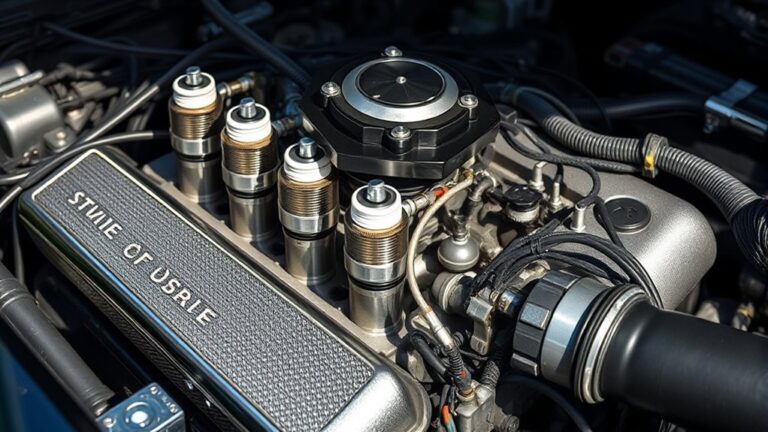
Running too rich causes rich conditions, leading to engine damage, fouled spark plugs, and decreased fuel economy.
Conversely, lean conditions can cause overheating, knocking, and performance loss.
Both extremes harm combustion efficiency and increase emissions.
Ignoring these issues shortens your engine’s lifespan, and repairs become costly.
Maintaining the proper air-fuel ratio guarantees peak performance, better fuel economy, and effective emissions control, safeguarding your engine’s health.
Conclusion
Optimizing your air-fuel ratio can boost engine power by up to 20%, giving you a noticeably better driving experience. Regularly checking and adjusting your mixture not only enhances performance but also cuts down on harmful emissions.
Did you know that poorly tuned engines are responsible for over 30% of vehicle pollution? Staying on top of your air-fuel balance ensures your engine runs smoothly, efficiently, and in an eco-friendly way.
By maintaining the right air-fuel ratio, you get the most out of every mile while helping protect the environment. Proper tuning is key to unlocking engine power and keeping your vehicle running at its best.