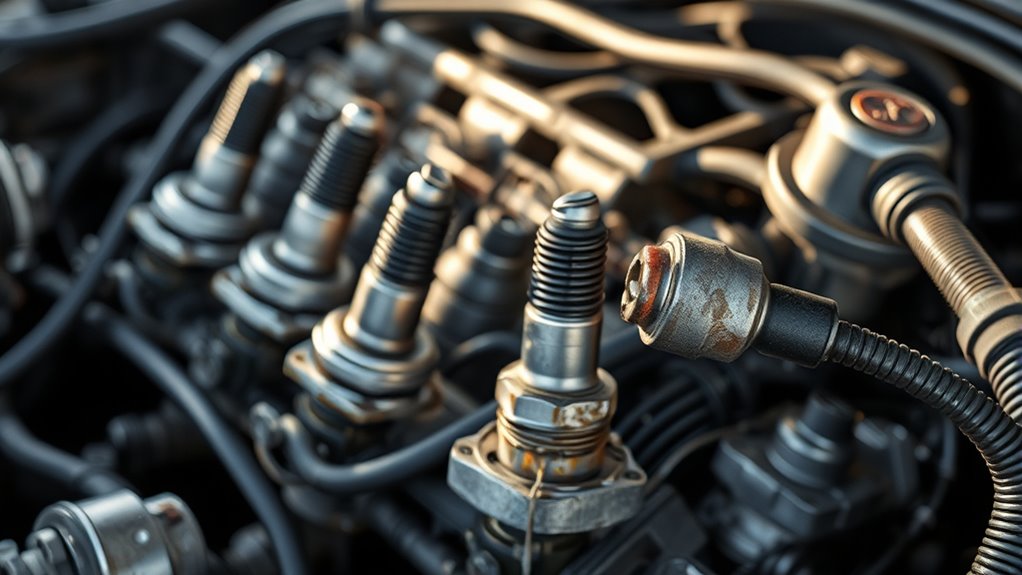
What Causes Car Engine Misfire At Low RPM? Let’s Find Out
If your car engine is misfiring at low RPM, you’re not alone. Many drivers struggle with rough idle issues that can be frustrating and even concerning. Understanding what’s behind these misfires can help you get back on the road smoothly.
A car engine misfires at low RPM mainly due to issues like faulty spark plugs, clogged fuel injectors, or vacuum leaks that disrupt smooth combustion.
Mechanical problems such as worn piston rings or timing issues can also cause misfires. Ignition system faults or fuel delivery problems restrict power and cause rough idling.
To keep your engine running smoothly, it’s essential to identify these causes early. Keep going to uncover how these problems can be fixed effectively.
Key Takeaways
- Incorrect fuel mixture or timing can cause uneven combustion at low RPM. This often results in the engine misfiring when you’re idling or driving slowly.
- Faulty spark plugs or ignition coils lead to weak sparks and misfires during idle. If these components aren’t working properly, it can cause rough running.
- Vacuum leaks disrupt the air-fuel mixture, resulting in rough idling and misfire. Even small leaks can have a noticeable effect on engine performance.
- Clogged fuel injectors or a failing fuel pump reduce fuel delivery, which can cause misfires. Without enough fuel, the engine struggles to run smoothly at low speeds.
- Mechanical issues like worn piston rings or damaged valves impair combustion at low speeds. These problems can cause the engine to misfire and run unevenly.
Why Does My Engine Misfire at Low RPMs?
Have you ever noticed your engine misfiring when you’re driving at low RPMs? This issue often relates to engine tuning and idle adjustment problems. When your engine isn’t properly tuned, it struggles to stay steady at idle, leading to misfires.
Incorrect fuel mixture or timing can cause uneven combustion, especially at low speeds. Sometimes, just tweaking the idle setting can fix the problem. If the idle speed is too low or too high, your engine may misfire or even stall.
Poor tuning, like clogged fuel injectors or faulty sensors, also contributes to misfires at low RPMs. Making sure your engine is properly tuned and your idle is correctly adjusted helps keep things running smoothly.
Addressing these issues early can prevent further damage and ensure your engine runs efficiently at low speeds.
How to Diagnose Low RPM Engine Misfires?
Wondering how to identify if your engine misfires at low RPMs? Start by noticing symptoms like rough idling, hesitation, or sputtering. These can be signs that something’s off.
To diagnose properly, use an OBD-II scanner to check for error codes related to misfires or sensor problems. Then, inspect spark plugs and ignition coils because worn or damaged parts often cause low RPM misfires.
Finally, pay attention to irregular engine sounds or vibrations, which might point to the source of the misfire. Here’s a simple step-by-step:
- Use an OBD-II scanner to read trouble codes.
- Check spark plugs and ignition coils for damage or wear.
- Observe engine response during acceleration and idle.
- Inspect vacuum lines and hoses for leaks.
Common Fuel Delivery Problems Causing Misfires
Fuel delivery problems are a pretty common reason why your engine might misfire. If your fuel pump isn’t working right or if your fuel filter is clogged up, your engine could have a hard time getting the right amount of fuel it needs to run smoothly.
Also, faulty fuel injectors can cause issues because they might not spray fuel properly, which can lead to misfires. So, whenever you’re dealing with engine misfires, it’s a good idea to check these fuel delivery components first.
Fuel Pump Malfunction
A malfunctioning fuel pump can disrupt the engine’s ability to receive a steady flow of fuel, leading to misfires that affect overall performance. When the fuel pressure drops, your engine has a hard time igniting the right mixture, which can cause rough running at low RPM.
Common signs include engine sputtering or stalling. To fix this, you’ll probably need to replace the pump to restore proper fuel delivery. Here are some key points to keep in mind:
- Low fuel pressure often signals a failing pump.
- Noise coming from the fuel tank may mean the pump has issues.
- Intermittent engine stalls suggest inconsistent fuel flow.
- A faulty pump can cause misfires, especially at low RPM.
Addressing these problems quickly ensures your engine runs smoothly and helps prevent further damage.
Clogged Fuel Filter
When a fuel filter becomes clogged, it restricts the flow of fuel to the engine, which can cause misfires and rough running. Over time, debris and sediment build up, blocking proper fuel delivery. Regular fuel filter maintenance helps prevent this and keeps the fuel flow steady.
If you notice symptoms like engine hesitation, lack of power at low RPM, or stalling, it might be a clogged filter. A symptoms checklist can help you identify the issue early. Usually, a clogged fuel filter makes the engine struggle during acceleration or idle rougher than usual.
Replacing or cleaning the fuel filter is a simple fix that restores proper fuel flow and smooth engine operation. Ignoring these signs can worsen engine performance and lead to more damage.
Faulty Fuel Injectors
Faulty fuel injectors can mess up the precise delivery of fuel into your engine, causing misfires and rough running. Over time, they can clog or leak, leading to inconsistent fuel spray. Neglecting injector cleaning or poor maintenance can make these issues worse.
Common problems caused by faulty injectors include irregular engine performance, like misfires at low RPM or rough idling. They can also reduce fuel efficiency because improper fuel spray affects combustion.
You might notice engine hesitation or sluggish acceleration due to inconsistent fuel flow. Faulty injectors can also increase emissions because unburned fuel escapes during incomplete combustion.
Regular cleaning and proper maintenance are key to preventing these problems. If you think your injectors are faulty, addressing it early helps keep your engine running smoothly and saves you from costly repairs.
How Ignition System Faults Lead to Low RPM Misfires?
Ignition system faults can directly cause low RPM misfires by disrupting the spark that ignites the fuel-air mixture in your engine’s cylinders. If your ignition timing is off, the spark may fire too early or too late, leading to incomplete combustion and engine misfire at low RPMs.
Proper timing guarantees the spark occurs at the ideal moment for power and efficiency. When it’s incorrect, misfires become more likely. Coil failure is another common culprit; if your ignition coil isn’t delivering a strong, consistent spark, cylinders won’t fire properly.
Proper ignition timing and coil health are essential for smooth engine performance and preventing misfires.
This weak or inconsistent spark hampers combustion, especially at low engine speeds where precise ignition is critical. Together, faulty ignition timing and coil failure can cause rough idling, hesitation, or engine stalls.
Addressing these issues promptly helps restore smooth engine operation and prevents further damage caused by misfires. Regular inspection and maintenance of your ignition system are essential for ideal engine performance.
Can Vacuum Leaks Cause Engine Misfires at Low RPMs?
You might notice your engine running rough or even stalling when you’re at low RPMs—that’s often a clue there’s a vacuum leak somewhere. These leaks can come from cracked hoses or a faulty intake gasket, and they mess with the air-fuel mixture, which can definitely cause engine misfires.
Knowing what to look for makes a big difference. If your engine sputters or stalls at low speeds, a vacuum leak could be the culprit behind those misfires. It’s a good idea to check those hoses and gaskets to see if anything’s cracked or damaged—that way, you can get to the root of the problem.
Vacuum Leak Detection Signs
Vacuum leaks are a common cause of engine misfires, especially at low RPMs. You can spot signs of leaks through different symptoms.
First, listen for hissing sounds around the intake manifold—that’s a good clue there might be a vacuum leak. Next, check for rough idling or stalling, since unmetered air messes up normal combustion.
You might also notice a high or fluctuating idle speed, which often points to vacuum problems. Performing a vacuum test with a gauge can help too—if the readings are low, a leak is probably present.
Identifying these signs early helps confirm the problem before you do any leak repairs. Catching vacuum leaks early can save you time and prevent further engine damage, making for a smoother ride.
Common Vacuum Leak Causes
Several components and connections can cause vacuum leaks, leading to engine misfires, especially at low RPMs. Common culprits include cracked or disconnected vacuum hoses, which can develop leaks over time.
These hoses connect various engine parts and can deteriorate due to age or heat. The intake manifold is another frequent source; if it develops a crack or gasket failure, it can let unmetered air into the engine.
When air leaks into the intake system, it disrupts the air-fuel mixture, causing misfires and rough idling. Regularly inspecting your vacuum hoses for cracks or disconnections and checking the intake manifold for leaks can help prevent low-RPM misfires.
Addressing these issues early restores proper engine function and improves drivability.
Impact on Engine Performance
Vacuum leaks can really impact how your engine runs, especially at low RPMs when it’s crucial to control the air-fuel mixture accurately. When there’s a leak, your engine struggles to get the right amount of air, which can cause misfires and lower efficiency.
This messes with your engine’s performance and can make tuning more difficult. Here are four ways vacuum leaks can affect your engine:
- Poor acceleration – your car feels sluggish, especially at low speeds.
- Rough idling – you’ll notice more vibrations and the engine feels unstable.
- Increased emissions – incomplete combustion means more pollutants are released.
- Higher fuel consumption – your engine needs to burn more fuel to make up for the air imbalance.
Fixing vacuum leaks helps improve overall engine performance and tuning, so your car runs smoother and uses fuel more efficiently.
Why Spark Plugs and Wires Are Key to Smooth Engine Performance
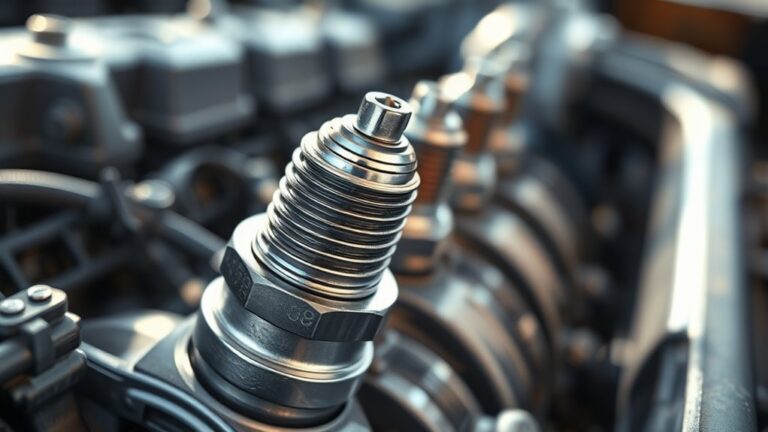
Spark plugs and wires are crucial for ensuring your engine runs smoothly because they deliver the electrical spark needed to ignite the fuel-air mixture.
The type of spark plug you choose—copper, platinum, or iridium—affects both performance and durability. Picking the right one ensures efficient combustion and helps prevent misfires, especially at low RPMs.
The wires carry high-voltage electricity from the ignition coil to the spark plugs. Worn or damaged wires can cause weak sparks or misfires, which hurt engine performance.
Proper ignition timing is essential. Even with perfect spark plugs, if the timing is off, the fuel-air mixture won’t ignite correctly.
Keeping your spark plugs clean, correctly gapped, and of the right type, along with maintaining good ignition wires, helps your engine fire smoothly.
When these parts work well together, your engine becomes more reliable and fuel-efficient.
How to Detect Faulty Sensors That Cause Low RPM Misfires?
Are faulty sensors causing low RPM misfires? If you think sensor problems might be the cause, you can use diagnostic tools to pinpoint the issue. Faulty sensors like the oxygen sensor, mass airflow sensor, throttle position sensor, or coolant temperature sensor can send incorrect data and lead to misfires.
To check these sensors, start by connecting an OBD-II scanner to your vehicle’s port to read trouble codes. Look out for codes like P0130 for the oxygen sensor or P0102 for the mass airflow sensor.
You can also use multimeters or scan tools to test sensor voltages and signals. Compare the readings to the manufacturer’s specifications to see if they’re off. Additionally, visually inspect the sensors for damage, corrosion, or dirt, and clean or replace them if needed.
Do Dirty Fuel Injectors Lead to Engine Misfires?
Sure! Here’s a more conversational version of the text:
Dirty fuel injectors can really mess with how your engine runs. When they’re clogged or dirty, they don’t deliver fuel as properly, which can cause your engine to misfire or run rough. You might notice things like rough idling or a drop in power—that’s usually a sign that something’s not quite right. When the injectors are clogged, the combustion process isn’t as efficient as it should be, and that can lead to those engine misfires you want to avoid.
Fuel Delivery Disruptions
Fuel delivery disruptions are a common cause of engine misfires, and dirty fuel injectors are often at the root of the problem. When injectors get clogged, they can mess with fuel pressure, leading to inconsistent delivery timing.
This disruption causes the engine to misfire, especially at low RPMs. To troubleshoot, check these factors:
- Fuel pressure drops due to clogged filters or faulty fuel pumps.
- Delivery timing issues caused by dirty or malfunctioning injectors.
- Inconsistent fuel spray patterns affecting combustion.
- Contaminated fuel that hampers proper atomization and flow.
Fixing these issues usually involves cleaning or replacing fuel injectors, making sure fuel pressure is within specs, and keeping fuel filters clean. Having proper fuel delivery is key to smooth engine operation and avoiding misfires at low RPMs.
Injector Clogging Signs
Clogged fuel injectors can cause noticeable engine misfires, especially during acceleration or at low RPMs. Signs include rough idling, hesitation, or a sudden loss of power.
Poor fuel quality often contributes to injector clogging, as impurities and deposits build up over time. Regular injector maintenance helps prevent these issues by keeping injectors clean and working properly.
If you notice engine misfires or rough running, it might be a sign that your fuel injectors are clogged. Addressing the problem early can prevent more severe damage and improve engine performance.
Using high-quality fuel and scheduling routine injector cleaning can extend the lifespan of your injectors. This keeps your engine running smoothly, especially during low-speed driving or when accelerating.
Impact on Combustion Efficiency
When fuel injectors get contaminated with deposits or debris, they can mess up the precise air-fuel mixture needed for efficient combustion. Dirty injectors impair the combustion process, leading to uneven fuel delivery.
This reduces the engine’s ability to run efficiently, especially at low RPMs. As a result, misfires can happen because of incomplete combustion or inconsistent fuel spray patterns.
Here’s how dirty injectors affect efficiency:
- Poor atomization — fuel doesn’t spray evenly, which hampers combustion.
- Inconsistent fuel flow — causes fluctuations in the mixture quality.
- Increased emissions — incomplete combustion releases more pollutants.
- Reduced power output — the engine struggles to perform properly.
Keeping fuel injectors clean helps optimize efficiency and reduces the risk of misfires.
Mechanical Issues That Can Cause Low RPM Engine Misfires
Mechanical problems are a common culprit behind low RPM engine misfires, disrupting your vehicle’s smooth operation. If your engine isn’t firing properly, issues like incorrect timing or compression problems could be the cause.
Faulty engine timing, caused by worn belts or chains, throws off the synchronization of valves and pistons. This can lead to misfires and rough running.
Compression issues, often due to worn piston rings or damaged valves, prevent proper combustion. That results in rough idling and low RPM misfires.
Here’s a quick look at common mechanical causes:
| Issue | Symptoms | Possible Fix |
|---|---|---|
| Engine timing problems | Rough idle, misfire, loss of power | Replace timing belt or chain |
| Compression issues | Poor acceleration, misfire | Repair or replace valves or rings |
| Worn pistons or rings | Loss of compression, smoke | Engine overhaul or repair |
| Damaged valves | Misfire, engine hesitation | Valve repair or replacement |
Fixing these mechanical issues helps restore proper engine function.
Tips to Prevent Future Low RPM Engine Misfires
Regular maintenance is key to preventing low RPM engine misfires. Staying proactive with preventative care helps catch issues early before they cause problems. Regular inspections can spot worn or damaged parts, keeping your engine running smoothly.
Regular maintenance prevents misfires and keeps your engine running smoothly through early issue detection.
Here are four tips to help you avoid future misfires:
- Keep up with spark plug replacements. Worn plugs can reduce ignition efficiency and cause misfires.
- Check the fuel system regularly. Clean injectors ensure proper fuel delivery and prevent misfires caused by poor fuel flow.
- Inspect ignition coils and wires. Damaged components can disrupt the spark needed for combustion.
- Perform routine air filter changes. A clogged filter affects air intake and can impact engine performance.
Following these steps and scheduling regular inspections will boost your engine’s reliability and reduce the chances of low RPM misfires. Remember, preventative maintenance is your best defense against costly repairs and engine trouble.
Frequently Asked Questions
Can Low Oil Pressure Cause Engine Misfires at Low RPMS?
Low oil pressure can contribute to engine misfires at low RPM because it affects oil viscosity and the oil pump’s ability to lubricate engine parts properly.
When oil pressure drops, components may not get enough lubrication, leading to increased friction and misfiring.
Making sure your oil levels are correct and using the right oil viscosity helps maintain good oil pressure. This can prevent misfires caused by not enough lubrication at low RPMs.
How Do Worn Piston Rings Affect Engine Performance at Low Speeds?
Worn piston rings cause compression loss, which directly impacts engine performance at low speeds. This loss can lead to uneven combustion, resulting in misfires and rough running.
You might notice a decrease in power and poor acceleration when the rings are worn out. They can also disrupt ignition timing, making it harder for the engine to fire correctly.
Fixing worn piston rings helps restore proper compression and ignition timing. This ensures your engine runs smoothly, especially at low RPMs.
Are Aftermarket Modifications Linked to Low RPM Misfires?
Coincidence can play a part when aftermarket modifications, like turbochargers, seem connected to low RPM misfires. Turbo effects can change airflow, putting extra stress on your engine’s parts.
Fuel injector issues might also lead to inconsistent fuel delivery, which can cause misfires. Sometimes, these modifications overload or don’t quite match your engine’s original setup.
That mismatch can cause misfire problems at low RPM. So, if you start noticing issues after upgrades, it’s a good idea to check both your turbo system and fuel injectors.
Can ECU Software Issues Lead to Engine Misfires During Idle?
Yes, ECU software issues can cause engine misfires during idle. If your ECU calibration is off or if software updates are faulty, it can disrupt fuel delivery and ignition timing, leading to misfires at low RPM.
Sometimes, outdated or corrupted software may not properly control engine functions. So, making sure your ECU has the latest, correctly installed updates is important for smooth idling and overall engine performance.
What Role Do Transmission Problems Play in Engine Misfires at Low RPM?
Think of your transmission as the engine’s dance partner; if it stumbles with wear or a faulty torque converter, misfires at low RPM can happen. When transmission issues cause slips or delays, the engine struggles to get smooth power, leading to misfires.
These problems disrupt the engine’s rhythm, especially at low speeds. It makes your car’s performance uneven and jerky, like a dance that’s lost its beat.
Conclusion
If your engine’s misfiring at low RPMs, it’s like a song missing a beat—you need to find and fix the faulty notes. Diagnosing issues with fuel delivery, ignition, vacuum leaks, sensors, and mechanical parts can help restore harmony to your engine’s performance.
Regular maintenance is key to keeping these problems at bay. It ensures your car runs smoothly without missing a beat. Think of it as tuning your vehicle’s symphony for a flawless ride every time.
When your car misfires at low RPM, it’s often caused by a variety of factors. Identifying whether it’s a fuel, ignition, vacuum, sensor, or mechanical issue is the first step to fixing it.
By addressing these common causes, you can prevent further damage and keep your engine running smoothly. Proper diagnostics and timely repairs are essential for resolving low RPM engine misfire issues.