Exploring Oil Leak Issues: Is Car Oil Leak Normal? Tips & Costs
Many car owners worry about oil leaks, and you’re not alone. It can be stressful to spot oil spots and wonder if it’s normal or a sign of trouble. Finding the right info can help you catch issues early and save money.
A small oil leak can be normal, especially in older cars or after oil changes, but significant leaks or persistent spots signal problems. Worn seals, gaskets, or cracks may cause leaks over time.
You can spot issues by checking under your car, inspecting the engine bay, or noticing oil spots on your driveway.
Repair costs vary from $100 to $400, depending on the severity, but addressing leaks early can prevent costly damage.
Uncover more tips to keep your vehicle in top shape.
Key Takeaways
- Minor oil spots after an oil change are normal; if leaks keep happening, it might be a sign of a problem that needs checking.
- Regular maintenance and timely seal replacements can help avoid serious leaks and save you from costly repairs.
- If you see visible oil spots, notice engine performance issues, or smell burning oil, it’s time to get it checked out promptly.
- Repair costs can range from $100 to $400, depending on parts like seals, gaskets, or the oil pan.
- DIY fixes are usually limited. For persistent or large leaks, it’s best to get professional help to prevent engine damage.
What Causes Oil Leaks in Cars? Common Sources Explained
Oil leaks in cars often happen because of worn-out seals, gaskets, or cracks in the engine components. Over time, heat and pressure weaken these parts, causing leaks.
To prevent oil leaks, regular oil leak prevention checks are essential. You should inspect seals and gaskets for signs of deterioration and replace them promptly.
Regular inspections of seals and gaskets help prevent costly oil leaks and engine damage.
If you notice oil spots under your car or see oil on engine parts, it might be time for an oil seal replacement. Proper maintenance reduces the risk of costly repairs and engine damage.
Tightening loose bolts and replacing cracked hoses also helps prevent leaks. Using quality oil and changing it according to your vehicle’s schedule supports the integrity of seals and gaskets.
How Do I Know If My Oil Leak Is Serious? Key Signs to Watch For
You should keep an eye out for visible oil spots under your car—that’s usually a sign there’s a leak that needs checking out. If you notice your engine acting up, like knocking or stalling unexpectedly, that could also mean your oil leak is more serious. Catching these signs early can save you from bigger, more expensive problems later on.
Visible Oil Spots
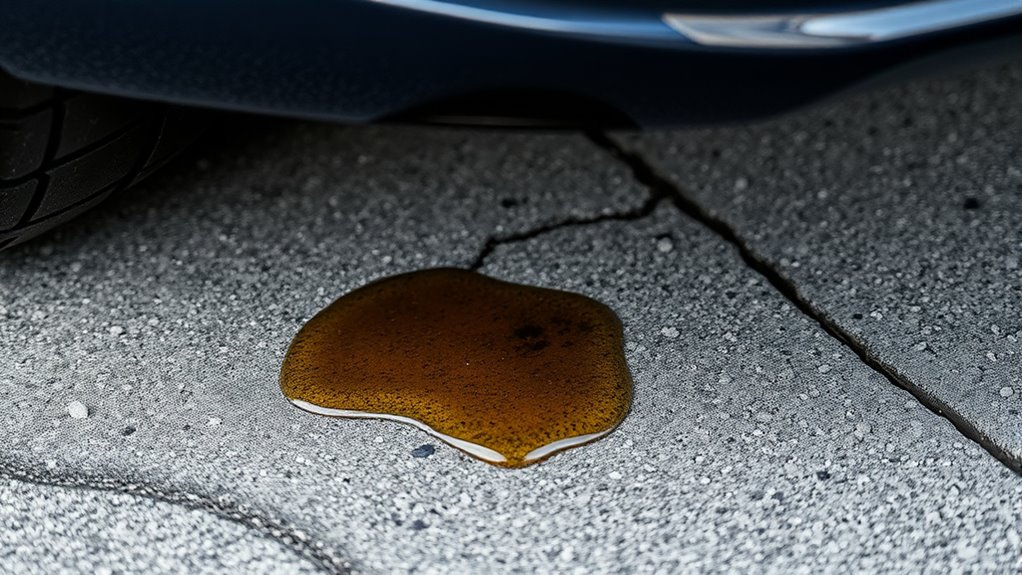
When you notice fresh, dark stains on your garage floor or driveway, it’s a clear sign that oil is leaking from your vehicle. Oil spot detection becomes essential here. These spots are often oily, shiny, and dark, making them easy to identify.
Proper oil stain identification helps you figure out if the leak is ongoing and how serious it might be. If the stain is small and appears only occasionally, it could be minor. But persistent or growing spots signal a more significant issue.
Pay attention to the size and frequency of the stains. Large, dark, and spreading oil spots indicate you should have your vehicle inspected promptly. They often point to a leak that needs professional attention before it gets worse.
Unusual Engine Performance
Persistent oil leaks often cause noticeable changes in how your engine runs.
You might hear unusual engine noises like knocking or sputtering, which could signal trouble.
Performance issues such as reduced power, sluggish acceleration, or stalling can also be signs of a serious leak.
If your engine feels rough or vibrates more than usual, don’t ignore it.
Oil leaks can lead to overheating or loss of lubrication, risking engine damage and costly repairs.
Keep an eye out for strange noises, decreased performance, or inconsistent idling.
Addressing these issues early can prevent further damage and save you money.
If you notice any of these signs, it’s a good idea to have a mechanic check your oil levels and engine condition promptly.
Is Age the Main Factor Behind Oil Leaks? When Wear and Tear Matter
As your vehicle gets older, it’s pretty common for wear and tear to start showing up. Parts can weaken or even crack, which can lead to oil leaks. It’s kind of like how anything else wears out with time – sooner or later, those small issues can turn into bigger problems.
Age definitely plays a role here, because as the vehicle ages, the chances of leaks happening tend to increase. But it’s not just about the number of years on the odometer. How you drive and how well you take care of your car also make a difference. When you understand how these factors come into play, it’s easier to know when it’s time to get those repairs done.
Wear and Tear Effects
Over time, wear and tear naturally weaken an engine’s components, making oil leaks more likely. As parts degrade, seals and gaskets lose their effectiveness, leading to leaks. You should pay attention to:
- Changes in oil viscosity, which can indicate worn engine seals.
- Cracks or deformation in engine components caused by prolonged stress.
- Loosened bolts or fasteners that hold seals in place.
- Deterioration of rubber or plastic parts that can crack over time.
These issues increase the risk of oil escaping, especially if engine components are no longer able to maintain proper seals. Regular maintenance can help catch these wear-related problems early, preventing costly repairs.
Age-Related Damage
Age can considerably contribute to oil leaks, but it’s not always the main factor. Over time, wear weakens seals, gaskets, and other engine parts, which increases the chance of leaks.
As your car gets older, rubber parts can become brittle, and metal parts may corrode, making leaks more likely. But proper preventative measures can slow down this process.
Regular inspections help catch early signs of wear and tear, so you can replace worn parts before leaks start. Using high-quality oil and sticking to your manufacturer’s maintenance schedule also helps extend the life of seals and gaskets.
While age naturally speeds up wear, staying proactive with care can keep your engine sealed and working longer, reducing leak risks and costly repairs later on.
Can Bad Seals and Gaskets Lead to Oil Leaks? How to Spot Failures
Have you ever noticed oil spots under your vehicle and wondered where they’re coming from? Bad seals and gaskets are common culprits behind oil leaks. Seal failure often happens because gaskets degrade over time, especially in older cars or in extreme weather.
To spot these failures, look for cracks or tears in seals or gaskets. You might also see oil spots near engine components, or notice oil loss without any clear leaks. A burning oil smell or smoke from the engine can also be signs of gasket issues.
Seal failure occurs when gaskets weaken, crack, or shrink, letting oil escape. Gasket degradation can speed up due to heat, age, or exposure to contaminants. If you see these signs, it’s a good idea to have your seals and gaskets checked out.
Seal failure happens when gaskets weaken or crack, leading to oil leaks and potential engine damage.
Addressing problems early can prevent bigger damage and costly repairs down the line. Keep an eye out for signs of gasket wear, and don’t ignore leaks that could turn into bigger issues later.
How Can I Check for Oil Leaks at Home? Simple Inspection Tips
Want to see if your car is leaking oil? It’s pretty straightforward to do at home. First, just take a look underneath your vehicle. If you notice any fresh oil spots or puddles, that’s a good sign there might be a leak.
Next, check your oil levels with the dipstick. If the oil seems to be dropping more than usual, that’s another clue something might be wrong. And don’t forget to peek around the engine bay—look for any visible signs of oil around seals, gaskets, or other parts. If you spot anything suspicious, it’s probably time to get it checked out by a pro.
Look Under Vehicle
When checking for oil leaks at home, start by inspecting underneath your vehicle. Look for fresh oil spots, wet areas, or drips on the ground. To spot issues more effectively, try these diagnosis techniques:
- Check for fresh oil: Look for dark, shiny patches that show recent leaks.
- Inspect seals and gaskets: Focus around the oil pan, valve cover, and filter.
- Examine the undercarriage: Look for oil streaks or pools along the frame.
- Use a flashlight: Shine underneath to see leaks better, especially in shaded areas.
This simple check helps prevent oil leaks and catch problems early, saving you money on repairs. Regular inspections keep your vehicle healthy and stop small issues from getting worse.
Check Oil Levels
Checking your oil levels regularly is a quick and effective way to spot potential leaks early. To do this, perform an oil level measurement using your vehicle’s oil dipstick.
Park your car on a level surface and wait a few minutes to let the oil settle. Remove the dipstick, wipe it clean, then reinsert it fully. Pull it out again to check the oil level against the marked indicators.
If the oil looks low or is uneven on the dipstick, it could be a sign of a leak or consumption issue. Regularly monitoring oil levels helps you catch leaks before they cause engine damage.
Make this a habit, especially if you notice oil spots under your vehicle or a sudden drop in oil levels.
Inspect Engine Area
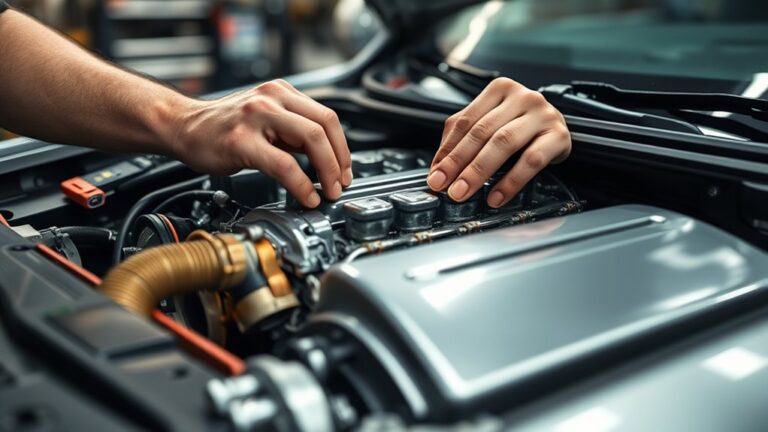
Start your inspection by opening the hood and visually examining the engine area. Look for signs of oil leaks, like wet spots, grime buildup, or puddles under the engine. A clean engine bay makes it easier to spot leaks.
Check the oil’s viscosity; if it looks thin or runny, it might mean a leak or oil loss. Focus on these areas for a thorough view:
- Valve cover gasket and surrounding parts
- Oil filter and drain plug
- Timing cover and oil pan edges
- Hoses and seals for cracks or looseness
Keep the engine area as clean as possible before inspecting since dirt and grime can hide leaks. Regular checks help catch issues early and keep the engine clean.
When Should I See a Mechanic About an Oil Leak? Warning Signs
Noticing some oil underneath your car or on the engine bay? That’s a clear sign you should consider a mechanic consultation. While small drips can be normal, persistent or increasing leaks indicate a more serious issue.
Watch for warning signs like a burning oil smell, low oil levels, or oil spots on your driveway. If your engine is making strange noises or the oil warning light comes on, it’s time to act.
Regular oil leak prevention measures can help, but when leaks worsen, they can cause engine damage and costly repairs. Don’t ignore these signs—early diagnosis can save you money and prevent further damage.
Seeing a mechanic promptly guarantees the leak is properly identified and fixed before it leads to bigger problems. Trust your instincts—if the leak seems to grow or persists despite simple checks, schedule a professional inspection without delay.
What Are My Repair Options for Oil Leaks? DIY Fixes and Professional Help
When dealing with an oil leak, you have a couple of options: trying a DIY fix or calling in professional help. If you go the DIY route, you can try:
- Tightening loose drain plugs or oil pan bolts.
- Replacing worn or damaged oil seals.
- Adding a high-quality stop leak additive.
- Sealing minor leaks with specialized automotive sealants.
That said, DIY fixes work best for small leaks and require some mechanical know-how. For bigger or stubborn leaks, professional services are usually the safer choice. A qualified mechanic can do a thorough inspection, find the exact source of the leak, and use specialized tools or parts to fix it properly.
While DIY solutions might save you money upfront, professional repairs often last longer and are more reliable. They also reduce the risk of further engine damage. Always consider how severe the leak is before deciding whether to tackle it yourself or get professional help.
How Much Does Fixing an Oil Leak Cost? Typical Expenses
The cost to fix an oil leak can vary a lot depending on how bad the leak is and which parts are involved. Typically, repair estimates fall into different ranges based on the problem. Here’s a quick cost breakdown:
| Part Repaired | Estimated Cost | Notes |
|---|---|---|
| Oil Pan Gasket | $200 – $400 | Common leak source, DIY possible |
| Valve Cover Gasket | $150 – $350 | Moderate fix, may need professional help |
| Oil Filter Seal | $100 – $250 | Usually straightforward repair |
These estimates include parts and labor, but your total costs can vary based on your location and vehicle make. Always ask for a detailed repair estimate before giving the go-ahead. Understanding typical costs helps you plan your budget and avoid surprises.
How Preventative Maintenance Can Reduce Oil Leaks and Save Money
Regular preventative maintenance is one of the best ways to catch small issues before they turn into costly oil leaks. By scheduling routine inspections, you can identify potential problems early and address them before they get worse.
Here are four ways preventive checkups help reduce oil leaks and save you money:
- Detect worn or damaged seals before they fail.
- Tighten loose fittings and bolts that could cause leaks.
- Replace aging gaskets to prevent seepage.
- Check oil levels and quality to avoid overfilling or contamination.
These routine inspections keep your engine in good shape and prevent small leaks from turning into major repairs. Staying proactive with maintenance also helps extend your vehicle’s lifespan and improves efficiency.
Investing in regular checkups might seem minor, but it’s a smart way to avoid expensive repairs and keep your car running smoothly. Don’t wait for warning signs—preventative care is your best defense against oil leaks.
FAQs: Common Questions About Oil Leaks and Repairs
Are oil leaks a common concern for vehicle owners? Many people worry about whether a leak indicates a serious problem or is just normal wear. It’s a good idea to learn about oil leak myths; not every drip means disaster.
For example, small leaks can be normal with age, but large or persistent leaks need attention. Regular maintenance tips, like checking oil levels and inspecting for signs of leaks, can help you catch issues early.
If you notice oil spots on your driveway or a drop in oil pressure, don’t ignore it. Common questions include how much oil is too much to lose and whether repairs are costly.
Typically, addressing leaks early saves money and prevents engine damage. Remember, understanding the facts about oil leaks and staying proactive with maintenance tips will keep your engine running smoothly and extend its lifespan.
Frequently Asked Questions
Can Driving With an Oil Leak Cause Engine Damage?
Driving with an oil leak can definitely cause engine damage since the oil leak causes inadequate lubrication, leading to increased engine wear. When you ignore the leak, you risk running the engine dry, which speeds up parts’ deterioration and can lead to costly repairs.
Addressing the oil leak quickly helps prevent further damage, keeps your engine running smoothly, and extends its lifespan. Always keep an eye out for signs of leaks and get them fixed as soon as possible.
How Long Can I Drive With a Small Oil Leak?
You can probably drive with a small oil leak for a few days, but don’t celebrate just yet. Ignoring oil leak symptoms, even temporarily, puts your engine at risk of damage.
While quick fixes might seem tempting, they usually don’t last long. Keep an eye on your oil levels and look for signs of a bigger leak.
If things get worse, it’s best to get professional help. Better safe than sorry—your engine’s health depends on it.
Are Synthetic Oils Less Likely to Leak Than Conventional Oils?
Synthetic oils are less likely to leak than conventional oils because of their synthetic benefits, which include better viscosity stability and fewer impurities. They tend to cling better to engine parts, offering improved leak prevention.
If you’re worried about leaks, switching to synthetic oil can help reduce the chance of oil escaping through worn seals or gaskets. This makes synthetic oils a smarter choice for keeping your engine cleaner and more efficient.
What Are the Environmental Impacts of Oil Leaks?
Oil leaks can harm the environment by contaminating soil and water sources, leading to wildlife damage and health risks. The effects of oil spills include harming aquatic life and polluting ecosystems.
To minimize these impacts, you should follow prevention strategies like regular vehicle maintenance and promptly fixing leaks. Proper disposal and containment help reduce environmental harm.
Making sure your vehicle’s oil leak doesn’t turn into a bigger ecological problem is key to protecting our planet.
How Often Should I Check for Oil Leaks?
Think of checking your oil like tending a garden—you need to do it regularly to spot weeds early. You should check for oil leaks at least once a month and before long trips.
Pay attention to signs like oil spots or burning smells. Regular leak detection helps you catch oil leak causes early, preventing costly repairs and environmental harm.
Staying vigilant keeps your engine running smoothly and your environment clean.
Conclusion
Regularly checking for oil leaks can save you time and money, as they’re responsible for about 40% of engine failures. Catching leaks early helps prevent costly repairs and keeps your car running smoothly.
Remember, simple inspections and timely maintenance can extend your vehicle’s lifespan. Don’t ignore signs of leaks. Staying proactive now could save you hundreds down the road.
Keep an eye on your oil and watch for leaks. Being aware of oil leaks is key to maintaining a safe, reliable drive.