How Often to Replace Cabin Air Filter in Your Car: Essential Tips for Every Driver
Many drivers know the frustration of dealing with stale air, unpleasant odors, or allergy symptoms while on the road. You’re not alone—these issues are common and often linked to a dirty cabin air filter.
Fortunately, staying on top of its maintenance can make a big difference.
You should replace your cabin air filter every 15,000 to 30,000 miles, or sooner if you notice reduced airflow, unpleasant odors, or allergy symptoms while driving.
In urban or dusty environments, you might need to change it more frequently. Always check your vehicle’s manual for specific guidance.
Staying on top of inspections and knowing when to replace it can keep your air clean and HVAC system running smoothly—learn more to keep your car in top shape.
Key Takeaways
- Replace the cabin air filter every 15,000 to 30,000 miles, or sooner if you drive in dusty areas or high-traffic zones.
- Keep an eye out for signs like musty odors, reduced airflow, or more allergies, which may mean it’s time to change the filter.
- Your driving environment matters—urban pollution shortens the filter’s life, while highway driving can help it last longer.
- Check the filter every 12,000 to 15,000 miles for dirt, tears, or discoloration to keep the air inside fresh and clean.
- Make sure to use the right filter for your vehicle model, and replace it by locating it behind the glove box or under the dashboard.
How Often Should You Replace Your Cabin Air Filter?
How often should you replace your cabin air filter? Regular filter maintenance is key to keeping the air inside your car fresh and making your ride more comfortable.
Most experts suggest replacing the cabin air filter every 15,000 to 30,000 miles. But keep in mind, this can change depending on your driving conditions.
If you’re often in heavy traffic, urban areas, or dusty places, you might need to change it more frequently. A clean filter helps improve airflow and cuts down on pollutants inside your vehicle.
Neglecting filter maintenance can lead to poorer air quality, which might cause allergies or respiratory issues. Be sure to check your vehicle’s owner’s manual for specific recommendations for your car.
Signs Your Cabin Air Filter Needs Replacing
If you start noticing weird smells inside your car, it might be a sign that your cabin air filter is dirty or clogged up. You know, those strange odors can really make your drive less pleasant.
You might also see that the airflow from your vents isn’t as strong as it used to be, which can make it harder to stay comfy on your trip. And if you’re sneezing more or your allergies seem worse than usual while driving, that’s another clue it might be time to swap out that filter.
Unusual Odors Inside Vehicle
Unusual odors inside your vehicle are a clear sign that your cabin air filter may need replacing. If you notice unpleasant smells sticking around even with the windows down, it’s a good indication your filter isn’t doing its job properly.
Poor air quality inside your car can cause musty or moldy smells, especially after long drives or in humid conditions. These odors often come from mold, bacteria, or debris trapped in the filter.
When the filter gets clogged or dirty, it can’t trap airborne pollutants effectively, so odors circulate freely. Replacing your cabin air filter can eliminate these smells and improve the air inside your vehicle.
Regularly checking for strange odors is a simple way to keep your car’s interior fresh and healthy.
Decreased Airflow Efficiency
When your cabin air filter gets clogged or dirty, you’ll notice less airflow from your vents.
This isn’t just annoying; it also affects the air quality inside your vehicle. Poor airflow makes it harder for your HVAC system to circulate fresh air properly.
As a result, your cabin can feel stuffy or stagnant. Over time, ignoring your filter can cause it to block airflow even more.
This makes your system work harder and reduces its efficiency. If you notice weaker airflow even when you turn up the fan, it’s a clear sign you need to replace the filter.
Keeping your filter clean helps maintain good air quality and proper airflow.
This way, your climate control system runs smoothly and keeps you comfortable. Regular filter maintenance is key to preventing airflow issues and enjoying a better driving environment.
Increased Allergic Symptoms
As your cabin air filter gets dirty or clogged, you might notice more allergic symptoms while driving. You could be sneezing, feeling congested, or getting itchy eyes more often. That’s because a clogged filter can’t trap allergy triggers like pollen, dust, and mold effectively.
When these allergens circulate inside your vehicle, your symptoms tend to get worse. Recognizing this means it’s probably time to replace your filter. Doing so will help improve the air quality and create a healthier driving environment.
Keep an eye out for these common signs:
| Symptom | Cause | Solution |
|---|---|---|
| Increased sneezing | Clogged filter lets allergens through | Replace the filter |
| Congestion | Poor air circulation | Clean or change filter |
| Itchy eyes | Dust or pollen circulating in the air | Maintain or replace filter |
Replacing your cabin air filter reduces allergy triggers, making your drive more comfortable and healthier.
What Affects How Long Your Cabin Air Filter Lasts?
Several factors influence how long your cabin air filter lasts, and understanding them can help you plan for replacements more effectively. The filter lifespan mainly depends on your driving environment and maintenance habits.
If you often drive in urban areas with high pollution or dusty conditions, your filter will clog faster, reducing its effective lifespan. On the other hand, driving mostly on open highways can help extend its life.
Regular maintenance practices, like checking and replacing filters at recommended intervals, also matter a lot. A neglected filter becomes less efficient quicker, leading to poorer air inside your vehicle.
Using your car’s recirculation mode constantly can cause dust and pollutants to build up faster. Keeping your vehicle clean and replacing the cabin air filter when dirty can help prolong its lifespan.
This ensures better air quality and keeps your system working well. Knowing these factors helps you stay ahead and avoid unexpected discomfort or costly repairs.
How to Check and Inspect Your Cabin Air Filter for Wear
To figure out if your cabin air filter needs replacing, start by inspecting it for signs of wear or buildup. Remove the filter following your vehicle’s manual and look for excess dust, debris, or discoloration.
Check for tears or holes that could let unfiltered air pass through. Regular inspections are part of good filter maintenance and should be done every 12,000 to 15,000 miles, or more often if you drive in dusty areas.
Inspect for tears or holes to prevent unfiltered air from entering your vehicle. Regular checks keep your filter effective.
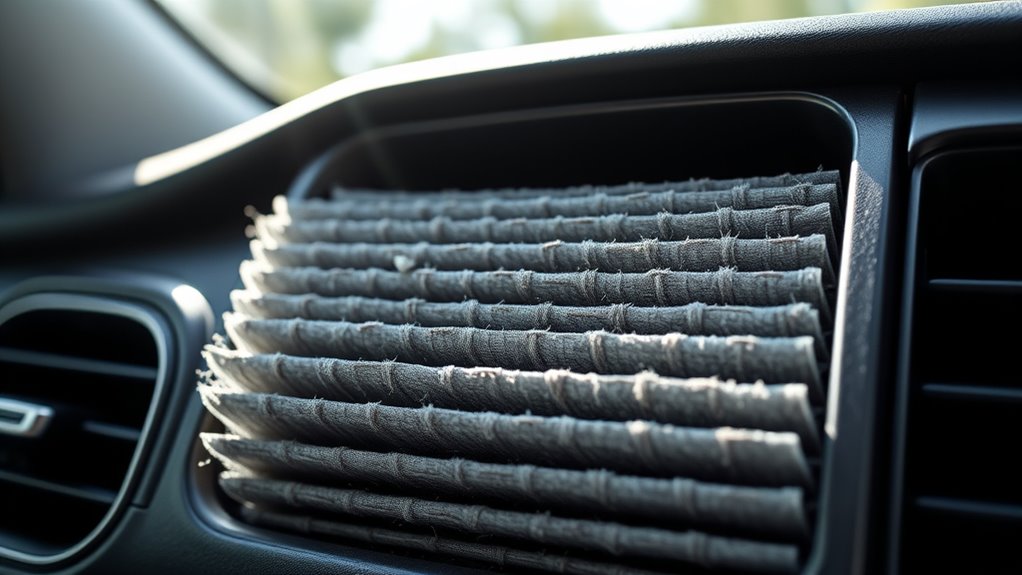
During the inspection, note if the filter looks clogged or dirty, which can restrict airflow and reduce your system’s efficiency. If you see heavy dirt or damage, it’s time to replace the filter.
A well-maintained filter improves air quality inside your car and helps prevent strain on your HVAC system. Establishing a regular inspection routine ensures your cabin air filter works properly and lasts longer.
Easy Tips to Extend Your Cabin Air Filter’s Life
Keeping your cabin air filter in good shape doesn’t have to be complicated. Regular maintenance tips can help extend its life and improve air quality inside your vehicle.
Start by checking your filter every few months, especially if you notice less airflow or smells. Keep windows closed during pollution or construction to stop dirt from getting in.
Avoid using your AC or heater on the highest setting unnecessarily, as this puts extra strain on the filter. Regularly cleaning or replacing the filter prevents dirt buildup and saves you money.
Environmental Factors That Impact Your Cabin Air Filter
Environmental factors like pollution, pollen, dust, and vehicle exhaust can significantly affect how well your cabin air filter works. When air quality is poor, it introduces more contaminants, making your filter work harder and possibly clog up faster.
Seasonal changes, like spring pollen or autumn leaves, can increase debris and allergens, putting extra stress on different types of filters. Your driving conditions also play a role—city traffic or dusty rural roads expose your filter to higher pollution levels.
The age of your vehicle and the type of filter it uses also matter. Older cars often have less efficient filters, and different materials respond differently to environmental stresses. Regular inspections and timely replacements are key to keeping the air inside your vehicle clean.
To maintain good air quality, consider these factors:
- Pollution levels in your area
- Seasonal variations affecting debris and allergens
- Whether you mostly drive in the city or rural areas
- The filter materials suited for your environment
- Your vehicle’s age and filter compatibility
When to Replace Your Cabin Air Filter Based on Mileage
Most car makers suggest changing your cabin air filter somewhere around every 12,000 to 15,000 miles. But of course, that can depend a lot on where and how you drive. If you’re often driving in heavy traffic or dusty areas, you might need to change it more often.
Keep an eye out for signs that your filter is getting clogged—like if the airflow feels weaker or if you notice any weird odors coming from the vents. Those are good clues it’s time for a swap. And hey, it’s always a smart idea to check your owner’s manual for the specific recommendations for your vehicle to keep the air inside fresh and clean.
Typical Replacement Mileage
Typically, your cabin air filter should be replaced every 15,000 to 30,000 miles, depending on driving conditions. Regularly sticking to this range is a simple way to keep the air inside your car fresh and clean.
If you drive in urban areas with heavy pollution or dusty environments, consider replacing it closer to 15,000 miles. For occasional or highway drivers, 30,000 miles might be enough.
Keep in mind that different types of cabin air filters—like paper, activated carbon, or HEPA filters—may have different lifespan expectations. To get the best performance, check your vehicle’s manual for specific recommendations.
Tracking your mileage helps you stay on top of replacements, making sure your system works efficiently and your cabin stays fresh.
Signs of Dirt Accumulation
Dirt buildup is a clear sign that your cabin air filter needs replacing. When dirt and debris accumulate, your filter’s ability to clean the air decreases, leading to poor air quality inside your vehicle.
If you notice a musty smell or increased dust on your dashboard, it’s a sign your filter isn’t performing effectively. Reduced airflow from the vents or difficulty maintaining airflow can also indicate dirt buildup.
Regular filter maintenance helps prevent these issues and keeps your HVAC system working efficiently. Keep an eye out for visible dirt or clogging, especially if you haven’t replaced your filter within the recommended mileage.
Addressing dirt accumulation promptly guarantees better air quality and prevents strain on your vehicle’s ventilation system.
Manufacturer Recommendations
Following your vehicle manufacturer’s recommendations is the best way to confirm your cabin air filter remains effective. Most automakers specify replacement intervals based on mileage, typically between 15,000 and 30,000 miles. Be aware that different filter materials, such as activated carbon or pleated paper, may influence these schedules.
Regularly reviewing your maintenance schedules helps maintain ideal air quality and system performance. Keep in mind:
- Check your owner’s manual for exact mileage guidelines
- Consider driving in dusty or polluted environments that may require more frequent replacements
- Replace filters sooner if you notice reduced airflow or odors
- Use manufacturer-approved filters for compatibility
- Follow recommended replacement timing to avoid strain on your HVAC system
Adhering to these recommendations keeps your cabin air fresh and maintains your vehicle’s air quality.
Choosing the Right Cabin Air Filter for Your Car
Choosing the right cabin air filter for your car is essential to keep the air inside clean and your HVAC system working well. You want to make sure the filter matches your vehicle’s make, model, and year.
Check your owner’s manual or ask your mechanic for the correct specifications. When looking at aftermarket filters, focus on quality and how well they filter out allergens and pollutants.
Not all filters are the same—some do a better job at removing irritants, while others are made for specific driving conditions. Pick a filter that fits properly and suits your needs, whether for standard filtration or better performance.
Avoid generic or ill-fitting filters, as they can hurt air quality and put extra strain on your system. Choosing the right filter helps ensure good airflow, cleaner cabin air, and a longer-lasting HVAC system.
DIY Cabin Air Filter Replacement: Step-by-Step Guide
Replacing your cabin air filter yourself is pretty simple and can save you both time and money. Keeping up with filter maintenance makes sure your car’s interior air stays fresh and clean. First, find the filter—it’s usually behind the glove box or under the dashboard.
Before taking out the old filter, check your vehicle’s manual for any specific instructions or tips.
Here are some key steps:
- Remove the glove box or panel to get to the filter compartment.
- Take out the old filter and note which way it was facing.
- Clean any dirt or dust from the area around the filter.
- Insert the new filter, making sure the airflow arrows are pointing the right way.
- Put everything back together and secure the panel or glove box.
Keep these tips in mind:
Handle the filters gently to avoid damaging them.
Make sure the new filter fits properly before closing everything up.
Use a clean cloth when handling new filters.
Follow the manufacturer’s recommendations on the right filter type.
Regularly check for dirt or clogs to keep your system working well.
When to Consult a Professional for Cabin Air Filter Changes
While changing your cabin air filter is usually straightforward, there are times when it’s better to get professional help. If persistent odors stick around even after replacing the filter, it’s a good idea to have a mechanic take a look.
A professional can identify issues like mold or bacteria buildup that might be missed during a DIY job. If your vehicle’s manual recommends more thorough inspections or replacements at certain intervals, trusting a pro ensures it’s done right.
Signs like reduced airflow or strange noises during filter operation also mean you should seek expert advice. A trained technician can tell if the filter is clogged or if other parts need attention.
Reduced airflow or odd noises indicate it’s time to consult a professional technician.
Getting regular professional maintenance not only helps your filter last longer but also keeps the air inside your vehicle fresh and safe. When you’re unsure, scheduling a filter check with a professional is a smart move to keep your car’s ventilation system working properly.
Frequently Asked Questions
Can Using the AC or Heater Affect Cabin Air Filter Lifespan?
Using the AC or heater can affect your cabin air filter’s lifespan because they circulate air through it. Regular filter maintenance is even more important if you drive in areas with high pollution or pollen, as climate conditions can cause the filter to clog faster.
Turning on the fan without the AC or heater can also help extend the filter’s life by reducing unnecessary strain and buildup. This simple step can make a big difference in keeping your filter clean longer.
How Does Traveling in Urban vs. Rural Areas Impact Filter Replacement?
Traveling in urban areas exposes your cabin air filter to more pollution, so you should replace it more often. The higher concentration of vehicle emissions and city pollutants can clog the filter faster.
In rural regions, dust from dirt roads and open fields builds up on the filter, but typically at a slower pace. Still, it’s a good idea to check it regularly.
Keep an eye on your filter’s condition, especially if you notice reduced airflow or strange odors inside the vehicle. Adjust your replacement schedule based on your driving environment to keep your cabin air fresh and clean.
Are There Specific Cabin Air Filters for Allergy Sufferers?
A stitch in time saves nine, especially when it comes to allergy relief. Yes, there are pollen filters made specifically for allergy sufferers that can help improve your air quality.
These filters trap more allergens like pollen and dust, making them more effective. If you have allergies, choosing specialized filters can keep the air inside your car cleaner.
This means you can breathe easier on every ride and feel more comfortable.
Does Air Pollution Level Influence How Often I Should Replace the Filter?
Yes, air pollution levels do influence how often you should replace your cabin air filter. When air quality is poor, pollutants like dust, smog, and pollen build up faster.
So, you might need to replace your filter more often. Keep an eye on local air quality reports, and if pollution is high, check and replace your filter sooner.
This helps ensure you’re breathing cleaner air inside your vehicle. Regular maintenance is key to keeping the air quality inside your car at a good level.
Can a Dirty Cabin Air Filter Affect Your Vehicle’s HVAC System?
A dirty cabin air filter can really affect how well your vehicle’s HVAC system works. When it gets clogged, airflow drops, and your system has to work harder just to keep things running.
This extra effort can lead to less effective heating, cooling, and air quality inside your car. Regularly changing or cleaning the filter helps your HVAC system run smoothly and keeps the air fresh.
It also prevents unnecessary strain on other parts, which can help extend your vehicle’s lifespan. Keeping up with filter maintenance is a simple way to ensure your cabin stays comfortable and your system stays healthy.
Conclusion
Replacing your cabin air filter might seem like a small task, but ignoring it can lead to poor air quality and costly repairs. Think of it as a refreshing change for your car’s interior—necessary but often overlooked.
Just like regular maintenance keeps your engine running smoothly, timely filter changes ensure your comfort and health.
Don’t wait for a musty smell or foggy windows to remind you. Stay proactive and replace your cabin air filter on schedule to keep the air inside your car fresh and clean.