How to Fix Spark Plugs: Easy Steps to Boost Engine Performance
Struggling with engine performance or wondering why your car isn’t running as smoothly as it used to? You’re not alone—many people find fixing spark plugs confusing or intimidating.
But don’t worry, it’s easier than you think to get your engine back in top shape.
To fix your spark plugs and boost engine performance, start by inspecting them for wear, deposits, or damage. Verify the engine is cool, then carefully remove the old plugs with a spark plug socket.
Clean or replace them if needed, checking the electrode gap and applying anti-seize for easy future removal. Install the new plugs to the proper torque to prevent issues.
Want to learn more about preventing common mistakes and choosing the right plugs? Keep going!
Key Takeaways
- Regularly check your spark plugs for wear, deposits, or damage to keep your engine running smoothly.
- Use the right tools, like a spark plug socket and torque wrench, when removing and installing them.
- Clean or replace worn or damaged plugs to ensure proper combustion and better fuel efficiency.
- Make sure to check and adjust the spark plug gaps to match your vehicle’s specifications for reliable ignition.
- Be careful not to over-tighten or skip using anti-seize, as these mistakes can damage the plugs or your engine.
Signs Your Spark Plugs Need Cleaning or Replacing
Spark plugs are essential for your engine’s performance, and they often give warning signs when they need attention. Knowing the typical spark plug lifespan helps you stay alert to early issues.
If your engine misfires, idles roughly, or struggles to start, these are clear signs that your spark plugs might be worn out or dirty. You may also notice decreased fuel efficiency or rough acceleration, which signal it’s time to check your spark plugs.
A buildup of deposits or corrosion on the electrodes can hinder spark quality and reduce overall engine performance. Regularly inspecting your spark plugs’ condition can help prevent more serious engine problems later.
If your spark plugs are past their recommended lifespan or show signs of wear, replacing them promptly is key to keeping your engine running smoothly. Paying attention to these signs helps you catch issues early and maintain peak vehicle performance.
Why Are Spark Plugs Essential for Your Engine?
Your spark plugs are pretty important because they’re the ones igniting the fuel-air mixture inside your engine. This small spark is what helps everything run smoothly and efficiently. Without spark plugs doing their job, your engine wouldn’t be able to produce the power needed to move your vehicle.
That’s why it’s really important to keep your spark plugs in good shape. When they’re working well, your engine performs better, runs more smoothly, and can even save you some fuel. So, taking care of your spark plugs isn’t just about maintenance — it’s about keeping your car running at its best.
Spark Plugs Ignite Combustion
Ignition is the critical step that starts the engine’s operation, and spark plugs play a key role in this process. They create the spark needed to ignite the air-fuel mixture in each cylinder at just the right moment, which is determined by ignition timing.
Proper timing guarantees efficient combustion, maximizing power and fuel efficiency. When your spark plugs generate a strong, consistent spark, they ensure the engine runs smoothly and responds quickly.
If the spark is weak or delayed, combustion becomes inefficient, leading to increased fuel consumption and sluggish performance. Regularly inspecting and maintaining your spark plugs helps keep ignition timing precise, which is essential for peak fuel efficiency and overall engine health.
Without properly functioning spark plugs, your engine simply can’t perform at its best.
Engine Performance Dependence
Because they create the spark that ignites the air-fuel mixture, spark plugs are essential for keeping your engine running smoothly. Without properly working spark plugs, your engine might misfire, lose power, or even stall, which can shorten its lifespan.
When spark plugs work well, they help ensure smooth combustion, making your engine more efficient. This is especially important for performance tuning, as good spark plug operation helps you get the most power and fuel economy out of your vehicle.
If you neglect spark plug maintenance, it can cause extra wear on other engine parts and reduce your engine’s overall lifespan. Keeping your spark plugs in good shape helps maintain consistent performance and prolongs your engine’s durability, making them a key part of your vehicle’s health.
What Tools and Materials Do You Need?
To get started on fixing your spark plugs, you’ll need a few essential tools and materials. First, identify your vehicle’s spark plug types, since different engines may require specific replacements. Common options include copper, platinum, and iridium, so make sure you choose the right ones for your car.
For tools, gather a socket wrench with a spark plug socket that fits snugly around the plugs. You’ll also want a torque wrench to tighten the new plugs properly and prevent damage. A ratchet extension can help reach tight spaces easily.
A wire brush or spark plug cleaner is useful for removing deposits. Don’t forget anti-seize compound to prevent future seizing and dielectric grease to protect against moisture. These tools and materials make the process smoother and ensure your spark plugs are installed correctly, boosting your engine’s performance and longevity.
How to Inspect Your Spark Plugs for Wear and Damage?
Before installing new spark plugs, it’s important to check your current ones for wear or damage. First, identify the type of spark plugs in your engine, like traditional, iridium, or platinum, since inspection methods can vary a bit.
Carefully remove the spark plugs and examine the electrode tips. Look for signs like heavy carbon buildup, which looks like black soot, or oil fouling, which appears greasy. Worn electrodes might look rounded or eroded.
Also, check the ceramic insulator for cracks or chips, as these are signs of damage. Don’t forget to inspect the spark plug gaps; if they’re too wide or narrow, it can cause misfires.
Use a spark plug socket and a gap gauge to measure and adjust the gaps if necessary. Proper inspection helps catch wear or damage early, preventing poor engine performance and costly repairs later on.
Step-by-Step: Removing Old Spark Plugs
Start by making sure the engine is cool to avoid burns and make the removal safer. Once it’s cooled down, find the spark plugs—usually on top of the engine, connected by wires or coils.
Before you start, gather the right tools like a spark plug socket, ratchet, and extensions. Remember, spark plug types can vary—some have different sizes or ceramic insulators—so check your vehicle’s manual for details.
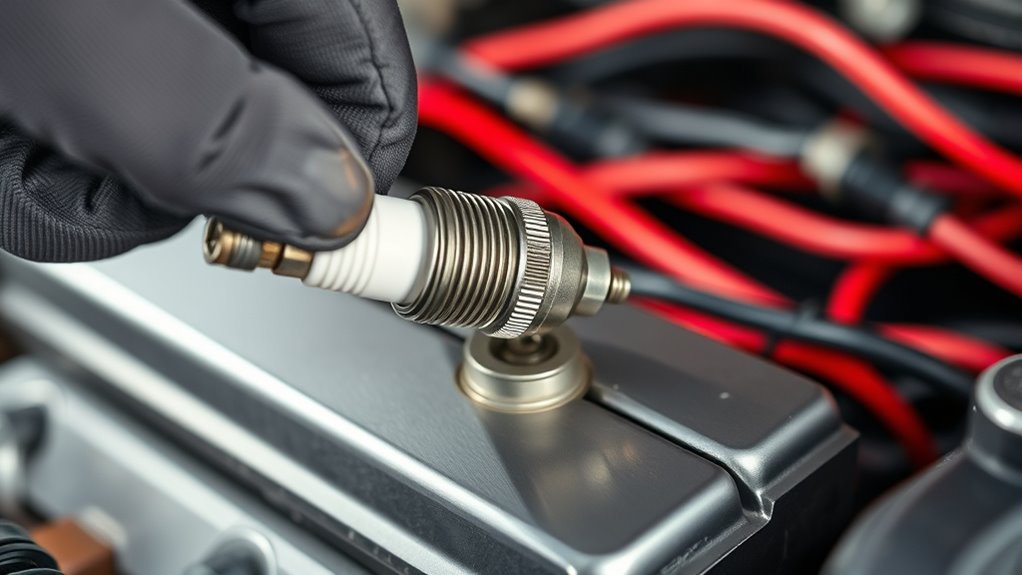
To remove the old spark plugs, carefully detach the ignition wires or coils from each plug. Fit the spark plug socket onto the ratchet and grip the plug firmly.
Turn counterclockwise to unscrew it, applying steady pressure. Keep track of each plug’s position to ensure correct installation later.
Gently lift the old spark plug out, taking care not to damage surrounding parts.
These steps help you remove the spark plugs safely and set the stage for proper installation.
How to Clean Spark Plugs for Better Performance
Want your engine to run smoother and more efficiently? Cleaning your spark plugs is a great place to start! First off, gather all the cleaning supplies you’ll need—things like a wire brush, a spark plug socket, and maybe some carburetor cleaner or a special spark plug cleaner.
Once you’ve got everything ready, carefully remove the spark plugs from your engine. Take your time and handle them gently—you don’t want to cause any damage. After they’re out, use your tools to clean off any dirt or carbon buildup. Give them a good inspection too; cleaning them not only boosts performance but also helps you spot any signs of wear or damage early on.
Gather Necessary Cleaning Supplies
Gathering the right cleaning supplies is essential to effectively restore your spark plugs’ performance. Proper supplies ensure you can perform spark plug maintenance efficiently and use the best cleaning methods.
You’ll want to have these items ready: a wire brush or spark plug cleaning brush, carburetor or brake cleaner spray, a small bowl or container for soaking, a lint-free cloth or rag, and protective gloves and safety goggles.
These supplies help remove carbon deposits and grime, which improves your spark plugs’ efficiency. Using proper cleaning techniques with these tools prevents damage and keeps your engine running at its best.
Be sure to work in a well-ventilated area and handle chemicals carefully. With the right supplies, spark plug maintenance becomes quick, safe, and effective.
Remove Spark Plugs Carefully
Carefully removing your spark plugs is key to avoiding damage and making sure they get a good cleaning.
Before you start, identify your spark plug types—copper, platinum, or iridium—as each needs slightly different handling.
Use a proper socket wrench to gently loosen the spark plug.
Avoid using too much force that could strip the threads or cause damage.
Be careful not to drop the plugs, since impact can harm the electrodes.
Work in a clean area, keep track of the firing order, and handle each plug gently.
Taking your time during removal helps prevent costly mistakes.
It also allows you to inspect the plugs later for signs of wear or damage.
Getting the removal right is a crucial first step toward better engine performance.
Clean and Inspect Properly
Cleaning and inspecting your spark plugs thoroughly can really boost your engine’s performance. First, identify your spark plug type—copper, platinum, or iridium—as each needs different cleaning methods.
Use a wire brush or abrasive pad to remove carbon deposits and dirt, making sure the electrodes stay clean. Check for signs of wear like erosion or cracks, which mean it’s time to replace.
Be careful with the porcelain insulator and avoid damaging it. Follow these tips for effective cleaning: remove deposits without scratching the ceramic, use a spark plug cleaner or gentle wire brush, and inspect the electrode gap with a feeler gauge.
Look for corrosion or damage, and replace the spark plug if you see signs of wear. Proper cleaning and inspection help optimize spark plug performance and last longer.
When and How to Replace Spark Plugs
Knowing when to replace your spark plugs is key to keeping your engine running smoothly. Usually, spark plugs last between 30,000 to 100,000 miles, but this depends on your car and how you drive.
Check your owner’s manual for recommended maintenance intervals, but also watch for signs like misfires, rough idling, or worse fuel economy.
If your spark plugs look worn—heavy carbon buildup, damaged electrodes, or other damage—it’s time to change them. Always verify the engine is cool before starting.
Carefully remove the spark plug wires or coils, then use a spark plug socket and ratchet to turn counterclockwise and take out the old plugs.
Check the gap on your new spark plugs and install them by hand first. Tighten them with a torque wrench to avoid damaging the threads.
Getting the installation right ensures your engine performs at its best and prevents any damage. Regular replacements help your engine stay smooth and efficient.
Choosing the Right Spark Plugs for Your Vehicle
Choosing the right spark plugs for your vehicle really comes down to what your engine needs. It’s not just about picking any plug off the shelf — you want to make sure it’s compatible with your car and suits its specific requirements.
There are different types of spark plugs out there, and each one offers something a little different. The materials they’re made from can impact how well they perform and how long they last. So, it pays to do a bit of homework before making your pick.
Compatibility With Engine
Selecting the right spark plugs for your vehicle is essential to guarantee peak engine performance and fuel efficiency. To do this, you need to confirm spark plug compatibility with your engine. Check your vehicle’s manual or manufacturer specifications for engine type compatibility, which influences the size, heat range, and electrode design needed.
Consider these factors:
- Engine type (gasoline, diesel, hybrid)
- Spark plug size and thread type
- Heat range suited for your engine
- Electrode material compatibility
- Manufacturer recommendations
Matching these elements confirms your spark plugs fit correctly and operate efficiently. Proper compatibility prevents misfires, improves fuel economy, and extends spark plug life. Always verify details before purchasing to keep your engine running smoothly.
Types of Spark Plugs
Understanding the different types of spark plugs available is key to finding the best fit for your vehicle. Platinum spark plugs offer longevity and smooth performance, while iridium spark plugs provide even better durability and efficiency.
Copper core plugs deliver excellent conductivity and quick starts but wear faster. Double platinum spark plugs feature platinum on both electrodes, extending lifespan and performance, making them ideal for daily drivers.
High-performance plugs and racing spark plugs are designed for improved power and response in demanding conditions. When choosing, consider cold versus hot spark plugs—colder plugs prevent knocking in high-compression engines, while hotter plugs ensure reliable ignition in low-demand engines.
Electrode configurations, such as fine-wire or multiple electrodes, also influence spark efficiency and combustion. Pick the right type based on your vehicle’s needs and driving style.
Material Selection Factors
In choosing the right spark plugs for your vehicle, considering material factors is really important because different materials bring various benefits like durability, performance, and efficiency.
You should look at aspects like material durability and heat resistance to handle high temperatures. Good conductivity efficiency is also key for better spark delivery.
Electrode design influences ignition consistency, so keep that in mind. Resistance to corrosion helps prolong the lifespan of your spark plugs.
Ease of installation and cost are practical factors to consider for convenience and budget.
Picking the right material ensures better performance, longer lifespan, and fewer replacements. Options like platinum or iridium offer superior durability and heat resistance.
Cheaper copper plugs might provide better initial conductivity but tend to wear out faster.
Focusing on these factors helps you choose spark plugs that deliver great performance and value for your money.
Common Mistakes to Avoid When Fixing Spark Plugs
When fixing spark plugs, it’s easy to make mistakes that can cause engine problems or even damage your vehicle. One common mistake is falling for spark plug myths, like thinking that more torque always means better performance. Over-tightening can crack the ceramic insulator or damage the threads, leading to costly repairs.
On the other hand, under-tightening might cause poor contact and misfires. Installation errors are also common; forgetting to apply anti-seize or not torquing the plugs properly can result in loose connections or seized plugs in the cylinder head. Always follow the manufacturer’s specs for torque and check the spark plug gap before installing.
Rushing the job or skipping a close inspection of the old plugs can cause issues too. Avoid these mistakes by understanding the facts, using the right tools, and double-checking your work. This way, you can make sure your spark plugs are installed correctly and safely.
Troubleshooting Engine Problems After Spark Plug Maintenance
After replacing your spark plugs, engine problems like rough idling, misfires, or reduced power can still happen if something wasn’t done correctly. To troubleshoot, start by diagnosing misfires—check for loose wires, improper spark plug gaps, or damaged ignition coils.
Inspect the spark plugs for fouling or wear, which can cause poor combustion. Then, assess fuel efficiency; if it drops, there might be an issue with fuel delivery or air intake.
Listen for irregular engine noises or vibrations that could point to misfiring. Also, verify that the ignition timing is correct and all connections are secure. Finally, use an OBD-II scanner to identify any error codes related to misfires or their causes.
Frequently Asked Questions
How Often Should I Replace My Spark Plugs?
You should replace your spark plugs every 30,000 to 50,000 miles, but check your vehicle’s manual for specific recommendations.
Spark plug lifespan varies depending on the type and driving conditions. Regular replacement ensures proper ignition timing, keeping your engine running smoothly and improving fuel efficiency.
If you notice misfires or difficulty starting, it’s time to inspect and replace your spark plugs to maintain peak engine performance.
Can I Change Spark Plugs Myself Without Professional Help?
Yes, you can change spark plugs yourself with the right tools and tips. Just make sure you have a spark plug socket, ratchet, and maybe a torque wrench.
Follow clear instructions and disconnect the battery carefully. Work in a well-lit area so you can see what you’re doing.
Take your time to avoid cross-threading and double-check your work afterward. Doing it yourself saves money and gives you a real sense of accomplishment.
What Are the Signs of a Faulty Ignition System?
If your vehicle struggles to start, stalls unexpectedly, or experiences misfires, you’re likely facing ignition issues. You might also notice reduced fuel efficiency, rough idling, or difficulty accelerating.
These signs often point to electrical faults within the ignition system. Ignition problems can cause inconsistent spark delivery, which leads to engine performance issues.
Addressing these symptoms promptly helps prevent further damage and ensures your engine runs smoothly. So, don’t ignore these warning signs—they’re trying to tell you something.
How Do I Choose the Best Spark Plugs for My Vehicle?
Choosing the best spark plugs for your vehicle isn’t just guesswork; it’s about precision. You need to consider spark plug types—copper, platinum, or iridium—and how well they match your engine.
Pay close attention to the heat range, which tells you how hot or cold the plug runs. Picking the right one makes a big difference in your vehicle’s performance.
The perfect combination ensures peak performance, better fuel efficiency, and longer-lasting plugs. Don’t settle for less—your engine’s secrets are waiting to be revealed.
Are There Specific Spark Plug Brands Recommended for My Car?
Yes, certain spark plug brands are recommended for your car. Look for brands that offer high-quality spark plug types suited for your engine, like iridium or platinum, which use durable spark plug materials.
Brands like NGK, Bosch, and Denso are reliable options, providing excellent performance and longevity. Always check your vehicle’s manual for specific spark plug types and materials to verify compatibility and peak engine performance.
Conclusion
Keeping your spark plugs in top shape isn’t just about engine performance. It’s also about preventing unexpected breakdowns.
When you inspect, clean, or replace them, you’re catching issues early. That can save you money and hassle down the road.
Sometimes, a simple spark plug fix is all it takes to keep your engine running smoothly, especially when you need it most.
Stay proactive with your spark plugs, and your car will thank you with reliable, efficient performance.