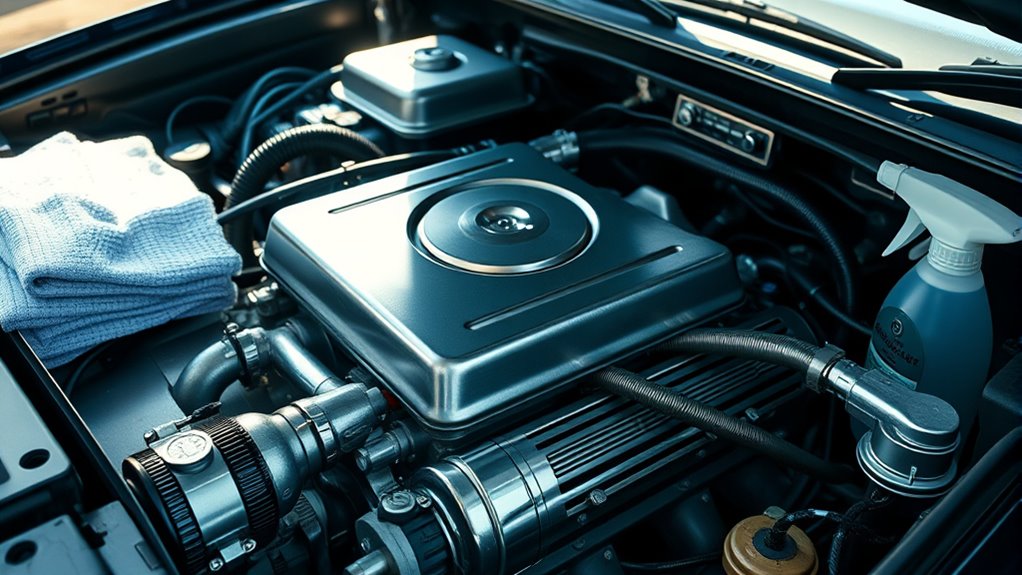
Ultimate Guide: How to Clean Engine Bay Without Water for Vehicle Longevity
Many car owners struggle with keeping their engine bay clean without risking damage to electrical components. You’re not alone—water can sometimes cause more harm than good.
Luckily, there’s a safe and effective way to make your engine look great and stay protected.
Cleaning your engine bay without water is a safe, effective way to protect electrical components and extend your vehicle’s lifespan. Start by preparing your car in a shaded area and covering sensitive parts with plastic.
Use specialized waterless cleaners, microfiber towels, and compressed air to remove dirt and grease. Be gentle around electrical parts, dry thoroughly, and finish with a polish for a sleek look.
Keep your engine spotless by following these steps—more helpful tips await you.
Key Takeaways
- Use waterless engine cleaners and degreasers made for electrical parts to safely remove grime without using water.
- Start by cooling down the engine, then cover electrical components and remove loose dirt with compressed air or brushes.
- Spray the cleaner evenly over the engine, let it sit for a few minutes, then wipe away dirt with microfiber towels or soft brushes.
- Dry everything thoroughly with microfiber towels and compressed air, making sure to remove moisture from tight spots.
- Protect electrical parts with dedicated contact cleaners and cover sensitive areas to avoid damage during cleaning.
Why Cleaning Your Engine Bay Without Water Is Beneficial
Cleaning your engine bay without water offers several advantages, especially for protecting your vehicle’s electrical components and sensitive parts. Water can cause corrosion, short circuits, or damage to delicate wiring and sensors, which could harm your engine.
By avoiding water, you reduce these risks and help keep your electrical systems working properly. Waterless cleaning methods also cut down on rust and corrosion, which can shorten your engine’s lifespan.
Plus, this approach is quicker and less messy. It allows you to target grime and grease efficiently without waiting for everything to dry. It’s especially helpful if you’re working in tight spaces or around delicate wiring where water might seep in.
Essential Tools and Products for Waterless Engine Bay Cleaning
To effectively clean your engine bay without water, you’ll need the right tools and products designed specifically for dry or waterless methods. Start with quality cleaning chemicals formulated for engine maintenance; these help loosen grime without rinsing.
Use specialized waterless cleaners and quality tools for safe, effective engine bay maintenance without rinsing.
Microfiber towels or soft detailing brushes are essential for gentle scrubbing and wiping away dirt without scratching delicate surfaces. An air blower or compressed air can remove dust from tight spots, ensuring a thorough clean.
You might also consider spray-on degreasers that break down grease and grime quickly, making wiping easier. A detailer’s clay or clay mitt can help remove stubborn contaminants from painted surfaces.
Always choose eco-friendly, non-corrosive cleaning chemicals to protect engine components. With these tools and products, you can efficiently maintain your engine bay and prolong its lifespan.
Proper use of these essentials ensures a clean, well-maintained engine without risking damage to your vehicle’s parts.
How to Prepare Your Vehicle Safely for Waterless Cleaning
Ever wondered how to guarantee your vehicle is fully prepared before starting a waterless cleaning process? Proper vehicle preparation is key to confirming engine safety and avoiding damage during cleaning.
Start by parking your car in a shaded, well-ventilated area to prevent rapid drying and streaks. Turn off the engine and let it cool completely. Hot components can cause cleaning products to evaporate quickly or damage sensitive parts.
Next, cover any electrical components, like the alternator or exposed wiring, with plastic bags to prevent moisture from getting in. Remove loose debris and dirt from the engine bay using a brush or compressed air. This helps prevent scratching during wiping.
Finally, make sure all surfaces are dry and free of loose dirt. Good preparation creates a solid foundation for a safe, effective waterless engine bay cleaning, protecting your engine’s integrity while leaving it spotless.
Step-by-Step: How to Clean Your Engine Bay Without Water
With your vehicle properly prepared, it’s time to start cleaning. Begin by spraying a high-quality degreaser or engine cleaner that’s suitable for waterless methods. Cover the engine bay evenly, focusing on greasy, oily, or dirty spots. Let it sit for a few minutes to loosen stubborn grime.
Next, use a microfiber cloth or soft brush to gently wipe down all surfaces. Be careful to avoid scratching, especially on delicate parts. Pay attention to hard-to-reach spots to make your engine look its best.
After wiping, use compressed air or a clean microfiber cloth to remove any leftover product and dirt. Regular cleaning helps keep your engine looking sharp and prevents buildup that could impact performance.
Tips for Removing Tough Dirt and Grease Stains
Tackling tough dirt and grease stains takes a little more effort, but with the right steps, you can get your engine bay looking clean again. For stubborn stains, use a degreasing cleaner made specifically for engine parts.
Spray the cleaner directly on the stain and let it sit for a few minutes to loosen the grease. Then, gently scrub with a soft brush or microfiber cloth, focusing on areas with heavy buildup.
Here’s a quick guide to help you out:
| Step | Tip |
|---|---|
| Apply degreaser | Use a dedicated engine degreaser for stubborn stains |
| Let sit | Wait 3-5 minutes to break down the grease |
| Scrub lightly | Gently scrub with a soft brush or cloth to lift dirt |
| Wipe clean | Use a dry microfiber cloth to remove residue |
| Repeat if necessary | For tough stains, repeat the process |
This method ensures you remove grease effectively without damaging your engine parts.
How to Protect Sensitive Components During Waterless Cleaning
After removing dirt and grease, protecting your vehicle’s sensitive components becomes a key step in waterless cleaning. Sensitive parts like electrical connections, sensors, and exposed wiring can be damaged if not handled properly or if overspray occurs.
To prevent this, take protective measures such as covering these areas with plastic or rubber caps, or use painter’s tape to shield vulnerable parts. Be careful with sprays; aim them precisely and avoid saturating delicate components.
Using a microfiber cloth or detailing brush helps you control application, reducing the risk of moisture getting where it shouldn’t go. Keep a close eye on areas like the alternator, fuse box, and electronic modules to make sure they stay dry.
Proper Drying and Finishing Techniques for a Spotless Engine Bay
After you’ve finished cleaning your engine bay, it’s really important to dry everything thoroughly. This helps prevent water spots and keeps rust and corrosion at bay. You might want to use compressed air to blow out any moisture in those tricky, hard-to-reach spots, or grab a microfiber cloth to gently wipe everything down.
Once it’s dry, a light polish can do wonders. It not only boosts the shine but also adds a layer of protection to the surfaces. That way, your engine bay looks spotless and professional, just like it’s been detailed by the pros.
Effective Drying Methods
To achieve a spotless engine bay after cleaning without water, proper drying techniques are essential. Focus on removing moisture efficiently while avoiding streaks or corrosion.
Use high-quality microfiber towels to absorb any residual water, ensuring a thorough dry. Improving air circulation is key—open the hood and use a blower or compressed air to reach tight spots and vents.
This step helps evaporate remaining moisture quickly and effectively. Consider these drying methods: use microfiber towels first, then employ compressed air or a blower for hard-to-reach areas.
Keeping the engine bay open boosts air circulation, speeding up the drying process. You can also use a fan or portable heater to help speed things up.
Finally, wipe surfaces in a consistent, sweeping motion. These techniques help keep your engine bay clean, dry, and looking spotless for longer.
Final Polishing Techniques
Achieving a flawless finish in your engine bay depends on proper drying and polishing techniques. These steps boost its appearance and help protect delicate parts.
The final touches involve carefully applying a surface polish to enhance the shine and ensure a spotless look. Use a microfiber cloth to gently buff the engine bay, removing any remaining streaks or residue.
Here’s a simple table to visualize the process:
| Step | Action | Result |
|---|---|---|
| 1 | Use a clean microfiber cloth | Removes dust and smudges |
| 2 | Apply a light coat of engine polish | Boosts shine and protection |
| 3 | Buff with a dry cloth | Achieves a smooth, glossy surface |
Following these final polishing techniques gives your engine bay a professional, spotless look while protecting its components.
Common Mistakes to Avoid When Cleaning Without Water
Be careful not to use too much degreaser, because it can leave behind residues that end up attracting dirt later on. Also, don’t forget about electrical components—moisture or harsh chemicals can really do some damage. And when you’re drying, take your time. Rushing it can leave spots or moisture behind, which might cause corrosion down the line.
Using Excessive Degreasers
Using too much degreaser can do more harm than good if you’re not careful. Overapplying leaves behind excess residue that’s hard to remove and can attract dirt.
It also increases the risk of chemical damage to sensitive parts. Applying too much might seem like it works better, but it can cause buildup that’s sticky and grimy.
This buildup makes cleaning more difficult and can lead to engine parts sticking together. Plus, the chemicals can seep into places you don’t want them to reach, risking corrosion or damage.
Be mindful of these common mistakes: using more product than needed, relying only on chemical cleaners, ignoring instructions on the label, neglecting to wipe off residue thoroughly, and not testing on small areas first.
Avoid these pitfalls for a safer, cleaner engine bay.
Neglecting Electrical Components
Electrical components are especially vulnerable during a waterless engine bay cleaning, so you need to be careful not to neglect them. Failing to protect sensitive parts can lead to electrical safety hazards or damage to your vehicle’s electronics.
Use a dedicated electrical contact cleaner and avoid spraying directly onto wiring harnesses, sensors, or connectors. Instead, gently wipe these areas with a soft cloth or a brush designed for electrical components.
Cover exposed electrical parts with protective covers or plastic bags when cleaning nearby surfaces. Remember, component protection is key to maintaining your vehicle’s functionality.
Never use high-pressure air or aggressive cleaning tools near electrical elements, as these can force debris or moisture into delicate areas. Safeguarding electrical components guarantees a safe, effective, water-free cleaning process.
Rushing the Drying Process
Rushing the drying process might seem like a quick fix, but it can cause problems later, like corrosion or electrical issues. Proper drying techniques are key for a thorough engine bay cleaning.
Avoid hurrying through it or skipping steps, especially when it comes to air circulation. Good airflow helps water evaporate faster and more completely.
Here are some common mistakes to watch out for:
- Using compressed air too forcefully, which can damage parts
- Relying only on towels or rags without airflow to help dry
- Overlooking hidden crevices where moisture can hide
- Not using fans or air blowers to boost air circulation
- Waiting too short a time for natural drying
Taking your time ensures no moisture is left behind, helping your vehicle last longer.
Maintaining Your Engine Bay to Keep It Clean Longer
To keep your engine bay looking clean longer, regular maintenance is essential. Consistent upkeep helps prevent dirt and grime buildup, making future cleanings easier.
Start by inspecting the engine bay periodically for leaks, corrosion, or debris. Use a soft brush or microfiber cloth to remove loose dust and dirt, avoiding harsh scrubbing that could damage components.
Applying a protective spray or engine bay dressing can also help repel dust and moisture, keeping it cleaner longer. Keep hoses, wires, and connectors free of grime to prevent deterioration.
Remember, a tidy engine bay not only looks better but also helps you spot potential issues early. Regular cleaning and protection reduce the need for deep cleanings and help maintain its appearance.
Incorporating these simple steps into your routine guarantees your engine stays cleaner longer and supports overall vehicle health.
Troubleshooting Waterless Engine Bay Cleaning Problems
Having trouble with waterless engine bay cleaning? Sometimes you might see stubborn dirt or streaks left behind. Don’t worry—these problems usually have easy fixes, like tweaking how you clean or choosing the right products. Let’s take a look at some common issues and how you can fix them effortlessly.
Common Waterless Cleaning Issues
While waterless engine bay cleaning offers many advantages, you might run into some common issues that can affect your results. One problem is leftover degreaser residue, which can attract dirt if you don’t wipe it away thoroughly.
Another issue is forgetting to protect electrical parts, risking damage to sensitive components. You might also have trouble with uneven cleaning, leaving greasy spots behind. Insufficient agitation can leave stubborn grime, and using too much product might cause overspray or waste.
To avoid these problems, make sure to wipe thoroughly to remove degreaser residue. Protect electrical parts properly and use the right amount of cleaner. Pay attention to even application and proper technique to get a spotless engine bay.
Being aware of these common issues helps ensure a safe, effective, and long-lasting clean.
Solutions for Persistent Problems
Persistent problems during waterless engine bay cleaning often come from overlooked details or improper techniques. If you notice lingering engine odors, try focusing on thorough odor elimination with specialized degreasers made for this purpose.
To tackle stubborn grease buildup, apply a grease removal solution directly to the affected areas. Let it sit for a bit so it can break down grime before wiping it away.
Make sure you’re using the right tools, like microfiber cloths, to avoid scratching surfaces and trapping dirt. If odors stick around, consider repeating the cleaning process or using an odor-neutralizing product.
For persistent grease, reapply the solutions and give them some time to work. Proper technique and targeted products are key to keeping your engine bay clean, odor-free, and free of grease.
Frequently Asked Questions
Can Waterless Cleaning Damage Any Engine Components?
Waterless cleaning, when done correctly, generally won’t damage your engine components if you follow proper engine safety and detailing techniques. You avoid the risks of water intrusion that could harm sensitive parts or cause corrosion.
How Often Should I Clean My Engine Bay Using Waterless Methods?
You should clean your engine bay with waterless methods every 3 to 6 months, depending on your driving conditions. Regular cleaning helps prevent dirt buildup and keeps your components working smoothly.
If you notice excessive grease or grime, it’s a good idea to clean more often. Consistent maintenance not only keeps your engine looking good but also helps extend its lifespan.
Regular cleaning reduces corrosion and ensures your engine performs at its best. So, keep an eye on the dirt and grime, and clean accordingly to keep everything running smoothly.
Are Waterless Cleaning Products Environmentally Friendly?
Waterless cleaning products can be eco-friendly options if they contain biodegradable ingredients and avoid harsh chemicals.
When comparing products, look for eco-friendly options rated by environmental organizations and review product comparisons to find safer choices.
You can reduce your environmental impact by selecting biodegradable, non-toxic formulas, ensuring your engine bay stays clean without harming the planet.
Always check labels to confirm the eco-friendly credentials before purchasing.
What Are Signs That My Engine Bay Needs Cleaning?
You notice dirt, grease, and grime buildup. You also see oil leaks and smell burnt or musty odors—that’s when your engine bay needs cleaning.
These signs mean neglect in engine maintenance and show it’s time to use effective cleaning techniques. Regularly checking for these cues helps prevent corrosion and keeps your engine running smoothly.
Addressing dirt and leaks early ensures peak performance and helps prolong your vehicle’s lifespan. Staying on top of these signs makes a big difference for your engine’s health.
Can Waterless Cleaning Remove Oil Leaks or Just Dirt?
Waterless cleaning mainly removes dirt and grime, but it isn’t designed to eliminate oil residue or leaks.
For oil leaks, you need specific cleaning techniques like applying degreasers and carefully wiping away the oil, making sure you don’t spread it further.
Waterless methods are great for routine maintenance and dirt removal, but stubborn oil leaks need targeted solutions to clean effectively and prevent damage.
Conclusion
Just as a skilled artist preserves the integrity of a masterpiece with careful touch, maintaining your engine bay without water safeguards its longevity and performance.
By mastering these waterless cleaning techniques, you guarantee your vehicle remains as resilient as a timeless sculpture—beautiful and enduring.
Adopt these practices, and your engine bay will stay pristine, echoing the wisdom of ancient artisans who knew the value of gentle, deliberate care.
Keep it clean, keep it lasting with waterless engine bay cleaning.