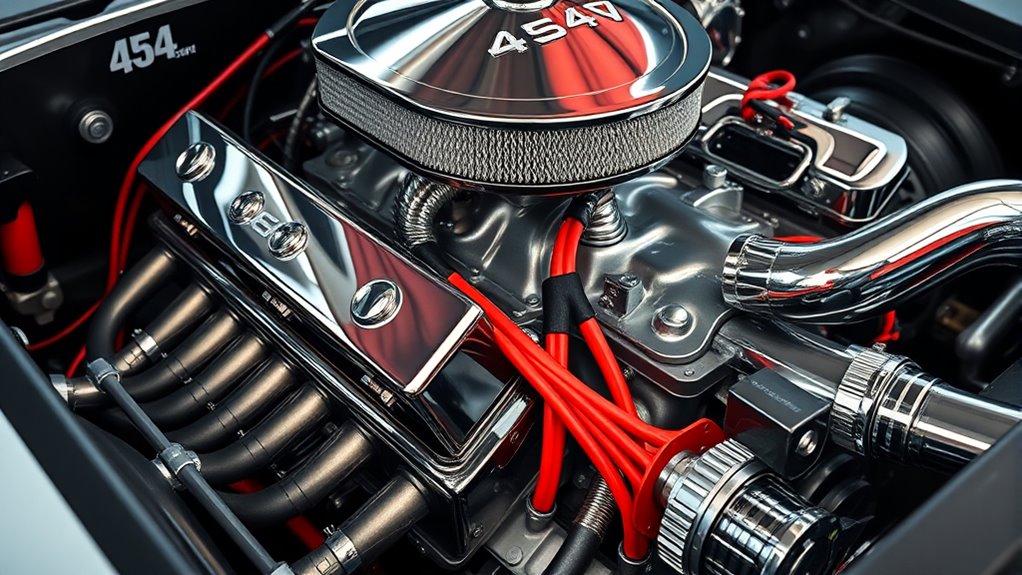
Unleashing Power: Boosting 454 Chevy Engine Horsepower With Expert Upgrades
Are you dreaming of turning your Chevy 454 into a powerhouse? You’re not alone—many enthusiasts struggle with boosting their engine’s horsepower without sacrificing reliability.
If you’re eager to unlock more power, understanding the right upgrades can make all the difference.
To boost your 454 Chevy engine’s horsepower, start by evaluating its current performance with diagnostics and measurements.
Upgrade key components like the carburetor, headers, intake manifold, and fuel injectors to improve airflow and fueling.
Adjust ignition timing and install high-performance spark plugs, pistons, and stronger rods for durability.
Proper tuning and cooling are essential, but avoid mismatched parts or aggressive cam swaps without supporting upgrades.
Keep following for detailed tips to reveal maximum power safely.
Key Takeaways
- Start with engine diagnostics to see what’s limiting your current performance before making upgrades.
- Upgrade your intake, headers, and carburetor to boost airflow and fuel delivery, which means more horsepower.
- Fine-tune the fuel pressure and ignition timing to get the most efficient combustion and maximize power output.
- Strengthen internal parts like pistons and rods to handle higher compression ratios and boost levels safely.
- Make sure your tuning and cooling systems are up to par so your engine stays reliable during these performance upgrades.
How to Assess Your 454 Chevy Engine’s Current Performance
Before making any upgrades to your 454 Chevy engine, it’s important to evaluate its current performance accurately. Start by doing thorough engine diagnostics to identify existing issues and get a baseline. Use a diagnostic scanner to check for error codes and monitor key parameters like fuel pressure, ignition timing, and sensor outputs.
Next, measure performance metrics like horsepower, torque, and acceleration times to see how strong your engine really is. A dynamometer test gives precise data on power output and shows how your engine performs under load. This helps you understand its current state clearly.
Also, listen for any abnormal noises, check for excessive exhaust smoke, and keep an eye on fuel economy. These signs can point to underlying problems that might affect your upgrade plans. Gathering all this info ensures you know exactly where your engine stands.
With this knowledge, you can make smarter decisions about future modifications. It helps you get the most out of your engine’s potential and avoids unnecessary expenses or issues later on.
What Upgrades Will Boost Power in Your 454 Chevy?
To significantly boost the horsepower of your 454 Chevy engine, it’s important to focus on upgrades that improve airflow, combustion, and fuel delivery. Upgrading your carburetor can greatly enhance fuel mixture accuracy, resulting in better power and throttle response. Choosing the right headers helps improve exhaust flow, reducing backpressure and increasing horsepower.
Here’s a quick guide:
| Upgrade Type | Benefits | Factors to consider |
|---|---|---|
| Carburetor upgrades | Better fuel atomization and throttle response | Match size to your engine needs |
| Header selection | Increased exhaust flow and power gains | Material, diameter, design |
| Intake manifold | Optimizes air intake and improves combustion | Make sure it’s compatible with other parts |
These upgrades work together to maximize your engine’s performance, giving you more power, better efficiency, and a thrilling driving experience.
How to Choose the Best Camshaft for Your 454 Chevy
Choosing the right camshaft for your 454 Chevy is essential to unlocking its full potential. The type of camshaft you pick will directly affect your engine’s performance profiles, so it’s important to match it with your driving goals.
If you want more low-end torque for towing or daily driving, look for a cam with a milder profile designed for smooth power delivery. For high horsepower and top-end power, go for a performance camshaft with more aggressive lift and duration.
Think about your engine’s build and the RPM range you want to target. Some camshafts are better at high RPM, while others focus on mid-range power. Also, check the valve timing and lift specs to ensure compatibility with your existing parts.
Choosing the right camshaft is all about balancing your desired power with drivability. Take the time to research different camshaft types and performance profiles that match your upgrade goals.
How to Upgrade Your Intake and Exhaust for More Power
Thinking about boosting your car’s power? One of the first things you can do is upgrade your intake components. Swapping out your stock intake manifold and filters for high-performance ones can really help improve airflow. Better airflow means your engine can breathe easier, which translates to more power on the road.
Next up, don’t overlook your exhaust system. Installing headers and a free-flowing muffler can significantly reduce backpressure, allowing exhaust gases to escape more efficiently. That means your engine doesn’t have to work as hard, and you’ll see an increase in horsepower.
And hey, once you’ve got these upgrades in place, make sure to tune your engine. A proper tune will help you get the most out of your new parts and ensure everything runs smoothly for peak performance.
Upgrading Intake Components
Enhancing your engine’s airflow starts with upgrading the intake components. Focus on improving the intake manifold design to optimize airflow and reduce restrictions, which can significantly boost horsepower.
A high-performance intake manifold helps your engine breathe better at higher RPMs, releasing more power. Pair this with throttle body upgrades to increase airflow volume and improve throttle response.
Larger or more efficient throttle bodies allow more air into the engine, maximizing combustion potential. Just make sure they’re compatible with your engine’s specs to avoid bottlenecks.
These upgrades work together to create a smoother, more efficient intake system. They set the stage for increased horsepower and better overall performance.
Properly upgrading your intake components is a key step toward unlocking your 454 Chevy’s full potential.
Enhancing Exhaust System
A well-designed exhaust system plays an essential role in maximizing your 454 Chevy engine’s horsepower. Improving exhaust flow reduces backpressure, allowing your engine to breathe more freely and produce more power.
Start by upgrading your muffler to a high-performance version that minimizes restrictions and improves exhaust flow. Consider headers that enhance scavenging and boost airflow efficiency.
Upgrading to larger diameter pipes can also help increase horsepower by reducing exhaust resistance. Remember, muffler upgrades aren’t just about sound—they’re vital for performance gains.
A better exhaust system guarantees smoother, quicker expulsion of gases, which directly impacts your engine’s output. Focus on quality components and proper installation to optimize your exhaust system’s effectiveness and reveal the full potential of your 454 Chevy.
Tuning for Performance
To get more power out of your 454 Chevy engine, it’s important to focus on tuning your intake and exhaust systems. Upgrading these parts helps improve airflow, which directly boosts your engine’s performance.
Performance tuning also involves adjusting your engine management system to ensure the air-fuel mixture and timing are perfectly calibrated for maximum output. A high-flow intake helps your engine breathe easier, increasing horsepower.
A well-designed exhaust system reduces backpressure, unlocking hidden power. Combining these upgrades with proper tuning makes sure your engine runs efficiently at higher levels.
Don’t forget, fine-tuning your engine management system after making modifications is key to getting the best results. This not only boosts horsepower but also improves throttle response and overall engine reliability.
How to Optimize Fuel Delivery in Your 454 Chevy
Want to get the most power out of your 454 Chevy? The secret is in optimizing your fuel delivery. Upgrading your fuel injectors is a great way to ensure you get a steady, powerful spray every time. It helps your engine breathe better and perform at its best.
And don’t forget about fine-tuning the fuel pressure. Making small adjustments here can help your engine run smoother and more efficiently. When both of these things are dialed in just right, you’re really unlocking your engine’s full potential.
Upgrading Fuel Injectors
Upgrading your fuel injectors is a key step in optimizing fuel delivery for your 454 Chevy engine. Picking the right injector types and adjusting the flow rate ensures your engine gets the precise fuel it needs for maximum power.
When upgrading, keep these points in mind: match the injector flow rate to your horsepower goals and choose fuel injectors compatible with your fuel system. Upgrading to high-performance injectors can improve atomization and efficiency.
Make sure the wiring and connectors fit properly to avoid any issues. Lastly, balance the fuel delivery to prevent your engine from running too lean or too rich.
Fine-Tuning Fuel Pressure
Fine-tuning your fuel pressure is crucial to make sure your 454 Chevy engine gets the right amount of fuel for top performance. Proper adjustment helps you hit the ideal fuel map, which is key for power and efficiency.
Use a fuel pressure gauge to check where you’re at, then tweak the regulator to match either the manufacturer specs or your custom tuning needs. Too high or too low pressure can cause poor throttle response, less power, or engine knocking.
Regularly monitoring and adjusting your fuel pressure lets you improve fuel delivery, especially after upgrades like new injectors or fuel system parts. Remember, precise fuel pressure adjustment unlocks your engine’s full potential and keeps it running reliably at high performance.
Should You Increase Compression Ratios? Here’s What to Know
Increasing compression ratios can greatly boost your 454 Chevy engine’s horsepower, but it’s not something to decide on lightly. Higher compression improves power and efficiency, but it also comes with trade-offs.
Pushing compression too high increases the risk of knocking and engine damage, especially if you’re running lower-octane fuel. You’ll need to consider your fuel quality, engine durability, and reliability before making any changes.
Before increasing compression, think about these factors:
- Higher compression can boost power and fuel economy
- It also raises the chance of knocking and pre-ignition
- You might need premium fuel to prevent damage
- It puts more stress on engine parts
- Compatibility with modifications like aftermarket pistons or heads is important
In the end, raising compression can bring big gains, but only if you balance the performance benefits with the risks. Proper tuning and maintenance are key to enjoying these improvements without hurting your engine’s longevity.
How to Tune the Ignition System for More Power and Efficiency
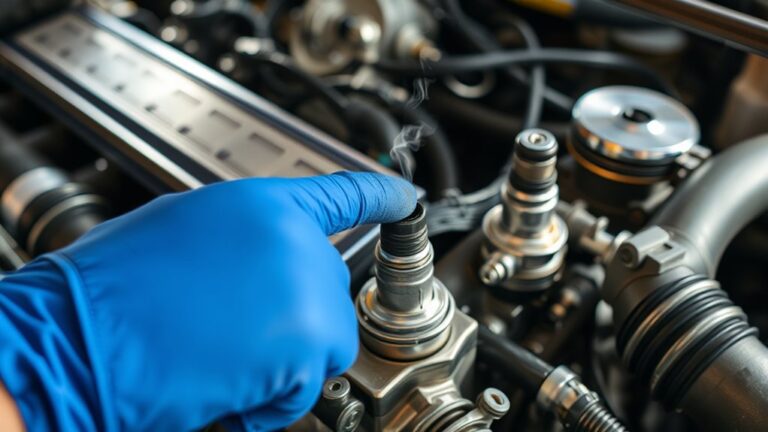
Adjusting your ignition system is key to unlocking more power and improving efficiency in your 454 Chevy engine. Start by refining your ignition timing; a slight advance or retard can boost power without risking damage. Use a timing light to set the correct degree at the specified RPM for precise adjustments.
Next, focus on your spark plugs—they’re crucial for combustion. Upgrade to high-performance spark plugs with a hotter or colder heat range based on your setup, which helps achieve a more complete burn and better throttle response.
Proper gap size is also important. A wider gap can increase spark strength, but don’t overdo it. Regularly inspect and replace worn spark plugs to keep your engine running at its best.
Fine-tuning your ignition timing and choosing the right spark plugs will help your 454 Chevy run more efficiently, releasing extra horsepower and smoother operation.
What Performance Pistons and Connecting Rods Do for Your Engine
Performance pistons and connecting rods are great because they make your engine more durable. They can handle higher stresses and pressures, which is especially helpful if you’re pushing your engine harder.
On top of that, they give you more power potential, so you can tune your engine more aggressively and reach higher RPMs without worrying. Plus, they help reduce mechanical stress, making your engine run smoother and last longer, even when you’re demanding more from it.
Enhancing Engine Durability
Upgrading your pistons and connecting rods is essential for boosting your engine’s durability, especially when you’re aiming for more horsepower. High-quality components made from advanced materials can handle higher pressures and temperatures, reducing the risk of failure.
Stronger connecting rods improve resistance to fatigue, while performance pistons with better heat dissipation help keep your engine at ideal temperatures. Upgrading cooling systems ensures your engine stays within safe temperature ranges even under heavy loads.
These upgrades work together to provide increased resistance to stress and fatigue, better heat management, and a lower risk of engine knocking. They also improve overall reliability and extend your engine’s lifespan.
Investing in durable pistons and rods, along with improved cooling, guarantees your engine can handle the extra power without sacrificing longevity or performance.
Increasing Power Potential
Enhancing your pistons and connecting rods directly boosts your engine’s power potential by allowing it to generate more force and operate more efficiently under increased stress. Upgraded performance pistons are built to withstand higher combustion pressures, enabling more aggressive power management and higher compression ratios.
Stronger connecting rods help the engine handle increased torque without flexing or failing. These upgrades create a solid foundation for performance tuning, giving you better control over timing, fuel delivery, and boost levels.
Reducing Mechanical Stress
Since higher power levels put extra stress on engine parts, choosing the right pistons and connecting rods is key to reducing mechanical stress. Performance pistons and rods are built to handle increased forces, helping prevent failures and keep things reliable.
They also help spread out stress more evenly, which lowers the chances of cracks or deformation. To really optimize stress reduction and boost engine life, keep these points in mind:
- Use lightweight, high-strength materials like forged aluminum or steel
- Choose reinforced connecting rods with added durability
- Make sure the rotating assemblies are properly balanced
- Use high-quality bearings for smoother operation
- Regularly upgrade to components designed for high-performance use
Why Proper Tuning and ECU Remapping Matter for Long-Term Durability
Proper tuning and ECU remapping are essential because they ensure your engine runs smoothly and reliably over time. When you fine-tune your ECU, you boost performance and enjoy benefits like better fuel economy and a more seamless power delivery.
Getting the calibration right prevents engine stress caused by improper air-fuel ratios or ignition timing, which helps your engine last longer.
| Tuning Benefits | Impact on Durability |
|---|---|
| Improved Fuel Efficiency | Reduces wear on parts |
| Power Optimization | Less strain during high-performance driving |
| Consistent Engine Response | Lowers the risk of knocking or damage |
What Common Upgrades to Avoid When Boosting Your 454 Chevy
While upgrading your 454 Chevy engine for more horsepower, it’s essential to avoid certain modifications that can do more harm than good. Falling into common pitfalls or believing upgrade misconceptions can lead to engine damage, reduced reliability, or wasted money.
Steer clear of these common mistakes:
- Overly aggressive camshaft swaps without supporting upgrades
- Installing cheap or mismatched intake and exhaust components
- Relying solely on high-performance parts without proper tuning
- Upgrading to high-boost turbochargers without strengthening internal components
- Ignoring fueling and cooling system limitations during upgrades
These pitfalls often stem from misunderstandings about how different parts interact or rushing into upgrades without proper planning. Remember, not every modification adds horsepower safely or efficiently.
Misunderstanding part interactions and rushing upgrades can compromise safety and efficiency.
Focus on balanced, well-researched upgrades, and always seek expert advice to avoid costly mistakes that can hinder your engine’s performance and durability.
Frequently Asked Questions
What Are the Signs My 454 Chevy Engine Needs an Upgrade?
You’ll notice your 454 Chevy engine needs an upgrade if engine performance drops, like reduced power or sluggish acceleration. Signs also include poor fuel efficiency, rough idling, or difficulty maintaining speed.
If you’re doing power tuning but still experience these issues, it’s time for upgrades. Upgrading components can restore and boost your engine’s power, making sure it runs at its best.
Don’t ignore these signs; they mean your engine needs expert attention. Addressing them early can save you trouble down the road and keep your engine running smoothly.
How Much Horsepower Can I Expect From Specific Upgrades?
Expect significant surges in your 454 Chevy’s horsepower, often boosting by 50 to 150+ horsepower depending on the upgrades you choose.
With precise performance tuning and thorough dyno testing, you can optimize your engine’s output to maximize power and efficiency.
Upgrades like camshaft swaps, carburetor upgrades, and exhaust improvements can dramatically raise performance, turning your engine into a powerhouse.
All of this can be achieved while ensuring reliable, refined results through expert testing and tuning.
Are Aftermarket Parts Compatible With Stock Engine Components?
Yes, aftermarket parts are often compatible with stock engine components, but you should check compatibility for each part. Some upgrades, like new intakes or exhaust systems, usually work well without affecting your stock performance.
However, major modifications might need additional tuning or adjustments to keep everything running smoothly. Always verify compatibility before installing, and it’s a good idea to consult with experts if you’re unsure.
This way, you can ensure your modifications boost performance without risking engine reliability.
What Is the Typical Cost Range for a Power-Boosting Upgrade?
You’re on the edge of transforming your engine, but how much will it cost? Typically, a power-boosting upgrade ranges from $2,000 to $6,000, depending on your performance goals and budget.
High-end modifications can go even higher, offering incredible gains. Keep in mind, investing more often means better results, but you’ll want to balance your goals with what you’re willing to spend for that exhilarating boost in horsepower.
How Does Upgrading Affect My Engine’s Reliability and Lifespan?
Upgrading your engine can boost performance tuning, but it might affect reliability and lifespan if not done correctly. Regular engine maintenance becomes even more important since increased power puts extra strain on the components.
Choose quality parts and get professional installation to keep your engine dependable. Good upgrades strike a balance between gaining power and maintaining durability.
This way, you can enjoy better performance without sacrificing your engine’s longevity. Keep up with routine checks to ensure everything stays running smoothly and reliably.
Conclusion
Remember, Rome wasn’t built in a day, and neither is a powerhouse 454 Chevy engine.
It takes time to develop serious horsepower.
By carefully evaluating your current setup, choosing the right upgrades, and tuning with precision, you’ll see impressive gains.
Patience and avoiding shortcuts are key because quality work pays off in performance and durability.
With the right upgrades and some know-how, you’ll turn your engine into a true beast on the road.
Keep pushing, and let your engine roar with boosted horsepower.