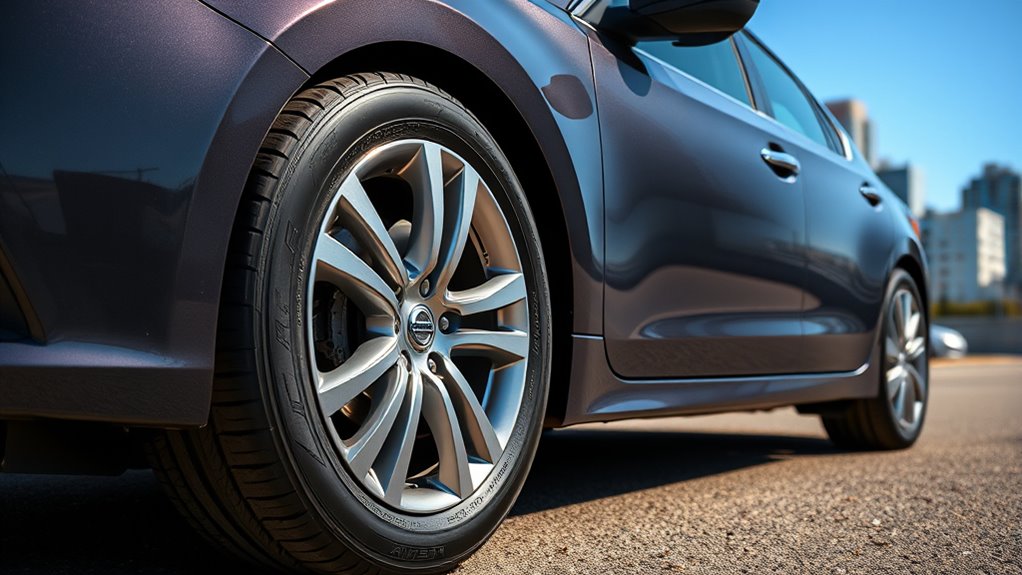
Top Choice Tires for Nissan Altima: Unlock Performance
Are you tired of feeling unsure on the road or worried about your Nissan Altima’s performance? You’re not alone—many drivers struggle with choosing the right tires that balance safety, comfort, and handling.
For your Nissan Altima, choosing top-quality tires is key to attaining better performance and safety. Opt for all-season tires like Michelin CrossClimate or Continental TrueContact for versatile year-round driving.
If you want sharper handling, performance tires can boost traction and acceleration, while winter-specific tires improve grip in snow and rain.
Proper maintenance, like regular rotations and correct pressure, extends tire life and safety.
Keep exploring to find more tips for selecting and maintaining the best tires for your Altima.
Key Takeaways
- Choose high-quality, all-season or performance tires suited to your driving conditions for the best Nissan Altima performance.
- Look for tires with good traction, handling, and durability, like Michelin CrossClimate or Continental TrueContact.
- Regularly check tire pressure, rotate your tires every 5,000-7,500 miles, and get alignment checks to keep them in good shape.
- Think about your driving style—whether you’re mostly in the city, on the highway, or facing winter conditions—to pick tires that give you better grip and responsiveness.
- Follow Nissan’s recommended tire size, load capacity, and specs to ensure safety and optimal vehicle performance.
Why Quality Tires Are Key to Your Nissan Altima’s Performance
Your Nissan Altima relies heavily on its tires to deliver a smooth, safe, and efficient ride. High-quality tires greatly impact your vehicle’s tire lifespan, helping them last longer and perform reliably over time.
High-quality tires ensure a smooth, safe, and reliable ride while extending your Nissan Altima’s tire lifespan.
When you choose premium tires, you benefit from better traction, handling, and braking. This directly improves your driving experience and keeps you confident on the road.
Cheaper or worn-out tires can compromise safety, increase stopping distances, and cause uneven wear. This often forces you to replace them more often, costing you more in the long run.
Investing in top-tier tires means you get consistent performance, even in tough conditions like rain or snow. This consistency boosts your confidence and helps your tires last longer.
How to Choose the Right Tires for Your Nissan Altima
Choosing the right tires for your Nissan Altima involves understanding your driving needs and conditions.
Think about tire longevity factors like tread life and durability to ensure your tires last longer and perform consistently.
If you mainly drive in urban areas with smooth roads, look for tires that offer good ride comfort and fuel efficiency.
For more aggressive driving or frequent highway use, choose tires that deliver better handling and stability.
Comparing tire brands can help you find quality options. Some brands excel in longevity, while others focus on grip and responsiveness.
Reading reviews and checking manufacturer warranties can also guide your decision.
Remember, the right tires should match your driving style, climate, and road conditions.
By understanding these factors, you’ll pick tires that boost safety, performance, and value.
This way, your Nissan Altima stays reliable and responsive on the road.
Best All-Season Tires for Year-Round Reliability
All-season tires are designed to provide reliable performance throughout the year, handling a variety of weather conditions without the need for frequent tire changes. They offer the benefits of versatility, convenience, and cost savings, making them perfect for daily drivers like your Nissan Altima.
These tires balance tread patterns for good traction in rain, light snow, and dry conditions, helping ensure safety all year round. Their durability also means they last longer, so you won’t need to replace them as often, saving you money over time.
Here’s a quick comparison of popular all-season tires:
| Tire Model | All-Season Benefits | Tire Longevity |
|---|---|---|
| Michelin CrossClimate | Excellent rain and light snow traction | Long-lasting tread life |
| Continental TrueContact | Balanced performance in various weather | High durability |
| Pirelli Cinturato P7 | Comfortable ride, fuel-efficient | Extended tread wear |
Choosing the right all-season tire helps keep your Nissan Altima reliable and safe, season after season.
Top Performance Tires to Improve Handling and Acceleration
For drivers looking for sharper handling and quicker acceleration, performance tires can really make a difference. Advanced tire technology helps deliver these upgrades by providing better grip, responsiveness, and stability.
These tires come with specialized tread patterns and softer rubber compounds that boost traction during aggressive driving. The improved sidewall design also enhances steering feedback and reduces body roll, making your Nissan Altima feel more agile.
Plus, performance tires are designed to optimize acceleration by reducing rolling resistance and increasing grip during quick throttle inputs. When choosing these tires, look for high-performance models that focus on handling and braking.
Keep in mind that while they perform great in dry conditions and spirited driving, they may wear out faster than all-season options. Upgrading to top performance tires enhances your driving experience, giving you the confidence and control for dynamic maneuvers and spirited acceleration.
Selecting Tires for Snow and Wet Conditions
When you’re picking out tires for snowy and wet weather, the main thing to keep in mind is how well they can grip the road. You want tires that can give you good traction so you don’t slip or lose control.
Look for tread patterns that are specifically designed to move water and snow out of the way. This helps keep the contact patch between your tires and the road clean, giving you better stability. When your tires are doing their job well, you’ll feel more confident and safer, even when the roads are tricky.
Traction and Grip Enhancement
Guaranteeing ideal traction and grip is essential when selecting tires for snowy or wet conditions, as these surfaces demand extra performance features. Modern tire technology focuses on enhancing grip through specialized rubber compounds and innovative tread designs, which help your vehicle stay connected to the road.
When comparing grip, look for tires with strong wet traction ratings and responsive handling. A good grip comparison shows which tires excel at maintaining stability and reducing braking distances on slick surfaces.
High-performance tires often include features like sipes and specialized tread patterns to channel water away and prevent hydroplaning. Choosing tires with advanced technology ensures confident handling and safety, even in tough weather conditions.
Tread Pattern Optimization
Optimizing the tread pattern is crucial for getting the best traction in snow and wet conditions. A good design helps move water and snow away from the tire, which reduces hydroplaning and slipping.
Look for tires with deep grooves and an asymmetric tread pattern. These features improve grip on slick surfaces and help channel water away effectively, keeping better contact with the road.
A well-designed tread pattern can also cut down on noise, making your ride more comfortable without losing performance. Many tires include noise reduction features like variable pitch blocks or sipes to minimize road noise.
When choosing tires for winter or wet weather, focus on those with specialized tread patterns that balance traction, noise reduction, and durability. This helps you stay in control even in tough weather conditions.
How to Find the Correct Tire Size for Your Nissan Altima
Wondering how to find the right tire size for your Nissan Altima? The key is to check your vehicle’s tire size, which is usually found on the driver’s side door frame or inside the fuel hatch.
Check your Nissan Altima’s tire size on the door frame or inside the fuel hatch for a perfect fit.
You can also look at the sidewall of your current tires, where the tire size is stamped. This info lines up with Nissan’s specs, making sure you pick tires that fit well and perform efficiently.
The tire size usually appears as a series of numbers and letters, like P215/60R16. These numbers show the width, aspect ratio, and diameter, which are important for compatibility.
Always verify your specific model’s tire size before buying new tires. If you’re unsure, check your owner’s manual or contact your dealership to confirm the right Nissan specifications.
Matching your tire size properly guarantees a smooth ride, better handling, and safety on the road.
Budget vs. Premium Tires: Which Should You Pick?
When choosing between budget and premium tires for your Nissan Altima, it’s important to think about your driving needs and what matters most to you. Budget tires are often chosen because they’re affordable, especially if you don’t drive a lot or mostly stay on smooth roads.
But keep in mind, cheaper tires might not last as long, so you may need to replace them sooner. That could add up and cost you more in the long run. Premium tires, though more expensive upfront, tend to give you better performance, last longer, and handle different driving conditions better.
They’re also usually more fuel-efficient and safer, which can make a big difference if you value a smooth ride and longevity. If you don’t drive much and saving money is your priority, budget tires could be enough.
Ultimately, think about your driving habits, your budget, and what you want from your tires to make the best choice for your Nissan Altima.
Tips to Maintain and Rotate Your Nissan Altima Tires
Maintaining and rotating your Nissan Altima tires regularly is key to ensuring even wear, extending their lifespan, and keeping your vehicle safe. Start by checking your tire pressure every month to make sure it matches your manufacturer’s recommended levels. Proper tire pressure helps with fuel efficiency, handling, and prevents uneven tread wear.
It’s also important to get your alignment checked at least once a year or if you notice your car pulling to one side or uneven tire wear. Good alignment keeps your tires wearing evenly and ensures your steering feels responsive. When it’s time to rotate your tires, follow your vehicle’s recommended pattern—usually every 5,000 to 7,500 miles—to promote even tread wear and make your tires last longer.
Don’t forget to regularly inspect your tires for damage like cuts or punctures. Being proactive with tire pressure, alignment, and rotation will help your Nissan Altima perform better, stay safer, and keep your tires in great shape for longer.
When and Why to Upgrade to High-Performance or Specialty Tires
Upgrading to high-performance or specialty tires makes sense when your driving needs change or you want to get the most out of your Nissan Altima. These tires provide benefits like better traction, handling, and braking.
You’ll notice performance improvements that make your driving more responsive and fun, especially on winding roads or at higher speeds.
Think of these tires as your vehicle’s new gear:
| Driving Style | Tire Type | Benefits |
|---|---|---|
| Daily commuting | All-season high-performance | Better grip, smoother ride |
| Sport driving | Summer or ultra-high-performance | Sharper handling, faster response |
| Off-road adventures | Specialty off-road tires | Increased durability, traction |
Choosing the right high-performance or specialty tire depends on your driving style, so you get the best performance out of your Nissan Altima.
How Proper Tire Choice Enhances Safety and Fuel Efficiency
Choosing the right tires directly impacts your Nissan Altima’s safety and fuel efficiency. Proper tire selection guarantees ideal contact with the road, improving handling and reducing the risk of accidents. It also helps maintain consistent tire pressure, which is vital for fuel economy and safety. When selecting tires, pay attention to load capacity; tires with appropriate load ratings prevent overloading and potential blowouts.
Consider these key factors:
- Maintain correct tire pressure. Underinflated tires increase fuel consumption and tire wear, while overinflated tires compromise safety.
- Choose tires with suitable load capacity. Confirming your tires can handle your vehicle’s weight boosts safety and longevity.
- Opt for tires with proper tread design. Better grip improves safety in various weather conditions.
- Match tire size to manufacturer specifications. Correct sizing maximizes performance and fuel efficiency.
Frequently Asked Questions
How Often Should I Replace My Nissan Altima Tires?
You should replace your Nissan Altima tires every 6 to 10 years, depending on how long they last and your driving habits.
Make sure to check your tires regularly for signs of wear, like uneven tread or cracks.
If you drive a lot on rough roads or in bad weather, your tires might wear out sooner.
Keep an eye on the tread depth and change your tires as needed to stay safe and get the best performance.
Can I Mix Different Tire Brands on My Vehicle?
Mixing tire brands on your Nissan Altima is like blending different melodies—possible but risky. You should focus on tire compatibility and brand performance to ensure safety and good handling.
It might be tempting to save money or use your existing tires, but mismatched brands can cause uneven wear and reduce traction. For the best results, stick to the same brand and model, especially for front and rear tires, to keep everything balanced on the road.
What Are the Signs of Tire Wear I Should Watch For?
You should watch for signs of tire wear like uneven tread depth, which means you might need new tires or an alignment.
Check for sidewall damage such as cuts, cracks, or bulges that can affect safety.
Also, look for bald spots or objects stuck in the tread.
Regularly inspecting your tires helps prevent blowouts and keeps your vehicle running smoothly and safely.
How Do Tire Warranties Work for Altima Tires?
You might be surprised how tire warranties protect your Altima. When a defect happens, you can file a warranty claim, but first, you need to understand what the warranty covers.
Most warranties cover manufacturing defects but don’t include damage from driving habits or road hazards. So, it’s good to know what’s included and what isn’t.
To make the warranty process smooth, keep your purchase receipts and have your tires inspected quickly if any issues come up.
Don’t wait too long—your tires’ warranty could save you money in the long run.
Are There Eco-Friendly Tire Options for Nissan Altima?
Yes, there are eco-friendly tire options for your Nissan Altima. Brands like Michelin, Bridgestone, and Goodyear offer eco-friendly tires that focus on sustainability without sacrificing performance.
These tires often use sustainable materials and advanced manufacturing processes, helping to reduce environmental impact. By choosing eco-friendly brands, you can enjoy reliable handling and better fuel efficiency.
Supporting environmentally conscious practices is a smart way to balance performance and sustainability on your vehicle.
Conclusion
Choosing the right tires for your Nissan Altima is like finding the perfect dance partner. When they move together seamlessly, your drive becomes smoother, safer, and more enjoyable.
With the right balance of quality, seasonality, and performance, you’ll unlock your car’s full potential. Proper tire care isn’t just maintenance; it’s the key to a confident, exhilarating ride every time you hit the road.