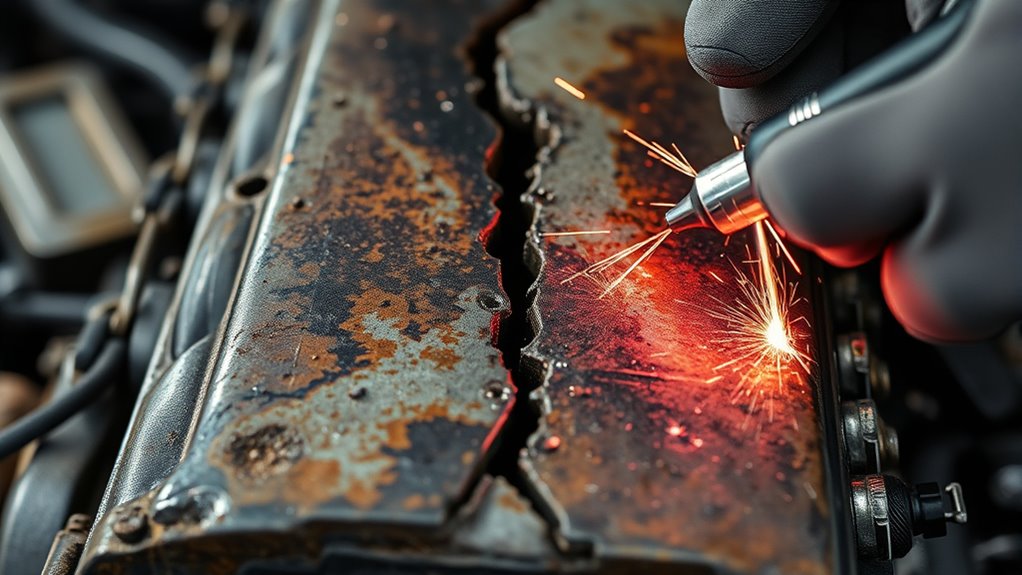
Cracked Engine Block Repair: Methods, Costs, and Long Term Implications
Dealing with a cracked engine block can be a nightmare for any car owner. Many people struggle with the fear of costly repairs and the worry about how long their engine will last.
If you have a cracked engine block, repair methods include epoxy sealing for small cracks, welding or brazing for larger issues, and sometimes replacing the entire block. Costs vary from around $2,500 to over $4,500, depending on damage and labor.
Choosing the right repair helps guarantee engine longevity, but neglecting issues can lead to costly failures or full engine replacement.
To get the best solution for your situation, there’s more to evaluate.
Key Takeaways
- Repair methods include epoxy sealing for minor cracks and welding or brazing for larger damages, depending on how bad the damage is.
- The cost to fix a cracked engine block usually falls between $2,500 and $4,500, but it depends on how severe the crack is and how much labor is needed.
- Ignoring a crack can lead to engine failure, expensive repairs, or even a full engine replacement, which can really add up.
- Doing proper, high-quality repairs can extend your engine’s life, keep it running well, and stop further damage. Poor fixes, on the other hand, might cause more problems down the line.
- Regular maintenance and early detection methods like pressure testing and coolant leak checks are key to catching cracks early and preventing bigger issues.
What Causes Engine Blocks to Crack and How Severe Are the Damages?
Engine blocks can crack for a bunch of reasons, mostly because of stress or sudden temperature shifts. Overheating is a big one, causing thermal shock that puts stress on the metal.
Engine blocks often crack due to stress and rapid temperature changes, especially from overheating or thermal shock.
Cold weather can also cause cracking, since extreme cold makes the metal contract and increases the chance of fractures. Material fatigue over time weakens the engine’s structure, especially if maintenance is skipped or if parts face too much pressure.
Manufacturing defects, like flaws in the casting process, can create weak spots that crack under stress. Corrosion damage, often from coolant leaks or poor upkeep, further weakens the metal.
Skipping maintenance, such as ignoring coolant levels or not fixing overheating problems, speeds up wear and tear. All these factors can cause small cracks that get worse over time, sometimes leading to serious engine damage if ignored.
How to Detect a Cracked Engine Block Early
Wondering if your vehicle might have a cracked engine block? Early signs can be subtle but important to catch.
Look for coolant leaks around the engine block or white smoke coming from the exhaust. Overheating is another warning sign; if your temperature gauge spikes unexpectedly, it could point to a crack.
Unusual engine noises like knocking or ticking may also suggest internal damage. Diagnostic tools, such as pressure testers and leak detectors, can help confirm these issues by checking for compression loss or coolant leaks.
| Symptom | Diagnostic Tool | Action to Take |
|---|---|---|
| Coolant leaks | Visual inspection | Check for puddles or white residue |
| Overheating | Temperature gauge | Monitor engine temperature |
| White smoke from exhaust | Visual & diagnostic tools | Confirm coolant entering combustion |
| Unusual engine noises | Listening devices | Detect internal damage |
| Loss of power or misfire | Compression tester | Assess engine compression |
Repairing a Cracked Engine Block: Methods, Pros, and Cons
In regard to repairing a cracked engine block, you have several options, each with its own advantages and drawbacks. One common method is epoxy sealing, which involves applying a specialized epoxy to seal small cracks. This option is quick and cost-effective but may not be suitable for large or high-pressure cracks.
Another approach is welding or brazing, which can permanently mend the crack but requires skilled technicians and may weaken the metal. Finally, pressure testing after repair guarantees the integrity of the fix, confirming the seal holds under operating conditions.
To understand deeper, consider these points:
- Epoxy sealing offers a fast fix but might only be temporary.
- Welding provides a durable solution but can alter the metal’s strength.
- Pressure testing verifies the repair’s effectiveness, preventing future failures.
Choosing the right method depends on the crack’s severity, location, and your long-term goals.
Can Welding Fix a Cracked Engine Block?
Welding can be a good option for fixing a cracked engine block, especially if the crack is localized and easy to access. The success really depends on choosing the right welding techniques, like TIG or arc welding, which offer precision and strength.
The type of engine material matters too; aluminum and cast iron need different welding approaches, and not all materials respond well to repair. Proper prep is essential—cleaning and removing old paint or corrosion helps ensure a solid bond.
Different materials like aluminum and cast iron require specific welding methods for effective repairs.
Welding can restore the engine’s structural integrity, but it’s not always a permanent fix. This is especially true if the crack is large or located in a high-stress area. Skilled welding is crucial to prevent further damage or leaks.
Keep in mind that welding might not be suitable for all materials or crack types. It’s a good idea to consult a professional before trying this repair method.
What Are the Typical Repair Costs for a Cracked Engine Block?
Repairing a cracked engine block can vary widely in cost, typically ranging from around $2,500 to $4,500 or more, depending on how bad the damage is and the repair method you choose.
Your costs will be influenced by several key factors, including the type of repair options available and how severe the crack is.
- Extent of Damage: Minor cracks might be fixed with welding or epoxy, which costs less. But major cracks usually mean replacing the block or machining it.
- Labor Costs: These vary depending on where you are and how complex the repair is, and they can really affect the total price.
- Parts and Materials: Replacement parts, gaskets, and other components can add to your overall expenses.
Knowing these cost factors helps you evaluate your options better, so you can find a solution that balances your budget with durability.
When Should You Consider Replacing Your Engine Instead of Repairing?
Determining whether to replace your engine instead of repairing a cracked engine block often depends on the extent of the damage and the age of the vehicle.
If the crack is severe, or if your engine has high mileage and shows signs of other wear, an engine replacement might be the smarter choice.
A cost comparison can show that repairing a cracked block can sometimes approach or even exceed the price of a new or rebuilt engine, especially when you include labor costs.
If repairs are extensive or if multiple components are affected, replacing the engine could save you money in the long run.
Older vehicles tend to benefit more from a replacement, as repairs may not be cost-effective or reliable over time.
In the end, evaluating the damage and considering the overall condition of your vehicle will help you decide whether an engine replacement makes the most sense financially and practically.
How Do Repair Choices Affect Your Engine’s Long-Term Performance?
Your repair choices really impact how your engine holds up over the long run. Some repair methods tend to last longer and keep your engine running smoothly, while others might not be as durable and could even hurt its efficiency.
Knowing the differences between these options can help you make smarter decisions. When you choose wisely, you’re more likely to enjoy a reliable engine that performs well for years to come.
Durability of Repair Methods
Choosing the right repair method can really impact how well your engine holds up over time. The durability of repair methods depends on factors like how long the repair lasts and the materials used.
High-quality repairs with stronger materials tend to last longer, which means fewer future fixes needed.
Consider these key points:
- Material Selection: Durable materials like billet aluminum or reinforced composites offer better repair longevity.
- Method Quality: Precision welding or specialized epoxies can provide a more resilient fix than basic patching.
- Environmental Resistance: Repair methods that resist heat, pressure, and corrosion ensure long-term performance.
Your choice affects not just immediate fixes but also how your engine endures years of use. Opting for reliable, high-quality repairs guarantees sustained performance and saves you money in the long run.
Impact on Engine Efficiency
The repair method you choose can really impact your engine’s efficiency over the long run. It affects how smoothly it runs and how well it keeps its power as time goes on.
A proper fix helps keep your engine performing at its best. For example, a high-quality weld or professional patch can stop leaks and lessen strain on engine parts, which can boost fuel efficiency.
On the flip side, cheap or improper repairs might cause misfires, higher emissions, or uneven power delivery. All of these issues can hurt performance and increase your fuel costs.
In the end, picking the right repair not only fixes the problem now but also helps your engine run efficiently for longer. This means conserving fuel and reducing wear over time.
What Are the Risks of Ignoring a Cracked Engine Block?
Ignoring a cracked engine block can be a serious mistake. If you don’t take care of it, your engine might completely fail, leaving you stranded and stuck with some pretty hefty repair bills. Over time, that crack can get worse, leading to leaks of coolant and oil, which can then damage other parts of your engine.
If you keep ignoring the problem, it could end up costing you a lot more — possibly even needing a full engine replacement. It’s definitely better to get it checked out sooner rather than later to avoid bigger headaches down the road.
Engine Failure Risks
A cracked engine block can lead to serious issues if you don’t fix it. It compromises the core strength of your engine, making things worse over time.
Ignoring this damage can increase your chances of engine failure in several ways. For example, coolant leaks from the crack reduce cooling efficiency, which can cause your engine to overheat and damage internal parts.
Thermal stress from temperature changes can cause the crack to spread, weakening the engine even more. Plus, cracks let oil escape, which means your engine won’t get the lubrication it needs, leading to faster wear on parts.
All these problems can escalate quickly, risking a total engine seizure or catastrophic failure. Catching a cracked engine block early can save you from costly repairs and bigger problems down the road.
Expensive Repairs
Neglecting a cracked engine block can lead to costly repairs that far outweigh the initial fix. Ignoring signs increases the risk of severe engine damage, which can result in unexpected expenses draining your finances.
Repairing a cracked block often involves extensive work. Sometimes, it even requires replacing the entire engine, which can be financially overwhelming. If you delay, you might need financing options or face the high costs of a new engine.
Here’s a quick comparison of common repair costs:
| Repair Type | Cost Range |
|---|---|
| Sealant Fix | $500 – $1,500 |
| Engine Replacement | $2,500 – $7,000 |
| Complete Engine Rebuild | $3,000 – $8,000 |
Ignoring the problem can turn a small repair into a long-term financial burden.
Preventative Maintenance Tips to Avoid Engine Cracks
To prevent engine cracks, regular preventative maintenance is essential. Proper care helps manage factors like engine coolant levels, oil quality, and driving habits that influence thermal expansion and engine stress. Here are three key tips:
- Maintain ideal engine coolant and regularly check for leaks. This helps prevent overheating and reduces thermal expansion stress on the engine block.
- Perform seasonal inspections. Adjust your maintenance routine for seasonal changes to ensure components like the radiator and hoses stay in good condition.
- Monitor your driving habits and engine load. Avoid aggressive acceleration and high engine loads, as they increase heat and strain on the engine, raising the risk of cracks.
How to Choose a Reliable Repair Shop for Engine Block Repairs
When you’re on the hunt for a good repair shop, the first thing you should do is check out their certifications and credentials. It’s a good way to make sure they’re up to speed with industry standards. You want technicians who have experience and specialize in engine block repairs—that way, you know your engine is in capable hands.
And don’t forget to ask about warranties and guarantees. It’s always smart to have some protection in case you run into any issues down the line. That way, you can feel confident that your investment is safeguarded.
Certification and Credentials
Choosing a repair shop with the right certifications and credentials is key to making sure your engine block gets quality repairs. Reputable shops that meet industry standards show they have the technical skills needed.
Always verify their credentials to confirm they’re qualified. This helps you avoid subpar work and ensures your engine is in good hands. Here’s what to look for:
- Manufacturer Certifications – Shows they have specialized training for specific vehicle brands.
- Industry Certifications – Like ASE, indicating they follow professional standards.
- Accreditation and Credentials Verification – Ensures the shop maintains reputable practices and quality control.
Having these credentials gives you confidence that experienced professionals are taking care of your engine. Proper certification and credentials verification are crucial steps in choosing a reliable, skilled repair shop for your engine block.
Experience and Specialization
Experience and specialization are key factors that can really influence the quality of engine block repairs. An experienced shop knows advanced repair techniques and performs thorough engine diagnostics, which helps ensure the right diagnosis and fix.
A shop that specializes in engine repairs is familiar with the details of cracked engine blocks and uses the best methods for long-lasting results. When choosing a reliable shop, it’s important to look at their expertise, tools, and track record.
| Aspect | What to Look For | Why It Matters |
|---|---|---|
| Experience | Years in engine diagnostics | Accurate diagnosis helps prevent further damage |
| Specialization | Focus on engine block repairs | Mastery of repair techniques guarantees quality |
| Certifications | Relevant technical certifications | Validates skill and knowledge |
| Customer Feedback | Positive reviews and testimonials | Shows reliability and trustworthiness |
Warranty and Guarantees
A repair shop’s warranty and guarantees can be a good sign of how confident they are in their work. When you’re choosing a place, look for clear warranty details and strong repair guarantees. These show they’re committed to quality and accountability.
Keep these points in mind:
- Make sure the warranty covers both parts and labor so you don’t get surprised with extra costs.
- Check how long the repair guarantee lasts—longer periods usually mean they trust their work more.
- Find out if the shop offers free follow-up repairs if problems come up after the service.
A trustworthy shop will back their work with solid warranties. That way, you can feel confident that your engine block repair is protected and that they stand behind their craftsmanship.
Frequently Asked Questions
How Long Does a Typical Crack Repair Last Before Needing Replacement?
A typical crack repair can last anywhere from a few years to over a decade, depending on repair techniques and factors like engine use and maintenance.
Techniques such as epoxy injections or welding offer temporary fixes, but more durable methods like sleeving or replacing the engine tend to last longer.
Regular inspections and proper maintenance are key to ensuring your repair holds up, but in severe cases, replacement might be necessary.
Are There Any Aftermarket Parts That Can Enhance Repair Durability?
Sure, aftermarket parts are like superhero capes for your engine—if you believe more is always better. You can find aftermarket materials designed to boost repair durability, and advanced repair techniques that promise longer-lasting fixes.
These upgrades often include high-strength epoxies or reinforced sleeves. Just remember, while they might make your engine feel invincible, no repair is truly immortal—so don’t get too attached.
Can a Cracked Engine Block Cause Additional Engine Damage?
Yes, a cracked engine block can cause more damage to your engine. If you ignore the crack, it can lead to overheating, which makes the crack worse and harms other parts.
The crack can also let coolant or oil leak out, which means less lubrication and cooling. This can cause parts to warp or even seize up.
Getting the crack fixed early is important to stop further damage. If you ignore it, it could lead to a serious engine failure and expensive repairs.
What Are the Environmental Impacts of Repairing Versus Replacing?
When you repair an engine, you often use methods like welding or epoxy, which can reduce material waste and resource consumption compared to replacing the entire engine.
Replacing might generate more waste and environmental impact because of manufacturing and disposal processes.
By following environmental regulations and choosing sustainable materials, repairs can be environmentally friendly.
Your decision impacts resource use, emissions, and waste, making repair a greener option when done properly.
How Does Driving Style Influence Engine Crack Development?
Your driving habits really impact engine crack development by influencing engine stress. Aggressive acceleration, sudden stops, and high-speed driving put extra pressure on engine parts, increasing crack risk.
Consistently harsh driving causes thermal and mechanical stress that weaken the engine over time. To keep your engine healthier longer, try to drive smoothly, avoid rapid acceleration, and maintain steady speeds.
Conclusion
Remember, an ounce of prevention is worth a pound of cure. Regular maintenance and early detection can save you from costly repairs and long-term engine damage.
Don’t ignore the signs of a cracked engine block. Acting promptly can keep your engine running smoothly for years to come.
Trust your instincts and stay vigilant. A well-maintained engine is the key to a reliable ride.
Keep your engine healthy, and it’ll take care of you. When it comes to cracked engine blocks, prevention is always better than repair.