Will Bad Spark Plugs Throw a Code? What You Need to Know
Are you tired of dealing with rough idling, poor acceleration, or unexpected engine hiccups? Many drivers face these issues, and often, the culprit is worn or faulty spark plugs.
If you’re wondering whether bad spark plugs can throw a code and turn on your check engine light, you’re not alone.
Yes, bad spark plugs can throw a code and turn on your check engine light. When your spark plugs are worn or fouled, they cause misfires and poor combustion, which are detected by your vehicle’s sensors.
This triggers diagnostic trouble codes like P0300 or P0301, indicating misfires in specific cylinders.
If you want to understand how to identify these signs and what to do next, keep exploring this topic further.
Key Takeaways
- Worn or damaged spark plugs can cause misfires, which might turn on the check engine light and set diagnostic trouble codes.
- Codes like P0300 or P0301 point to misfires related to spark plug problems.
- Regularly maintaining your spark plugs helps prevent these error codes from ignition issues.
- Faulty spark plugs mess up combustion, and onboard diagnostics catch and log these problems as error codes.
- Using an OBD scanner makes it easy to quickly find trouble codes connected to your spark plugs.
How Do Spark Plugs Affect Your Car’s Performance and Error Codes?
Spark plugs are crucial for your car’s performance because they ignite the air-fuel mixture in the engine’s cylinders. When they’re well-maintained, they help ensure smooth combustion, which improves ignition efficiency.
Regular maintenance like cleaning or replacing worn-out spark plugs keeps your engine running smoothly and helps prevent misfires. If your spark plugs are fouled or damaged, you might notice sluggish acceleration, rough idling, or lower fuel economy.
Regularly inspecting and replacing spark plugs ensures smooth engine performance and prevents misfires.
These issues can also trigger error codes in your vehicle’s computer system, alerting you to potential problems. Faulty spark plugs can cause misfires that lead to incomplete combustion, which onboard diagnostics can detect.
Keeping your spark plugs in good shape helps your engine perform at its best and reduces the chances of error codes related to ignition issues. In short, maintaining your spark plugs is key for reliable performance and accurate error detection.
Can Bad Spark Plugs Cause the Check Engine Light to Turn On?
Sometimes, when spark plugs start to fail or become worn out, the check engine light can turn on. This often happens because a spark plug’s lifespan has been exceeded, leading to inefficient combustion. A worn spark plug can cause an engine misfire, which the vehicle’s computer detects and triggers the warning light.
Here’s a quick overview:
| Issue | Cause | Effect |
|---|---|---|
| Spark plug failure | Excessive spark plug wear | Engine misfire, check engine light on |
| Ignition problems | Dirty or damaged spark plugs | Rough idling, poor acceleration |
| Fuel efficiency decline | Incomplete combustion | Higher fuel consumption |
| Emission increase | Unburned fuel emissions | Failing emissions test |
| Engine performance drop | Spark plug lifespan exceeded | Reduced power, rough running |
A failing spark plug disrupts smooth operation and can turn on the check engine light because of misfiring and incomplete combustion.
What Are the Common Signs Your Spark Plugs Are Failing?
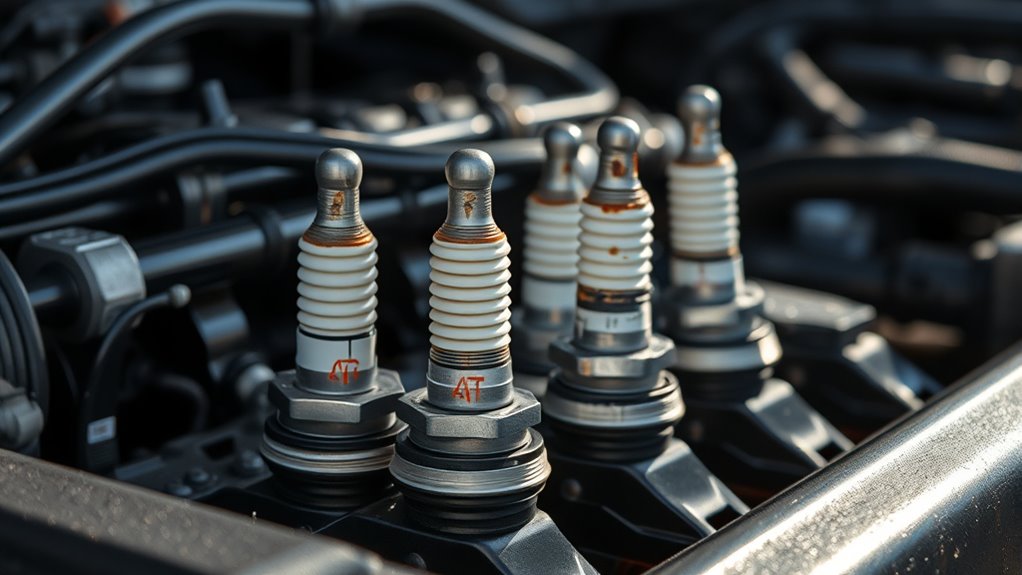
Are you noticing changes in your vehicle’s performance? These could be signs your spark plugs are failing. During spark plug testing, you might find they’re worn or fouled, causing misfires and rough idling. Here are three common signs:
Noticing engine misfires or rough idling? Your spark plugs might be worn or fouled, causing performance issues.
- Engine misfires or rough idle. Bad spark plugs disrupt the ignition system, leading to uneven engine performance.
- Reduced fuel efficiency. Worn plugs cause incomplete combustion, making your engine work harder.
- Difficulty starting the vehicle. Failing spark plugs can prevent proper ignition, leading to hard starts or failure to start altogether.
Recognizing these signs early can save you money and prevent further damage. If you notice any of these issues, it’s a good idea to check your spark plugs and perform spark plug testing. Problems within the ignition system often trace back to the spark plugs, so timely replacement guarantees smooth operation.
How Do Onboard Diagnostics Detect Spark Plug Problems?
Your vehicle’s onboard diagnostics system keeps an eye on how the engine is running. If there’s a problem with the spark plugs, like misfires, the system notices something’s off. It detects changes in engine performance that happen when spark plugs aren’t firing properly.
When it spots these issues, it records specific misfire codes. This way, your car can warn you early on, so you can get the problem checked out before it turns into a bigger, more expensive repair.
Monitoring Engine Performance
Onboard diagnostics systems play an essential role in detecting spark plug problems by continuously monitoring engine performance parameters. They track key signals like ignition timing, fuel efficiency, and exhaust emissions through engine diagnostics and performance monitoring.
When a spark plug starts to fail, these systems notice irregularities such as misfires, incomplete combustion, or inconsistent acceleration. They analyze the data and compare it to baseline norms, which can trigger warning lights or error codes.
Specifically, these systems observe:
- Variations in sensor readings related to combustion efficiency
- Fluctuations in engine RPM and throttle response
- Changes in emissions that suggest incomplete combustion
This constant monitoring helps identify spark plug issues early, preventing more serious engine damage.
Detecting Misfire Codes
When a spark plug begins to misfire, onboard diagnostic systems actively monitor engine parameters to detect the issue. These systems track variables like oxygen levels, fuel mixture, and engine timing to spot irregularities caused by spark plug problems.
Misfire detection relies on sensors such as oxygen sensors and the crankshaft position sensor, which help identify when combustion isn’t happening properly. If a misfire happens repeatedly, the system triggers a trouble code, often P0300 or specific cylinder misfire codes, indicating spark plug issues.
Regular spark plug maintenance can prevent misfire detection from turning into bigger engine problems. When a misfire code appears, it’s a clear sign to check and replace worn or faulty spark plugs, helping keep your engine running smoothly and efficiently.
Do Specific Error Codes Point to Spark Plug Issues?
Are specific error codes reliable indicators of spark plug problems? Not always. While some codes can hint at issues with spark plug types or ignition timing, they often need careful interpretation.
For example, P0300 (Random Misfire) suggests misfiring, which could be caused by worn or incorrect spark plugs. But it can also point to ignition timing or fuel system issues.
Codes like P0301-P0308 (Cylinder-specific Misfire) might indicate a problem with a particular spark plug or its coil. However, they could also involve spark plug gaps or ignition timing errors.
Lastly, codes such as P0171 or P0174 (System Too Lean) may be caused by faulty spark plugs that aren’t firing properly. But they could also be due to vacuum leaks or fuel delivery problems affecting spark performance.
How to Interpret P0300 and Other Spark-Related Diagnostic Codes
Understanding how to interpret diagnostic codes like P0300 is important because they point to misfires that can involve multiple cylinders or the whole engine.
P0300 signals a random or multiple-cylinder misfire, which can be caused by issues with spark plugs, among other things. If you see this code, start by checking your spark plug types to make sure they’re the right fit and in good shape.
Worn or faulty spark plugs can cause incomplete combustion, leading to engine misfire and a rough running engine. Other related codes like P0301-P0308 specify misfires in individual cylinders, helping you identify which spark plug or coil might be faulty.
Interpreting these codes correctly helps you diagnose whether the problem comes from spark plug wear, incorrect gap settings, or ignition system failures. Recognizing how these codes connect to your spark plug types and engine misfires can save you time and prevent further engine damage.
Should You Reset Error Codes Before Replacing Spark Plugs?
Should you reset error codes before replacing spark plugs? Generally, it’s a good idea to reset error codes after doing spark plug maintenance. This helps ensure the vehicle’s computer shows the current state and prevents old codes from causing confusion.
Reset error codes after spark plug maintenance to ensure accurate diagnostics and current vehicle status.
Consider these points:
- Clear false alerts: Reset error codes to remove outdated or irrelevant codes that might mislead diagnostics.
- Verify repairs: After replacing spark plugs, resetting codes helps you see if the issue comes back, confirming the spark plugs are working right.
- Avoid masking problems: Not resetting error codes might hide underlying issues that need attention, making diagnostics harder.
Some technicians prefer to clear codes before replacing spark plugs, while others wait until after to see if the repair was successful. In the end, resetting error codes is an important part of spark plug maintenance that helps keep your vehicle running smoothly and diagnostics clear.
Are OEM or High-Quality Spark Plugs Necessary for Accurate Diagnostics?
Using high-quality or OEM (original equipment manufacturer) spark plugs can really improve your vehicle’s diagnostic accuracy. OEM benefits include a precise fit and performance, making sure the engine runs as it should.
When you go for OEM or top-tier spark plugs, you get better quality assurance. This reduces the chance of false codes caused by mismatched or substandard parts.
High-quality spark plugs deliver a consistent spark, helping sensors and diagnostic tools accurately identify issues. Cheaper, generic plugs can cause misfires or inconsistent performance, which may lead to incorrect diagnostic readings.
This can make troubleshooting more difficult and extend your repair time. Investing in OEM or premium spark plugs ensures your vehicle runs smoothly and that your diagnostic systems work correctly.
Ultimately, using the best spark plugs lowers the risk of inaccurate codes and gives you confidence that your vehicle’s diagnostics reflect real problems—not faulty parts or performance issues.
How to Diagnose Spark Plug Problems Using an OBD Scanner
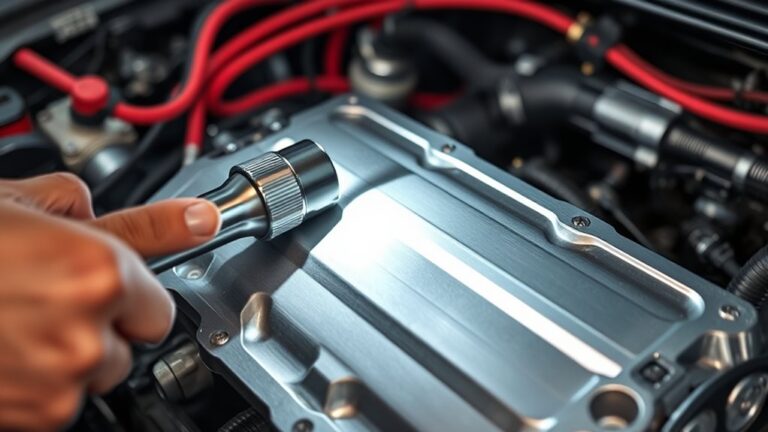
An OBD scanner is a handy tool for spotting spark plug problems quickly and accurately. It helps you identify issues related to spark plug maintenance and overall engine performance.
To diagnose spark plug issues with an OBD scanner, start by connecting it to the vehicle’s OBD-II port, usually located under the dashboard. Then, scan for error codes, especially P0300-P0308, which indicate misfires or ignition problems linked to spark plugs.
Next, analyze live data streams to check ignition coil signals, misfire counts, and fuel trim values. These can reveal if your spark plugs or related components are not working properly.
Using an OBD scanner makes troubleshooting easier by pinpointing issues without removing parts unnecessarily. It’s important to interpret error codes correctly to decide whether spark plug maintenance or further inspection is needed.
This approach saves you time and helps keep your engine running smoothly.
When Is It Time to Replace Spark Plugs to Prevent Error Codes?
Ever wonder when it’s time to replace your spark plugs before error codes pop up? Your spark plug lifespan usually ranges from 30,000 to 100,000 miles, depending on your vehicle and the type of plugs used.
Spark plugs typically last 30,000 to 100,000 miles depending on your vehicle and plug type.
Following the manufacturer-recommended replacement intervals is key to preventing misfires that can trigger error codes. Signs like rough idling, poor acceleration, or decreased fuel efficiency often mean it’s time for a change.
Regular inspections can help you catch worn or fouled plugs early. If your vehicle’s manual suggests replacing plugs every 60,000 miles, don’t wait until issues arise—stick to that schedule.
Replacing spark plugs proactively keeps your engine running smoothly and reduces the risk of error codes related to ignition problems. Staying ahead of maintenance intervals helps your vehicle perform at its best and avoids unexpected warning lights.
Frequently Asked Questions
Can Faulty Spark Plugs Cause Other Sensor Error Codes?
Faulty spark plugs can indeed cause other sensor error codes. When spark plugs reach the end of their lifespan, misfires or poor combustion happen, putting extra stress on sensors like the oxygen sensor or MAF sensor.
Over time, these sensors can become more sensitive or faulty because of the added strain. This can lead to error codes that aren’t directly related to the spark plugs but are connected to their improper functioning.
Regularly inspecting and replacing spark plugs helps prevent sensor issues and keeps your engine running at its best.
Are All Misfire Codes Related to Spark Plug Issues?
Not all misfire codes are directly caused by spark plug issues. While worn spark plugs with a limited lifespan can lead to misfires, other factors like ignition timing problems, faulty coils, or fuel delivery issues can also trigger these codes.
If your spark plugs are old or improperly gapped, they might cause misfires. But it’s important to check ignition timing and other components to find the real cause.
How Do Spark Plug Gaps Influence Error Detection?
Spark plug gaps greatly influence error detection because incorrect gaps can cause misfires or incomplete combustion, leading to engine issues. Using the right gap specifications ensures your spark plugs fire properly, which helps sensors detect any irregularities.
Spark plug materials like platinum or iridium affect durability and performance but don’t directly impact error detection. Maintaining proper gap specifications guarantees your engine runs smoothly and minimizes false error codes.
Can Driving Habits Affect Spark Plug-Related Error Codes?
Yes, your driving habits can affect spark plug-related error codes.
Frequent short trips, harsh acceleration, or driving in extreme conditions can cause engine temperature to fluctuate.
This can lead to incomplete combustion. These conditions put stress on the spark plugs, which may cause misfires or fouling.
As a result, the vehicle’s sensors detect these issues and may trigger error codes.
Over time, this can indicate problems with spark plug performance tied to how you drive.
Do Aftermarket Spark Plugs Impact Diagnostic Accuracy?
Think of aftermarket spark plugs as different musical instruments in your engine’s orchestra. While they can boost performance, some types might hide or mimic issues, affecting how accurately you can diagnose problems.
These variations influence your engine’s rhythm, sometimes causing false error codes or missing actual issues. So, if you go with aftermarket options, be aware that their performance and compatibility can impact how well diagnostics reflect your engine’s true health.
Conclusion
To keep your car running smoothly, you need to pay attention to your spark plugs. Address signs of failure early, understand how error codes relate to spark plug issues, and use diagnostic tools effectively.
Whether you’re replacing them yourself or seeking professional help, prioritize quality parts and proper maintenance. Prevent misfires, improve performance, and avoid unnecessary codes by staying proactive.
When spark plugs fail, your car’s health and your peace of mind suffer. Knowing if bad spark plugs can throw a code helps you catch problems early and keep your vehicle running reliably.