Car Shuts off While Driving Battery Light Comes on: [Solved
Are you tired of your car unexpectedly shutting off while you’re on the road? You’re not alone—many drivers struggle with this frustrating issue.
When your car stalls suddenly and the battery light comes on, it can be both unsettling and dangerous.
If your car shuts off while driving and the battery light comes on, it’s usually due to electrical or fuel system issues, like a failing alternator, loose battery terminals, or a worn serpentine belt.
These problems disrupt power flow and can cause stalling.
To prevent further damage, it’s important to check these components and seek professional help if issues persist.
Stay with us to find out more about diagnosing and fixing these common vehicle troubles.
Key Takeaways
- A failing alternator or loose battery terminals can cause your engine to shut off suddenly and turn on the battery warning light.
- If the serpentine belt fails, it can disrupt power flow and lead to electrical issues or engine stalling.
- Keeping an eye on dashboard lights, how your engine runs, and doing regular maintenance helps catch electrical problems early.
- Faulty sensors, damaged wiring, or a malfunctioning voltage regulator can cause the battery light to flicker and lead to power loss.
- Getting a professional diagnosis right away and doing preventive maintenance can stop further damage and keep your vehicle safe.
Why Does My Car Shut Off While Driving and the Battery Light Flickers?
If your car suddenly shuts off while driving and the battery light flickers, it usually points to an electrical problem. But engine issues and fuel problems can also cause these symptoms.
A sudden engine shut-off and flickering battery light often indicate electrical, engine, or fuel system issues.
Engine issues, like a failing sensor or overheating, can cause the engine to shut down to prevent damage. The flickering battery light signals that there’s an electrical disruption.
Fuel problems, such as a clogged fuel filter or faulty fuel pump, can cut off fuel delivery and cause the engine to stall unexpectedly.
When these issues happen, your vehicle’s systems struggle to stay powered, leading to sudden shutdowns. The flickering battery light shows that your charging system isn’t working right, making things worse.
If you notice these symptoms, it’s important to get your car checked out soon. Fixing engine or fuel problems early can prevent more damage and keep you safe on the road.
Common Causes of Car Power Loss and Battery Light Activation
If your car is losing power or the battery light comes on, it usually has something to do with the alternator or the battery connections. When the alternator isn’t working right, it can’t keep the battery charged, which might cause your engine to die unexpectedly. It’s like the car’s giving you a heads-up that something’s off with the charging system.
On the other hand, if the battery terminals are loose or corroded, it can mess with the electrical flow too. That can lead to similar warning signs, making it look like there’s a bigger issue. So, it’s worth checking these connections first before diving into more complicated repairs.
Alternator Malfunction Risks
Alternator malfunctions are a common cause of sudden power loss and the activation of the battery warning light while driving. When your alternator isn’t working properly, it can’t keep your battery charged, leading to voltage fluctuations that disrupt the electrical system.
You might notice your lights dimming or your dashboard flickering during these issues. Alternator testing helps identify problems early, like worn brushes or faulty diodes, which can cause inconsistent power delivery.
If left unchecked, a failing alternator can cause your engine to stall unexpectedly, leaving you stranded. Regular inspections and understanding the risks of alternator problems are key to preventing breakdowns and keeping your vehicle running smoothly.
Battery Connection Issues
When the alternator malfunctions, it can cause the battery to struggle with maintaining a proper charge. This often leads to power loss while you’re driving. Battery connection issues are common causes of this problem.
Loose or corroded battery terminals can impair connection integrity. This results in insufficient power flow, which can cause your vehicle to stall or the battery light to come on. It’s important to inspect the terminals for corrosion, rust, or looseness.
Tightening or cleaning the terminals can restore a proper connection. Use a mixture of baking soda and water to clean corroded terminals, and make sure all connections are secure. Replacing faulty cables may also be necessary if they are damaged.
Addressing these connection issues helps maintain steady power and prevents unexpected shutdowns. It also reduces the chances of the battery light activating unexpectedly.
How the Alternator Affects Your Car’s Power
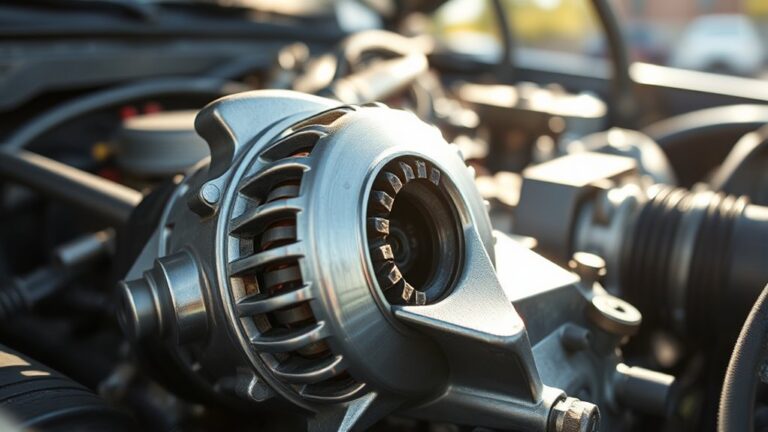
Even though your engine powers the car, the alternator is responsible for keeping the electrical system running smoothly. It generates electricity to power your vehicle’s lights, radio, and other electronic components while recharging the battery. The alternator types vary, including standard, high-output, and lightweight models, each designed for specific vehicle needs.
Charging efficiency is key; a well-functioning alternator guarantees your battery stays charged and your electrical systems operate without interruption. If the alternator fails or isn’t working efficiently, your car may lose power suddenly, causing it to shut off.
A properly functioning alternator keeps your battery charged and electrical systems running smoothly.
A weak or malfunctioning alternator can also trigger warning lights, like the battery light on your dashboard. Regular maintenance and understanding the different alternator types can help prevent unexpected power loss while driving.
Keep an eye on signs of alternator trouble to avoid your vehicle shutting down unexpectedly.
Battery Problems That Can Turn Off Your Vehicle
Battery problems like corrosion or damage can really cause your car to stall unexpectedly. It’s one of those issues that can catch you off guard if you’re not careful.
Also, loose or broken cables can mess with the electrical flow, which might turn your vehicle off suddenly. So, it’s a good idea to keep an eye on these things to avoid getting stranded while you’re out and about.
Alternator Malfunctions Affect Power
A malfunctioning alternator can cause your vehicle to lose power unexpectedly, leading to it shutting off while you’re driving. When the alternator isn’t working properly, it can’t recharge the battery or supply consistent electrical power.
This often results in battery drain, causing the battery to weaken and eventually fail. As a consequence, electrical failure occurs, affecting crucial systems like fuel injection and ignition.
You might notice the battery light illuminating on your dashboard or dimming headlights. If the alternator continues to malfunction, your vehicle will lose power completely, risking an unexpected shutdown.
Regularly checking your alternator’s performance can prevent these issues. Addressing alternator problems early helps maintain electrical stability and keeps your vehicle running smoothly without unexpected stalls.
Battery Corrosion and Damage
Corrosion and damage to your vehicle’s battery terminals can cause sudden shutdowns while you’re driving. When corrosion builds up, it creates a poor connection between the battery and cables, leading to electrical issues and battery failure.
Regular battery maintenance is essential to prevent corrosion. Clean terminals and cable ends with a wire brush and apply a protective coating or terminal spray.
Prevention is key to avoiding unexpected stalls and keeping your vehicle running smoothly. Damaged or cracked terminals can also stop electrical flow, making the problem worse.
If you notice corrosion or damage, address it promptly to maintain reliable power. Proper care of your battery terminals helps prevent sudden shutdowns and extends the life of your vehicle’s electrical system.
Loose or Broken Cables
Loose or broken cables can disrupt the flow of electricity, causing your vehicle to shut off unexpectedly. Check the battery terminals for corrosion or looseness, as these can prevent proper current flow.
During cable inspection, make sure all connections are tight and secure. Damaged or frayed cables might be the problem, so look for signs of wear or breaks.
If you see any corrosion on the terminals or cables, clean them thoroughly or replace damaged parts. Properly secured and intact cables ensure a steady power supply to your engine.
Ignoring loose or broken cables can lead to more electrical issues and sudden shutdowns while driving. Regular cable checks are key to preventing these problems and keeping your vehicle running smoothly.
How the Serpentine Belt and Charging System Keep Your Car Running
The serpentine belt plays an essential role in keeping your car running smoothly by transferring power from the engine to various components, including the alternator and water pump. When it works properly, it keeps your charging system active, so your battery stays charged and your electrical systems run correctly.
If the belt slips or breaks, your charging system can fail. That can cause your battery light to come on and your car to shut off unexpectedly.
Here are 4 critical points to understand:
- The serpentine belt powers your alternator, which keeps your battery charged while you’re driving.
- A faulty serpentine belt can cause the charging system to fail, leading to electrical issues.
- The water pump relies on the serpentine belt, preventing your engine from overheating.
- A worn or broken serpentine belt can cause your vehicle to stall and leave you stranded.
Keeping the serpentine belt in good condition is key to avoiding sudden breakdowns and ensuring your charging system keeps your car alive.
Signs of a Faulty Voltage Regulator
A faulty voltage regulator can cause your vehicle’s electrical system to behave unpredictably, often giving subtle clues that something’s wrong. You might notice flickering or dimming headlights, especially when idling or accelerating.
Voltage fluctuations can lead to erratic instrument panel readings or unexpected warning lights on the dashboard. If your battery light keeps coming on and off, it’s a sign your regulator isn’t maintaining proper voltage levels.
Erratic dashboard readings and intermittent battery warning lights indicate a faulty voltage regulator.
During electrical checks, you may see inconsistent voltage readings on your multimeter, which means the regulator isn’t regulating power correctly. Electrical accessories like power windows or radios might also stop working properly.
These issues tend to get worse over time, causing your car to run poorly or even shut off unexpectedly. Paying attention to these signs helps you catch a faulty voltage regulator early, preventing more damage and keeping your electrical system stable and reliable.
First Steps to Diagnose Power Loss in Your Car
When your car suddenly loses power while driving, start by noting exactly when it happens. Does it stall at a stoplight, during acceleration, or on the highway? That detail helps guide your diagnosis.
Next, check some common causes. First, inspect the fuel system. Make sure your fuel tank isn’t empty and look for leaks or clogs in the fuel lines. A blocked fuel filter can cause power loss.
Then, examine the ignition. See if your spark plugs are worn or dirty. Faulty ignition can lead to misfires and sudden shutdowns.
Also, watch out for warning lights like the battery light or check engine light. These can point to electrical issues or sensor problems affecting your car’s power.
Finally, listen for unusual sounds. Sputtering or coughing noises could indicate issues with fuel delivery or ignition timing.
When to Seek Professional Help for Car Shutting Off and Battery Light Issues
If your car keeps shutting off unexpectedly or the battery light stays on, it’s a good idea to get it checked out. Those warning signs aren’t just minor glitches—they could indicate a bigger problem under the hood.
Electrical issues and warning lights like the battery light shouldn’t be ignored. Waiting too long might lead to more serious damage or even safety risks while you’re on the road. So, if you notice these signs, it’s best to see a professional sooner rather than later.
Persistent Shutting Off
Persistent engine shutting off while you’re driving is a serious problem that needs quick attention, especially if the battery light is flashing or stays on. This could mean there’s an issue with your fuel system or ignition that could be dangerous.
Ignoring these signs can lead to breakdowns or even accidents. You should get professional help right away if:
- Your car stalls unexpectedly, risking a collision or injury.
- The battery light stays on, which points to electrical or charging system issues.
- The engine struggles or misfires before shutting down.
- You notice rough idling or trouble starting, indicating fuel or ignition problems.
Dealing with these problems fast can save you money on repairs and keep you safe on the road. Don’t wait—have a mechanic check and fix the persistent shutting off issues.
Warning Light Activation
Noticing your dashboard warning lights flicker on while you’re driving should never be ignored, especially if your car suddenly shuts off or the battery light stays on. These warning lights are signals that something’s wrong with your vehicle’s electrical system.
When you see them, it’s a good idea to get warning light diagnostics done promptly. Ignoring these signals can lead to more serious issues, like a complete breakdown.
A professional can perform an electrical system analysis to find the root cause, whether it’s a faulty alternator, battery, or wiring problem. Addressing warning light activation early can save you time and money, and most importantly, keep you safe on the road.
Don’t delay seeking help when warning lights come on unexpectedly.
Unusual Electrical Behavior
When your car unexpectedly shuts off or the battery light stays on while you’re driving, it’s a clear sign that your vehicle’s electrical system is having problems.
Unusual symptoms like flickering dashboard lights, sudden engine stalls, or warning lights flashing are warning signs of electrical issues.
Ignoring these signs can lead to breakdowns or safety hazards.
Here are four key moments to get professional help:
- You notice persistent electrical glitches, like inconsistent instrument panel behavior.
- Your car stalls suddenly without any warning.
- The battery light stays on even after a recent charging system check.
- You see dimming headlights or other electrical components flickering unexpectedly.
Dealing with these issues quickly can prevent costly repairs and keep you safe on the road.
Preventive Maintenance to Avoid Power Failures
Regular preventive maintenance is key to avoiding power failures that can cause your car to shut off unexpectedly. Doing routine checks helps catch issues before they turn into big problems.
Start by inspecting your battery terminals for corrosion and making sure they’re tightly connected. Check your alternator’s belt for wear and proper tension— a worn belt can cause charging issues.
Inspect battery terminals for corrosion and ensure tight connections for reliable power.
It’s also a good idea to regularly test your battery’s voltage to ensure it’s holding a proper charge. Examine your wiring for frays or damage, which can disrupt electrical flow.
Don’t forget to inspect the fuse box for blown fuses, as these can lead to electrical failures. Keeping these parts in good shape reduces the risk of sudden power loss while you’re driving.
Making these checks part of your regular maintenance can save you from unexpected breakdowns and expensive repairs. Staying proactive with preventive care keeps your vehicle reliable and safe on the road.
How to Fix Your Car’s Shutting Off Problem and Replace Faulty Parts
If your car keeps shutting off unexpectedly, diagnosing and replacing faulty parts can bring back its reliability. The problem usually comes from issues in the engine or electrical systems. To fix it, you need to quickly find and address the root cause.
Here are four key steps to help you get started:
- Inspect the battery and alternator. Faulty electrical parts can cause your car to stall. Check the battery voltage and the alternator’s output.
- Check the fuel system. Clogged filters or failing fuel pumps can mess with engine performance and lead to shutdowns.
- Examine the ignition system. Worn spark plugs or ignition coils can cause misfires and engine stalls.
- Replace damaged sensors. Bad sensors, like the crankshaft position sensor, can mess with engine control and cause your car to shut off.
Fixing these parts can make your engine run smoothly and keep your electrical systems reliable. Acting quickly can prevent further damage and help you stay safe on the road.
Frequently Asked Questions
Can a Bad Ground Connection Cause My Car to Shut off Unexpectedly?
Yes, a bad ground connection can cause your car to shut off unexpectedly. It messes with the electrical system by disrupting the flow of power, which can lead to engine stalling or the battery light coming on.
When ground connections are loose or corroded, your vehicle’s electrical system struggles to work properly. Regularly checking and tightening these connections can help prevent these issues.
Keeping your grounds in good shape ensures your car runs smoothly and helps avoid unexpected shutdowns.
How Does Temperature Affect the Battery Light and Power Issues?
Temperature swings can turn your battery into a temperamental artist, affecting its performance.
Extreme cold slows chemical reactions inside the battery, reducing power and causing the battery light to flicker or come on.
On the flip side, excessive heat speeds up battery wear, leading to voltage drops and power issues.
So, when temperatures hit the extremes, your battery struggles to deliver consistent energy.
That’s why it’s important to keep it well-maintained to prevent unexpected stalling or electrical problems.
Could a Faulty Fuse Lead to Sudden Engine Shutdowns?
Yes, a faulty fuse can cause sudden engine shutdowns by disrupting the electrical system. When a fuse blows, it cuts off power to critical components, including the engine control unit, which can lead to engine stalls.
To fix this, you should replace the blown fuse and perform an electrical diagnosis to find out why the fuse failed in the first place. Regularly inspecting fuses can help prevent unexpected shutdowns and keep your vehicle running smoothly.
Is It Safe to Drive With the Battery Light On?
You shouldn’t drive with the battery warning light on because it signals electrical issues that could cause your engine to stall. The warning means your battery isn’t charging properly, which can lead to sudden shutdowns.
Ignoring this can damage your vehicle’s electrical system or leave you stranded. It’s best to get your battery and alternator checked out quickly to keep your car running safely.
Taking care of it now helps you avoid unexpected breakdowns on the road and keeps you safe while driving.
How Long Can I Drive With a Blinking Battery Warning Light?
You shouldn’t drive long with a blinking battery warning light because it signals potential electrical issues and battery drain.
Continuing to drive risks your car stalling unexpectedly and damaging your alternator or battery further.
If the light blinks, pull over safely and get your vehicle checked promptly.
Addressing electrical issues early helps prevent breakdowns and costly repairs, keeping your car reliable and safe on the road.
Conclusion
If your car stalls and the battery light flickers, don’t ignore it—these are signs of underlying issues like a failing alternator or battery.
Regular maintenance can reduce your risk of unexpected breakdowns, which cost drivers an average of $500 annually in repairs.
Staying vigilant and addressing problems early keeps your vehicle reliable and safe on the road.
Remember, timely fixes for issues like a car shutting off while driving and the battery light coming on can save you money and prevent inconvenient breakdowns.