Can a Bad Alternator Cause a Misfire?
Are you feeling odd vibrations, rough idling, or hesitation while driving? You’re not alone—many drivers struggle with sudden engine roughness and misfires, often wondering what’s going wrong.
One common culprit might be a bad alternator, but can it really cause a misfire? Let’s dive into that.
Yes, a bad alternator can cause a misfire because it disrupts your vehicle’s electrical system. When the alternator isn’t supplying steady voltage, it can affect the ignition system and fuel injectors.
This leads to irregular spark timing and engine misfires.
This issue can cause rough running, hesitation, and poor acceleration. If you’re experiencing these symptoms, it’s a good idea to check your alternator.
Want to learn more about how an alternator impacts engine performance and how to spot issues early? Keep exploring the details.
Key Takeaways
- A failing alternator causes voltage fluctuations, which can disrupt spark delivery and lead to engine misfires.
- Inconsistent electrical supply affects ignition system performance, increasing the risk of misfiring.
- A bad alternator may cause sensor errors, resulting in incorrect engine timing and misfire issues.
- Voltage instability from a faulty alternator can impair fuel injection, contributing to rough running and misfires.
- Overall electrical system instability caused by a bad alternator can indirectly lead to engine misfire.
How Does the Alternator Keep Your Car’s Electrical System Running?
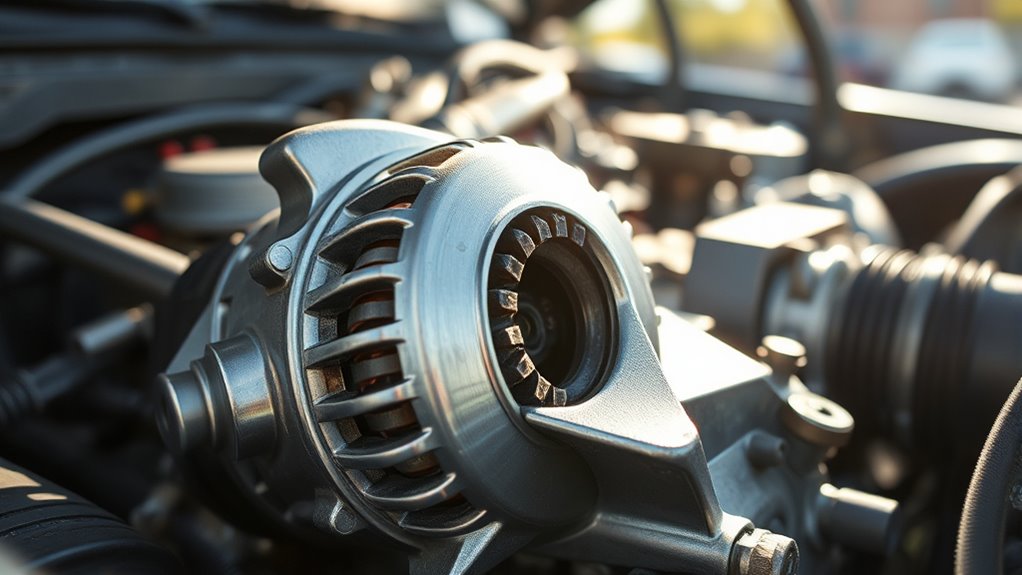
The alternator plays an essential role in keeping your car’s electrical system functioning properly. Its main job is to generate electricity while your engine runs, powering your vehicle’s lights, radio, and other electronic parts.
The alternator ensures your car’s electrical system stays powered and reliable while the engine runs.
It converts mechanical energy from the engine into electrical energy through electromagnetic induction. This process helps maintain electrical stability, making sure your car’s systems work smoothly without power fluctuations.
When the engine is on, the alternator charges the battery, preventing it from dying and providing a steady flow of electricity. If it isn’t working right, you might notice dimming lights, slow electronics, or a dead battery.
Without a properly functioning alternator, your electrical system can’t keep up with the demand for power. This can lead to various issues and eventually leave you stranded.
In short, the alternator keeps your vehicle’s electrical components energized and running reliably, making it a vital part of your car’s overall performance.
Can a Bad Alternator Cause Your Engine to Misfire?
Can a faulty alternator cause your engine to misfire? Yes, it can. When your alternator isn’t working properly, it might not supply steady power to your vehicle’s electrical system.
This inconsistency can mess with the ignition system, causing irregular spark delivery. Without steady sparks, your engine’s fuel mixture may not ignite correctly, leading to misfires.
A failing alternator can also cause voltage fluctuations, which can disrupt sensors that control fuel injection and ignition timing. These issues can make your engine run rough or even stall.
While a bad alternator doesn’t directly cause misfires like a faulty spark plug, its inability to keep the electrical system stable can indirectly lead to engine misfire problems.
If you notice your engine misfiring along with electrical issues or dimming lights, it’s a good idea to get your alternator checked. Catching the problem early can help prevent more serious engine damage later on.
How Do Voltage Fluctuations Affect Engine Performance?
Voltage fluctuations can really mess with your engine’s performance. When the voltage isn’t steady, your spark plugs might not get the consistent power they need to fire properly. That inconsistency can cause your engine to run rough or unevenly, which is never good.
Plus, when the voltage drops or spikes, the sensors in your car can send incorrect information to the engine control unit. This can make the engine respond oddly or poorly, leading to issues like hesitation, misfires, or even reduced fuel efficiency. So, keeping your voltage steady is pretty important for smooth engine operation.
Voltage Drops Impact Spark
When voltage drops happen in your vehicle’s electrical system, they can cause big issues with spark performance. Low voltage can delay spark timing, making your engine run rough or misfire.
Without steady electrical power, the spark might weaken or not ignite the fuel properly. This leads to incomplete combustion, less power, and even stalling.
Voltage drops can also cause the spark to fire too early or too late, messing up the precise timing your engine needs to run smoothly. If your alternator isn’t providing consistent voltage, these fluctuations happen more often.
All these problems affect overall engine performance. Keeping your electrical system at the right voltage levels helps ensure spark timing stays accurate and the electrical system remains stable.
This is crucial for smooth, reliable engine operation.
Fluctuations Disrupt Sensors
Fluctuations in electrical voltage don’t just affect the spark; they also disrupt the sensors that monitor your engine’s vital functions. When voltage varies, sensor sensitivity can become compromised, causing inaccurate readings.
These sensors rely on stable electrical signals to detect things like air intake, temperature, and oxygen levels. Electrical interference from a failing alternator can introduce noise into these signals, confusing the engine control unit (ECU).
As a result, the ECU might misinterpret data, leading to improper fuel delivery or timing adjustments. This disruption can cause rough idling, poor acceleration, or misfires.
Basically, unstable voltage hampers your sensors’ ability to provide reliable information, which directly impacts engine performance and efficiency. Keep in mind that a faulty alternator often triggers these voltage fluctuations and sensor issues.
Engine Hesitation Risks
Engine hesitation often happens when electrical issues mess with your vehicle’s performance. Unstable voltage levels are a common cause of this problem.
Fluctuating voltage can make your engine hesitate or sputter, which risks poor engine performance. When electrical stability drops, your engine’s sensors struggle to communicate properly. This can lead to misfires or rough running.
Think of it like a power stream flowing unevenly, causing disruptions at critical moments.
| Voltage Level | Effect on Engine Performance |
|---|---|
| Stable | Smooth acceleration |
| Fluctuating | Hesitation, misfires |
| Low | Reduced power, stalling |
| High | Engine misfire, potential damage |
What Are the Signs of an Alternator Causing Engine Problems?
You might start to notice your headlights flickering or your dashboard lights dimming unexpectedly—that’s often a sign something’s up with your alternator. If your battery warning light pops on, that’s another clear indication that your charging system isn’t functioning properly. And if your engine stalls suddenly or runs rough, it could be because the alternator isn’t providing steady power anymore.
Dim or Flickering Lights
Dim or flickering lights are often the first signs that your alternator might be failing and causing engine problems. If you notice your headlights dimming or flickering, it indicates electrical fluctuations that could signal a weak alternator. These fluctuations happen because the alternator isn’t providing a steady power supply, which affects your vehicle’s lighting and electrical systems.
| Symptom | Possible Cause |
|---|---|
| Dimming headlights | Alternator not providing enough power |
| Flickering lights | Loose or worn alternator belt |
| Sudden electrical issues | Failing alternator or faulty wiring |
Pay attention to these signs—they’re key indicators your alternator may need attention before more serious engine problems happen.
Battery Warning Indicator
Have you noticed the battery warning light flickering or staying on your dashboard? This warning is an important sign that something’s wrong with your vehicle’s electrical system, often related to your alternator.
When the alternator isn’t charging properly, your battery’s life can be affected, leading to insufficient power for engine functions. The warning light acts as an early alert that your car’s battery isn’t getting the charge it needs.
Ignoring this sign can cause your battery to drain quickly and might even lead to engine problems. If you see warning lights related to the battery, don’t wait—get your alternator checked as soon as possible.
Fixing these issues early can prevent bigger problems and help keep your engine running smoothly.
Unusual Engine Stalling
Unusual engine stalling is a common sign that your alternator might be causing problems. When your alternator isn’t working properly, it can’t keep your engine’s electrical connections stable, which can lead to inconsistent engine performance.
You might notice your engine stalls unexpectedly, especially at low speeds or when idling. These stalls happen because the electrical system isn’t supplying enough power to essential engine parts.
Poor electrical connections from a failing alternator can also cause fluctuations in power. This can result in rough running or misfires, making your vehicle feel jerky or unstable.
If your vehicle stalls suddenly without warning, it’s a strong sign that the alternator could be the culprit. Catching these issues early can help prevent further damage and keep your engine running smoothly.
How Might a Failing Alternator Disrupt Ignition Timing?
When a failing alternator can’t maintain a steady voltage supply, it causes fluctuations in the electrical system that directly affect your vehicle’s ignition timing.
These voltage drops or spikes can send inconsistent signals to your ignition system, disrupting the precise timing needed for proper engine operation. This electrical interference can lead to misfires by throwing off the spark plug firing schedule.
When the ignition timing is off, your engine may run rough, hesitate, or even stall. Since the ignition system depends on a stable electrical environment, any instability caused by a weak or failing alternator can interfere with this process.
You might notice your engine running unevenly or experiencing power loss. Essentially, a malfunctioning alternator doesn’t just affect the battery — it can also disturb the delicate timing of your engine’s spark, causing misfires and other performance problems.
Why Is a Stable Voltage Supply Important for Engine Operation?
Why is a stable voltage supply necessary for engine operation? Your engine relies on steady voltage to run smoothly. When voltage fluctuates, it can cause misfires, rough idling, or poor acceleration.
A stable voltage makes sure sensors and electronic parts get the power they need to work properly. Without it, fuel injectors, ignition systems, and other key components might misfire or not perform well.
This can lead to lower engine efficiency, higher emissions, and even damage over time. A healthy alternator keeps the voltage steady by providing a consistent electrical supply.
If the voltage drops or spikes, your engine’s performance takes a hit. Keeping the voltage stable helps your engine run efficiently, respond properly, and avoid unnecessary wear.
In the end, a steady voltage isn’t just about preventing misfires. It’s essential for peak engine performance and long-term durability.
Common Symptoms of Alternator Failure Beyond Misfires
A failing alternator can cause more than just engine misfires; it often shows a range of other electrical issues. You might notice your battery dying quicker than usual because the charging system isn’t keeping the right voltage, leading to dead batteries more often.
Electrical components like your headlights, dashboard lights, or radio may flicker or act erratically. Alternator noise, such as whining or grinding sounds, can also be a sign, especially if the belt is worn or loose. Poor power distribution can trigger warning lights on your dashboard.
You might also see dimming lights or experience electrical load fluctuations, which show the alternator can’t keep up. Regular maintenance like checking belt tension, inspecting for wear, and ensuring your charging system is working properly can help.
Addressing these symptoms early can prevent more serious damage to your electrical system and help extend your vehicle’s lifespan.
How to Troubleshoot if Your Alternator Is Causing Engine Issues
If you think your alternator might be causing engine problems, start by checking your vehicle’s electrical system first. A weak or failing alternator can cause voltage drops that mess with engine performance.
Begin by inspecting your battery connections to make sure they’re tight and free of corrosion. Next, listen for any unusual noises from your alternator, like squealing or grinding, which could mean it needs maintenance.
Use a multimeter to measure the voltage at your battery terminals. A healthy alternator should produce around 13.8 to 14.4 volts with the engine running. If it’s lower, your alternator could be the culprit.
Also, keep an eye on dashboard warning lights like the battery or check engine light. Catching these signs early can help prevent more serious engine issues.
How to Test Your Alternator for Potential Causes of Misfiring
Testing your alternator for potential causes of misfiring involves checking its output voltage and overall performance while the engine is running.
Proper alternator testing is key for diagnosing misfires because a failing alternator can cause inconsistent voltage levels that affect engine performance.
Start by using a multimeter set to DC voltage. Place the probes on the battery terminals with the engine running; a good alternator should produce between 13.8 and 14.8 volts.
If the voltage drops below this range, it could mean your alternator is weak or failing. You can also do a load test by turning on electrical accessories like headlights or the AC and then rechecking the voltage.
If the voltage drops significantly during this test, it’s a sign of potential alternator problems. While testing, listen for unusual noises or signs of belt slipping, which can also impact performance.
These steps help you determine if your alternator is contributing to misfire issues.
When Should You Seek Professional Help for Alternator-Related Engine Problems?
If you start noticing persistent electrical issues, like your headlights dimming or your dashboard electronics acting up, it’s a good idea to get it checked out. Unusual engine behavior, such as stalling or difficulty starting, can also be signs that something’s not right. And of course, if the battery warning light pops on, don’t ignore it—it’s often a sign your alternator isn’t charging the battery properly.
These symptoms usually point to a failing alternator that’s impacting your engine’s performance. It’s better to address the problem sooner rather than later, because catching it early can save you from more expensive repairs down the line. So, if any of these signs pop up, it’s worth making an appointment with a professional to get it looked at.
Persistent Electrical Issues
Persistent electrical issues in your vehicle can be a clear sign that your alternator isn’t working properly. If your dashboard lights flicker, headlights dim, or electronics behave unpredictably, it’s time for a check-up.
These symptoms often point to problems with the charging system, which can cause or contribute to misfires. Ignoring these signs can lead to more serious engine issues and costly repairs.
When electrical components malfunction repeatedly or inconsistently, it might mean your alternator struggles to supply stable power. If electrical issues keep happening despite simple fixes, it’s best to get a professional diagnosis.
A mechanic can identify the real problem, see if the alternator is to blame, and help prevent further damage to your engine. Don’t wait—address electrical problems early to keep your vehicle running smoothly.
Unusual Engine Behavior
Unusual engine behavior is often a warning sign that your alternator may be causing problems and warrants professional attention. If your engine runs rough, stalls unexpectedly, or shows irregular idling, it’s time to think about engine diagnostics.
Electrical anomalies like flickering lights or dashboard warning indicators can also signal alternator issues that affect engine performance. You should seek expert help if you notice:
- Sudden loss of power or acceleration
- Erratic engine RPMs
- Unusual noises when starting or running the engine
- Frequent stalling or misfiring
- Persistent electrical issues affecting vehicle systems
Addressing these signs early can prevent further damage and help your vehicle run smoothly. A professional mechanic can identify the root cause and recommend necessary repairs.
Battery Warning Indicators
Have you noticed warning lights or messages related to your battery on the dashboard? These warning lights often signal issues with your battery life or charging system, which could be caused by a failing alternator.
If the battery warning light stays on or flashes, it’s a sign you should seek professional help promptly. Ignoring these indicators can lead to your vehicle’s electrical system failing, causing engine misfires or stalling.
Also, if your battery drains quickly or your vehicle has trouble starting, it’s time for an inspection. Addressing warning lights early can prevent more serious engine problems later on.
Don’t wait until your car refuses to start. Get your charging system checked by a professional to make sure your alternator isn’t causing hidden damage.
Frequently Asked Questions
Can a Bad Alternator Cause Your Car to Stall Unexpectedly?
Yes, a bad alternator can cause your car to stall unexpectedly. When the alternator fails, it can’t provide consistent power, which can lead to stalling symptoms like engine hesitation or sudden shutdowns.
Keep an eye out for signs like dimming headlights or a warning light on your dashboard. These are clues that your alternator might be having issues.
If you notice these signs, it’s important to get your alternator tested quickly. It directly affects your vehicle’s ability to run smoothly.
How Does a Faulty Alternator Affect Fuel Efficiency?
Think of your car’s fuel efficiency as a delicate dance. A faulty alternator throws off the rhythm, causing your fuel system to work harder and electrical strain to increase.
This strain reduces fuel efficiency because the engine has to compensate for inconsistent electrical power, burning more fuel. Over time, a bad alternator can noticeably decrease your miles per gallon, making your car less economical and more prone to breakdowns.
Can Replacing the Alternator Resolve Engine Misfires?
Replacing the alternator can help resolve engine misfires caused by electrical issues. When your alternator is failing, it might not supply steady power to the engine control unit and spark plugs.
This can lead to poor engine performance and misfires. Installing a new alternator restores proper electrical flow, which can eliminate misfires and improve overall engine operation.
However, if misfires continue, other engine components might need to be checked.
What Other Vehicle Components Are Impacted by a Failing Alternator?
A failing alternator impacts your vehicle’s electrical system and battery performance. As it weakens, your battery can’t hold charge properly, causing dim lights and slow electronics.
You might also notice issues with your power windows, radio, or navigation. Over time, the alternator’s failure strains the entire electrical system, leading to engine stalling or misfires.
Additionally, other components like your starter motor, sensors, and even your vehicle’s computer can be affected. Addressing the problem quickly helps prevent further damage and keeps your vehicle running smoothly.
How Often Should You Have Your Alternator Inspected?
You should have your alternator inspected every 12,000 to 15,000 miles or once a year, whichever comes first.
Think of it as checking your car’s heartbeat—sometimes it’s steady, sometimes weak. The alternator lifespan varies, but regular inspections catch potential issues early.
Don’t wait for warning signs. Proactive checks keep your vehicle running smoothly and help prevent unexpected breakdowns.
Conclusion
If your engine’s misfiring feels like a stubborn echo in your ride, your alternator might be the silent culprit, quietly disrupting the symphony of your car’s electrical harmony.
Don’t let this hidden trouble turn your journey into a bumpy ride. Stay alert to signs, test your alternator, and when in doubt, call in the pros.
Catching the problem early keeps your engine humming smooth as a well-tuned orchestra, ready to hit every note perfectly.
Can a bad alternator cause a misfire? Yes, it can interfere with your engine’s performance and lead to misfiring.