How Do Electric Vehicles Work: Genius Guide
Feeling overwhelmed by the rising costs of fuel and maintenance? You’re not alone. Many people are turning to electric vehicles (EVs) to save money and reduce their environmental impact.
But how do these cars actually work?
Electric vehicles run entirely on electricity, using a rechargeable battery to power an electric motor that drives the car. The battery stores energy, which the motor converts into motion with instant torque, providing a smooth ride.
You can charge EVs at home or at fast stations; charging times vary.
Benefits include lower emissions, lower maintenance, and cost savings.
Curious about how these components work together? Keep exploring to uncover the full story behind electric vehicles.
Key Takeaways
Electric vehicles run solely on rechargeable batteries that power electric motors for propulsion. Batteries store electrical energy, which the motor then converts into mechanical energy to move the vehicle.
Charging EVs means plugging into power sources, and fast chargers can give you a quick boost in just 20-30 minutes. This makes recharging convenient and efficient.
EVs produce zero tailpipe emissions, helping reduce environmental impact compared to traditional gasoline-powered cars. It’s a cleaner way to get around.
Battery management and thermal systems are in place to help extend battery life and keep everything running safely and efficiently.
What Is an Electric Vehicle and How Does It Work?
Electric vehicles (EVs) are cars that run entirely on electricity instead of gasoline or diesel. Understanding the basics helps you see how they differ from traditional cars. Instead of an internal combustion engine, EVs use electric motors powered by rechargeable batteries, making them more environmentally friendly.
One big advantage is energy efficiency. EVs convert a higher percentage of stored energy into motion, which means less energy waste. This not only cuts emissions but also lowers your fuel costs over time.
When you drive an EV, you’re using a clean, renewable energy source, especially if you charge it with green power. The design usually has fewer moving parts than regular cars, so maintenance is simpler.
How Do EV Batteries Power the Car?
Batteries in electric vehicles store the electrical energy that powers the motor, acting as the car’s energy reservoir. The battery chemistry, often lithium-ion, determines its energy density, impacting how far you can travel on a single charge.
As you charge and discharge the battery through cycles, its capacity gradually declines. Advanced thermal management keeps it within safe temperature ranges, helping to prolong battery lifespan.
Voltage levels regulate the power output, providing the necessary energy to drive the motor efficiently. Battery management systems monitor safety features, ensuring protection against overheating, overcharging, and other risks.
Proper thermal control improves both performance and longevity. Recycling methods allow for sustainable disposal and reuse of battery materials, reducing environmental impact.
How Do Electric Motors Drive Your Vehicle?
The stored energy in the battery powers the electric motor, which is the core component that moves your vehicle. When you press the accelerator, the motor converts electrical energy into mechanical energy with high efficiency. This means less energy is lost during the process, so your vehicle can go further on a charge and perform better.
The motor’s design allows for precise torque delivery, giving you immediate response and smooth acceleration. Unlike traditional engines, electric motors can produce maximum torque instantly, so you get quick acceleration from a stop.
Thanks to its efficiency and torque delivery, the motor works together to give you a responsive driving experience while using less energy. This combination ensures your vehicle moves smoothly and efficiently, whether you’re accelerating or cruising.
How Are EVs Charged and How Long Does It Take?
Ever wonder how you actually charge an electric vehicle and how long it takes? Charging an EV is simple, but the process depends on the method you choose.
Home charging is pretty convenient—you just plug in your car at night. It usually takes between 6 to 12 hours for a full charge, depending on your charger’s power.
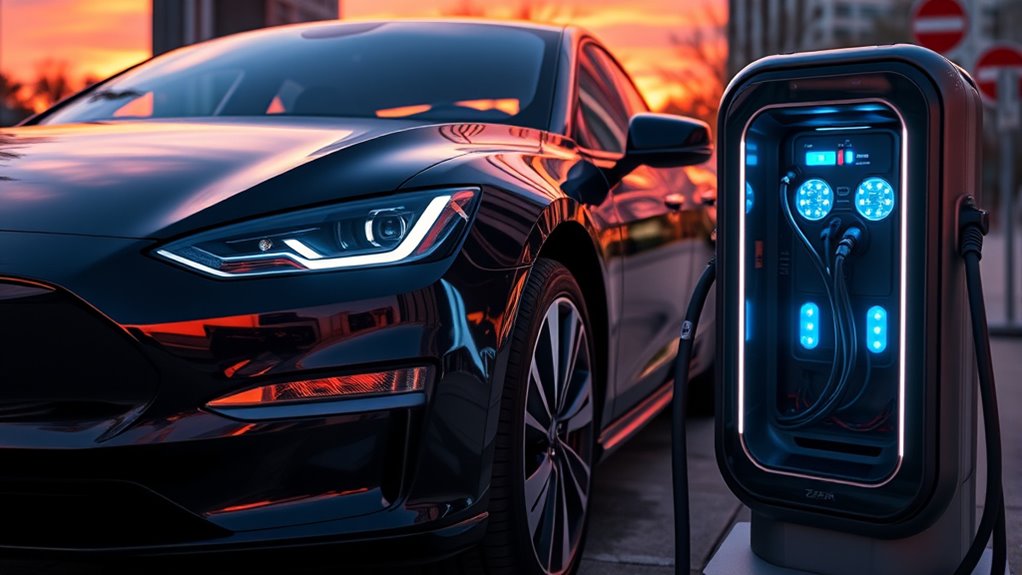
Fast charging stations give you a quick boost, typically in 20 to 30 minutes. This is great for getting enough range during road trips and saving time.
Here’s what you’ll experience:
- Home charging feels just like plugging in your phone—easy and reliable.
- Fast charging lets you top up quickly on the go, so you’re back on the road sooner.
Charging times depend on your vehicle’s battery size and the type of charger. Most EVs have built-in safety features to prevent overcharging.
You can plan your day around charging stops or just plug in overnight. Whether at home or on the road, charging your EV is straightforward and efficient.
Different Types of EV Charging Stations
There are quite a few types of EV charging stations out there, and they all come with different connectors and power levels. This really impacts how fast your car charges. You’ll see these stations in all sorts of places—public spots like parking lots and cafes, as well as private setups at home. Each type offers different levels of convenience and access, so it’s good to know what’s available.
Getting familiar with these differences can help you pick the right station for your needs and your vehicle. Whether you’re looking for a quick boost or a slower, more cost-effective charge, there’s a station out there that fits your lifestyle.
Types of Charging Connectors
Different types of EV charging connectors serve various charging stations, making sure your vehicle can recharge efficiently in different settings.
These connectors follow specific standards that influence compatibility and how accessible charging is around the world.
Global variations in connector types reflect different industry rules, which can affect your charging experience.
Knowing these differences helps you find the right station and avoid frustration.
Whether you’re at a fast-charging hub or plugging into a regular outlet, understanding the connector type ensures smooth, reliable power.
As industry standards change, staying informed about your options keeps your EV ready whenever you need it.
This knowledge helps you navigate the charging landscape confidently, no matter where your journey takes you.
Charging Speed Variations
Have you ever wondered why some charging stations fill your EV’s battery in minutes while others take hours? The difference comes down to charging speed, which depends on the station’s power output and charging efficiency.
Fast charging stations deliver higher wattage, allowing your battery to recharge quickly—sometimes up to 80% in just 30 minutes. These are perfect for quick top-ups during long trips.
On the other hand, slow chargers provide lower power, so it takes longer to charge. But they often have better charging efficiency for daily use.
Your vehicle’s onboard charger and battery capacity also play a role in how fast you can charge.
Knowing these differences helps you pick the right station for your needs, balancing convenience and battery health.
Fast chargers are a game-changer for road trips, while slower stations are great for overnight charging.
Public vs. Private Stations
When choosing where to charge your electric vehicle, understanding the difference between public and private stations can really help.
Public charging stations are great for on-the-go top-ups and offer widespread station accessibility. But they can vary in cost differences and user experiences.
Private charging, usually at home or work, offers more location convenience and control over maintenance requirements.
Public chargers often rely on diverse energy sources, which can impact sustainability. Private stations usually use cleaner energy options.
Your choice affects your overall EV experience, from charging speed to convenience. Think about these emotional factors:
- The freedom of charging whenever you want
- Peace of mind with reliable private stations
- Cost savings of home charging
- Confidence in quick, accessible public chargers
- Satisfaction of supporting sustainable energy
How Do Electric Vehicles Help the Environment?
Electric vehicles (EVs) greatly reduce emissions compared to traditional gasoline-powered cars, helping to lower air pollution and fight climate change.
By switching to EVs, you help create more sustainable transportation, which means less reliance on fossil fuels and fewer greenhouse gases.
This shift can shrink your personal carbon footprint and make a positive difference for the environment.
EVs produce zero tailpipe emissions, leading to cleaner air in your community and healthier living conditions.
Electric vehicles emit no exhaust fumes, helping to improve air quality and promote healthier communities.
As electricity grids become greener with renewable energy, the environmental benefits of EVs grow even more.
Choosing electric vehicles supports global efforts to cut pollution and slow climate change.
Overall, going electric plays an essential role in creating a cleaner, healthier planet for future generations.
Your decision to go electric aligns with a more sustainable lifestyle that benefits both the environment and society.
Benefits of Electric Vehicles Over Gasoline Cars
Electric vehicles offer several advantages over traditional gasoline-powered cars, making them a smarter choice for both drivers and the environment. You’ll enjoy significant cost savings on fuel and maintenance since EVs have fewer moving parts and lower repair costs.
Their performance comparison often exceeds expectations, providing smooth acceleration and quiet driving. Plus, you can take advantage of charging incentives and government rebates that help reduce upfront costs.
The resale value of EVs is improving as market trends shift toward cleaner transportation, boosting your investment’s worth. The driving experience feels modern and effortless, augmented by their energy efficiency and reduced environmental impact.
These benefits make EVs not just eco-friendly but also economically smarter, aligning with a future-focused lifestyle. Embracing electric vehicles means you’re part of a movement toward sustainable transportation, enjoying both personal and planetary gains.
How Long Do EV Batteries Last and When Should They Be Replaced?
Your EV’s battery usually lasts somewhere between 8 to 15 years, but it really depends on how you use and maintain it. It’s a good idea to keep an eye out for some signs that it might be time for a replacement. For example, if you notice your car isn’t going as far on a charge or if it’s taking longer to charge than it used to, those are clues that your battery could be wearing out.
Being aware of these signs means you can plan ahead and avoid unexpected issues. Regular maintenance and gentle driving can help prolong the life of your battery, keeping your EV running smoothly for years to come.
Battery Lifespan Expectations
While EV batteries are built to last for many years, their lifespan can vary depending on factors like how you use them, the climate, and how well you maintain them. Taking good care of your battery helps extend its life, but it’s also important to understand what affects its longevity.
Most EV batteries last between 8 to 15 years, depending on how you care for them and the conditions they’re in. Keep in mind that extreme temperatures can speed up battery wear and tear.
Frequent rapid charging might also shorten your battery’s lifespan. Regular maintenance can improve its durability, so it’s worth keeping an eye on your battery’s health.
Driving a lot or covering high mileage can lead to faster deterioration, so be mindful of that. When your car isn’t in use for a while, storing it properly can help preserve the battery’s health.
Signs for Replacement
Even with proper care, EV batteries don’t last forever. Monitoring battery health is key to knowing when you might need a replacement. Signs like reduced range, longer charging times, or inconsistent power are clear warnings.
Your charging habits matter too. Frequent fast charging can speed up battery aging and shorten its lifespan. Regular vehicle maintenance helps catch issues early, but if you notice big drops in performance despite care, it might be time to consider replacing the battery.
Age also plays a role. Batteries typically degrade over several years. Recycling old batteries is important for the environment, but replacing a failing one can be costly. Spotting these signs early can save you money and keep your EV running reliably.
Common Challenges and Limitations of Electric Vehicles
Despite their many advantages, electric vehicles (EVs) face several significant challenges that can hinder widespread adoption. Range anxiety is a top concern because limited driving distances make long trips stressful. The charging infrastructure isn’t yet widespread enough, which can leave some users stranded or waiting too long to recharge.
Cost concerns also play a role, with higher upfront prices due to expensive batteries. Maintenance issues, like battery recycling and replacement, add to long-term expenses. Performance limitations, especially in extreme weather, affect reliability and safety.
Market availability varies, making it harder for consumers to find the right model. Cold temperatures and seasonal changes reduce battery efficiency. Heavy weight distribution impacts handling, and some people struggle with adopting new technology.
Overcoming these hurdles requires innovation, better infrastructure, and more consumer education. This way, more people can access and benefit from EVs’ full potential.
The Future of Electric Vehicles: Trends and Innovations
The future of electric vehicles is looking pretty exciting, especially with all the new advancements in battery technology. These improvements are going to make EVs not only more efficient but also more affordable, which means more people can enjoy driving electric. It’s a game changer that could really transform the way we get around.
And it doesn’t stop there. Autonomous electric vehicles are on the horizon, and they’re set to become more common soon. Imagine a world where your car can drive itself safely and conveniently—sounds pretty amazing, right? These innovations are poised to reshape our entire idea of mobility, and you’ll be able to experience it firsthand in the near future.
Emerging Battery Technologies
Emerging battery technologies are set to change how we use electric vehicles by greatly improving their range, charging speed, and overall performance. Innovations like solid state batteries aim to make batteries safer with higher energy density, while lithium sulfur tech offers lightweight, long-lasting options.
Battery recycling is becoming more efficient, helping to lower environmental impact. Fast charging solutions also cut down wait times significantly, making EVs more convenient. Advances in energy density allow for longer trips on a single charge, and better grid integration helps manage energy more effectively.
Improved thermal management keeps batteries healthier over time. Second life applications give batteries a second purpose, extending their usefulness beyond just vehicles. Ultra capacitors enable quick power bursts, supporting rapid acceleration and braking.
These breakthroughs boost confidence and excitement around electric vehicles. They make EVs more reliable, sustainable, and accessible for everyone.
Autonomous Electric Vehicles
Autonomous electric vehicles are rapidly changing transportation by combining advanced self-driving tech with eco-friendly electric powertrains. They use smart AI and routing systems to boost safety and improve user experience.
Traffic management gets more efficient as autonomous EVs chat with each other and infrastructure, helping to reduce congestion. Still, there are regulatory hurdles and ethical questions, like how decision-making algorithms should work, that need to be addressed.
Picture a sleek vehicle smoothly navigating busy streets, adjusting to traffic flow, and keeping passengers safe—all without human input.
| Feature | Benefit | Impact |
|---|---|---|
| Self-driving tech | Hands-free driving | Convenience & safety |
| Safety features | Collision avoidance | Passenger security |
| Routing systems | Real-time route updates | More efficient travel |
| Traffic management | Coordinated vehicle flow | Less congestion |
| AI integration | Smarter decision-making | Better user experience |
Frequently Asked Questions
What Maintenance Do Electric Vehicles Require Compared to Traditional Cars?
You require less maintenance with electric vehicles compared to traditional cars because they have fewer moving parts.
You’ll mainly need to monitor the charging infrastructure and ensure your battery stays healthy. Regularly check the battery’s condition and keep the charging system clean.
Unlike gas-powered cars, you won’t need oil changes or exhaust repairs. This makes EV maintenance simpler and often more affordable, so you can enjoy a smoother, more reliable drive.
How Safe Are Electric Vehicles in Crashes and Emergencies?
Electric vehicles are incredibly safe, maybe even safer than traditional cars during crashes and emergencies. Their safety features include reinforced batteries and advanced crash avoidance systems.
In emergencies, responders often find EVs easier to handle because of their simpler power systems and clear safety protocols.
Although their high-voltage systems need caution, overall, EVs are designed to keep you safe and make rescue efforts easier.
This makes them a reliable choice for safety in all kinds of situations.
Are Electric Vehicles Suitable for Long-Distance Travel?
Electric vehicles are suitable for long-distance travel, but you should plan ahead. With a growing charging infrastructure, you can find quick charging stations along your route to minimize stops.
However, you might experience some range anxiety, especially with older models or if charging stations are sparse. To make your trip smoother, map out charging points beforehand and consider a vehicle with a longer range to reduce worries about running out of power.
What Are the Costs Involved in Replacing EV Batteries?
Thinking about replacing your EV battery? Well, get ready for a big expense because costs usually range from $5,000 to $15,000, depending on your battery’s age and model.
Replacement options include brand-approved rebuilds or completely new batteries, each with their own price tags.
Keep in mind, after about ten years, your battery’s performance drops, and your eco-friendly ride might turn into an expensive paperweight.
It’s a good idea to start saving now so you’re prepared when the time comes!
How Do Electric Vehicles Perform in Extreme Weather Conditions?
In extreme weather, you’ll notice battery efficiency drops because of temperature effects, especially in cold or hot conditions.
To counter this, electric vehicles use thermal management systems to regulate battery temperature and keep performance steady.
You can also optimize charging strategies during extreme weather, like pre-conditioning the battery before you start driving.
These measures help your EV perform better, ensuring reliable range and safety no matter the temperature.
Conclusion
Electric vehicles are changing the way you travel, offering cleaner, quieter, and more efficient rides. Did you know that EV batteries can last over a decade with proper care?
As technology gets better, charging times get shorter and the range increases, making EVs even more practical.
Switching to an electric vehicle benefits the environment and can save you money in the long run.
So, jump in—you’re part of a movement toward a smarter, greener future with electric vehicles.