Recognizing Overfill Engine Oil Symptoms: A Guide to Avoiding Vehicle Damage
Many vehicle owners worry about engine issues but often overlook overfilled engine oil. It’s a common problem that can lead to serious damage if not caught early. You’re not alone—many people struggle with recognizing the signs and knowing what to do.
If your engine oil is overfilled, you’ll notice foamy or milky oil on the dipstick, and you might smell burning oil or see smoke from the exhaust. The engine may run rough, and warning lights could turn on.
Overfilling creates excess pressure, risking seal damage and reduced lubrication.
Checking the oil level properly and addressing any overfill early helps prevent costly repairs. Keep going to learn how to identify and correct this issue effectively.
Key Takeaways
- Foamy or milky oil on the dipstick can mean overfill and might point to engine problems.
- Too much oil can increase pressure, cause leaks, and damage seals, which could lead to serious engine damage.
- Watch out for signs like rough running engine, strange smells, smoke, and warning lights about oil pressure.
- Always check your oil level when the engine is cool and the car is on level ground to avoid overfilling.
- If you realize you’ve overfilled, carefully drain the excess oil and see a mechanic if symptoms persist or get worse.
How to Detect If Your Engine Oil Is Overfilled
Wondering how to tell if your engine oil is overfilled? The first step is knowing your vehicle’s oil capacity. Check your owner’s manual or dipstick to see the recommended level.
Check your owner’s manual or dipstick to confirm the correct oil level for your vehicle.
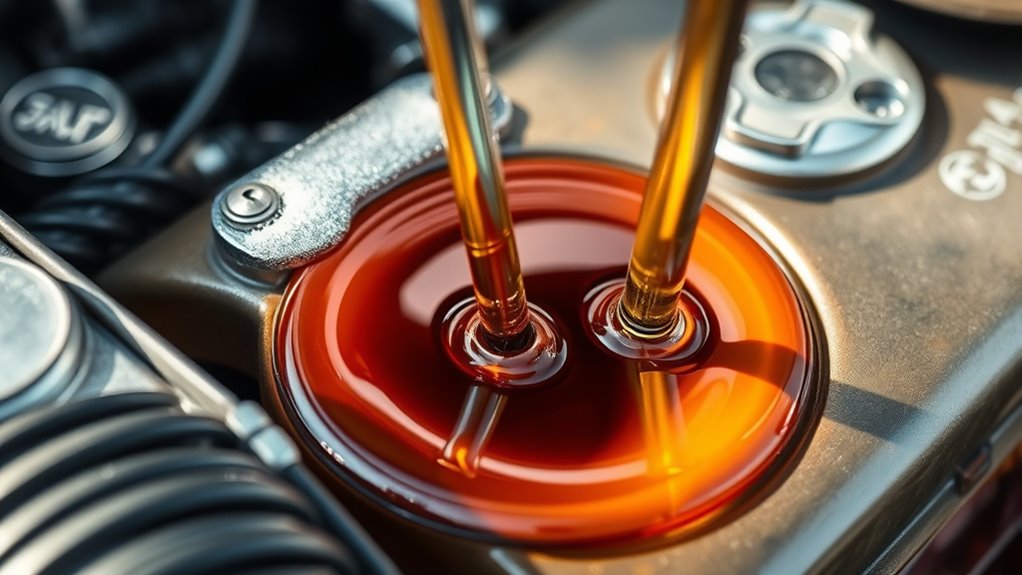
If the oil appears above the maximum mark, your engine might be overfilled. Look for signs like foamy or milky oil on the dipstick, which indicates excess oil trapping air.
You might also notice a burning smell or smoke from the exhaust, signaling potential issues. Regular maintenance tips include checking the oil level when the engine is cool and on level ground.
Avoid overfilling by adding small amounts of oil gradually and rechecking levels. An overfilled engine can cause increased pressure, leaks, and damage.
Why Overfilling Your Engine Oil Can Damage Your Engine
Overfilling your engine oil can lead to serious damage because excess oil creates excessive pressure within the engine’s components. Engine oil properties, such as viscosity and foaming tendencies, are essential for proper lubrication, but too much oil disrupts this balance.
When oil levels are too high, it can cause aeration or foaming, reducing lubrication effectiveness and increasing wear on engine parts. This excess pressure can lead to oil leaks, damaged seals, or even cracked engine components.
Poor maintenance practices, like overfilling during oil changes, heighten these risks. Overfilled oil also affects the functioning of the crankshaft and pistons, potentially causing them to whip through the oil, creating foam and further impairing lubrication.
Ultimately, overfilling compromises engine performance and longevity. To avoid damage, always follow manufacturer recommendations and check oil levels carefully during maintenance, ensuring your engine operates smoothly without the hazards of overfilled oil.
Signs Your Oil Might Be Overfilled
Have you noticed any unusual signs while driving that could indicate your engine oil is overfilled? One common sign is inconsistent oil viscosity, which can cause the engine to run rough or produce strange noises.
Overfilled oil can create excessive pressure, leading to oil foaming, which reduces lubrication efficiency. This foaming can cause oil to circulate improperly, increasing the risk of engine sludge buildup.
You might also notice a burning smell or smoke from the exhaust, signaling that excess oil is burning or contaminating other engine components. Furthermore, the oil level on the dipstick may appear higher than normal, and you might experience decreased fuel efficiency or engine misfires.
If these signs are present, it’s essential to check your oil level and address overfilling promptly. Ignoring these symptoms can lead to serious engine damage, so staying alert to these indicators helps you prevent costly repairs.
How to Check Your Oil Level Using the Dipstick
Sure! Here’s a more conversational version of the text:
First, you’ll want to pull out the dipstick and give it a quick wipe to get rid of any oil on it. Then, carefully reinsert it, making sure it’s properly seated. Once it’s in, pull it out again and hold it horizontally so you can see the oil level clearly. Take a look at where the oil film marks fall in relation to the recommended indicators—this will tell you if your oil level is just right or if you need to add a bit more.
Proper Dipstick Positioning
Before checking your oil level, make sure the engine is turned off and has had a few minutes to cool down. Proper dipstick positioning is important for getting accurate readings and keeping your dipstick in good shape.
To get an accurate oil level, follow these simple steps:
- Carefully remove the dipstick and wipe off any excess oil with a clean cloth.
- Reinsert the dipstick fully, pressing it in firmly without twisting.
- Pull the dipstick out again, holding it horizontally so oil doesn’t run down.
- Check the oil level at the marked indicators, making sure it’s within the recommended range.
Keeping the dipstick in the right position during each check helps prevent false readings and keeps your oil level accurate. Using proper technique ensures your vehicle stays safe and reliable.
Reading Oil Levels Accurately
Once you’ve properly positioned the dipstick, it’s time to check the oil level accurately. Use proper oil measurement techniques by removing the dipstick, wiping it clean with a rag, then reinserting it fully to guarantee accurate readings.
When you pull the dipstick out again, look at the oil level against the marked indicators. Be sure to check the oil when the engine is cool or has been off for a few minutes, as hot oil can give false readings.
Regular dipstick maintenance keeps the measurement precise, avoiding misjudging oil levels. Avoid rushing or guessing; take your time to read the oil level carefully.
Accurate readings help you maintain the right oil quantity, preventing overfill or underfill. Both can damage your engine, so it’s important to get it right.
What Happens When You Overfill Your Engine Oil?
Overfilling your engine oil can cause serious problems that might not be immediately obvious. When you add too much oil, it disrupts how fluids move inside the engine. This can lead to:
- Foaming and aeration, which reduces oil viscosity and hampers proper lubrication.
- Engine components like pistons and crankshafts may experience more stress because of inconsistent oil coverage.
- Lubrication failure, speeding up wear and increasing the risk of engine damage.
- Oil dilution, where excess oil mixes with combustion gases, degrading engine performance and increasing contamination.
These issues can cause your engine to slow down and even get damaged over time. As a result, the engine won’t run smoothly, and maintenance becomes more urgent. Keeping the right oil level helps maintain ideal fluid flow, protecting engine parts and ensuring peak performance.
Overfilling can damage your engine, slow performance, and increase costly repairs. Maintain proper oil levels for optimal engine health.
But overfilling throws off this delicate balance and can lead to costly repairs.
Risks of Ignoring Overfilled Oil Symptoms
Ignoring the signs of overfilled oil can really cause some serious problems for your engine. If you don’t pay attention, it could lead to costly repairs down the line. Plus, overfilling often causes oil leaks, which can create even more issues under your vehicle and make a mess.
And it’s not just about leaks—overfilled oil can also mess with your engine’s performance. It might run less smoothly and become less efficient, which isn’t great for your car’s long-term health. So, it’s definitely worth keeping an eye on your oil levels to keep everything running smoothly!
Engine Damage Risk
If you neglect to address overfilled engine oil, you risk severe engine damage. Excess oil can cause increased pressure and foaming, which impairs lubrication. This leads to rapid wear and potential failure, shortening your engine’s lifespan.
Furthermore, overfilled oil affects oil viscosity, making it too thick or too thin to perform properly. You might notice engine knocking, overheating, or leaks as signs of trouble.
- Reduced lubrication causing component wear
- Increased engine temperature and overheating
- Damage to piston rings and valve seals
- Shortened engine lifespan and costly repairs
Ignoring these symptoms can escalate damage, so addressing overfill promptly is critical to maintaining your engine’s health.
Oil Leak Potential
When engine oil is overfilled, the extra pressure can push oil past seals and gaskets, increasing the chance of leaks. This oil leakage can show up as spots under your vehicle and might cause slipping or burning smells.
Ignoring overfill signs makes things worse, possibly damaging engine parts and leading to costly repairs. To avoid this, regularly check your oil level and follow good maintenance habits.
Use the correct dipstick technique and don’t overfill during oil changes. Keeping the right oil level helps seals stay intact and lowers leak risks.
If you notice oil leaking, deal with it quickly to prevent more engine problems. Staying on top of your oil levels and leaks can save you money and help your vehicle last longer.
Reduced Engine Efficiency
Overfilled engine oil can really hurt your vehicle’s efficiency by messing with how the engine runs. When there’s too much oil, it makes the oil thicker, which makes the engine work harder to run smoothly.
This can cause a few problems. First, your engine might not perform as well, struggling to produce power. You’ll also notice worse fuel economy because the engine needs more energy to overcome the extra resistance.
Plus, too much oil can lead to engine wear. It can cause overheating and damage to engine parts. You might also see oil foaming, which means the oil gets aerated and doesn’t lubricate properly.
Ignoring these signs can cause long-term damage. Keeping your oil at the right level is key to ensuring your engine runs smoothly and efficiently.
Steps to Fix an Overfilled Oil Level Safely
To fix an overfilled oil level safely, start by making sure the engine is cool and parked on a flat surface. Locate the oil drain plug underneath the vehicle, usually at the lowest point of the oil pan.
Using a wrench, carefully loosen the drain plug so excess oil can escape into a container. Be careful not to remove too much; pour the drained oil into a suitable recycling container.
After draining, check the oil level with the dipstick, wiping it clean before reinserting. Adjust the oil quantity until the level is within the recommended range.
Remember, oil viscosity affects how it flows, so use the correct type specified for your vehicle. Avoid over-tightening the drain plug to prevent leaks.
Once the level is right, clean around the drain area and dispose of the used oil properly. This process ensures you safely correct an overfilled engine without damaging your vehicle.
Tips to Prevent Overfilling Your Engine Oil
One of the best ways to prevent overfilling your engine oil is to always check the level using the dipstick before adding more oil. Regularly monitoring helps you avoid accidental overfill and keeps your engine running smoothly. To stay on top of this, consider these tips:
Always check your oil level with the dipstick before adding to prevent overfilling and keep your engine running smoothly.
- Follow your vehicle’s recommended oil change frequency to prevent unnecessary overfilling during top-offs.
- Use a clean funnel when adding oil to minimize spills and over-pours.
- Add small amounts at a time, checking the dipstick frequently to gauge the correct level.
- Keep up with regular engine maintenance tips, including inspecting for leaks or oil consumption that could lead to overfilling.
How Overfilled Oil Affects Your Engine’s Performance and Efficiency
When engine oil is overfilled, it can create excessive pressure and aeration within the crankcase, which negatively impacts your engine’s performance. This excess oil can lead to increased oil pressure fluctuations, making it harder for the engine to operate smoothly.
Overfilled oil often causes the oil to foam, reducing its ability to lubricate properly. As a result, engine components may experience increased friction and wear, decreasing overall efficiency.
Moreover, the altered engine oil viscosity caused by aeration can hinder proper flow and lubrication, worsening engine performance. You might notice a drop in fuel economy or rough idling as the engine struggles to maintain ideal operation.
Overfilled oil can also trigger warning lights on your dashboard, indicating oil pressure issues. Ultimately, this imbalance not only compromises your engine’s power and responsiveness but also increases the risk of long-term damage.
Keeping the oil level within recommended limits is essential for smooth, efficient engine performance.
When to Seek Help From a Mechanic for Oil Overfill Issues
Recognizing the signs that you need professional help is essential, especially if you suspect the oil has been overfilled. If you notice unusual engine noises, excessive smoke, or a burning smell, it’s time to consult a mechanic. Overfilled oil can cause foaming, which reduces lubrication and risks engine damage.
You should seek mechanic consultation or diagnostic services if:
- You observe oil leaks or puddles under your vehicle.
- The oil dipstick shows abnormally high levels.
- Your engine runs roughly or stalls unexpectedly.
- Warning lights appear on your dashboard related to oil pressure.
Addressing overfill issues promptly prevents serious damage. A mechanic can perform diagnostic services to assess the oil level and condition accurately. Don’t ignore persistent symptoms or uncertainty. Professional help guarantees your engine remains safe and properly maintained.
Frequently Asked Questions
Can Overfilled Engine Oil Cause Engine Overheating?
Yes, overfilled engine oil can cause engine overheating. When there’s too much oil, it can increase oil viscosity, leading to aeration and foaming.
This hampers proper lubrication and heat dissipation, which can negatively impact engine performance. The excess oil may also block ventilation systems, trapping heat inside the engine.
To prevent overheating, always check oil levels regularly and keep them within the recommended range.
Does Overfilling Oil Void My Vehicle’s Warranty?
Overfilling your engine oil can jeopardize your warranty coverage, especially if damage happens because of poor oil maintenance.
While a little extra oil might seem harmless, it can cause engine issues that aren’t covered under warranty.
Always follow your vehicle’s recommended oil level to keep your warranty intact.
Think of it as a tightrope walk—balance is key, and overdoing it could tip the scales against you.
How Long Does It Take for Overfilled Oil to Cause Engine Damage?
Overfilled oil can start damaging your engine within a few hundred miles, especially if the oil level is well above the maximum mark. The excess oil creates foam, which can reduce lubrication and cause problems.
It can also increase pressure inside the engine, leading to leaks or seal damage. To keep your engine running smoothly, check your oil level regularly and make sure it stays within the recommended range.
Fixing overfill issues promptly helps prevent costly repairs and can extend your vehicle’s lifespan.
Are There Any Specific Vehicle Models More Prone to Overfilling Issues?
Certain vehicle models, especially older or less-maintained ones, are more prone to overfilling issues during oil changes.
You should always check your vehicle’s manual for its specific oil capacity to prevent overfilling. Many vehicles with complex or sensitive engine designs can suffer damage if overfilled.
Regular vehicle maintenance, including accurate oil level checks, helps avoid this problem and keeps your engine running smoothly.
Can Overfilled Oil Lead to Catalytic Converter Problems?
Overfilled oil can indeed cause catalytic converter problems because excess oil might leak into the combustion chamber. This can lead to symptoms like reduced efficiency or strange odors coming from your vehicle.
To avoid this, make sure to regularly check your oil level and don’t overfill. Keeping the right oil level helps your engine run smoothly and protects your catalytic converter from damage caused by oil contamination.
Conclusion
To keep your engine running smoothly, always check your oil level regularly—think of it as your engine’s heartbeat.
Avoid the mistake of overfilling, which can cause damage similar to the chaos of the Great Fire of London, but with less drama and more costly repairs.
Stay vigilant, follow the steps to check and correct your oil, and don’t hesitate to call a mechanic if things seem off.
Your engine’s health depends on it—don’t let overfill engine oil turn into a costly burden on your vehicle.